Hack Attack

Imagine a plain brown box showing up at your front door with no indication of who or where it came from. The box is topped by a small white envelope with a card inside. In elegant script the card reads: Scan the QR code to see who sent you this gift! So you scan it. Congratulations – you’ve just given scammers access to everything on your smartphone.

I wish this story was a work of fiction but some day soon it could be coming to a doorstep near you. The gift box scam worked on my son’s friend and frankly I can’t say that it wouldn’t have worked on me. If someone sent you a gift and they wanted it to be a surprise, would the situation look much different than what I just described? Would you scan the QR code?

Do not scan!

I can’t explain how the simple scan of a QR code translates to the hack of a smartphone, but technology far outpaces my understanding of its capabilities these days. My first reaction to this story was to check my phone apps to make sure any “data-sensitive” ones were password-protected. My next reaction was to wonder if I could ever trust a QR code again.

Here’s a second bit on hacking, also passed along by my son. He said scammers now prey on public parking lots. Many of these lots use pay-by-app technology and the app can be downloaded onsite by scanning a QR code. Scammers simply place their own sticker over the one you’re supposed to scan and presto! – you’ve unknowingly given some level of data access to thieves. It reminds me of gas station scams where the pump credit card reader is retrofitted with a device capable of collecting your card’s data.

By comparison email and text scams now seem pedestrian, but boy-howdy they keep trying don’t they?  I got one just last week claiming I have a “USPS parcel being cleared, but the parcel is temporarily detained due to an invalid zip code”… and I’m supposed to click on a link so I can correct the zip code.  These phishing messages are so common they’ve become easy to spot, whether from the broken English or from the bizarre originating email address.  Phishing reminds me of those long-ago Nigerian princes who sought our help in exchange for “large sums of money”.

At least I’m not a head-over-heels fan of Brad Pitt.  Last month two women were scammed out of hundreds of thousands of dollars by five people in Spain, posing collectively as the actor in an online conversation.  The fraudsters were arrested, but you have to wonder about the naivety of people these days.  Do you really believe Brad Pitt would contact you to invest in one or two of his projects?  More importantly, would you invest this kind of money with anyone without meeting them in person first?

All of this hack-yacking brings to mind the 1970s counterculture bestseller Steal This Book.  From the title you’d expect to read about tricks of the hacking trade but it was a different topic entirely.  Steal This Book gave step-by-step instructions on how the average American could get free services and products courtesy of the federal government’s welfare programs.  The book was intended as a sort of protest against the powers-that-be, written by a well-known activist of the time.

[Side note: Steal This Book also explained how to create (underground) radio broadcasting and printing presses, start (non-violent) demonstrations, and make bombs with household materials.  You can still buy the book but I’m guessing the section on bombs has been removed.  And don’t ask me how many copies of the book were actually stolen.]

Not a good investment

The FBI’s website lists eighteen categories of common frauds and scams.  The examples I shared above fall under just one of these categories: “skimming”.  Some of the other categories are even more disheartening, like “holiday”, “elder”, or “romance”.  Collectively it’s a sad statement about the world we have to deal with.  So be skeptical, I tell you.  That unexpected gift at your front door is probably not a gift at all.  That QR code may create a connection you don’t want.  And “Brad Pitt”?  He has no interest in doing business with you.  He only wants your money.

Some content sourced from Wikipedia, “the free encyclopedia”.

Adding Fire to the Fuel

When I step up to the counter at Starbucks for my favorites (hot: Grande Flat White, cold: Grande Cold Brew w/ a splash of cream), I find it interesting how accepting I am of the high price of my purchase. By nature I’m a penny-pincher, monitoring the family budget with a fully-focused microscope. But the scan-and-go Starbucks app makes it easy to overlook the five dollars for a single cup of coffee. On the other hand, a gallon of gasoline for the same price is literally headline news.

I don’t wonder if you’re just like me at the gas station these days because you are. When you pull up to the pump you try to ignore the unbelievable digits on the station sign and on the pump itself.  The tank in your vehicle is probably closer to “E” than usual (though my wife still refuses to go below the quarter mark).  You may even shop around now before choosing your station.  Finally, the price of your favorite octane has you considering a cheaper option, even though none of them are really “cheap”.  Just like the Starbucks menu, purchasing gas is no longer the mindless decision it used to be.

$5.00/gallon. Ten days ago the U.S. hit that preposterous average for the first time in its history.  Just two months ago the average was $4.00; two years before that, less than $2.00.  Forecasters say we’ll see a nationwide average of $6.00 before the end of the summer.  No wonder our fiery conversations are all about fuel these days.

When my car’s “low fuel” light pops on (with an annoying “DING!”) I know it’s going to take eighteen gallons to get the needle pointing back to “F”.  That’s $90 in June 2022 math.  When a stop at the gas station sets you back almost $100, you start to think about what else you could buy with the money.  Four or five dinners out.  Ten months of Netflix.  Twenty Starbucks Flat Whites.

If it’s any consolation, at least we’re talking about self-service gasoline here.  Some of you are too young to remember when a “gas station” was a “service station”.  Prior to 1980, it was all about full service.  I can still hear the ding-ding as the wheels of my parents’ car passed over black hoses, triggering the bell to let the attendant know they needed a fill-‘er-up.  Then he (yes “he” because I never remember a “she” working at service stations back then) would run over to the pump, ask what octane and how many gallons, and start the filling.  He’d also ask you to “pop the hood” so he could have a quick look at the oil, washer fluid, and engine.  Finally, he’d give your front windshield a wash, take payment (in cash, of course), and off you’d go.  For all that service, you simply rolled down the driver’s-side window and paid the man.

Full-service is still a thing of course but it’s a lot harder to find these days.  Unless you live in Oregon or New Jersey.  In those states, self-service is rarely an option.  Attendants are still the norm.  It sounds like an alternate reality for 2022 (or the scene from Back to the Future below) but two out of the fifty states stubbornly refuse to allow self-service.  They stand by the well-worn concerns: fire hazards, difficulties for the elderly or disabled, and loss of station attendant jobs.  They also charge a few pennies more per gallon because they can’t make a profit the way they used to – by offering services beyond the gas itself.  For the most part, those under-the-hood services moved to car dealerships a long time ago.

Just this week our politicians proposed a three-month “holiday” on gas taxes (and taxes on gasoline should be the subject of its own blog post).  The holiday won’t happen, though.  Our politicians won’t allow the sacrifices made by not collecting those taxes.  Or activists will wonder if gas companies will maintain the high prices and generate additional profit.  And if gas is on its way to $6/gallon anyway, it’s kind of like adding a new lane to the highway, where by the time it’s finished the traffic has increased too much to notice any difference.

Not speaking for other countries but Americans won’t be driving less in the next several months.  The travel forecast calls for more vehicle miles than even in the summers before COVID.  Our lack of efficient mass transit and our woes at the airport (can you say, “canceled flight”?) will, uh, drive us to drive.  In other words, we’ll pay $5, $6, maybe even $7 before we’ll pull back on our stubborn habits.  Just like I will, admittedly, at Starbucks.

Some content sourced from the CNN Business article, “Why New Jersey and Oregon still don’t let you pump your own gas”, and Wikipedia, “the free encyclopedia”.

Refining Buy-Products

Let’s chat about your last visit to the gas station (assuming you don’t own a “plug-n-play” vehicle).  Chances are you hit the pumps in the last week or so.  If you’re like me you drove in and drove out, mindlessly fueling to be on your way again as fast as possible.  But lately I’ve learned there’s more than meets the eye as you fill-er-up.  We’re all unknowingly playing the great retail chess game known as dynamic pricing.

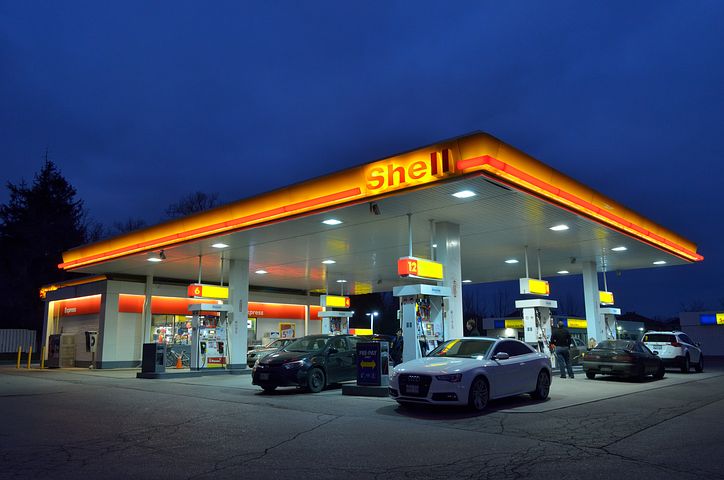
Here’s the drill.  My local Shell station asks me a lot of questions before I get my first drop of unleaded (which makes me crazy but what choice do I have?)  Cash or credit?  Rewards Program number?  Zip Code?  Car Wash?  Paper Receipt?  All that info is “pumped” out of me (ha) up front.  Even then I must choose the octane before I finally get what I came for.

Now here’s the rub.  Every one of those data points feeds a Watson-like computer somewhere far removed from the gas station.  Watson brews a big customer-transaction stew, mixing in time-of-day, day-of-week, gallons purchased, and even weather conditions.  The result?  The “optimal” price point, delicately balanced between a) what you the consumer are willing to pay and b) what the supplier wants to net.  It’s a price-per-gallon computation that changes as many as ten times a day.

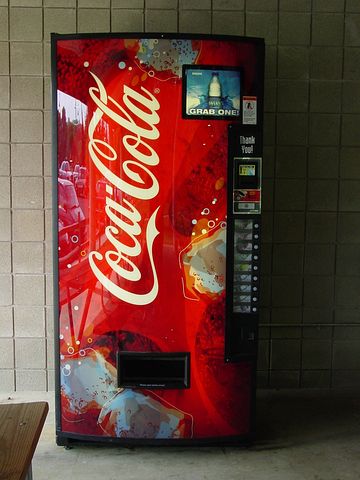
Coca-Cola may get the credit for the advent of dynamic pricing – with soft-drink vending (almost 20 years ago now).  Coke added a heat sensor and a computer chip to their machines, and as the outside temperature increased so did the cost of a soda.  Bad taste, and bad decision.  Consumers figured out the game and raised a big stink.  The running joke at the time – maybe not so funny today – was Coke would next install a camera to determine how much change was in your pocket.  Pepsi seized the opportunity to lure the unhappy customers and Coke quickly dropped the techno-gimmick.  But dynamic pricing took hold and never looked back.

Dynamic pricing is easier to digest when it targets times or situations where customers don’t notice or don’t even care.  The better example is school supplies.  Towards the end of summer your local Wal*Mart or Target will deep-discount pencils and paper and the like, often as much as 50%.  Kids will flock to the sale and load up on everything they need.  Parents will give their receipts an approving smile.  But guess what?  The store still wins.  That’s because “impulse purchases” bagged up with the school supplies are priced slightly higher than usual, more than offsetting any loss from the sale.

Dynamic pricing is hardest at work in hotels (what rate makes sense to fill that empty room?), utilities (do you really need the air conditioning right now?), and outdoor sporting events (are you willing to watch your baseball team during that unexpected rainstorm?).  And of course, any time you shop Amazon or Uber, dynamic pricing is asking the question, “how much do you really want that product or ride?”

Let’s pull up to the pumps again.  If you use “GasBuddy” or some other app designed to locate the lowest price-per-gallon, you’re winning the battle – but not the war.  I wish I had GasBuddy the first time I filled up as a teenager.  I crunched the numbers: forty years of driving; a tank of gas per week; eighteen gallons or so per tank.  If I purchased at $0.03/gallon less each time I filled up, I’d have an extra $1,000 in my pocket by now.

Thanks to Watson and his endless algorithms however, GasBuddy isn’t much more than instant gratification.  The suppliers are always one step ahead.  Unless you keep an eye on prices (and a few gallons in your tank), you’ll inevitably purchase when your demand takes priority.  Did you know gas is less expensive in the early hours of the day?  That’s because commuters are more likely to fill up at the end of the day, when they unknowingly drive up demand.  The computer is only too happy to adjust the price.

Maybe now you’ll leave the house a little earlier in the morning.  Fill up on your way to work instead of on your way home later in the day.  You will save a couple of cents per gallon if you do that.  And good for you – you’re beating the dynamic-pricing game.

Just don’t buy a cup of coffee while you’re at it.