Pretty In Pink (and Green)

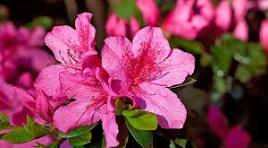
Here in the South, the arrival of spring has been declared with aplomb. You can already watch the grass grow, and it seems to need cutting every other day.  But even more apparent, the blooms are everywhere. Pink azaleas (a staple at last weekend’s Masters golf tournament) run rampant. The roses have never been redder. And the giant flower heads of white hydrangeas will soon spring forth. This Easter week therefore, it seems appropriate for this blog to pay a visit to another cathedral: Saint Mary of the Flowers in Florence, Italy.

Santa Maria dei Fiore

My LEGO creation of the cathedral of Notre-Dame de Paris is quickly coming to a close, so I need to tour you through at least one or two more cathedrals before I’m done.  The first, you may recall, was Saint John Lateran in Rome (read about that one in Tucked-Away Place to Pray).  Today we’re a three-hour drive to the north, at Santa Maria dei Fiore.  It’s no surprise my tour of the world’s prominent cathedrals continues in Italy.  To be honest, the whole tour would do just fine if it never left the country.
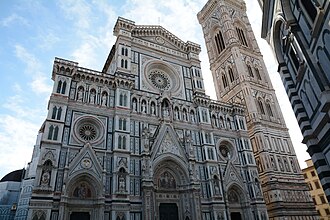
West facade and bell tower

Florence is the capital city of the Italian region of Tuscany, known for its stunning landscapes, world-class wines, and Renaissance art and architecture.  Approaching the city from any direction, you cannot help but notice Santa Maria dei Fiore.  The cathedral is not only one of the largest in the world, but its exterior is finished with marble panels of pink and green, giving the structure a light, airy contrast to the surrounding buildings.  The church is crowned by a distinctive dome, which captures your attention even before the church itself.

Inside shell of the dome

The architect in me wants to highlight Santa Maria dei Fiore for the remarkable engineering that went into this massive structure.  I could spend an entire post talking about the design of the dome alone.  Consider, its structure is actually one inside of another.  The brick-clad concrete shell you see from the outside is connected to the one you see from the inside by “chains” of stone, iron, and wood.  With this approach, Santa Maria dei Fiore doesn’t require the flying buttresses so prominent in Notre-Dame de Paris (a structural element the Italians regarded as “ugly makeshifts”).  And the dome’s four million bricks – which might seem heavy-handed (ha) – are a much lighter material than stone or tile.
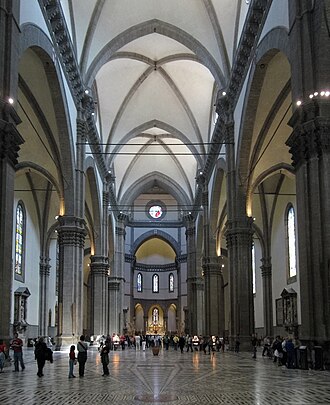
There’s more to this cathedral than its dome, of course.  The plan, a traditional Latin cross, includes three rounded apses surrounding the altar, each used as a chapel.  The nave (sanctuary) is the length of two football fields; a vast interior space with single aisles on either side.  The structural arches soar 75 feet above the seemingly endless marble floor.  And perhaps most unusual, Santa Maria dei Fiore is actually a complex of three buildings.  You enter the adjacent octagonal Baptistry of St. John through sets of bronze doors (which are replacements for the famous originals now residing in a nearby museum).  And the slender free-standing Giotto’s Campanile (bell tower) is a decorated work of art in itself.  All three structures blend together with those distinctive pink and green marble tiles.
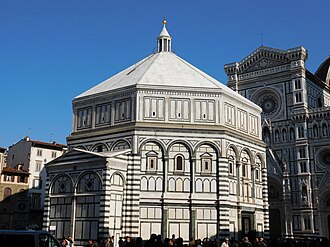
Baptistry of St. John

If you’re ever fortunate enough to visit Saint Mary of the Flowers, be sure to purchase the ticket to climb to the top of the dome.  Filippo Brunelleschi – the architect -included a narrow staircase between the two shells so you can reach the uppermost cupola for a spectacular view of Florence and the surrounding countryside. Brunelleschi designed other structures in his lifetime; churches, chapels, hospitals, and such, but the Florence Cathedral is his crowning achievement.  It’s no wonder you’ll find his tomb right inside the entrance, alongside the more prominent players in Santa Maria’s storied history.


LEGO Notre-Dame de Paris – Update #12

(Read about the start of this “church service” in Highest Chair)

Oh my stars, the build was challenging today!  Bags 22, 23, and 24 – of 34 bags of pieces, focused almost exclusively on the west facade and the rising of the bell towers.  We added the final rose window (above the west entrance) and reinforced the upper reaches of the nave in anticipation of adding the roof.

Magic wands?

So here’s a detail I didn’t expect.  In Notre-Dame’s towers, just below the uppermost structure (where the bells live – still to be built), you have – how else can I say it? – “stars on flag poles”.  Forty stars on flag poles, to be precise.  When I dumped out Bag 24, I thought, “What the…?” as the pile of magic wands you see here appeared.  Did LEGO mistakenly add pieces from a Harry Potter model into mine?  A Disney perhaps?  Nope.  Look at the final photo.  Every one of those stars is planted at the west end of the cathedral like palm trees; most of them in the bell towers.  Nice detail, Notre-Dame.  As for installing them?  It’s tough enough to push little poles into LEGO holes one-by-one-by one, but then you have to rotate the stars precisely forty-five degrees from the plane of the cathedral walls.  The engineers at LEGO are having a barrel of laughs at my expense.

(Click for more detail)

By the way, we’ve made it to the year 1245 as we build the bell towers, almost a hundred years after laying the first cornerstone at the opposite end.  And we are almost done.  By the numbers we have ten bags of pieces to go, but by the look of the model we’re closer than that.  They must be small bags of pieces.  Whatever.  I just hope they don’t contain any more stars on flagpoles.

Running build time: 12 hrs. 01 min.

Total leftover pieces: 32

Some content sourced from Wikipedia, “the free encyclopedia”.
Season Before the Sun

Every now and then I come across a little fact that makes me feel my age.  Fifty years ago this month a one-hit wonder named Terry Jacks released the single “Seasons In The Sun”, which parked at #1 on the music charts for three weeks and burned itself into my twelve-year old brain forever.  Any teen from back then will never forget the We had joy, We had fun lyrics.  Ironically it wasn’t a happy song (as in …goodbye Papa, it’s hard to die…) but not to worry.  Today I want to talk about the season before the sun instead.

Whether you celebrate Easter (this Sunday), the vernal equinox (a week ago Tuesday), or college basketball’s March Madness (on-going), the hints are everywhere: spring is beginning to, uh, spring.  For my wife and I, the season means strawberries, when the best of the fruit is available for the next sixty days.  For others it means the kids are out of school for a week.  But surely there’s no better indication of spring than flowers.  The bright bursts put winter’s doldrums behind us while the sun shines more often.  Flowers signify new beginnings.

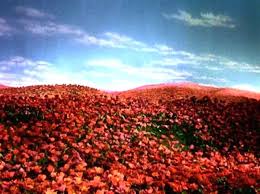
Oz is full of poppies

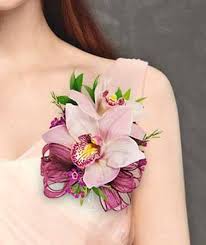
Guys don’t talk about flowers much (unless we’re gardeners) but it doesn’t mean we haven’t had our share of close encounters with them.  My first was probably with dandelions (yes, they’re flowers) and the childhood fascination of blowing the blooms into countless flying bits.  Growing up in Southern California also meant going to the Rose Parade, where the bigger floats average more than 50,000 flowers. Senior prom was probably the one and only time I bought flowers in high school.  Call a wrist corsage awkward if you will, but hey, it beats the terror of pinning flowers on a girl’s dress.

dicey

Speaking of awkward, when I first met my wife in college I decided to be coy and send flowers, forcing her to make the next move.  But fate played a part when the bouquet was delivered to the wrong dorm, the flowers wilting at the front desk for days.  I didn’t hear from her for a while and she didn’t hear from me, and that meant we were thinking nasty thoughts about each other. “Ungrateful” (my end). “Loser” (hers).  Another girl finally let her know about the flowers and it’s a good thing she found out.  A marriage was saved!

pricey

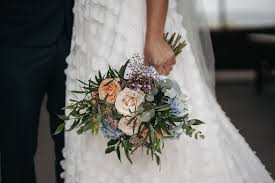
If you’re thinking my spend on flowers is below average, I’m confident I made up for it in a single day: at my daughter’s wedding.  Her bouquet, her bridesmaids’ bouquets, down the aisle, around the altar, at the centers of the reception tables, and on and on – the blooms were everywhere.  Let’s just say the cost of all that color was probably enough to buy a small car.

I’ve brought home several flower bouquets over the years, whether to my wife or to my mother.  What used to be an in-shop, DIY experience is now pretty much Amazon, where you click your way through the colorful screens of 1-800 FLOWERS or FTD to create the perfect arrangement.  And as you know, you rarely get the exact look you choose from the photos.  The fine print protects the companies by stating something like “depending on availability”.

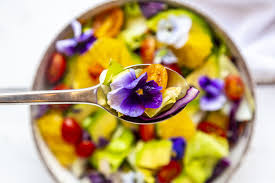
I like to bake (which is not the same as “to cook”), so when someone says “flower” I’m thinking “flour”.  After all, flour is to baking as flowers are to spring.  Flowers wouldn’t taste good in my chocolate-chip cookies, but you do find them in other foods.  Top your soup with a squash blossom, your tea with chamomile flowers, or your salads with calendulas, pansies, or marigolds. Not for me; no thanks.  When it comes to flowers as food additives I might be tempted to say, “the bloom is off the rose”.

The Masters is full of azaleas

Okay, so I went through the lyrics of “Seasons In The Sun” again and noticed …now that the spring is in the air, with the flowers everywhere… , so… what do you know?  Terry and I are talking about the same season after all.  At least this one lyric brings a little joy and fun to an otherwise depressing song.  It’s what this kid born in the 1960s might call “flower power”.

Blogger’s note: “Seasons In The Sun” really was #1 on the music charts exactly fifty years ago this month.  My wife and I bought strawberries last weekend, which had me thinking about seasons, which had the song bouncing around in my brain.  But the fifty-years thing is an eerie coincidence, don’t you agree?  Maybe a higher flower power is at work here.

Some content sourced from Wikipedia, “the free encyclopedia”.
Field of Flowers

In the heart of timeless Rome, not far from the Pantheon and the Coliseum and the Vatican City, lies a field of flowers.  The Italians call it the Campo de’ Fiori (literally, “field of flowers”) and it is a welcome retreat from the bustling metropolis that surrounds it.  The Campo is open and happy and bright; a sanctuary nestled within a vast maze of winding streets and crowded buildings.

38 - sanctuary 1

You can see the Campo in the photo above: the rectangular area with all the white tents.  Admittedly the Campo is not really a field, but rather a piazza (a public square).  But the place abounds with flower-vendors.  And the square hosts a daily food market, bars and restaurants, and a bath-like fountain to keep all those cut flowers fresh.

38 - sanctuary 2

The Campo has a special place in my heart, because in 1982-1983 I spent nine months in Rome, studying architecture.  The Hotel Lunetta (also in the map photo at the upper right) was our “dorm”, and the streets of the city our “campus”.  The Campo was our “quad”.  It was where we played Frisbee (while the Italians played soccer alongside us).  It was where we had our laundry done or grabbed a snack or shopped for conveniences.  But mostly it was just a cozy place to hang out after classes.

The Campo is one of Rome’s smaller piazzas.  To contrast, here’s a photo of nearby Piazza San Pietro, the vast open space in front of St. Peter’s Cathedral in the Vatican City:

38 - sanctuary 3

The Campo has an interesting history that dates back to the Middle Ages (see https://en.wikipedia.org/wiki/Campo_de’_Fiori).  It really was a field to begin with, until a Cardinal had it paved over in the fifteenth century.  Many of the buildings that surround the open space are the originals from hundreds of years ago.  My wife Brigid, an equestrian, would enjoy the fact that a) the one church on the Campo is for Santa Brigida (a Swedish saint), and b) the square was once the site of a twice-weekly horse market.

Several streets that lead to the Campo are named for the trades that occupied the area all those years ago.  Via della Corda – approaching from the southwest – means “Street of the Rope-makers”.  Via dei Cappellari – approaching from the northwest – means “Street of the Hat-makers”.

38 - sanctuary 4

The Campo also boasts a not-so-nice aspect.  In the seventeenth century the square was used for public executions, particularly for those at odds with the Church.  Almost in kind, the Campo of recent years has become a gathering place for drunken tourists, soccer enthusiasts, and overzealous youth, earning the distinction of “one of the most dangerous places in Rome at night”.  What a shame.  Perhaps the Campo should remain a keepsake memory for me instead of a place to revisit – my Campo – an unspoiled sanctuary more akin to a field of flowers.

Photos courtesy of Google Maps: https://www.google.com/maps)