
In the refrigerator of the beach house where my family and I vacation every summer, you’ll find an extensive collection of aging condiments. With different people in the house almost every week, the mustards, ketchups, salsas and spreads breed at an alarming rate. And the beverages aren’t far behind. Forage past the wine and beer bottles and you encounter all sorts of curious cans and contents. One in particular tempted me this time around but I couldn’t muster the courage to take a sip. I mean, would you try something called “Liquid Death”?
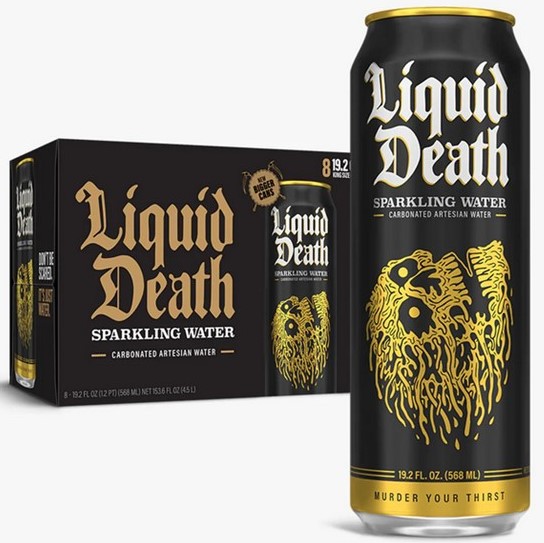 If you’re already familiar with Liquid Death, you know the joke’s on me. Liquid Death (“Murder Your Thirst!”) is nothing but drinking water, carefully sourced, packaged in a can covered with horror-movie graphics. The company believes their distinctive can means a) one less plastic bottle into landfill and b) one more serving of water into you (instead of something less healthy). Liquid Death also cans flavored sparkling waters and iced teas, and – no joke – invites you to sell your soul to the company. The company’s sales are no joke either – $130 million last year alone.
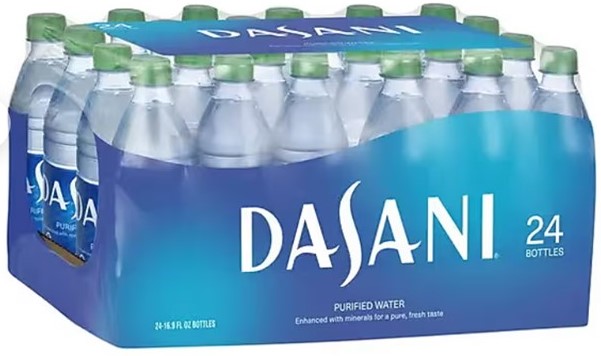 Liquid Death is one of countless examples of “packaged water” available to consumers these days. Since 2017, Americans are quaffing more bottled water than any other drink. 86% of us purchase water regularly, in addition to the H2O we drink from our faucets. Why? Because we’re waking up to the downsides of the sugar/chemical concoction known as the “soft drink”. We’re also subscribing to the belief we’re healthier if we drink more water. Finally, single/double/triple-serving containers appeal to us because we’ve already become so conditioned to them, thanks to… Starbucks.
 Here’s a story to prove the statistics hold water. At a volleyball tournament in Atlanta last weekend, I ventured to the nearby snack stand to buy a drink. The cashier invited me to fish around in his giant coolers for whatever I wanted. What I wanted was water, but all I could find were dozens of neglected bottles of soft drinks, “sports drinks”, and energy drinks. So I asked the cashier, “What, no water?”, to which he replied, “Oh, we sold out of the waters hours ago”.
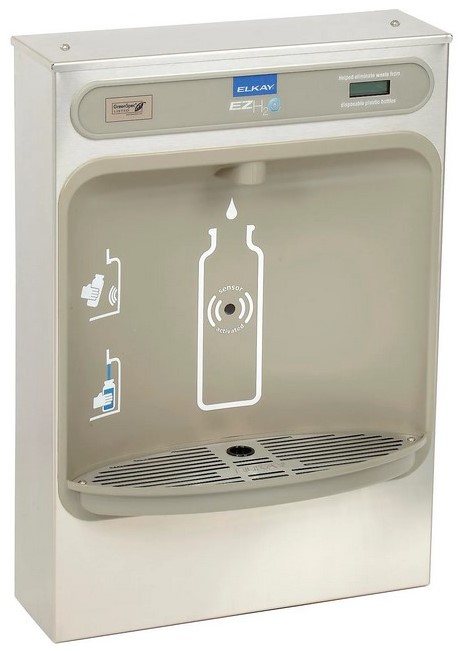
Then I went in search of a drinking fountain and couldn’t find one in the entire arena. Drinking fountains are quickly going the way of pay phones. In their places: dispensers designed to fill your personal bottle. I’m on board with this trend, especially because it reduces the use of plastic. But don’t forget your water bottle like I did or you’ll be forced to settle for one of those more colorful concoctions.
Lest you think otherwise, the bottled waters dominating the marketplace are brought to you by the same companies behind soft drinks. Accordingly, Dasani = Coca-Cola, Aquafina = PepsiCo, and Poland Spring = Nestlé. On the other hand, Arrowhead is only Arrowhead water, as is Evian’s natural spring variety (and whether “Evian” is intentionally “naive” spelled backwards is for you to decide).
 We’ve taken water one step further now. Into our personal water bottles, tumblers, and jugs we add “flavor enhancers”, designed to a) give us more of what we lack (ex. electrolytes) or b) encourage us to drink more water by adding flavor. Crystal Light and Gatorade set this tone years ago. Today we choose from a dizzying array of powders, drops, and tablets, all designed to make water more appealing. But if we’re thirsty, shouldn’t water be appealing enough just the way it is?
 A final sip of this subject. The average person has thirty-five “beverage occasions” a week. With each occasion you choose the container, contents, and quantity of whatever you’re going to drink. So even if your every day begins with a “Venti half-soy nonfat decaf latte” and ends with a fruit-forward, moderately dry Cabernet Sauvignon, you still have twenty-one other occasions for a tall drink of water. Liquid Death, anyone?
 Life In A Word