Let’s agree to disagree today (one of my favorite catchphrases). You see things one way while I see them another. Perspective, angle, viewpoint – choose your word – we all come to our conclusions on different roads. Which is ironic, because four of us came to Frank Lloyd Wright’s Fallingwater on the same road three weeks ago.
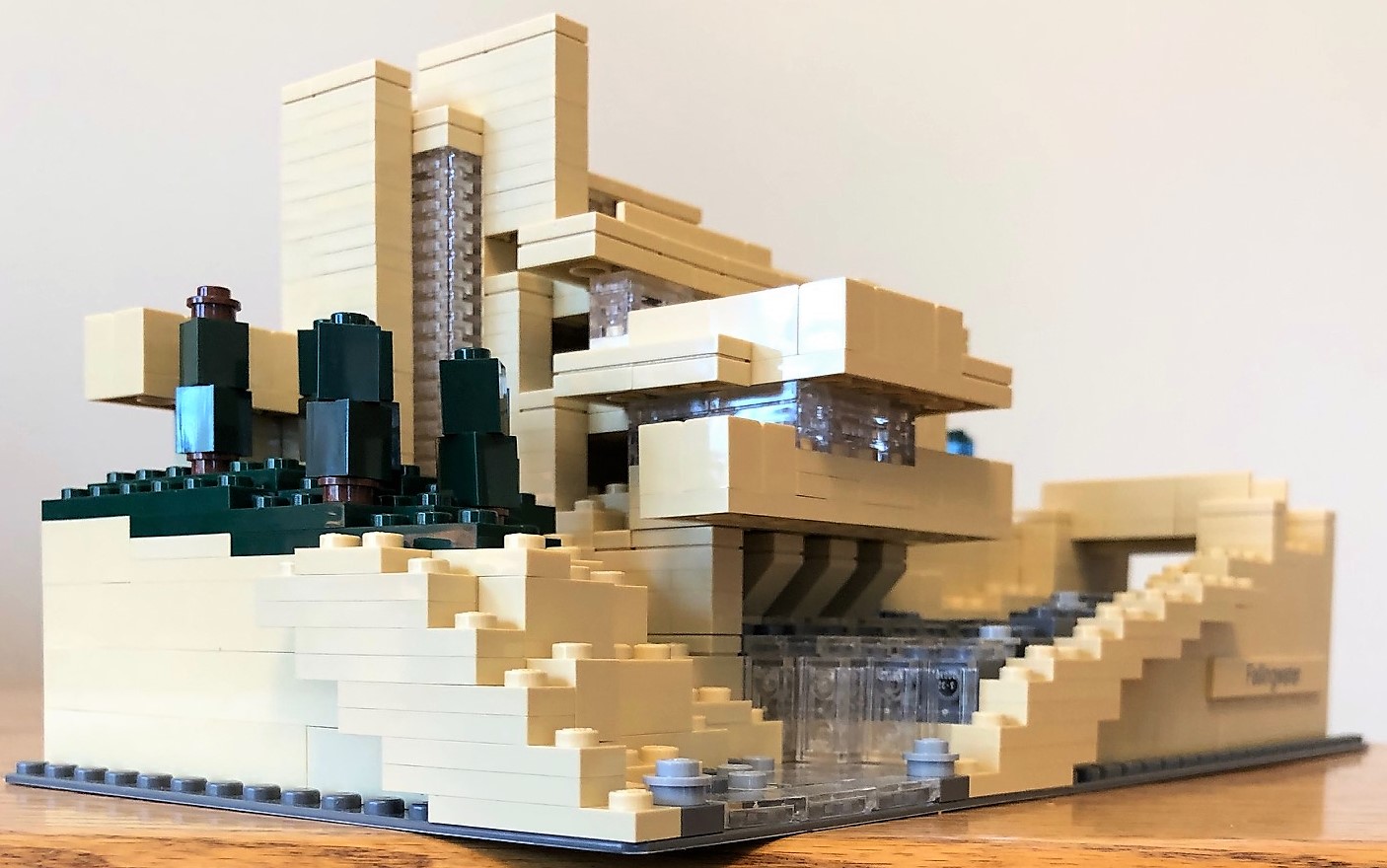
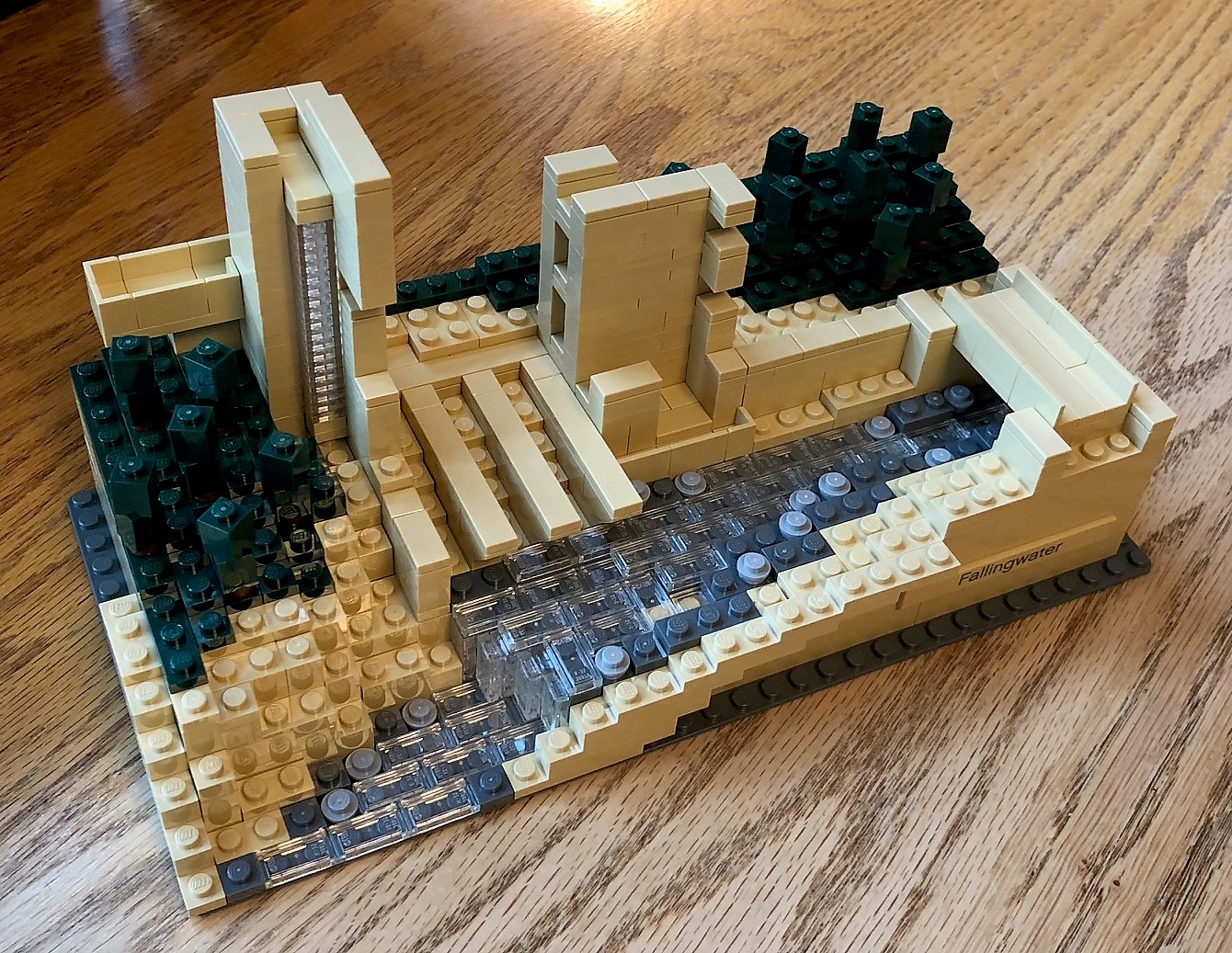
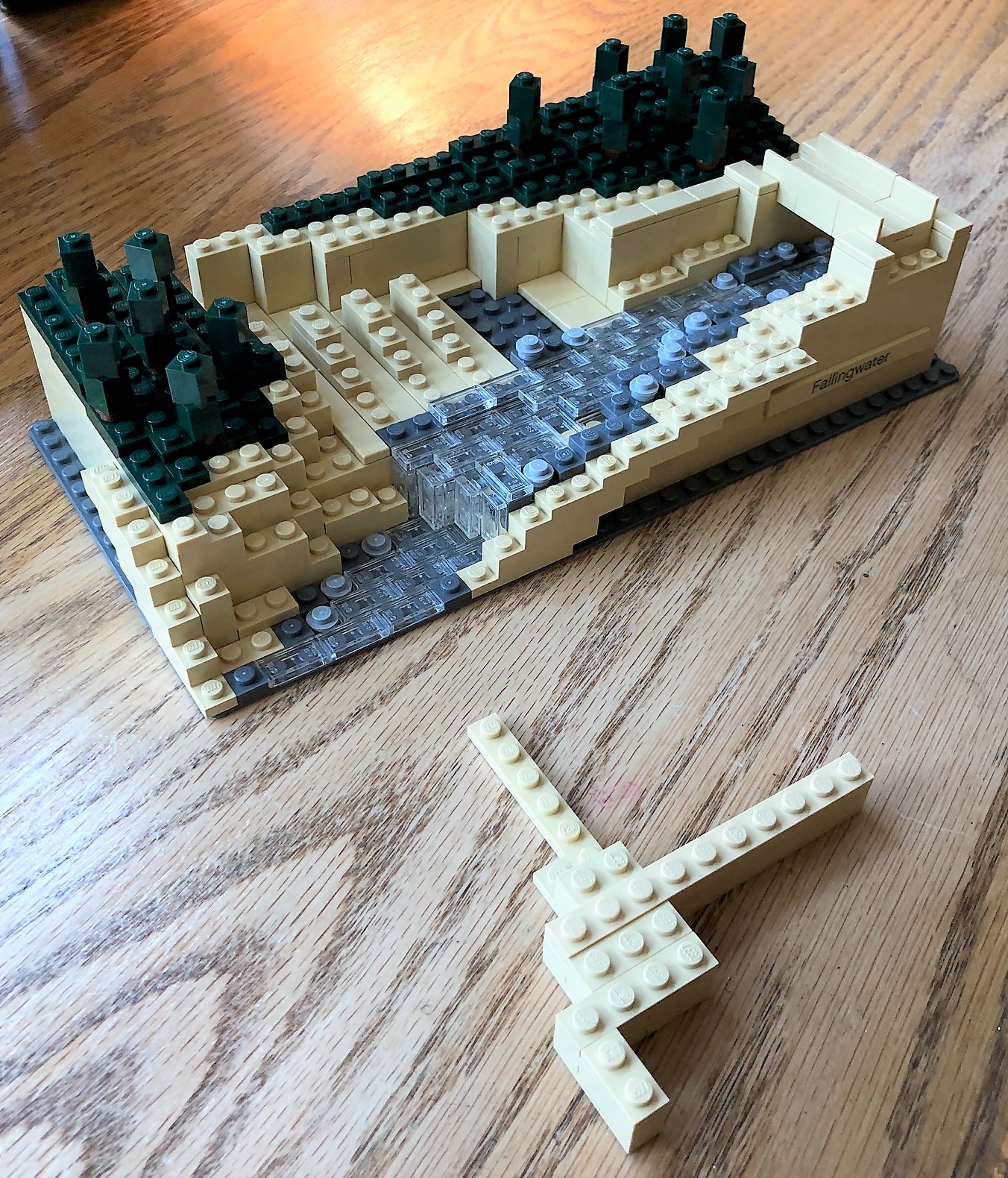
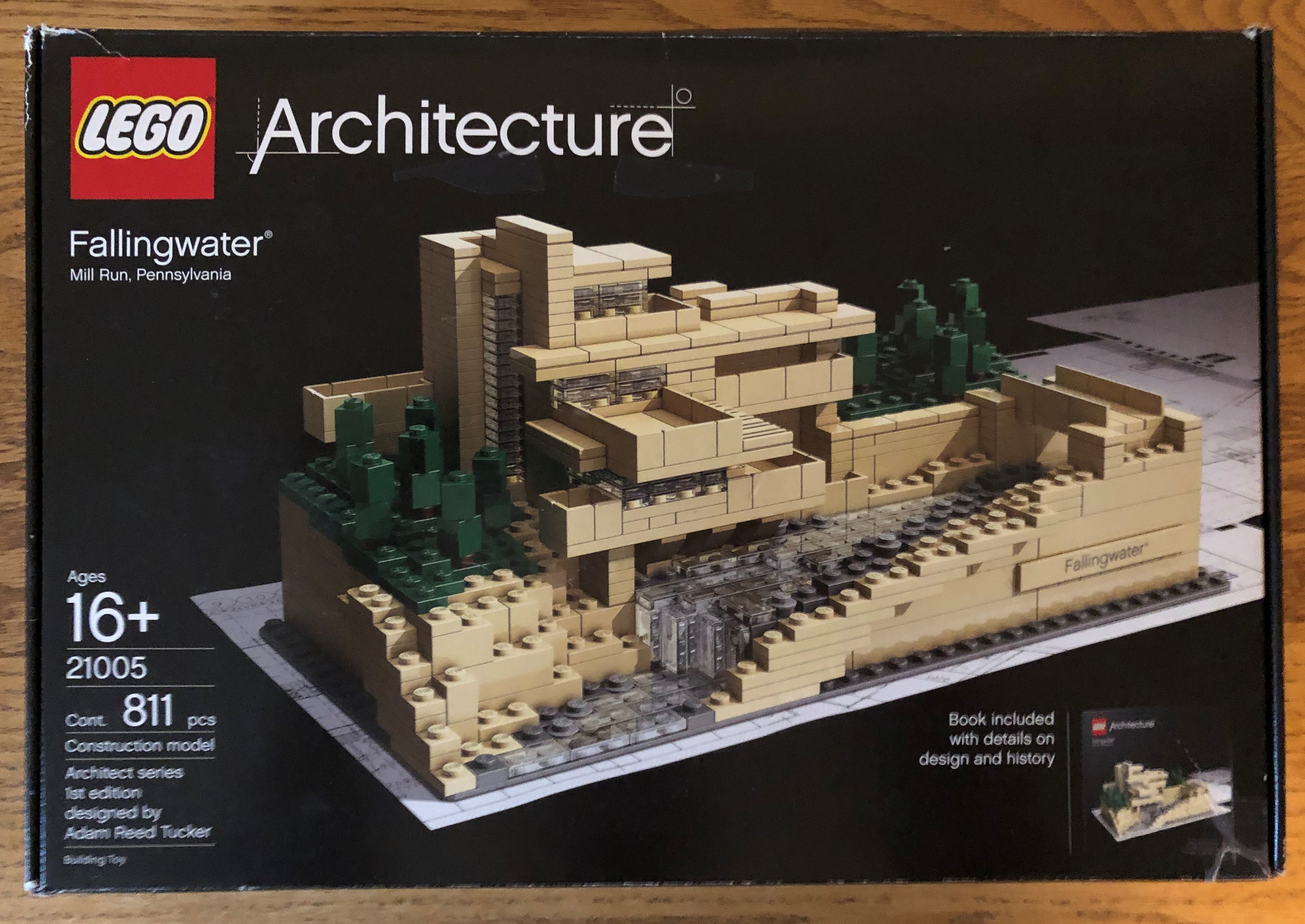
I blogged about Fallingwater in Perfect Harmony a couple of years ago. The post was meant to be a primer on what makes the house an iconic work of American architecture. At the time I was also building LEGO’s version, which is as close as I thought I’d ever get to the real thing. Today I can say I’ve checked an up close and personal visit off my bucket list.

Fair warning: there’s no convenient route to travel to Fallingwater, which shouldn’t surprise you about a house hidden in the forest. You’ll drive ninety minutes southeast of Pittsburgh on two-lane roads, some in desperate need of repair. And watch carefully for the driveway entry; it kind of pops up out of nowhere.
You won’t get to see Fallingwater without booking a reservation beforehand. Despite my dismay in last week’s post about required reservations in Rome they make a ton of sense with Fallingwater. It’s a small house after all, so it’d be overwhelming if visitors just showed up and walked in. We took the final tour on a Saturday and our guide said 600 others had already been through the house earlier in the day.

Thanks to the resources of the Frank Lloyd Wright Conservancy (which is still buying up property around Fallingwater), the experience begins before you ever see the house itself. The driveway wanders past a guard house to a modest parking lot. From there you walk to a beautiful Visitors Center nestled in the trees. A central outdoor seating area is surrounded by a small museum of Wright’s work, a cafe, and a gift shop that offers much more than shirts and postcards. Frankly, the Visitors Center is a nice little work of architecture all by itself.
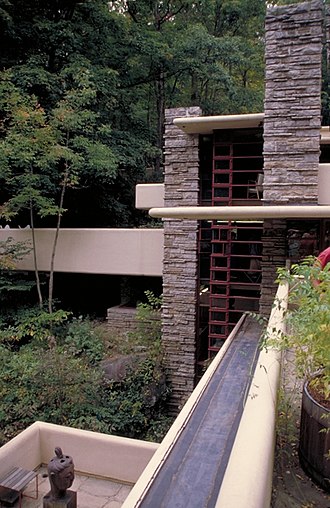
The walk to the house begins down a kind of woodsy nature trail, so you can see the rocks, trees, and other materials used to construct Fallingwater in their native forms. What impressed me most about the tour is how you never see the house until you’re practically at its front door, making for a dramatic reveal. Your walk descends through the canyon of Bear Run (the river over which Fallingwater is perched) until the house’s signature cantilevered forms emerge from the dense forest.
 As I described it in Perfect Harmony, Fallingwater looks like it was “constructed entirely offsite and dropped gently within the forest by pushing aside a few tree branches”. After seeing the house in person, I wouldn’t change a word of that statement. The design is a marvel, not only in how the indoor/outdoor spaces integrate with their natural surroundings, but also in how it was built as if floating over the waterfall below.
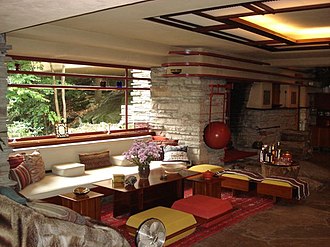
Enough with the fawning over Fallingwater, am I right? After the four of us took the tour we had a chance to process what we’d seen, and my wife’s and brother’s reactions were clear: it’s just a house. It’s not even a nice house, with its low ceilings, dark spaces, and anything-but-cozy use of rock, concrete, and glass. Fallingwater is hard to get to, and it’s in the middle of nowhere. And with its hundredth birthday not far off, everything about the house has a decidedly dated feel.
 I did my best to explain why I love Fallingwater. My sister-in-law, who appreciates everything about the arts, understood the significance of the house. She “got” what Frank Lloyd Wright was conveying in the design, and allowed the sacrifice of comfortable living for the sake of the indoor-outdoor interplay. She probably took in the house the way she would a painting at the Louvre. My wife and my brother, not so much. For them the ninety minute tour was probably sixty minutes too long.
Fallingwater promotes the thought: “one person’s junk is another’s treasure”. My treasure is architecture (so much so I studied it in college). Yours is probably something entirely different. It fascinates me how my brother spent years and years of research, consulting, and money to restore a 1960s vintage Ferrari in his back garage. To me, cars get you from Point A to Point B; a mere convenience. My brother could spend hours explaining why his Ferrari goes worlds beyond that statement.
 Still lingering on my bucket list is a visit to Paris, where among the city’s many wonders stands the Eiffel Tower. I want to see this engineering/architectural masterpiece from far and near, and of course, ascend it’s many levels to fully experience the structure itself. For now however, I’ll have to settle for building LEGO’s version. As with Fallingwater, we can all agree to disagree. The Eiffel is (not) just a tower.
Some content sourced from Wikipedia, “the free encyclopedia”.


























 Life In A Word