Once in a Red Moon

I try to keep my blog topics timely, inspired by the come-hither headlines of my news feed, shouting, Click me! or No, click ME!  But it’s not often – once in a blue moon, in fact – where I talk about what happened last week and what happens next week inside of the same topic. The calendar positions us perfectly today to do just that. So let’s talk rubies.

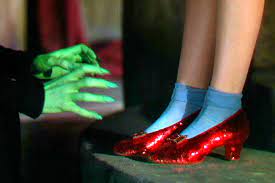
My first introduction to the four “precious gems” was probably when I started going to the movies.  Diamonds Are Forever was as much about the title jewels as it was about James Bond.  Romancing the Stone – the first movie my wife and I ever saw together – was a swashbuckling pursuit of a giant emerald in South America.  The “Heart of the Ocean” pendant from Titanic was the biggest sapphire I’d ever seen (until someone reminded me it was actually a blue diamond).  And rubies, of course, became something magical through Dorothy’s red slippers in The Wizard of Oz.
The “Star of Fura” ruby

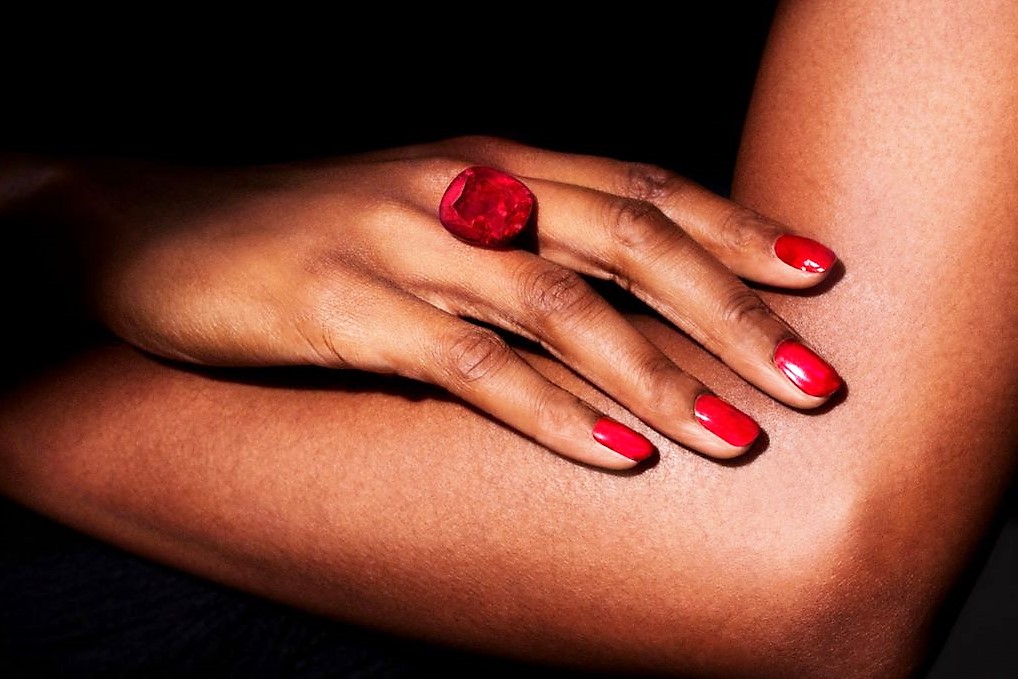
Last week, the largest ruby ever mined – 55.22 carats – came to the auction block at Sotheby’s.  For a cool $35 million it could’ve been yours.  Named the Estrela de Fura – Portuguese for the Mozambique mine where it was discovered – the “Star of Fura” was twice as big in its native form a year ago, then cut down and polished to the glistening red rock you see here.

Rubies aren’t made to be broken but world records are, and this one was shattered.  The previous largest ruby, known as  The Sunrise, was “only” half as big (25.59 carats).  To me, The Sunrise looks about as big as a red M&M.  The Estrela de Fura looks like a strawberry.  The most expensive strawberry in the world, that is.

Green?  Make that red!

If rubies are your thing, keep an eye on Mozambique.  Ruby mining is relatively new to this country in the south of Africa, with the first significant discovery of the gems made in 2009.  Less than fifteen years later we have the record-setting Estrela de Fura.  Surely an even bigger ruby can’t be far behind.

Moving on.  This week begins the month of July (and the second half of 2023) which means we have several reasons to see red.  America’s Independence Day includes a lot of red, whether the flag or the fireworks.  Sunbathers will see the color on their skin more often than they’d care to.  Strawberries are ripe and in abundance.  The month’s zodiac sign is cancer (the crab) and crabs are often red.  And July’s birthstone is, of course, the ruby.

Now’s a good time for some ruby trivia, the fun facts you most likely don’t already know.  The first one is my favorite for your next social gathering:

  1. Rubies are actually sapphires by definition (all mined from  the same crystalline form of aluminum oxide known as “corundum”).  In other words, rubies are simply rarer, red-colored sapphires.
    Don’t touch!
  2. Rubies have symbolized power and protection throughout human history, as with decorated warriors in battle (or slippered Dorothy in the Land of Oz).
    “The Hope”
  3. You’ve heard of the (blue) Hope Diamond but how about the (red) Hope Ruby?  The Hope is 32 carats, cradled in a ring and highlighted with just a few diamonds.  Same name, yes, but different gem, color, and setting.
  4. The most desirable (read: costly) rubies have a hint of blue in them, which contributes to the rich deep color known as “pigeon’s blood” red.
  5. A 10-carat ruby is typically more expensive than a comparably sized diamond.  Why?  Supply (and demand).  You just don’t find as many large rubies as you do diamonds.
Red sapphires, aka “rubies”

So there you have it: everything you need to know about rubies just in time for the month we celebrate them.  I’d be remiss (translation: “in trouble”) if I didn’t mention my wife’s birthday, which is next week as well.  Yes, her birthstone is the ruby, and “darn it all” I had the perfect gift idea if I’d only known about last week’s Estrela de Fura auction sooner.  These opportunities come along but once in a red moon.  Sorry honey, I need to be a little more on the ball.  Guess I’ll hang onto our $35M for next year’s birthday present.

Some content sourced from the CNN.com article, “Largest ruby ever to come to auction sells…”, and Wikipedia, “the free encyclopedia”.

Emerald Greens

In the final lines of our national anthem, Americans sing, “O’er the land of the free, and the home of the brave”.  Those labels are a little dicey today.  Are we really free?  Are we really brave?  It’s a debate best left to more intellectual bloggers. I’m simply looking for less controversial words to describe the United States.  Take Ireland, for example.  The little republic is nicknamed “The Emerald Isle”.  Of this, there can be no doubt.  Before your flight even touches down, the window seat view is nothing but endless rolling green hills.  And not just any green.

See what I did there?  Inside of a single paragraph I distanced myself from heavy topics like freedom and bravery, and now I’m focused on the color green.  Bravo, Dave! Now then, let’s continue.

“The Emerald Isle”

Emeralds have always been my favorite of the precious gems.  In the jewelry shop it’s hard to ignore diamonds (because they’re everywhere), yet somewhere in the glass cases you’ll find the more colorful stones. Blood-red rubies. Royal blue sapphires. Modest little garnets (my birthstone).  And green, green emeralds.  I’m drawn to emeralds because green is my favorite color.  On that note, do you realize your favorite color never changes?  Nobody says, “Well, I used to like purple but now my favorite color is orange”.  You can move to another country, switch up your career, or overhaul your wardrobe, but your favorite color is a constant.

I digress (sorry). I have emeralds on the brain for good reason.  My wife & I just celebrated thirty-five years of marriage (thank you very much), and she hinted emeralds might be a nice gift.  So I paid a visit to my jeweler.  I told her I was looking for something understated, maybe earrings and a necklace.  She showed me a pretty set, where I thought my only decision was the shape of the stones (Round? Square? Pear?).  But then she threw me a curve when she said, “Would you prefer natural or lab-created?” Huh? Why would I buy my wife anything other than the real thing?

“Natural”
“Lab-created”

Here’s the rub of the green.  Lab-created gems are the real thing.  They’re “chemically, physically, and optically identical to their natural counterparts.” So why choose one over the other?  Cost. Lab-created gems can be significantly less expensive, especially as the number of carats grows.  In other words, easy choice, right?  Wrong.  The lab-created gems – at least in my jewelry shop – were small enough to be the same price as the naturals.  Instead, my decision came down to color.

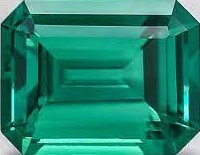
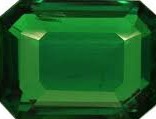
Was I tempted by the blue-green clarity of the lab-created?  Absolutely.  Did I choose them?  Absolutely not.  I kept coming back to the emeralds in my brain.  Call it natural green, kelly green, or Irish green, but I prefer the green on the left.  And I think my wife did too.

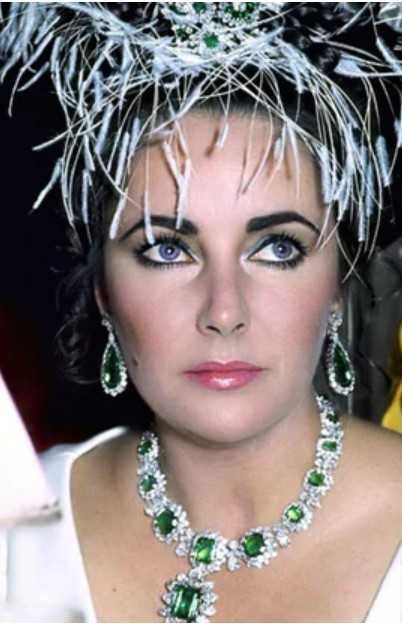
Liz is wearing $6.5M worth of emeralds and diamonds

I’d like to share some trivia on today’s topic but – warning – it’s a little pedestrian.  Emeralds are one of the twelve birthstones (conveniently, the month of May).  Emeralds come from the mineral Beryl (as do aquamarines).  Their rarity makes them “precious”, alongside diamonds, rubies, and sapphires.  They’re delicate, susceptible to chipping.  Finally, emeralds are considered, among other things, a symbol of rebirth.

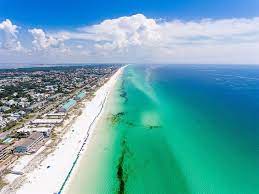
A section of the Florida Panhandle is called the Emerald Coast for the area’s clear, green water.  The Wizard of Oz lived in the Emerald City for reasons only Oz fanatics can explain.  And little Ireland, deservedly, earns its nickname for those rolling green hills, as well as Irish jewelry, made primarily from green gems (if not all emeralds).

Florida’s Emerald Coast

I saved one more fact for last, mostly to make points with my wife.  After I bought her the earrings and necklace, I said to my jeweler, “By the way, it’s silver for the 25th anniversary and gold for the 50th, but what about the 35th?” She replied, “Emerald” (even though several Google searches suggest jade).  Whoa. I didn’t plan on that coincidence but I’ll certainly take the credit.  After all, my wife is one-quarter Irish. My daughter’s name is Kelly. And my favorite color is green. How could it be anything but emeralds?

Some content sourced from Wikipedia, “the free encyclopedia”.
——————–

Lego Grand Piano – Update #17

(Read about how this project got started in Let’s Make Music!)

Today’s build demanded more of an overhead view so you can see the difference between last week and this week. Bag #17 – of 21 bags of pieces – earned me the row of seventeen black caps you see in the second photo (on top of the piano wires), as well as the wide stand for sheet music, just behind the keyboard cover.

Last week

The piano is a remarkable instrument.  When you press down on a key, you’re actually pushing a “hammer” up against the underside of a piano wire, creating a musical sound (or “note”).  When you release the key, a black “damper” (one of the seventeen I just built) drops down on the top of the wire, silencing the sound.  Add in the functions of the three pedals at the base and you should consider the piano a musical mechanical marvel.

Running Build Time: 12.5 hours.  Musical accompaniment: Rimsky-Korsakov’s Flight of the Bumblebee. Leftover pieces: 2

This week

Conductor’s Note: The Bumblebee is a brief orchestral interlude of an opera, composed well over a hundred years ago. Nikolai Rimsky-Korsakov’s furious little piece, when played on the violin, really does sound like a buzzing bee.  It’s only 84 seconds in length, but you find yourself catching your breath after you’ve heard it.  It’s even more remarkable when played on the piano, the fingers almost a blur.  Have a listen to the audio file here. I’m sure you’ll recognize the tune from some of today’s movies and cartoons.