
If you take a stroll down your supermarket’s greeting card aisle today, you’ll find Valentine’s Day cards long gone and Easter cards in full force. It’s only the start of Lent, yet the aisle is bursting bright with pink bunnies, yellow chicks, and painted eggs. I won’t be sending Easter cards this year (haven’t done so since my kids were little) but I will give up something for Lent. I’m thinking “foods with added sugar”.
 I know what you’re thinking. We live in an age where giving up tempting foods isn’t as difficult as it used to be. Whole foods are so available we have an entire chain of stores called “Whole Foods”. Sugar has so many alternatives I should revise my sacrifice to “foods with added sweeteners“. Even processed foods have matured to where “healthy snacks” are pleasing to the palate. I have options.
Doesn’t matter. Dropping added sugar will still be a challenge. My desk drawer (second one down on the left if you’d like to help yourself) is replete with black and red licorice, and some form of chocolate, be it a bar, a cookie, or those little baking morsels straight out of the bag. Giving up licorice for forty-six days and nights won’t be a stretch, but NO chocolate for all of March and half of April sounds like an eternity. What can I say? Everyone has a weakness and mine is chocolate. It speaks to me from my closed drawer with “come hither” seductiveness.

I’ll bet you’ll find thousands of blog posts about chocolate with a quick search. I’ll bet you’ll find entire blogs about the sweet stuff. I just checked my blog’s history and unearthed a dozen takes on chocolate (including this one from a year ago talking about the things people give up for Lent. Chocolate tops the list). So let’s make it a baker’s dozen because I invented a chocolate challenge. I call it the “85 Percent Ascent”.
 Let me explain. There was a time when I liked my coffee sweeter than a Starbucks Sugar Cookie Frappuccino. Together with artificial creamer I’d dump in sugar cubes or pour the white stuff straight from whatever you call those pourable glass containers. That was a long, long time ago. At some point (probably, er definitely my college year abroad in Italy) I realized coffee tasted pretty good all by itself. I started to wonder why you’d “taint” coffee by adding the other stuff. But let’s be real: it’s not like you go from Frappuccino to Americano cold turkey. You’ve got to ease into the one extreme from the other. Slowly I backed down the sugar (like years-slowly). Slowly I backed down the creamer. One day I eliminated the sugar altogether. Today, I still go with a tablespoon of (almond-coconut non-dairy no-sugar) “creamer” but otherwise it’s straight dark-roasted coffee for me. I even fancy an espresso shot every now and then.
 It’s a good analogy for my Percent Ascent challenge. 85% cocoa content is seriously dark chocolate (meaning not sweet at all). If your go-to is a Hershey’s Bar or a Milky Way you’re down below 50%. And moving from 50% to 85% is a serious ascent with chocolate. It’s like standing on top of Kilimanjaro and seeing how much further you have to go to summit Everest.
A recent article on chocolate lists nine criteria for the healthiest and best-tasting bars in the world, including:
- The first ingredient must be cocoa, cocoa mass, or chocolate liquor (not sugar or milk chocolate). In other words, put down the Nestle’s Crunch; it’s not even close.
- Ingredients must include real cocoa butter instead of (cheaper) vegetable oils. 95% of America’s chocolate manufacturers just dropped out of the race.
- The cocoa must come from an “Equator country” like Ivory Coast, Ghana, or Peru.
- The bar should be labeled “Organic” and/or “Non-GMO”.
- Bonus points: should be fairly traded and ethically harvested.
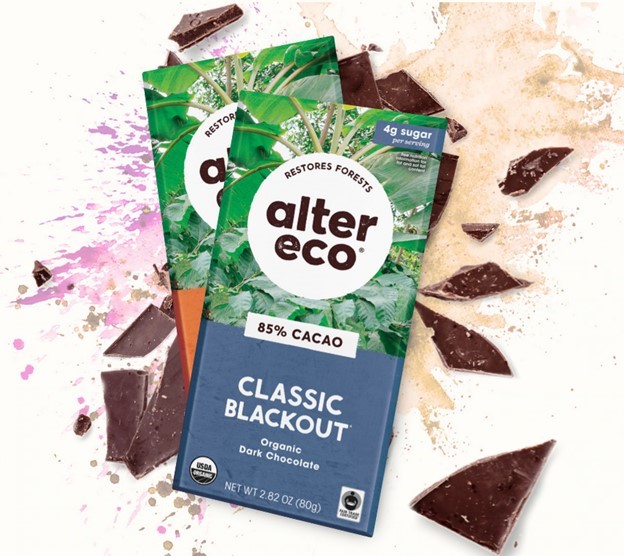 As if the search isn’t already difficult, NOW you have to go with >85% cocoa content. Not so hard to find actually, especially if you go online. I purchased a bar from five different manufacturers meeting every one of the above criteria, including Green & Black’s from the UK, and Theo from Seattle. All five bars fall between 85% and 90% cocoa content (and yes, 100% is an option). All five use scary words like “strong”, “super black”, and “extreme” to describe their product. Not gonna lie; I’m a little nervous to take a bite.
 As bitter as these chocolates are sure to be, I still have to give them up for Lent. Every one of them has “added sugar” (albeit way down on the ingredients list). So let’s just agree – I’m not going to break my Lenten covenant on a food that doesn’t even taste sweet. Think I’ll opt for a piece of fruit instead. I just hope it doesn’t come from the Garden of Eden.
Some content sourced from the “Experience Life” / Life Time article, “How to Find the Healthiest Dark Chocolate”.
——————–
Lego Grand Piano – Update #7
(Read about how this project got started in Let’s Make Music!)

I worked outside of the box again this week. Bag #7 – of 21 bags of pieces – assembled a second layer on top of the section I can’t yet attach to the bigger section behind it. From “Last week” to “This week”, you can see I worked almost entirely in black, which suggests I’m creating more of the outside of the piano.
Despite the majestic wash of Debussy’s “La Mer”, Bag #7 was completed in less than thirty minutes, with only one heart-pounding moment where I thought I’d left out pieces in the Bag #6 build. Thank goodness I was wrong. Still on track.
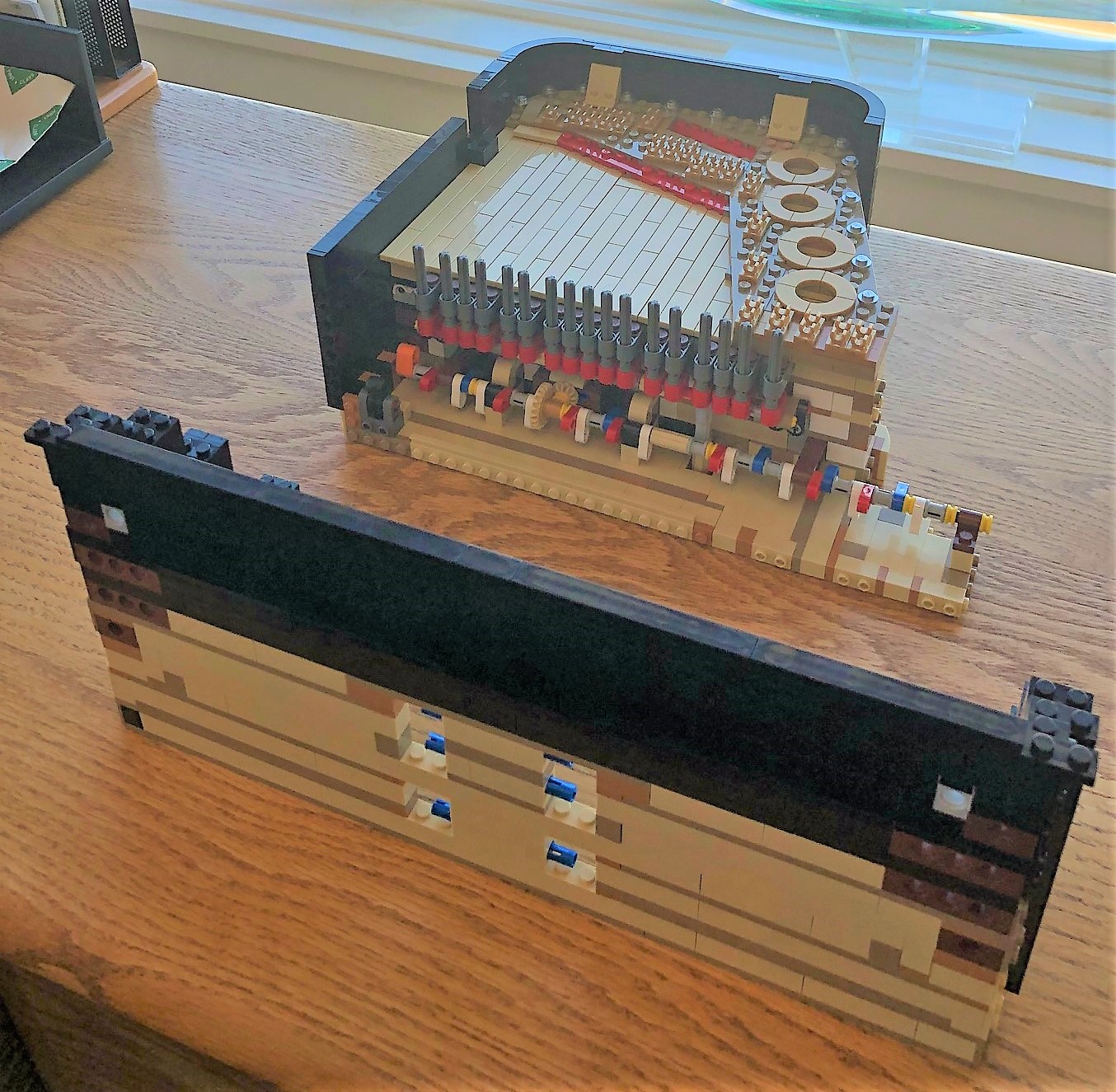
Running Build Time: 6.0 hours. Musical accompaniment: Debussy’s La Mer and Prélude à l’aprés-midi d’un Faune (try and say that ten times fast). Leftover pieces: One (clearly an extra, whew!)
Conductor’s Note: Today’s build wasn’t very exciting, so it helped to have Debussy booming in the background. However, as I turned the page of Mr. Instruction Manual in anticipation of Bag #8, I saw pictures of… long, thin, reed-like pieces. Holy buckets, Maestro, it’s time to make this piano a stringed instrument!



 Life In A Word