
In the camping days of my youth, I’d get a kick out of dropping little sticks into the water and watching them float lazily downstream. I’d imagine them as little boats, navigating uncharted waters on their way to some exotic destination. I’d see how far those sticks could go, sometimes removing obstructions to create clear channels. Perhaps it’s no surprise then, all these years later, I’m drawn to the adventure of Viking River Cruises.
 Maybe you’ve seen their commercials. Viking River Cruises advertise by showing you one of their elegant white ships cruising slowly down a pristine river, with dramatic terrain sloping up and away from the shorelines. Viking “longships” are low, flat, and narrow; a wholly refined version of my stick in the stream. Take your pick: the Nile in Egypt, the Rhine in Germany, or the Mississippi in America, to name a few. Viking has you covered when it comes to cruising the world’s rivers.
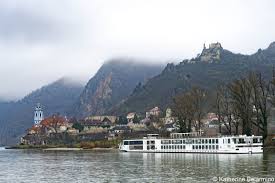 My wife and I just completed our second Viking cruise (well, “completed” doesn’t really cut it but I’ll get to that in a moment). Our first, in 2019, down the Rhine River from the Netherlands through Germany to Switzerland, was so satisfying we were ready to sign up for another as soon as we were done. Then the world went a little off the rails so we had to wait until the waters calmed again, so to speak. A week ago then, we returned from Viking’s Danube River cruise; Hungary through Austria to Germany.
There are at least two reasons why Viking River Cruises don’t appeal to those who seek a vacation on the water. First, you’ll find little more to do on the ship besides eat and sleep. Yes, you’ll find live music in the lounge and an occasional cooking demonstration by the head chef, but for the most part a Viking ship is a floating hotel. Second, the daily excursions off the boat are fast-paced guided looks at whatever is worth seeing, with only a little free time at the end for shopping and such. Best to bring a comfortable pair of walking shoes to keep up.
 Those same reasons are why Viking cruises do appeal to us. We’ve been on one of those floating-city ocean cruises before (Carnival – ick), and everything from the buffet to the entertainment felt cheap and mass-produced. A Viking river ship caters to only two hundred passengers, in rooms as nice as most anywhere we’ve stayed on shore. As for the excursions, the tour guides are carefully chosen for their knowledge and personalities, adding so much more to the tour than if you were to go it alone. Yes, you’re only getting a “taste” of each locale, but this means you see a lot in eight days of cruising, leaving you to choose if and where you might come back to for more in-depth looks.
Eight days is plenty of time to be on the river (at least in our book) but Viking offers several options twice as long, including a fifteen-day Grand European Tour covering the Rhine and the Danube. You can also add “land-based” days to either end of a cruise, exploring the cities from where you embark and disembark. Finally, Viking tailors its menus (and I do mean menus, not buffets) to the cuisine of the region you travel through. From our experience, the food is excellent.

If this sounds like a ringing endorsement for a Viking River Cruise, let me silence that bell for just a moment. Perhaps the only thing Viking can’t control is the water itself. Unbeknownst to most Americans, the Danube River flooded its banks earlier this month, forcing the powers that be (and who exactly are those powers?) to “close” the river. Residents in destinations downriver found themselves wading through four feet of water. River ships couldn’t fit under low-flying bridges, let alone dock at the shores. As a result, our cruise came to a premature halt in Vienna, Austria, with the remaining itinerary carried out with busses and hotels.
 I’ll take the next several posts to dive deeper into our “Romantic Danube” Viking cruise. We missed out on the time we expected on the river, but the destinations were no less impressive. Budapest is a heck of an interesting city. Gottweig Abbey (outside the Austrian town of Krems) is keeping apricots relevant. So stick with me the next few weeks and you’ll find out more about what the Danube has to offer. After all, river cruising is a whole lot more adventurous than floating a stick down a stream.



 Life In A Word