Following the Leader

Technology birthed the self-guided tour. More and more often, an admission ticket to sights worth seeing grants you a pair of headphones and a wearable device instead of a name-tagged human to show-and-tell you the way.  Self-guided touring allows for a more convenient and less distracted experience.  But it also removes the storyteller, and that, my friends, makes all the difference between a memorable tour and a forgettable one.

Budapest, Hungary

Viking River Cruises, one of which we completed on the Danube River in early June (see Going With the Flow), provide a plethora of tour guide experiences.  On any given day of the cruise, you disembark to one or two “land-based” locales, in the (sometimes) capable hands of a personal tour guide.  Viking contracts with local agencies to provide these guides for small groups of its travelers.  For example, having a Hungarian show you the sights of downtown Budapest is so much more satisfying than hearing someone drone on about it on a headset.  Sharing a beer with a German on a tasting tour is almost like being invited into his house.

Nuremberg, Germany

If I ask you to share one of your own memories involving a tour guide, you’ll probably recall a particularly good one.  Maybe you’ll even remember a bad one.  Regardless, your stories would support my theory: a top-notch guide can make the what or the where of the tour almost irrelevant.  The guide himself or herself can make the difference between a memorable experience and a forgettable one.

Consider, I still remember a tour of a southern plantation with my family from almost fifty years ago.  Why?  Because the tour guide presented herself in a way that made me think we were being welcomed into her own house.  She also had this soft, syrupy unforgettable Southern accent that had me hanging on her every word.  Do I remember anything about the plantation?  No, but I sure remember the tour guide.

Szentendre, Hungary

So it was on the Viking cruise.  We had good guides and we had outstanding ones.  The very best of the dozen or so – ironically – was a young woman working on contract with Viking for the first time, as a stand-in for our scheduled guide in Munich.  She was, in every respect, delightful.  She started our tour with a greeting and a smile, then a little conversation and questions to break the ice.  As she led us from one sight to another, she spoke with an energy and pride in her city that can only be described as vivacious.  By the end of the tour, as the saying goes, she had us feeding out of her hand.  I was so enthralled I forgot to take a picture of her.

But we also had a lesser guide a few days earlier in Vienna, who I’d describe as a speed-walking encyclopedia.  He led us on a many-thousand-steps rush through the sights, filling our heads with facts and figure as he went, in a pretty thick Austrian accent.  He never smiled and I don’t think we ever stopped walking.  Can’t remember much about that tour (or him for that matter) because it was a rush-rush blurry overload of the senses.  I need to go back to Vienna again someday so I can (literally) stop and smell their famous roses.
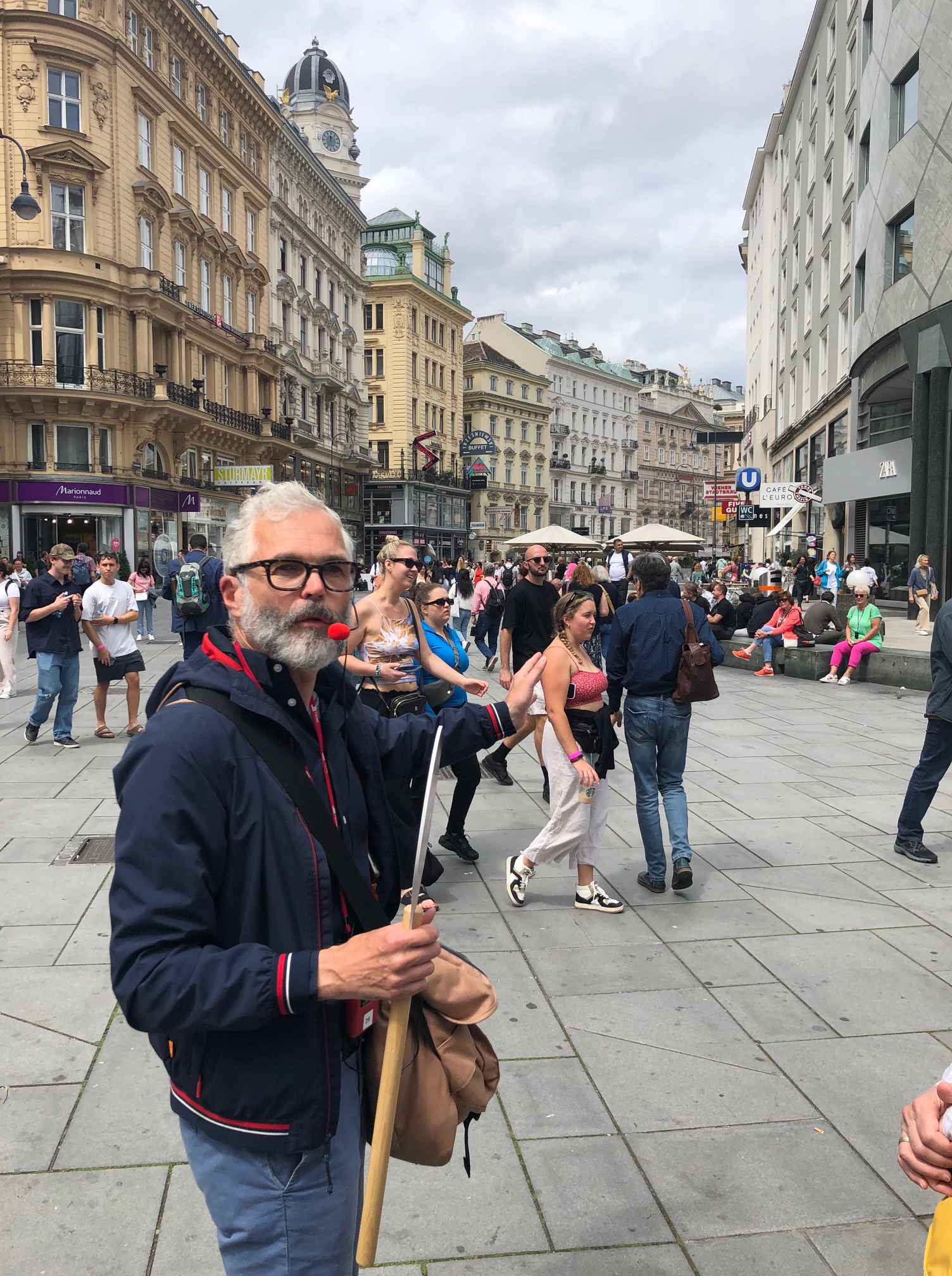
Vienna, Austra

Courtesy of Viking and those many tours near the Danube, I present to you, therefore, the attributes of the consummate tour guide:

  1. A local, familiar with the city or sight at hand through regular exposure.
  2. A personality; warm, friendly, energetic, and engaging.
  3. An overflowing font of knowledge on his/her subject, able to answer just about any question thrown their way.
  4. A storyteller, able to weave anecdotes at will into the facts and figures to keep it interesting.
  5. In tune with his/her audience, making adjustments to the tour as necessary (ex. “Am I going too fast for you?”)

If you take enough sightseeing tours, you’ll know whether your guide is missing one or more of the above within the first five minutes.  You’ll also know whether the next hour or two will fly by or drag on for all eternity.  If your guide checks all five boxes, consider yourself lucky.  Most of us aren’t cut out for the job (myself included), whether we like to think we are or not.  It takes a special set of skills to be the leader everybody wants to follow.

Goulash by the Gallon

My mother used to make Beef Stroganoff when I was a kid; an easy one-pot concoction to satisfy a hungry family of seven. Mom’s recipe was a far cry from the elegant Russian original of beef strips in a sauce of sour cream and mustard. Hers started with Campbell’s Cream of Mushroom soup, added in whatever leftover beef and spices were found in the kitchen, and finished with soft egg noodles, all mixed together. It wasn’t my favorite dish, but as I recently discovered it’s a whole lot more satisfying than Hungarian Goulash.

This isn’t “Beef Stroganoff”, Dave

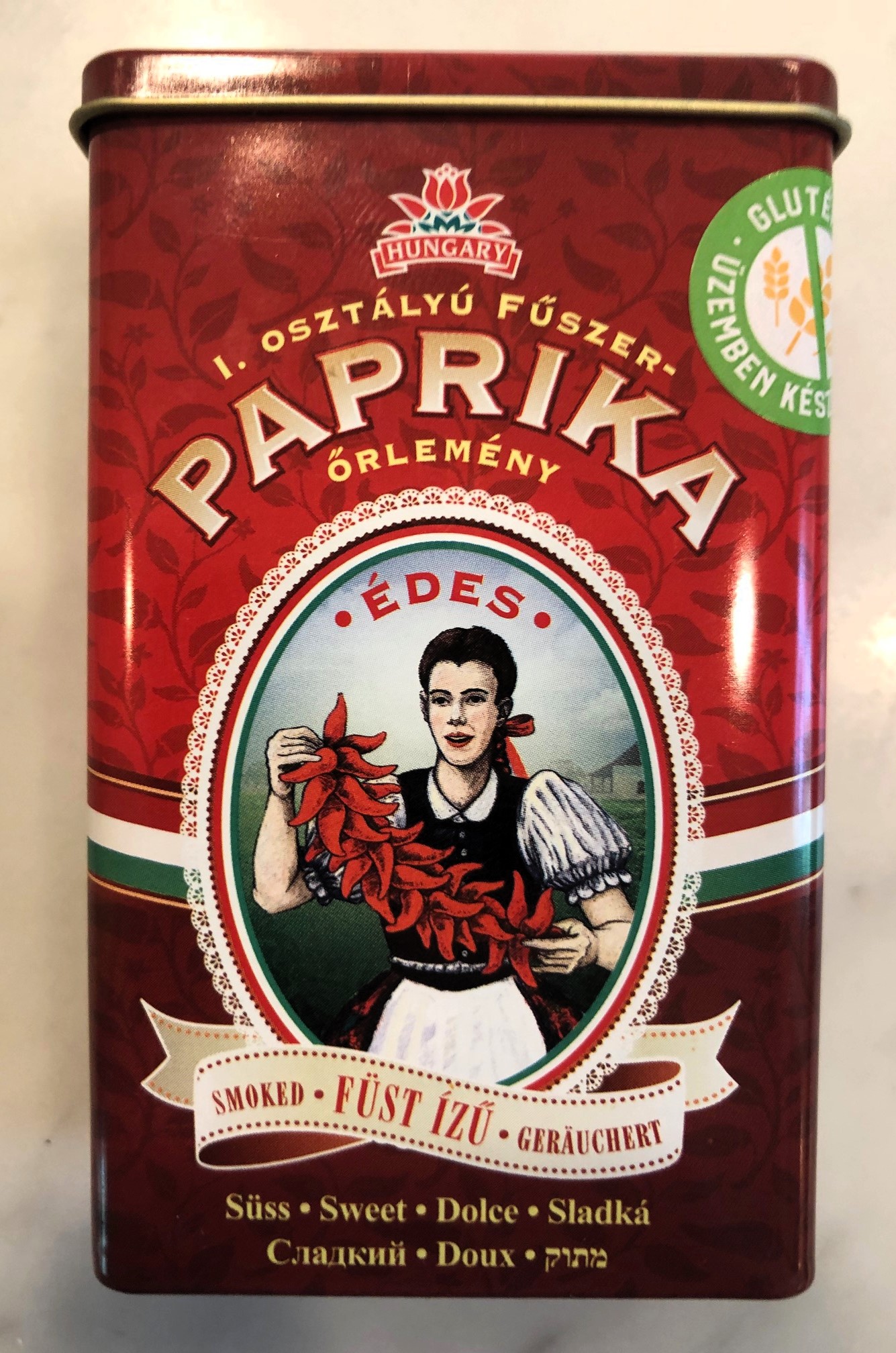
A month ago I didn’t know the first thing about Hungarian Goulash.  Now I know way too much about it.  That’s what happens when you visit Budapest.  Everything is about goulash.  And paprika.  Even goulash itself is about paprika.  But I’m getting ahead of myself here (kind of like I did with the last few blog posts, which were further down the Danube).

Before our plane landed in Hungary for the start of our Viking river cruise, I imagined goulash as a more traditional version of Mom’s Beef Stroganoff.  I expected a hearty casserole of meat, vegetables, and noodles, drenched in a rich, creamy sauce.  As it turns out, goulash isn’t even a poor man’s version of Stroganoff.  No “spoiler alert” here because you’re not missing much.  Goulash is plain ol’ broth-based soup.

Check out the list of ingredients here.  Besides the ground caraway (ground “carraway”?), the only item standing out to me is the paprika, and only because paprika is synonymous with Hungary.  You find the peppery spice everywhere (and in everything) over there, in grades of sweet, mild, pungent, and strong.  Choose wisely; a small spoonful of the “strong” knocks your socks off even if you like it hot.

On a guided walking tour of Budapest (which included an hour inside the exquisite Parliament Building), we stopped for lunch in a basement restaurant for our first sampling of goulash.  The soup was served family-style with bread so we all ladled a helping.  In short, Hungarian Goulash didn’t “have me at hello”.  I was underwhelmed from the get-go.  I looked around the table at our fellow travelers and noticed the same reaction.  We struggled to come up with something distinctive or even complimentary about our meal.

Pálinka shots

Later on, we ventured into the countryside for a “Hungarian Folklore Dinner”.  As soon as we stepped off the bus, the place practically screamed “tourist trap”.  They greet you at the door with a shot or two of pálinka (fruit brandy), no doubt to dull the senses for what lies ahead the rest of the night.  Then they seat you at long picnic tables with people who look like, well, travelers from all of the other Danube river boats.  The gypsy folk dancing was impressive – I’ll grant them that – but the cauldron of goulash set unceremoniously in the center of the table was no more tasty than the helping we had at lunch.

Our goulash guide

The next day, we took another trip into the countryside for a walk through the several acres of an “open-air museum”, an interesting collection of buildings and settings from Hungary’s storied history.  The tour included lunch (hold tight, I know what you’re thinking), but even before lunch we stopped at an outside kitchen for a “special treat” – a demonstration on how to make goulash! (You’ll see I earned a diploma for my efforts.)  Then we were hustled into a nearby dining room for our third helping of goulash in twenty-four hours.  Part of the restaurant was already set up for a wedding reception later that afternoon.  Wonder what they were having for dinner…

Lest you dismiss Budapest over the goulash that seems to be oozing out of the city walls, let me set the menu, er, record straight.  It’s a beautiful city, whether you choose to tour the Buda or the Pest side of the Danube River.  The buildings are illuminated at night, the same way you’ll see Paris during the Summer Olympics in two weeks.  And Hungary’s history is adventurous and remarkable, with many more chapters than you’ll find in America’s.  But sorry comrades; the goulash (and the paprika) can only be described as superfluous.

One of the highlights of a Viking river cruise is the nightly dinner menu.  In addition to standing entrees, Viking chefs design “sampling menus” made up of the food of whatever city or region you happen to be passing through.  In Vienna it was the veal cutlet wienerschnitzel.  In Nuremberg it was the famous white sausage Weisswurst (correction: it would’ve been Weisswurst had our ship actually made it to Nuremberg).  And in Budapest it could’ve been Chicken Paprikash.  Instead, it was Hungarian Goulash… again.  Make that four helpings in two days.  I should’ve misbehaved so our captain could’ve sent me to my room without supper.

Some content sourced from Wikipedia, “the free encyclopedia”.