Chugga Chugga Chew Chew

Technology isn’t always our friend. Recent studies show plastic water bottles shed as many as 24,000 “micro-bits” of plastic into the consumer’s body. These bits measure 1/1000th of a meter across. But more recent studies – studies we didn’t have the technology for even five years ago – reveal the same bottles sheds another 200,000 “nano-bits”. At 1/1,000th the width of a human hair, these infinitesimal particles are so small they pass through the membranes of the body’s organs, leading to heaven knows what kind of damage. “Gulp!”
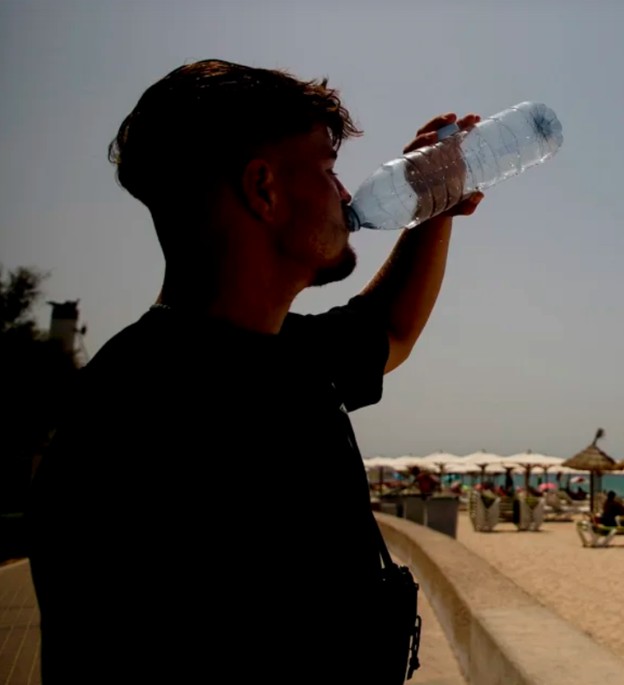
We love our water bottles!

Let’s leave this horror movie of science-you-didn’t-want-to-know behind and go with glass or metal containers instead.  But it’s virtually impossible to avoid ingesting plastic particles anyway.  And many people make a habit of it every day… with chewing gum.  Gum contains the same microplastics as water bottles.  No surprise there.  You shouldn’t really ingest any of the ingredients in chewing gum.

When you’re a kid however, you don’t care about ingredients (let alone bits of plastic).  Gum chewing is a habit I absolutely subscribed to in childhood.  I still remember the barber who cut my hair when I was single-digits old.  The reward for being a good boy in the chair was to help myself to one of those little wrapped chunks of Bazooka bubble gum.  Bubble gum has a distinctive flavor I can still recall decades later.  The pink stuff also has the built-in game of blowing big, sticky bubbles.

gumballs

After Bazooka came Bubble Yum, a trendy alternative because it was a softer chew from the get-go and packaged in larger chunks.  Bubble Yum came in several flavors.  But for me, chewing gum evolved from “bubble” to “sugarless” in a heartbeat, thanks to one too many trips to the dentist.  Choosing from the “prize shelf” after my fillings, I always went for the pack of Dentyne instead of the toys.  Dentyne was the dentist’s way of encouraging less sugar (and more saliva).  Dentyne was my way of thinking it was still okay to chew gum.

Somewhere between Bubble Yum and Dentyne came those slim packs of “stick gum”, including Doublemint, Juicy Fruit, Clove, and for this licorice aficionado, Black Jack.  I also consumed my fair share of Chiclets.  But my gum habit eventually evolved to more of  a”breath mint” chew.  The one I remember best was “Freshen Up”, the green chunk of gum encasing the small dose of mouthwash gel.  You’d get this mind-blowing burst of mint the moment you bit into it.  Pretty novel for chewing gum.

What I never saw coming – which ground my chewing gum habit to an abrupt halt – was TMJ, also known as (the more scary-sounding) “dysfunction of the temporomandibular joint”.  In plain English, TMJ is sustained pain in the jaw muscles from overuse.  It’s nasty, and if you’re not careful it can be chronic.  For me it was relieved by backing off on the chewing gum… as well as breakfast bowls of Grape Nuts.  If you’ve had TMJ yourself, you know it’s a little unnerving (pun intended) because there’s no guarantee you’re ever gonna get rid of it.

Every now and then someone offers me a piece of gum and I politely decline.  I’m not interested in the return of jaw pain and besides, I’ve developed a preference for breath mints instead.  As for you, whether you chugga chugga (your water) or chew chew (your gum), don’t forget about those nasty nano-plastics.  Just like Mr. TMJ, they’re not your friend.


LEGO Notre-Dame de Paris – Update #11

(Read about the start of this “church service” in Highest Chair)

Today we “leveled the praying field” 🙂   Bags 19, 20, and 21… of 34 bags of pieces, brought the height of the nave to virtually the same as the chancel.  It’s safe to say the lion’s share of the remaining pieces will be (tiny and) focused on building the roof structure and west end bell towers.

Arches and more arches

Dropping a piece down, down, down into the sanctuary – which I managed to do twice today through the top square openings you see here – is no laughing matter.  You might say, “Just flip the model over and shake them out, Dave” but I’m way too far along to risk it falling apart.  Instead, I had to reach down with my giant fingers, gently pinch, and then pull back like a construction crane.  I hope I didn’t scare the parishioners in the process.
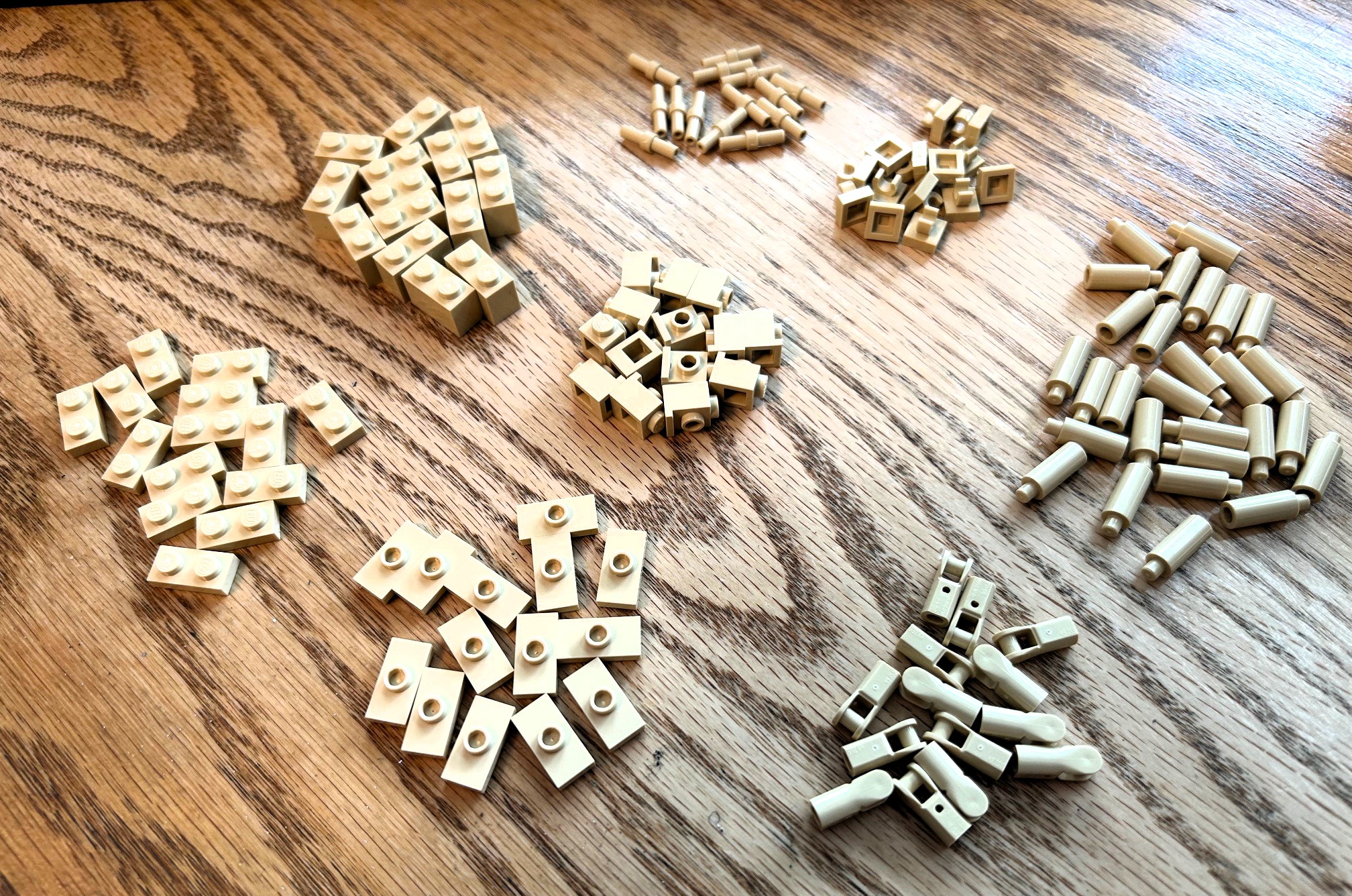
We built framed windows today, (plastic) glass and all!  These can be seen in the final photo, on the west end of the cathedral above the doors.  We also built – in somewhat assembly-line fashion – another fourteen of the cathedral’s distinctive flying buttresses.  But the most tedious, time-consuming task of all was the arched windows you see along the upper walls of the nave in the first photo.  Each is assembled from a dozen finger-numbing pieces.

Uniform height

Finally, a word about weight.  I picked up the cathedral the other day and went, “Holy cow!” (ha).  Turns out this beast weighs a robust three pounds already.  That’s a lot of plastic.  And given today’s blog topic I’m thankful the model isn’t edible. 

Running build time: 10 hrs. 28 min.

Total leftover pieces: 28 (no new ones!)

Some content sourced from the CNN Health article, “Chewing gum can shed microplastics into saliva…”, and Wikipedia, “the free encyclopedia”.
Day (After Day) Drinking

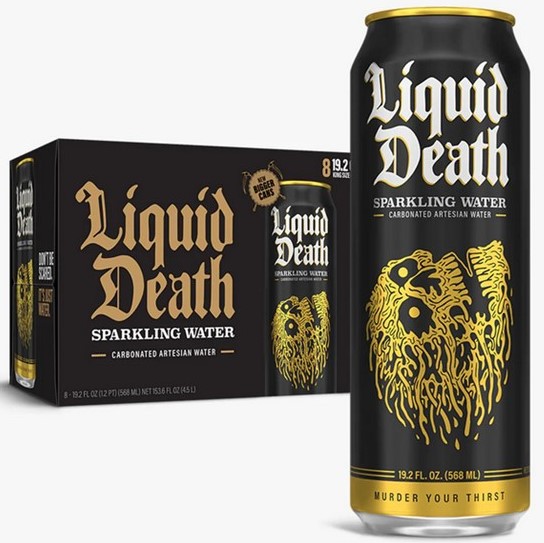
In the refrigerator of the beach house where my family and I vacation every summer, you’ll find an extensive collection of aging condiments. With different people in the house almost every week, the mustards, ketchups, salsas and spreads breed at an alarming rate. And the beverages aren’t far behind. Forage past the wine and beer bottles and you encounter all sorts of curious cans and contents. One in particular tempted me this time around but I couldn’t muster the courage to take a sip. I mean, would you try something called “Liquid Death”?

If you’re already familiar with Liquid Death, you know the joke’s on me.  Liquid Death (“Murder Your Thirst!”) is nothing but drinking water, carefully sourced, packaged in a can covered with horror-movie graphics.  The company believes their distinctive can means a) one less plastic bottle into landfill and b) one more serving of water into you (instead of something less healthy).  Liquid Death also cans flavored sparkling waters and iced teas, and – no joke – invites you to sell your soul to the company.  The company’s sales are no joke either – $130 million last year alone.

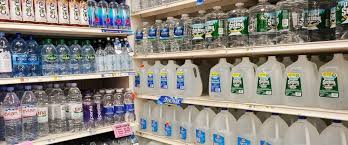
Liquid Death is one of countless examples of “packaged water” available to consumers these days.  Since 2017, Americans are quaffing more bottled water than any other drink.  86% of us purchase water regularly, in addition to the H2O we drink from our faucets.  Why?  Because we’re waking up to the downsides of the sugar/chemical concoction known as the “soft drink”.  We’re also subscribing to the belief we’re healthier if we drink more water.  Finally, single/double/triple-serving containers appeal to us because we’ve already become so conditioned to them, thanks to… Starbucks.

Here’s a story to prove the statistics hold water.  At a volleyball tournament in Atlanta last weekend, I ventured to the nearby snack stand to buy a drink.  The cashier invited me to fish around in his giant coolers for whatever I wanted.  What I wanted was water, but all I could find were dozens of neglected bottles of soft drinks, “sports drinks”, and energy drinks.  So I asked the cashier, “What, no water?”, to which he replied, “Oh, we sold out of the waters hours ago”.

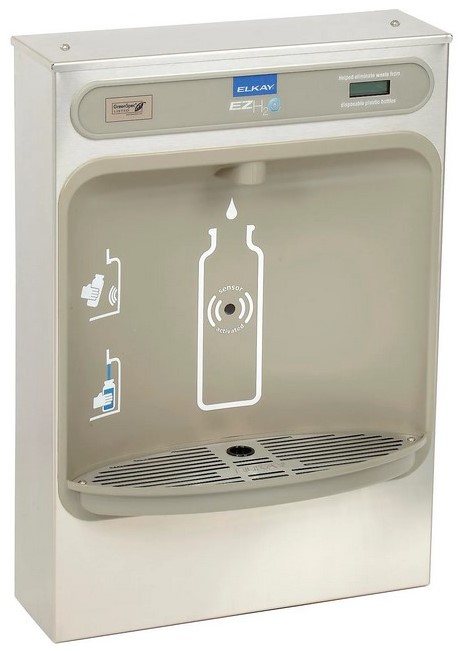
The new “drinking fountain”

Then I went in search of a drinking fountain and couldn’t find one in the entire arena.  Drinking fountains are quickly going the way of pay phones.  In their places: dispensers designed to fill your personal bottle.  I’m on board with this trend, especially because it reduces the use of plastic.  But don’t forget your water bottle like I did or you’ll be forced to settle for one of those more colorful concoctions.

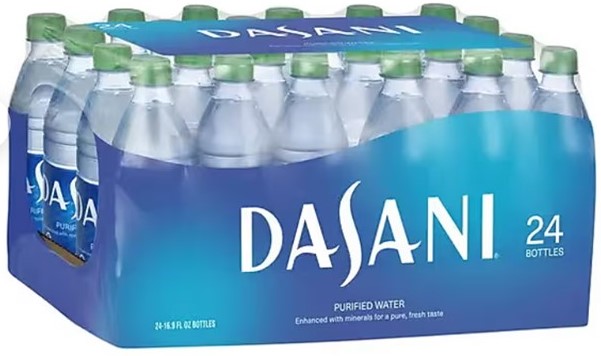
Lest you think otherwise, the bottled waters dominating the marketplace are brought to you by the same companies behind soft drinks.  Accordingly, Dasani = Coca-Cola, Aquafina = PepsiCo, and Poland Spring = Nestlé.  On the other hand, Arrowhead is only Arrowhead water, as is Evian’s natural spring variety (and whether “Evian” is intentionally “naive” spelled backwards is for you to decide).

We’ve taken water one step further now.  Into our personal water bottles, tumblers, and jugs we add “flavor enhancers”, designed to a) give us more of what we lack (ex. electrolytes) or b) encourage us to drink more water by adding flavor.  Crystal Light and Gatorade set this tone years ago.  Today we choose from a dizzying array of powders, drops, and tablets, all designed to make water more appealing.  But if we’re thirsty, shouldn’t water be appealing enough just the way it is?

A final sip of this subject.  The average person has thirty-five “beverage occasions” a week.  With each occasion you choose the container, contents, and quantity of whatever you’re going to drink.  So even if your every day begins with a “Venti half-soy nonfat decaf latte” and ends with a fruit-forward, moderately dry Cabernet Sauvignon, you still have twenty-one other occasions for a tall drink of water.  Liquid Death, anyone?

Cooler Water Cooler

In tiny Beaver, Utah – aside the I-15 and just south of the I-70 juncture, you’ll find a Chevron gas station (still) offering full-service at the pumps. Well, sort of full-service. You fill your own tank, and as soon as you do, the attendant comes over and cleans your windshield. He also checks under the hood. When all’s said and done, he doesn’t charge you extra nor will he accept a tip. It’s a nice throwback to a time when self-service was the exception. But these days we do just about everything for ourselves, don’t we? Including bottling our own water.

I have to admit; this is a new one on me: filling my own water bottle from a public dispenser. Sure, I already know the drill at the gym (just before I navigate the zoo of torturous cardio equipment). My gym’s water machine beckons me to place my bottle under the spout, auto-fills to within an inch of the top, then magically shuts off before overflowing. There’s even a digital counter tracking how many plastic water bottles we avoid in the process. Last I checked, my gym’s counter was into the several hundred-thousands.

Just this week – the “new one on me” – I noticed the same setup in the airport boarding lounge in Los Angeles.  Two self-service machines are built into the wall adjacent to the restrooms.  In the short time before my flight, at least three dozen people lined up and filled up, as if they’d been doing this for years.  I earn the old-timer label for thinking there should’ve been a drinking fountain on the wall instead.  Or a pay phone.

Like the full-service treatment in Beaver, Utah, self-service water dispensers are free of charge.  But that’s about to change, if you believe a recent Wall Street Journal article.  The water products of Coca-Cola (Dasani, Smartwater, Vitaminwater) or Pepsi (Aquafina, Life Water, Evian) may be your thing, and you’re about to get them – for a price – through self-service water dispensers.  For a little more cost, you can even carbonate your water or add fruit flavoring.  Safe to say, “plain water” (i.e. the brand-less, cost-less, out-of-the-tap option) may soon be hard to find in public places.

Now then, the facts.  Water is consumed by the (plastic) bottle more than any other beverage except soda.  America alone accounts for 42.6 billion bottles a year (the world: 200 billion bottles).  That spills to thirty-two gallons/person/year.  The cost?  $100/person/year.  You forgot that line item in your personal budget.  Put it just below the cost of your Starbucks habit.

Here’s another breakdown of the beverage.  Americans consume 2.2 million bottles of water every day, or 90,000 every hour, or 1,500 every minute.  No wonder proprietary self-service machines are the latest trend in airports (and just about every other place where people gather).  There’s a serious market for brand-name H20, and the manufacturers know today’s eco-friendly consumers prefer to drink from their own bottles.

[Nagging Thought for the Day:  There are more than 125 brands of bottled water across the globe; 125 unique recipes for a drink with essentially two ingredients.  What makes one different or better than the next?  For that matter, with reasonable filtering, what makes one different from the fill you can get from your taps at home?]

I wish I’d thought of self-service water dispensers myself (I also wish I’d “invented” bottled water).  I’d be drinking in the riches. These days, “dispensed” water is psychologically preferable to “tap” water, even though some calculations put it 2,000 times more expensive.  Are we just suckers for brand names?  Hey, maybe I’ll invent brand-name oxygen.  Oh wait – that ship already sailed…

Acqua di Cristallo

Here’s one more stat to quench your data thirst.  The most expensive of those brand-name waters – Acqua di Cristallo – costs $60,000 a bottle. The elixir (“water” doesn’t sound rich enough), is sourced from France and Fiji, comes in a 24-karat solid gold bottle, and contains a small sprinkling of gold dust.  Acqua di Cristallo might as well be advertised as a panacea.

Lucky for you, maybe one day Acqua di Cristallo will be offered through public self-service dispensers.  Might want to call your credit card company and increase your limit.

Some content sourced from the Wall Street Journal article, “Coke and Pepsi Want to Sell You Bottled Water Without The Bottle”, and the CreditDonkey article, “Bottled Water Statistics: 23 Outrageous Facts”.