
In today’s headlines the Wall Street Journal turns to Sears – the aging department store chain – which will close 150 locations in the next several months. Sears will also sell its iconic Craftsman tool brand (to competitor Stanley/Black & Decker) in a longer-term “fix-it-and-return-it” strategy intended to strengthen the company. Clearly these events feel like the beginning of the end for Sears, and the end has been coming for a long time. The day Sears shutters its last store will be a sad one – as if a slice of the proverbial American apple pie is lost forever.

In the defining years of baby-boomers Sears was the retail destination (and catalog) of choice. Sears Roebuck and Company – as it was originally known – bridged the gap between America’s small-town general stores and today’s elaborate shopping malls. As recently as 1989 Sears was still the largest retailer in the United States. In a world dominated by Wal*Mart, Target, and The Home Depot it’s hard to picture Sears atop the department store heap just a few decades ago.
The Sears store where I grew up – on the west side of Los Angeles – is not one of the 150 due to close its doors this year. That makes me happy. My Sears store is forever embedded in my childhood memories. It was where my mother clothed me and my four brothers. It was where my father bought appliances and a workshop full of Craftsman tools (most of which I’m sure he still has today). It was the brick-and-mortar embodiment of the Sears “wish book” – the wonderfully large and colorful catalog filled with 1960’s kids’ Christmas dreams. Last and perhaps most significantly, Sears was the location of the “Portrait Studio”, for which my family dutifully dressed up and posed every Christmas. One of my all-time favorite photos has all of my brothers standing smartly around the Sears-store Santa Claus, while I’m sitting in his lap bawling my two-year-old eyes out.
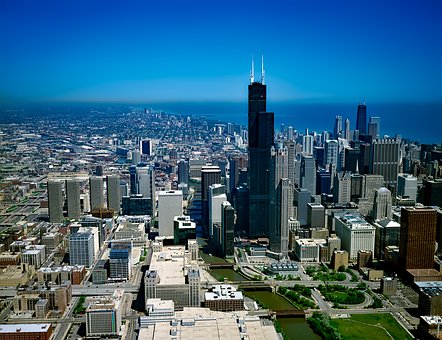
Sears would enter my life again somewhat unexpectedly, when I was in college studying to be an architect in the 1980’s. On several trips to Chicago my classmates and I visited the Sears Tower, the distinctive stair-stepped black skyscraper in the center of the Windy City. The Sears Tower was completed in 1973 as the tallest building in the world, and the first to use a “bundled-tube” structural design. Forty-three years later it is still the second-tallest in the Western Hemisphere (behind the recently-completed One World Trade Center in New York City).
Today’s Wall Street Journal article about Sears – which you can find here – includes dozens of reader comments more insightful than the article itself. The comments yearning for Sears’ glory days are clearly written by my peers. The comments blaming Sears’ demise on Amazon and other on-line retailers are largely from younger writers. In one particularly stinging but accurate account, Wade Harshman writes, “I still like the brand. I just don’t like waiting in line 20 minutes to buy a wrench because the one Sears rep is wrestling with a 1980 IBM machine and trying to sell an extended warranty on a $5 extension cord.”
If you Google “Sears Department Store”, you get the following up top:

It’s a sad statement when all four sub-links of the initial hit point to marked-down prices as the way to get you to buy at Sears. Then again this is senescent brick-and-mortar shopping we’re talking about. Montgomery Ward disappeared in 2001. K-Mart and J.C. Penny hang by a deteriorating thread. Even Macy’s reports “dreary” holiday sales, poised to close (another) 68 stores this year. Could Bloomingdale’s or Saks really be next?
Think about Sears and the disturbing/inevitable (take your pick) headlines of retail closings the next time you click your way to another on-line purchase. Future generations of shoppers may not even understand the meaning of “department store”.

 Life In A Word