
Hello, I’m Veronica
The sky is not completely dark at night. Were the sky absolutely dark, one would not be able to see the silhouette of an object against the sky.


-
Clothes Shrink
On our 25th wedding anniversary, my wife and I crossed the Atlantic for an unforgettable first trip to Ireland. We wanted a few keepsakes to bring back with us, so we shopped carefully as we went about our travels. She found a gold necklace with a St. Brigid’s cross (her namesake), and a few ceramic Christmas ornaments. I opted for a few logo items from the Guinness Brewery, and a coffee table book on the village of Kildare. We also purchased music from a lovely harpist, playing outdoors just steps from the Cliffs of Moher. Last week, I came across one more Ireland item I forgotten about: the sweater you see below. It’s colorful and it’s Celtic… and I think I’ve worn it once.
 Don’t know about you, but the new year is always my opportunity for “spring cleaning”. Maybe it’s because I’m already in the mode as I take down and box up the Christmas decorations. Or maybe it’s because my office files burst with paper after a year of accumulation. Whatever the reason, by mid-January I manage to a) empty my office of anything irrelevant to the coming year, and b) conduct something akin to an inventory reduction sale on my clothes. The office files are easy, but the wardrobe; that takes a little more judgment.
When it comes to decisions about clothes, it’s safe to say guys have it easier. We’re more utilitarian – by definition “designed to be useful or practical rather than attractive”. Yep, that’s us guys – if the shoe fits, so to speak. Of course, women flip the definition around and put the premium on “attractive”. For them it’s more about fetching than fitting. In fact, I’d venture to say a woman’s closet is 75% “attractive” and 25% “utilitarian”, while a man’s is the reverse. And trust me; “utilitarian” is easier to shift to the giveaway pile.

Destined for Goodwill My annual wardrobe shrink is always nostalgic. Some items – particularly suits and sweaters – survive several years before reluctantly leaving the nest. Others – admitted impulse buys – fly the coop having been worn just a handful of times. I’ll never forget one year, when I brought eight suits to Goodwill. Why so many? I moved from California to Colorado and changed jobs in the process. My CA job required the suits; my new CO job did not. Even so, I had to swallow hard on that donation. Those suits had plenty of mileage left in them.

Illustration: James Gulliver Hancock Here’s a mistake I make all too often with my wardrobe. I’ll buy a shirt or a pair of pants at a store. Weeks later, I realize I really like what I purchased, so I go online and buy another half-dozen; same style in various colors. That’s the mistake. Not only am I a poor color-chooser through the Web, but I don’t wear that shirt or those pants as often as I think I will. In other words, I over-shop (and I’m a guy!) Then comes wardrobe shrink time, and my giveaway pile includes that shirt or those pants. Not good.
The more common mistake – at least for us guys – is to buy something last-minute for a single occasion. Sure we may need it, but do we take a moment to project whether we’ll ever wear that item again? If not, that shirt or tie or sweater is reduced to a keepsake, sitting quietly on the closet shelf just yearning for another wear. That’s my Ireland sweater. Kinda sad, isn’t it?
 Admittedly, I have other keepsake clothing. I buy shirts from favorite destinations (hello Guinness), and can’t bear to part with them. I buy shirts with my college’s logo on them, and can’t bear to picture someone else wearing them. I still have an Aloha shirt from our honeymoon in Hawaii (probably the last time I wore it too). No matter – there’s plenty of room in the closet when 25% just went to Goodwill. The purge is not completely pure. My Ireland sweater will live to see another year.
Some content sourced from the Wall Street Journal article, “The Case for Buying Less Clothing”.
-
Putting the Kettle On
Kacey Musgraves is a blossoming country music artist whose recent album “Golden Hour” will compete with heavy-hitters at this year’s Grammy Awards for Album of the Year. She’s released only four albums (through major labels), so the nomination is remarkable. And yet – despite the acclaim heaped on “Golden Hour” – my favorite Kacey song remains a track from her second album, “Pageant Material”. In her words, it’s “a little, tiny, music-box-of-a-song” called “Cup of Tea”.

The message in “Cup of Tea” (have a listen here) – is simple: no matter who you are or what you stand for, you’re never going to appeal to everybody. There will always be haters out there no matter how you present yourself. My favorite lyrics in “Cup of Tea” are the refrain itself:
You can’t be, everybody’s cup of tea
Some like it bitter, some like it sweet
Nobody’s everybody’s favorite
So you might as well just make it how you please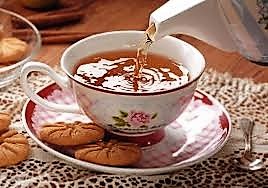
Kacey wouldn’t mind if I told her “Cup of Tea” gets me thinking just as much about tea as about how well I mesh with other people. Not that I’ll be steeping anytime soon, mind you. I can’t seem to acquire tea-taste, no matter how many times I put the kettle on. Go figure – half my DNA originates from England, so you’d think my instincts would have me setting out the fine china and doilies every afternoon. I’d nibble on the cakes or scones or whatever comes with, but no tea, please. I much prefer my morning coffee.
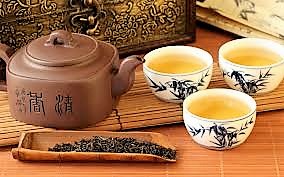
Ironically, tea brews with some of my earliest childhood memories. My parents used to take my brothers and I downtown in Los Angeles, to restaurants on the streets of Chinatown – probably as much for the cultural experience as for the food. I can still picture those dark, quiet dining rooms, with the strange music and gaudy decor. The meal always began with a pot of tea, including the little round cups that seemed to have misplaced their handles. Tea was a cool experience back then. Listen, when all you drank was milk or water (or the occasional soda), tea was pretty sweet no matter how it tasted. It was like having a “grown-up” drink before being grown up.

Forty-odd years later, I notched another tea-riffic memory. My wife and I took a cruise on the Baltic Sea a few summers ago (“six countries in eight days”), and chose Oceania, one of the nicer cruise lines. Good decision. As much as we enjoyed the excursions off the ship, we enjoyed the return even more, because every day we were treated to “afternoon tea”. Oceania’s tea was the perfect respite between the early morning touring and the evening dinners/dancing. “Tea” included tableside service from tuxedoed waitstaff, countless cakes and petit fours, and those little triangle sandwiches with the crusts removed. “Tea” even included a string quartet; their soft music adding to the ambiance. I suppose I could’ve asked for coffee instead, but that would’ve tainted the experience. Not to say I enjoyed the tea itself. Just “afternoon tea”.
The culture, history, and preparations of tea could generate a week’s worth of posts. (See the Wikipedia article here). What I find more interesting is how tea has become the daily routine of several global cultures. The Chinese and Japanese consume tea in the morning “to heighten calm alertness”. The Brits serve tea to guests upon arrival (or in the mid-afternoon), for “enjoyment in a refined setting”. The Russians consider a social gathering “incomplete” without tea. Not sure about all that, but I can at least agree with the moment of pause tea provides; the respite from the faster pace. It’s just… my “cup of tea” is coffee.

-
Nature’s Constant Call
It wasn’t supposed to be this difficult. Merely tweaking a former New Year’s resolution to create a new one should be the proverbial walk in the park. But clearly, I wasn’t prepared for the, uh, “inconveniences” of my particular undertaking. So it goes when you commit to drinking a dozen glasses of water a day instead of ten.
(Hey, give me a sec’… I’ll be right back.)

Are you a New Year’s resolution kinda person? Do you sit down towards the end of the holidays and pen (or pencil, for you not-so-brave) a list of gonna-do’s for the coming year? Me, I’m on the fence with the whole promises-promises thing. Sure, turning the calendar from December to January evokes a fresh start; I’m just not convinced I must be “resolute” in the process. I prefer casual, undocumented, safe-zone agreements. Gonna eat better. Gonna get to the gym more. Gonna read a bunch of new books. Whether I blow them out of the water or just achieve slightly better than last year, I win!
The water thing, though. Why-oh-why did I read my latest fitness club newsletter and choose to drink their Kool-Aid? (Wait, hang on… the phone’s ringing… it’s Nature again.)

Can you hear it? Does it make you want to…? Forget the glittering generality of eight-glasses-per-day. Not only is the rule passé, it holds no water. Eight glasses is simply too generic for the myriad human bodies out there. Ditto downing “half your weight in ounces of water” – too generic. On the other hand, a pile of research and scientific evidence in my newsletter suggested the following: Men should consume 15.5 cups (3.7 liters) of fluids per day, while women should consume 11.5 cups (2.7 liters).
Now then, “fluids” includes all liquids swallowed in a day, so right away we have an appealing math problem. Fluids from foods = 20% (just go with it), so my 15.5 cups instantly evaporate to 12.4. A cup of coffee in the morning and a glass of wine in the evening can also be subtracted (don’t believe the dehydration claims – they don’t hold water). However – and here we pause the calculator – I can’t escape the negative impacts of a) regular exercise (I sweat like a baby rainstorm), b) environment (Colorado = high altitude = dehydration), and c) breathing. Those three moisture-robbers elevate me back to 12.4 cups. Maybe I should stop breathing – that’s worth at least the 0.4 cup.

12 cups = 3/4 gallon Ten cups a day – now that’s navigable waters in my book. I start the morning with two (supposedly a good habit) as I wash down my multi-vitamin. I drink another two mid-morning, another two at lunch, another two or three in the afternoon, and one at dinner. But twelve cups? How the heck do I jam another two into my schedule? More importantly, where to I find the extra time to uh, um… (a little patience here, I need to talk to a man about a horse).
Time to get personal (as if we haven’t been already). When I morphed from child to teenager to full-grown adult, my body parts grew accordingly, EXCEPT my bladder. That little balloon remains the same size as when I was born – I’m sure of it. The bladder is a remarkable organ, “capable of expanding from 2 to 6 inches with a capacity of 16 to 24 ounces”. MY bladder is capable of expanding to 2 inches (a guess) with a capacity of 16 ounces (another guess). And here’s the best part. The urge to urinate comes when the bladder is one-quarter full. Whose idea of a cruel joke is THAT? Do the math on me and I’m only halfway through cup #1 before I’m scheduling time with the porcelain goddess. Speaking of the goddess, uh… (hold tight while I go water the flowers).

About these down-the-hall interruptions: is it just me or does the sound of running water “accelerate” the process? In my twelve-cups-a-day world, I continue to brush my teeth, make a cup of coffee, refill the dog bowl, refill the bedroom humidifier, and refill water bottles every time I go to the gym. You’d better believe every one of those tasks has me wanting to go powder my nose – and I really don’t powder my nose if you know what I mean. Gee whiz (for God’s sake, don’t say WHIZ!), can’t a guy catch a break that doesn’t have the word “bathroom” in front of it?
My fitness newsletter also claimed, “women who are pregnant or are breast-feeding need additional fluids to stay hydrated”. Bless my stars, I am not a woman. But seriously, twelve cups? I’ll be moving my laptop into another “office” in my house before I know it. There’s more to say on this topic but it’s gonna have to wait because… (I need to make a pit stop).
-
Center Peace
Let’s admit to one of the unspoken axioms of commercial air travel, shall we? When it comes to flying, we do everything we can to avoid sitting next to a stranger. In an open-seating approach like Southwest Airlines, it’s all about the aisles and windows, pinning our hopes on that almost-extinct creature known as the open middle seat. Turning the corner from the jetway and gazing down the narrow aisle, our brains simply erase the middles from the seating plan. We’ll go all the way to the last row before we’re forced to sit beside a stranger. It’s like boarding the big yellow bus in elementary school, forced to choose a seat next to a kid you don’t already know. Haven’t changed much as adults, have we?

Call me a lost cause, but I’m here today to extol the virtues of the middle seat. There really can be peace in the center. Thanks to my wife (who prefers the window seat for all kinds of reasons), I’ve chosen the middle seat for countless flights in our marriage. Used to be, we’d take the aisle and window and leave the middle open, with decent odds for extra storage and elbow room. These days? An open middle is about as likely as getting bumped to first class. It just doesn’t happen.

I know what you’re thinking. A middle seat forces you to sit next to a stranger (assuming you’re traveling alone or as a couple). Not a problem, as long as you drive the situation. After your stranger joins you, you have about fifteen seconds to engage them in a conversation. Those fifteen seconds are your one chance where a meet-and-greet feels natural, because you’re both still settling in and probably making a little eye contact. Sixteen seconds in however, you’ve lost your chance. I can’t tell you how many times I’ve waited until the tail end of the flight (that “safe” moment when you realize you’ll be off the plane and gone in fifteen minutes anyway), only to find out I was sitting next to one of the nice/normal ones out there.
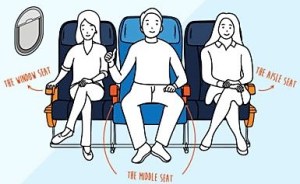
Here’s another rule about middle seats. You need to find your comfort zone with the armrests. There’s not a lot of real estate on those babies, so inevitably you’ll be jockeying with your neighbor to figure out how to share. Just make sure you don’t let your neighbor take the whole armrest from the get-go. If you do, your middle-seat space will feel super-cramped. (Why did a ’70’s rock band just come to mind?) In other words, you’ll experience “armrestlessness” the remainder of your flight.

Strangers and armrests aside, let’s acknowledge some of the hidden positives of sitting center. First, you have the easiest access to all the ceiling gadgets. Adding light or air or a flight attendant to your environment requires nothing more than a casual reach overhead. Your seatmates have it more difficult. They’ll often add an “excuse me” to their movements, or even ask you to do it for them. Sometimes that means bodily contact. Ick.
Second positive: you avoid the shortcomings of the window and aisle seats. What are those? The window seat personal space is noticeably smaller than other seats (including the storage space below the seat in front of you). The window seat is also be noisy if you’re near the engines. The aisle seat personal space is constantly interrupted by the happenings in the aisle itself: roving flight attendants, drink carts, and all those other strangers on the plane. And here’s the ultimate penalty for sitting in the aisle seat: you’re sitting between your seatmates and their freedom (i.e. the lavatory). Every time they’re up and out of their seats, so are you.
Speaking of airplane lavatories, I avoid them until my bladder pulses me into levitation. It’s not an issue of cleanliness or claustrophobia, but rather the journey to get there from your seat. Here’s my ultimate nightmare: I get past the aisle seat and head to the front lav. I find it occupied, which means I head to the back (no lines allowed in front). On my way to the back, the seat belt sign dings and flight attendants guilt me into returning to my seat. Mission unaccomplished. Hold please.
Final though: be bold and choose the middle seat on occasion. You might enjoy it as much as I do. Then again, in-between comes more naturally to me. I was a middle child growing up. I live in a middle state in the U.S. I like to think of myself as slightly above average. In other words, fair-to-middling.
-
Buzz + Booze = 90
In the last day or two, an article surfaced in my newsfeed suggesting coffee and alcohol better your chances of living past 90. Hello. Now that’s a little something worth reading! VinePair’s version of the report (“VinePair is the fastest growing media company delivering accessible, entertaining, and inspiring content about drinks and the experiences you have with a glass in hand.”) covers the critical details in a pleasantly short read.

Bless the research grants bestowed upon the University of California at Irvine (Go Anteaters!). The Ants have been studying “oldest-old” humans for the past fifteen years and have come up with the following buzz + booze conclusion: those who consumed moderate amounts of coffee and alcohol lived longer than those who did not. “Those who did not” were labeled as “having abstained“. Nasty word, abstained.

U.C. Irvine’s study is music to my favorite appliances: the coffeemaker and the wine cooler. No doubt my habits are mirrored by millions of others – start the day with a cup of coffee and end the day with a glass of wine. And because I do, Irvine says I up my chances of living past 90? Bacchus must be smiling down on me (and is there a god of coffee to keep him company?) I think I’ll celebrate by hiring a personal barista and sommelier.

In the spirit of VinePair’s efficient reporting (150 words!), let’s cut to the chase. Why have coffee early and alcohol late when you can have both in the same cup at the same time? What a perfect excuse to start the morning with, say, a Bailey’s Irish Cream Coffee! (coffee, 1.5 shots of Bailey’s, whipped cream, and cinnamon). Or even better, a Mexican Coffee! (0.75 shot Kahlua and 0.75 shot Tequila). Or best, a Millionaire’s Coffee! (equal parts Bailey’s, Kahlua, and Frangelico – you decide how strong). The coffee-alcohol combos are endless.
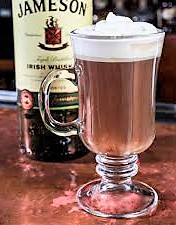
By vicious coincidence, the same day I read the VinePair article I received a newsletter from my health club. To kick off the New Year on the right foot, my club chose to “debunk” common nutrition advice. First, they recommended an 80/20 approach to radical diets instead of “all-in”. Second, they said weighing myself every day puts too much emphasis on what is likely the wrong indicator of better health. Third, I shouldn’t pretend I don’t need vitamins no matter how healthy I eat. Fourth, I shouldn’t toil endlessly at the gym as if I can outwork a bad diet. (Wait, so my health club is telling me to work out less?) Finally, they said I need to make nice with carbs again, favoring the complex over the simple. That’s a list of only five items, but it reads like it’s built on a significant amount of research, while studying the habits of countless people. Way too complicated for my taste. “My taste” would rather focus on coffee and alcohol.
To add a little cream and sugar to the study, U.C. Irvine reached another conclusion with the “oldest-old”. The overweight lived longer than the underweight. Wait, what? If I want to live well into my 90’s, I should drink and eat in excess? Well tickle me pink – and pass the whipped cream while you’re at it.
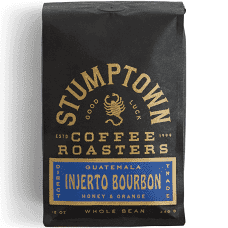
In the meantime, I’ve converted this welcome research into a superb business idea. Save the trip to the patent office because I beat you to it. Coming soon to a store near you: liqueur-infused espresso beans. And yet, as soon as I come up with the idea, I find out it’s already out there (has been for years).
I’m guessing Stumptown Coffee Roasters doesn’t have a retirement plan. Their employees probably live forever.







About Me
The sky is not completely dark at night. Were the sky absolutely dark, one would not be able to see the silhouette of an object against the sky.
Follow Me On
Subscribe To My Newsletter
Subscribe for new travel stories and exclusive content.
 Life In A Word