
Hello, I’m Veronica
The sky is not completely dark at night. Were the sky absolutely dark, one would not be able to see the silhouette of an object against the sky.


-
Smallest and Innermost
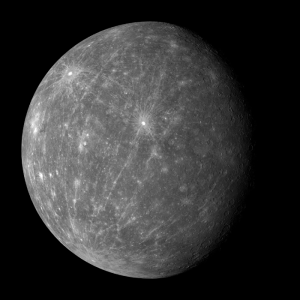
Mercury Last month, I spent an entire post lavishing love and affection on Earth’s beautiful space neighbor, the planet Venus (see here). I was quick to point out – from Earth – you can occasionally see the planets Mars, Jupiter, and Saturn as well. Turns out that list is, ahem, incomplete by at least one planet. Clearly miffed by my post, our solar system’s Mr. Smallest and Innermost – the planet Mercury – decided to speak up this week.

Don’t burn yourself, little one (image courtesy of NASA) For those of you who missed it, Mercury passed in front of the Sun on Monday. For five hours or so, Mercury looked like a little black mole on the bright cheek of a much larger creature. His orbit took him almost directly across the center of the Sun. You may think Mercury’s show is no big deal; after all, he circles the Sun every 88 Earth days. However, consider Earth, Mercury, and the Sun must be exactly lined up (put a ruler on it) for humans to witness a Mercury “Sun transit”. We only get fourteen Mercury transits every Earth century. The next one won’t happen until 2032.
I missed Monday’s Mercury transit myself, because a) I wasn’t up at sunrise in the Northern Hemisphere (when it happened), and b) I didn’t have the necessary eye protection to give it a direct look. Instead, I enjoyed the online photos and videos from NASA and the world’s other space agencies (like this one).
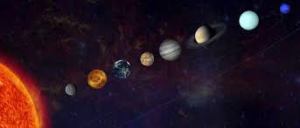
Mercury’s the tough little guy on the left The truth is, you don’t have to wait for a Mercury transit to observe the first rock from the Sun. On several early mornings last month, you could’ve seen Mercury rising in the east (same as Venus), and you’ll see him again early next year – no telescope required. Guess I got caught up in the allure of Venus and completely ignored her nearby brother.

If Mercury and Earth were side-by-side Mercury – like all the planets – has some interesting facts. He completes three rotations about his axis (days) for his every two orbits of the Sun (years). Pretty slow for the smallest orbit in the solar system. He has no moons. He’s only about a third the size of Earth. He’s pretty beat up, with the most craters of any planet, and “wrinkles” caused by the cooling and contracting of his iron core. Only two of Earth’s spacecraft have ever visited Mercury, and even those stayed far away from the surface for obvious reasons (800.6°F on the sunny side; -279.4°F in the shade).
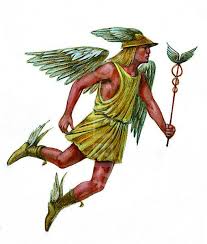 The Roman god for which Mercury is named is a lot “cooler” than the planet itself (ha). Young Mercury wears a lot of hats, including (god of) financial gain, eloquence, and divination. (Side note: perhaps Mercury should’ve been my blog mascot. “Eloquence” was the theme of my very first post). He also serves as the guide of souls to the underworld. Curiously, all these responsibilities take a back seat to Mercury’s most commonly known role – as speedy messenger to the other gods. This role explains the naming of the planet, the fastest of the eight to circle the Sun. Maybe we should also consider Mercury as messenger to the other planets, in case something gets weird with the Sun. After all, Mercury will be the first to know.
 I can’t talk about Mercury without a reference to the late, great Ray Bradbury. Of all his wonderful science-fiction short stories – and there have been at least a hundred – my Bradbury top five includes “The Golden Apples of the Sun”. “Apples” followed an exploratory rocket ship heading past Mercury to the Sun. The crew is tasked with collecting a sample of the Sun’s golden fire. I can still imagine the ship’s giant scoop as it extends from the hull and grabs a bit of the Sun. The story’s real drama comes just after the collection, as the ship overheats and the life-support systems begin to shut down. With respect to Bradbury, I won’t give away the ending.
 Well then, enough about Mercury (probably too much). I’ll conclude with a great tweet from Katie Mack, who was quick to note about Monday’s Mercury transit: “The official song of #TransitOfMercury is, obviously, ‘King of Pain’ by the Police. But please note that the ‘little black spot on the Sun today’ referenced in the song is a ‘sunspot’, not Mercury, since ‘it’s the same old thing as yesterday,’ and (Mercury) transits only last a few hours.”
Keep on a-circling the Sun, Mercury. I won’t forget ya next time.
Some content sourced from the BBC.com article, “Planet Mercury passes across the face of the Sun”, the Space-Facts.com article, Mercury Facts – Interesting Facts about Planet Mercury, and Wikipedia, “the free encyclopedia”.
-
Raining Cats and… More Cats
 Google “cat”, and you’ll get a return of 6.4 billion hits. Spend five seconds per hit and you’ll need a millennium to get through ’em all. That’s a thousand years on everything there is to know about cats. Your dog will think you’re nuts. Your cat, on the other hand, will wonder why you didn’t start your search sooner. Felis catus, after all, is more manipulative than we humans want to believe.
Something in the cosmos moved me to write about cats this week. When I started this post (last week), the calendar just closed on National Black Cat Day (10/27) as well as National Cat Day (10/29). Then my daughter relocated to Seattle, which involved two cars, her cat, and a whole lot of packing. (Pretty sure half the packing was for the cat.) Then Monday Night Football happened, and the video of a black cat eluding officials during the Giants-Cowboys game went viral. Finally, the Wall Street Journal (WSJ) spiced up its headlines with a piece called, “Should Your Cat Be Vegan?”
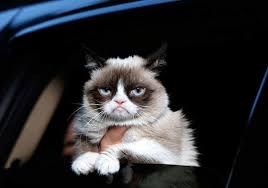 I think this cat-aclysm of events caused all other blog topics to step aside this week (again with the manipulation). Maybe it was my daughter’s cat, a little upset I hadn’t written about her after several hundred posts. More likely it was another WSJ article I’ve been saving from last April: “There Is Now Scientific Proof Your Cat Is Ignoring You”. Now there’s a headline. Talk about manipulation. Assuming a little obedience school and training, you probably have your dog right where you want him. Your cat? Obedient? Never.
 Per the WSJ article, cats hear and recognize their names; they just choose to show no response. When they do show a response it’s not for affection, but for potential reward, like petting or playing or food. Jennifer Vonk, an animal cognition psychologist, says, “…we (humans) sort of reward them for doing what they want to do… they’re better at manipulating our behavior than vice versa.” In other words, your dog wants to please you while your cat just wants to please itself.
Aside from persistent clawing (which can take down an upholstered chair faster than an army of serrated knives) I rather enjoy the company of cats. They’re quiet. They’re soft. They’re cute when they’re little fluff balls rolling around the carpet playing with toys. And they’re low maintenance, preferring to catnap or full-on sleep while you dutifully attend to their litter box and food bowl. So it’s a wonder to learn (“…Scientific Proof…”) – despite their outward laziness – cats have the cognitive ability to do everything dogs can. They just choose not to. A little disturbing, no?
 Dogs make six distinctive sounds: barking, whining, whimpering, and so on. Cats – as if to one-up their canine competition – make seven, and they all mean different things. Cats meow, purr, trill, chatter, yowl, hiss, and growl. (Listen to every one of them here.) If you’ve ever heard a cat chatter, it’s mildly disturbing, as if he’s on the verge of a paws-to-the-walls freak-out. But if you ever hear a cat growl, it’s one of the most unsettling bass-voice attention-getters ever emitted from a small, carnivorous mammal. My daughter’s cat growled while sitting on my lap once. Small wonder I didn’t wet my pants.
 Domesticated cats have a long history, dating back to 3000 years BC in Egypt or something like that. They fare well whether “house” (dependent), “farm” (semi-dependent) or “feral” (fully independent). They also have an impressive list of trivia bits. A few of my favorites:
- Cats spend up to 50 percent of their day grooming themselves. Maybe humans should too. Grooming tones down their scent to avoid predators, cools them down, and promotes blood flow. Smart.
- A group of kittens is called a kindle. I’ll never look at my e-reader the same way again. Also, a group of full-grown cats is called a clowder (hold the clams).
- The average running feline can clock around 30 mph. No wonder I’ll never catch my daughter’s cat after she “autographs” the upholstery.
- Cats can’t taste sweets. In other words, keep an eye on the steak but don’t worry about the big cake in the middle of the table. Your cat doesn’t care.
- Your cat has more bones than you do: 244 vs. 206. No wonder they’re so nimble.
- Cats sweat. Through their paws, in fact. They also pant, which should be the eighth distinctive (and disturbing) sound they make.
- Disneyland hosts approximately 200 feral cats. Their job, of course, is to control the amusement park’s rodent population. Think about that the next time you’re deep inside the Haunted Mansion.
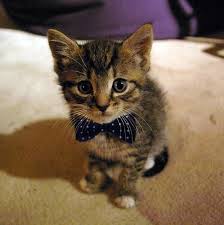 I learned a lot about cats as I prepared for this post. I realize the whole “nine lives” concept simply means cats are smart enough to cheat death more than most animals. Including humans. Maybe that’s why they ignore us. We’re less intelligent. And easier to manipulate.
Some content sourced from Wikipedia, “the free encyclopedia”.
-
Cardinal Roll
A paper towel, a napkin, and a facial tissue were chatting at a paper goods party one day. The towel spread himself flat and declared, “I’m the biggest one here, not counting the tablecloth under the dessert buffet.” The napkin glared at the towel and said, “Think you’re so important? All you do is clean up messes. I’m part of every place setting at every dinner table in the land!” To which the tissue sniffled, “Sorry boys, but I’m more important than either of you. No bathroom or lady’s purse would be complete without me”. Just then a roll of toilet paper wheeled by. Glancing at his paper pals, he grinned confidently as if to say, “No contest”.
 It’s true, isn’t it? If I dragged you to the same paper goods party and said, “Choose one, but it’s the only one you’re allowed for the next twenty-four hours”, toilet paper wins every time. Paper towels, napkins, and facial tissue come in plenty of sizes, quantities, and pretty designs, encouraging us to put them on display in our houses. TP gets no such fanfare and frankly, we’re embarrassed to be seen anywhere with those virgin-white rolls. When was the last time you proudly displayed your 24-pack of Quilted Northern or Angel Soft as you waited in the grocery store checkout line? If you’re like me, you jam those rolls into the lower part of the cart. You want them invisible.
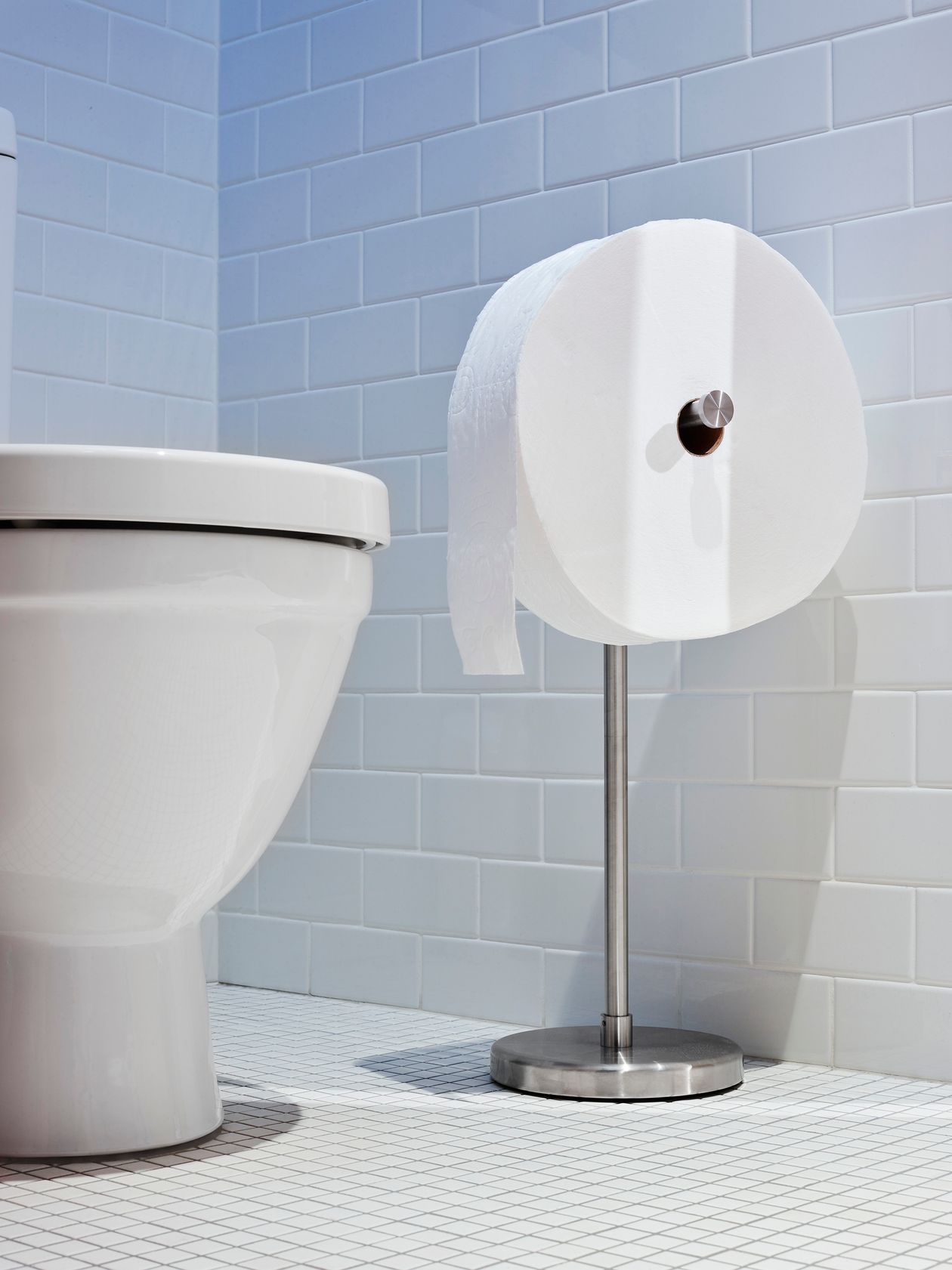
Cute, huh? It’s called “Cloudy Day” Here’s where you’re probably thinking, “Toilet paper? He’s writing a blog about toilet paper?” Damn right I am. When Procter & Gamble (P&G) comes out with a “bathroom tissue” product called “Charmin Forever Roll”, I’m all over it. Imagine if you will, a roll of toilet paper one foot in diameter (actually, don’t imagine; just look at the photo below). This bad boy’s three times bigger than your standard roll. He’s the equivalent of the 24-pack you were trying to hide in your shopping cart. It’s like putting a tractor tire next to your toilet. The “Forever” comes with its own sturdy stand, and the idea is, it never runs out. Well, almost never. The Forever lasts twenty-one days on average. If you told me my job was to change the toilet paper roll only once every three weeks? I might actually do it!
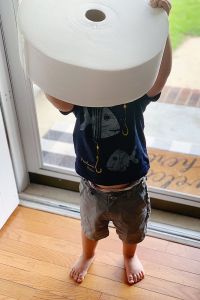
The “Charmin Forever Roll” What, you ask, inspired P&G to create a quarter mile of rolled toilet paper the size of an LP vinyl record? Human nature, that’s what. No matter how easy the task, people refuse to change the roll (on top of whatever else they’re doing in the bathroom). In fact, a survey of 2,000 bathroom users – as if the survey-takers had to screen out “non-bathroom users” – found 85% agreed to the phrase, “An empty toilet paper roll is one of the most frustrating bathroom scenarios”.

Don’t you just hate this? You should’ve seen this coming and beaten P&G to the punch. Toilet paper has been rolling out in ever-bigger sizes since those 4″ originals hit the shelves. We’ve graduated to “double”, “triple”, “jumbo”, “mega”, “mega plus”, and “super mega”. It’s getting grandiose. Even the Forever isn’t the biggest anymore. Last month Charmin debuted the “Forever Roll XL”, which gets you 50% more than the Forever. You can go a whole month without changing the roll. Not only that, P&G lets you subscribe, so your XL tractor tires show up at the front door all by themselves. Order a dozen and you’re good for a year!
 There’s no end to the madness, if shopping habits tell the truth. When P&G first offered the Forever, they gave us a choice of an 8.7″ or a 12″ round. They figured we’d want to ease into the idea of super-sized toilet paper. Wrong. Consumers went straight for the 12″, which is why P&G fast-tracked the 13.2″ XL (and promptly dropped the 8.7″). Just how “XL” is a 13.2″ roll? 3.2 pounds – or 2,550 squares.
 Clearly, the sky’s the limit when it comes to a roll of toilet paper. I can picture it now: a roll the size of a Ferris Wheel. Laugh all you want – homebuilders are probably already redesigning bathrooms to accommodate one. And then – maybe then – toilet paper will get more attention than just who was supposed to change the empty roll.
Some content sourced from the 10/16/19 Wall Street Journal article, “The Empty Toilet Paper Roll Torments Families. Procter & Gamble Has an Answer”.
-
Girl Crush
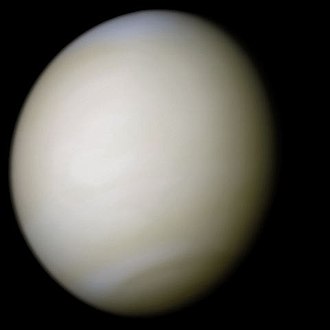
The Goddess Last Sunday, our corner of the night sky was graced with a full moon called a “Tiny Hunter”. Tiny, because the moon was at the furthest point in its elliptical orbit. Hunter, because this time of year harvested fields leave few places for animals to hide. (Add a full moon and the hunting’s even easier). When our Tiny Hunter rose in the east that night, it was as if a giant flashlight switched on in the heavens, blotting out a typically starry night. But I know it didn’t blot out everything. Venus, beckoning brightly to the west, was saying hey, this is my party too.
Next to the moon, Venus is the brightest bulb in the night sky. Even if you don’t know where she sits, you can find her by simply scanning the western horizon at dusk or eastern at dawn for the most brilliant pinpoint of light. As if outshining all of the stars isn’t enough, Venus is also the most vivid planet. Mars, Saturn, and Jupiter occasionally make an appearance, but Venus always seems to be there. Even in broad daylight.
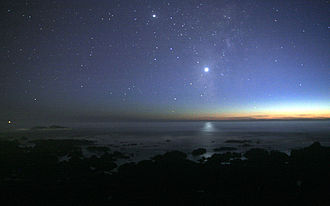
“Morning Star” or “Evening Star” – take your pick I’m not gonna lie; Venus gives me a bit of a girl crush. After all, she’s the Roman goddess of love and beauty. Now consider her other “outstanding” attributes:
- She’s the only planet in our solar system to identify as female.
- She’s referred to as our “sister planet”, not only because she’s our closest neighbor, but because she’s virtually the same size.
- She rotates in the opposite direction of seven of the eight planets (including Earth).
- She hosts two continents: Ishtar Terra (named after the Babylonian goddess of love), and Aphrodite Terra (named after the Greek goddess of love).
- Her rotation is so slow, a day in her world is longer than a year in ours. But, a year in her world is shorter than that same day. Say what? You read that right: Venus completes a trip around the sun faster than she completes a rotation on her own axis.
- Her orbit is closer to the shape of a circle (vs. an ellipse) than all other planets.
- She has no moons or rings. Naturally, why would the goddess of love and beauty need adornments?
No wonder the Babylonians referred to Venus as “bright queen of the sky”, eh?
Given her allure, it’s a wonder our earthly culture hasn’t done more to embrace her. I went in search of homage to Venus and here’s all I could come up with:

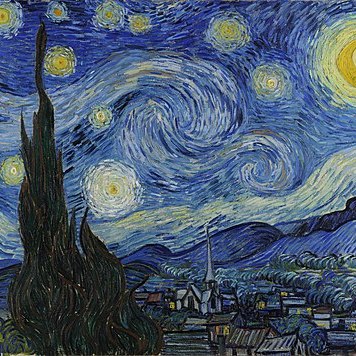



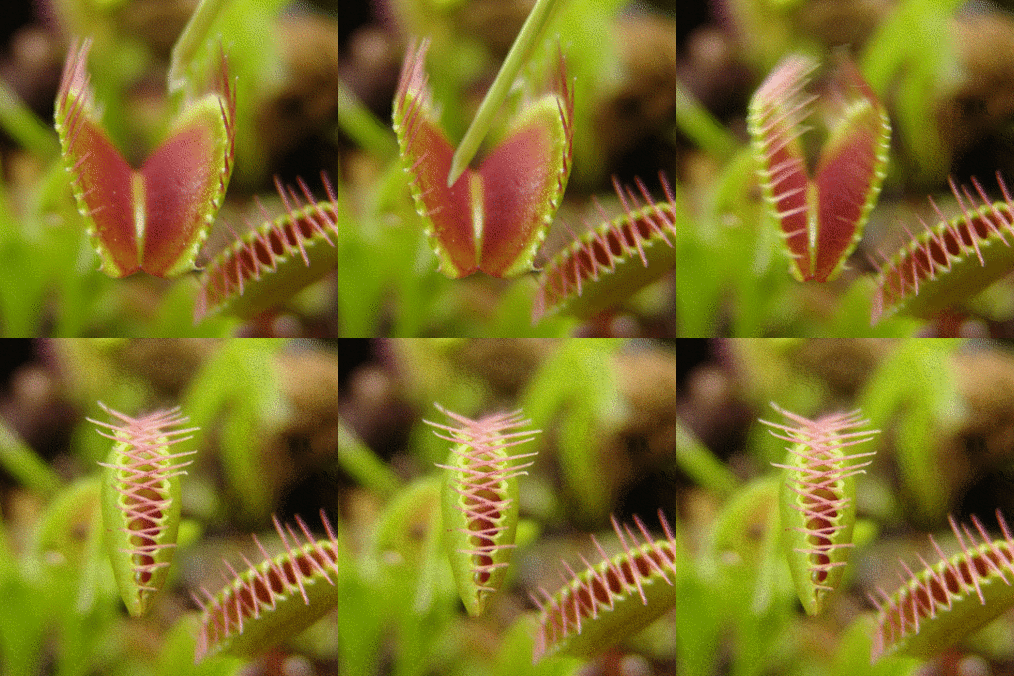
- Sandro Botticelli’s iconic “The Birth of Venus” (top left), with our girl posed unashamedly naked on a seashell.
- Vincent van Gogh’s post-impressionist “The Starry Night” (top center), with Venus as the bright “star” just to the right of the cypress tree.
- The Bible’s Song of Songs (fitting, if you know the book’s subject matter), Chapter 6, Verse 10.
- John Gray’s bestselling relationship guide, Men are from Mars, Women are from Venus.
- Gillette’s “Venus” line of women’s shaving products.
- The “Venus” women’s clothing line (catalog arrived for my wife just last week).
- A nasty-looking fly-trapping plant.
- Frankie Avalon’s adoring anthem “Venus” (Hey, Venus… oh, VENUS…).
- Shocking Blue’s psychedelic rock hit “Venus” (I’m your Venus… I’m your fire, at your desire…).
If that’s the extent of our tribute to Venus, no wonder we have the phrase “hell hath no fury like a woman scorned”. Venus shows her not-so-lovely side if she wants to. She’s the hottest planet in the solar system (including Mercury), with an average surface temperature of 863 degrees F (462 C). Her atmospheric pressure is 92 times stronger than Earth’s (which is why her surface is beautifully crater-free). She’s covered in a thick layer of sulfuric acid clouds. Her wind speeds are extraordinarily high. And she’s explosive, with a long history of volcanic activity.

The second rock from the Sun… and the brightest of all eight. Scientists believe – 700 million years ago under drastically different conditions – Venus was temperate enough to host oceans of water and life itself. So…, what in God’s name happened to make her so nasty now? Whatever it was, even our most advanced spacecraft can’t land on her surface today (though we’re working on it).
Considering this brief education on Venus, I suggest you ignore her siren song and simply admire her from afar. Even if you could speed your car along an interstellar highway, you’d need over forty years to get to Earth’s twisted sister. No; stay on her good side lest she show her surface temperatures and atmospheric pressures. That wouldn’t go well for you. I’d rather look Medusa in the eye and be turned to stone.
Some content sourced from the 9/22/19 Phys Org article, “Could Venus have been Habitable?”, “Venus Facts:…” from The Planets website, and Wikipedia, “the free encyclopedia”.
-
Agony or Ecstasy?
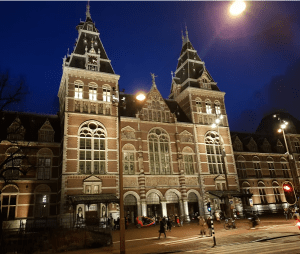
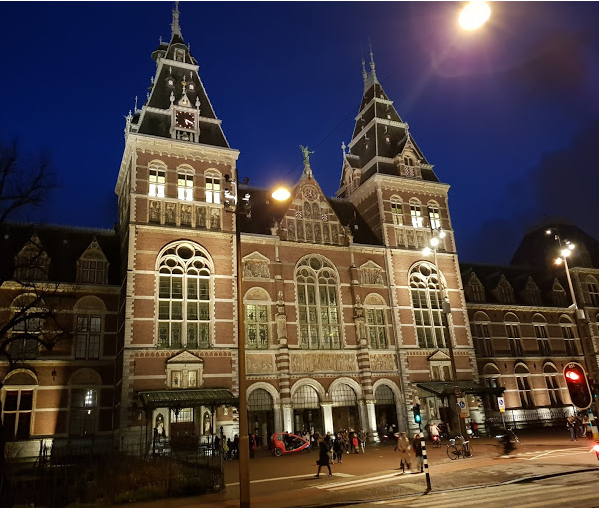
Rijksmuseum, Amsterdam, The Netherlands On a first visit to The Netherlands earlier this year, our plan was to traverse the quaint canals and bridges of Amsterdam, stand in the shadows of Kinderdjyk’s working windmills, and learn more about the country’s wartime era, perhaps through a stop at the Anne Frank House. I also looked forward to a field of their famous tulips, and Dutch treats like stroopwafels, poffertjes, and bitterballen. Sure, I ticked the boxes on several of these items, but I was also blindsided by a group-tour-captive stop at Amsterdam’s Rijksmuseum. 8,000 artworks covering 800 years of Dutch history (in what felt like 80 different rooms)? Not my idea of a delightful morning in Holland.
I’m not what you’d call a “patron of the arts”, though I’m about to contradict myself. I love a classical performance by a symphony orchestra. I’m drawn to the theater’s foremost stage productions (Les Miserables comes to mind). I even enjoy the occasional visit to a museum, provided the subject is specific and of my choosing (ex. Amsterdam’s Dutch Resistance Versetsmuseum). But endless rooms of paintings on walls and free-standing sculptures behind glass? As the Dutch would say, nee bedankt ik zal slagen. No thanks, I’ll pass.
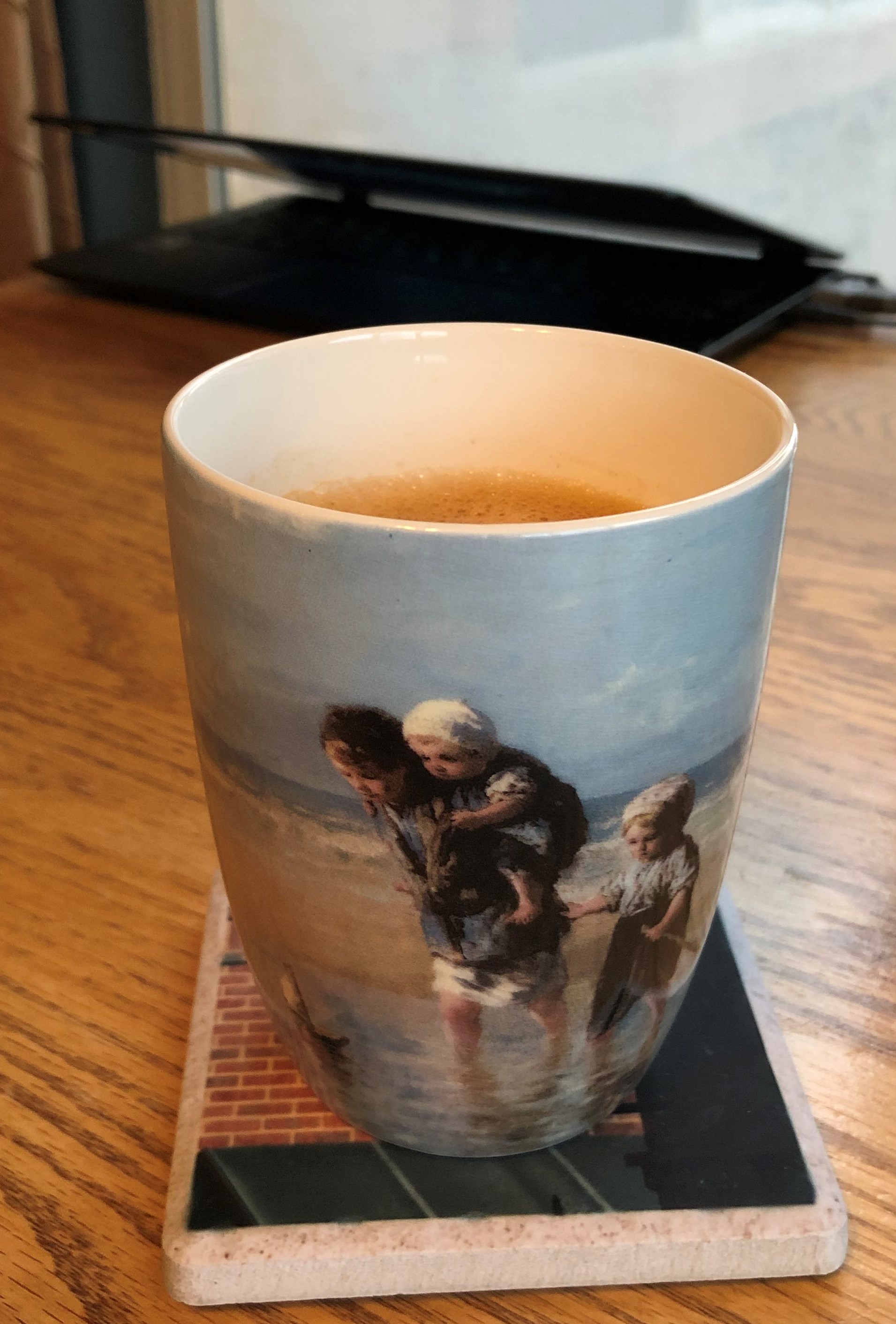
 Here’s where I contradict myself a second time. As I type this post I’m sipping morning coffee from the mug in the photo. The mug is a souvenir from my “captivating” visit to the Rijksmuseum. The painting on the mug is called “Children of the Sea” (1872), by Dutch artist Jozef Israels. Go figure; I was able to blow past the throngs flocking to the Rembrandts and Vermeers and van Goghs; yet a small artwork in the corner of Rijksmuseum Room 118 captivated me enough to take a little piece of it home. I probably spent as much time in front of that painting as I did the rest of the museum.
Jozef Israels’ “Children of the Sea” (1872), Rijksmuseum, The Netherlands Naturally I had to learn more about “Children of the Sea”. When I returned to Colorado, I read up on Jozef Israels. Not only was he “… a leading member of a group of landscape painters known as the Hague School…”, Israels was “… the most respected Dutch artist of the second half of the nineteen century”. Do I know how to pick ’em or what? Maybe I have a little art appreciation in me after all.
“Children of the Sea”, as you might expect, offers a deeper message than a group of kids playing on the beach. Their simple clothing and toys hint at a life of poverty. The eldest child is quite literally carrying his family on his shoulders. The boat suggests the rigors of life at sea. From that perspective, I find the painting even more enthralling.

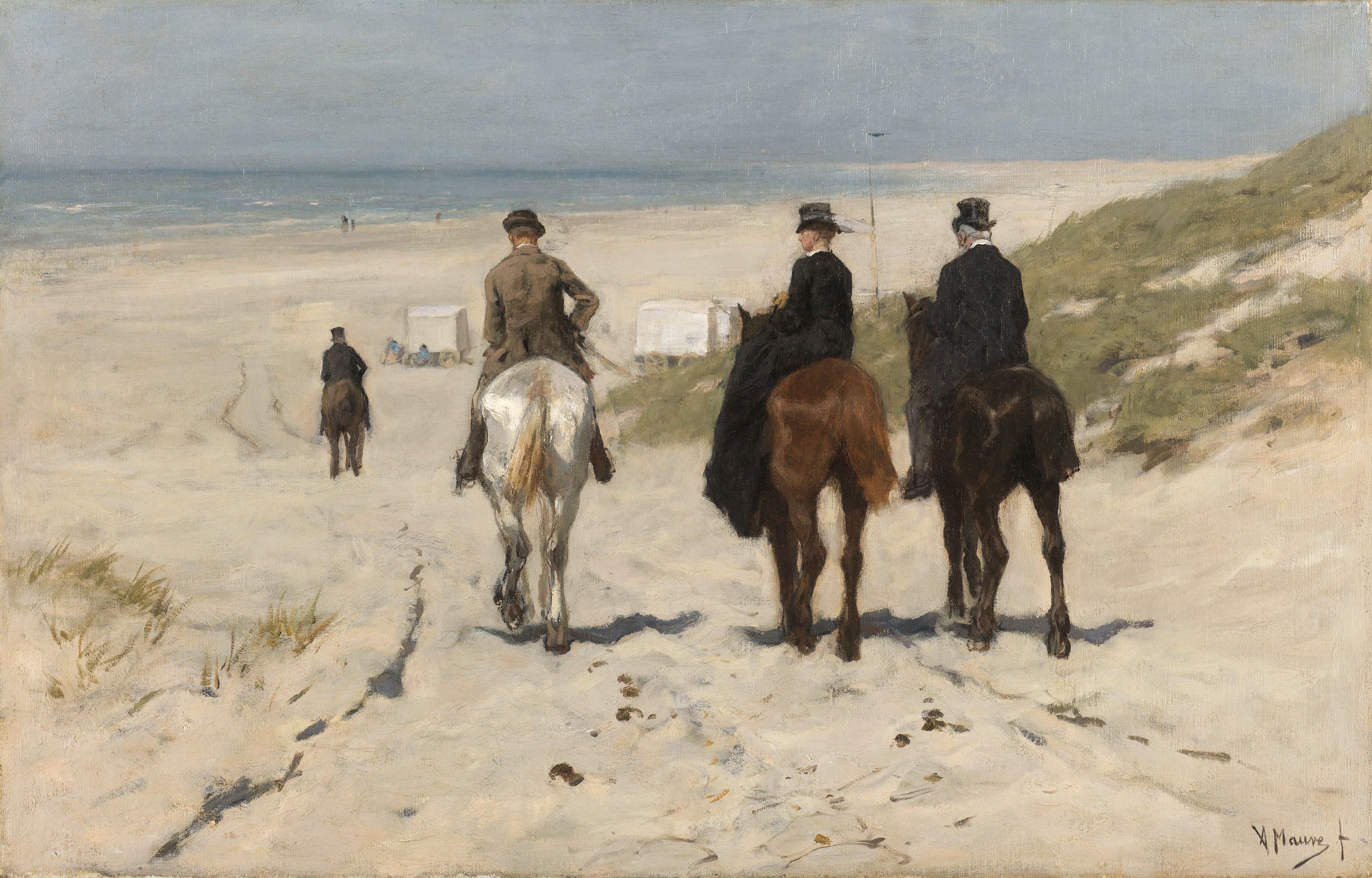
Anton Mauve’s “Morning Ride along the Beach” (1876), Rijksmuseum, The Netherlands Adjacent to “Children of the Sea” in Rijksmuseum Room 118, I also enjoyed a moment in front of the artwork shown above. It is called “Morning Ride along the Beach”, and I mistook it for another Jozef Israels masterpiece. Instead, “Morning…” was painted by Anton Mauve, another Dutch painter of the same era (and Hague School). “Morning…” provides a contrast to the harsh existence of the poor fishermen of the time, by focusing instead on the “well-to-do bourgeoisie”: horses, elegantly dressed riders, bathing cabins – all on a pastel-colored sunny day. No souvenir mug with this one, but equally compelling to the eye.
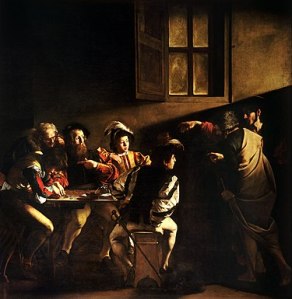
Caravaggio’s “The Calling of Saint Matthew” (1699-1700), Contarelli Chapel, San Luigi dei Francesi, Rome Admittedly, the Hague School paintings weren’t the first artwork to stop me in my tracks, nor were they the last. In my college year of architecture studies in Rome, the Renaissance-era paintings and sculptures were as impressive as the cathedrals that housed them (I could write an entire post on the stunning chiaroscuro works of Caravaggio). Case in point, I was so taken by the life and work of Michelangelo I read all 700 pages of Irving’s Stone’s fictional biography, “The Agony and the Ecstasy”.

John Dowd’s “Provincetown Summer” (1997), Provincetown, MA 
As for my latest artwork pause, my wife and I visited Cape Cod last month, all the way out to Provincetown at the tip. One of Provincetown’s pier-side shops sold tiles of local artists’ paintings. The tile above (left) – John Dowd’s depiction of a nearby Provincetown Cape house in 1997 – sits on our fireplace mantle now. The photo above (right) is how the painter’s subject looks today.
Someday I would love to return to The Netherlands for more adventures, but I assure you my itinerary would not include another trip to the Rijksmuseum. However, I can’t claim I wouldn’t pause on the sidewalk if I walked past the museum’s massive entrance. After all, in Room 118 there’s a very small painting, utterly captivating to this non-patron of the arts.
Some content sourced from The Netherlands Rijksmuseum website, and Wikipedia, “the free encyclopedia”.









About Me
The sky is not completely dark at night. Were the sky absolutely dark, one would not be able to see the silhouette of an object against the sky.
Follow Me On
Subscribe To My Newsletter
Subscribe for new travel stories and exclusive content.
 Life In A Word