
Hello, I’m Veronica
The sky is not completely dark at night. Were the sky absolutely dark, one would not be able to see the silhouette of an object against the sky.


-
A Baker’s Half-Dozen
 If you’ve ever been to an IKEA home furnishings store, you know the shopping experience is more about navigating a vast warehouse than a cozy “store”. IKEA retail covers several football fields worth of showrooms and merchandise, with clever navigation arrows projected onto the floor so you don’t lose yourself in the maze. Before or after your purchases, IKEA offers a spacious sit-down cafeteria, so you can fuel or restore your energy levels as needed. And it is here – in the IKEA cafeteria – where I can’t help but picture the Swedish Chef from the The Muppet Show.
 You remember Swedish Chef, don’t you? Even if you only occasionally glanced over the shoulders of your children as they watched The Muppet Show, Swedish Chef left an indelible impression. Chef had those big, bushy brows completely covering his eyes. He always had a handful of utensils, inevitably launched into the air of his kitchen as his gibberish songs ended with “… BORK, BORK, BORK!” Chef sported a colorful bow tie, a white apron, and the distinctive toque blanche (white hat) on his head. Swedish Chef was always my favorite Muppet.
 Chef could be working behind the counter of the IKEA cafeteria, because naturally; IKEA serves Swedish food. My favorite entree (as if I dine at IKEA regularly) is the Swedish meatballs in brown sauce (köttbullar), served with a side of the crepe-like potato pancakes (raggmunkar) and a dollop of lingonberry jam (Sweden’s famous “food freshener”).
There’s another fellow in the States who reminds me of Swedish Chef, and he doesn’t work in the IKEA cafeteria. Ever heard of Mimal, “the Man in the Middle of the USA”? Mimal lives in the Midwestern states, and he’s a big boy. In fact, Mimal’s so big he barely fits between Canada’s border to the north and Mexico’s to the south.
 Have a look at the map. Mimal (sometimes called “the Elf”) is a silhouette of a chef, represented by the outlines of seven American states. MIMAL is quite literally (M)innesota, (I)owa, (M)issouri, (A)rkansas, and (L)ouisiana. He holds a pan (Tennessee) of fried chicken (perfectly represented by Kentucky). Mimal can thank the west bank of the Mississippi River for the shape of his five-state body. He also looks like he’s about to march his chicken right off the map, over the Atlantic Ocean, and on into Europe. Maybe he’s headed to Sweden?
 Whoever discovered Mimal hiding in America came up with a clever way for children to memorize a handful of states. Appropriately, Mimal the chef is made up of a baker’s half-dozen of them. A baker’s dozen (13) began in the 11th century, when an extra loaf was added to the bread basket to guarantee the minimum sales weight. A baker’s half-dozen then – rounded-up – is seven loaves. Or seven American states.
Leave it to Americans to deny Mimal his innocence. Based on one or more unsolved mysteries in the MIMAL states, the elf-chef was once connected with a real-life kidnapper/murderer. The legend claimed if you drove straight from Minnesota to Louisiana – through each of Mimal’s five “body” states, you’d be abducted (never to be seen again) once you crossed Louisiana’s northern border. My logical brain asks how said abductor knows you made it through all five states? But this is legend we’re talking about, much like the monster in Scotland’s Loch Ness. Tabloid fodder at best.
 Educators expanded on Mimal’s seven-state profile, including all fifty American states in a story designed to help students memorize names and locations (would’ve been helpful back in my school days, when I’d confuse Wyoming with Colorado). Still, I prefer to limit the game to Mimal’s baker’s half-dozen. I can’t help but see a big chef every time I look at a map of the United States. I also can’t help hearing him sing, “…BORK, BORK, BORK!”
Some content sourced from Wikipedia, “the free encyclopedia”, and the Laughing Squid blog.
-
Check-Out Champ
We had a good drop of snow the other night; the best we’ve had since the new year began. The flakes fell quickly, adding inches to the front porch and everything in the yard beyond. As I surveyed the vast, white blanket before me, my mind wandered to snow angels and snowmen, to pulling the sled out of the garage. I pictured wandering lines of deep footprints, far as the eye could see, or snowballs piled up and ready, waiting for a battle with the neighborhood kids. Without knowing it, I was effectively ticking the list of images from Ezra Jack Keats’ 1962 children’s classic, “The Snowy Day”.

Confession time. I didn’t remember the story of “The Snowy Day” until I stopped by my local bookstore the other day for a copy (destined to my granddaughter’s bookshelf). It’s a simple book: the snow-filled adventures of a little boy on a winter’s day, captured in less than two hundred words. The images tell the story as well as the words, including the boy’s disappointment when he realizes a snowball carefully packed into his coat pocket melted moments after entering the warmth of his house.

Why all the fuss over a short children’s story, authored almost sixty years ago? Consider this: “The Snowy Day” is the most checked-out book in the 125-year history of the New York Public Library (NYPL). That’s 485,583 individual borrows, putting the book comfortably ahead of hundreds of thousands of others. (Safe to say the “Jeopardy” writers jotted down that bit of trivia for future use.)
You’d think I’d have checked out “The Snowy Day” when I was little. After all, the library was a weekly – if not bi-weekly destination as a kid. My older brothers took music lessons right across the street, leaving the library as a convenient “babysitter” while Mom went to the grocery store. I’ll always be grateful to her for that strategy, which generated countless check-outs and a lifetime love of reading.

I find it remarkable the NYPL maintains complete records – most of them on paper – backing up its check-out claim for “The Snowy Day”. The book topped several other bestsellers I would’ve chosen instead. Take “Fahrenheit 451” (#7 all-time checked-out), or “Harry Potter and the Sorcerer’s Stone” (#9). How about other children’s titles like “The Cat in the Hat” (#2) and “Where the Wild Things Are” (#4)? “The Snowy Day” sits atop the list with fewer words and fewer pages (except perhaps #10, “The Very Hungry Caterpillar”) Good on you, Ezra Jack Keats.
Dale Carnegie’s “How to Win Friends and Influence People” seems out of place in the NYPL top-ten (#8) – the only non-fiction read on the list. I’ve never checked out a Carnegie self-help book, let alone bought one (not that I couldn’t use the help). For that matter, I’ve never checked out any of the NYPL top-ten. Maybe #6 Charlotte’s Web, but that was a long time ago.
“The Snowy Day” brought to mind storybooks from my own childhood, I took a few minutes to recall the following favorites (sans Google search):
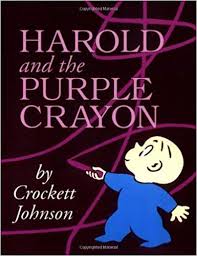

- Harold and the Purple Crayon
- Clifford the Big Red Dog
- The Red Balloon
- Make Way for Ducklings
- Blueberries for Sal
- Mike Mulligan’s Steam Shovel
- Are You My Mother?
- Sparky’s Magic Piano
- Caps for Sale
The brain is remarkable. I can give you a complete synopsis of each of the above stories, fifty years after I first read them. Furthermore, “Harold and the Purple Crayon” and “The Red Balloon” manage to tell their stories without a single word. Nothing but photos and illustrations. They make “The Snowy Day” look like a novel.

I can’t tell you the last time I set foot in a library, but I know it’s been years. I’d say I’m “overdue” and should “check out” one of the nearby branches. After all, the stories of my childhood have endured the test of time, waiting patiently on the shelves; perfect reads for the next “snowy day”.
Some content sourced from the 1/13/2020 Wall Street Journal article, “These Are the Most Frequently Checked-Out Books in the History of the New York Public Library“.
-
Ever Eat a Pine Tree?
 If I ask you to recall a catchphrase – a word or statement you heard repeatedly and probably won’t forget – you could come up with several examples. Movie quotes, for instance. (“I’m the king of the world!”) Song lyrics. (“I get by with a little help from my friends.”) And television commercials; where the product or “jingle” yields a branded catchphrase. Just this week I learned a new one: bindle stiff, which describes a homeless person through the bag of personal items (bindle) on the end of his/her stick. I’m no hobo, but Euell Gibbons once was. And Gibbons once uttered one of the most famous catchphrases ever.
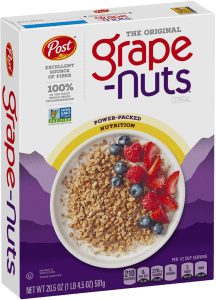 Who the heck is Euell Gibbons? Any American kid growing up in the 1970’s would know. Gibbons was the spokesperson for Post Grape-Nuts cereal, made instantly famous by a single television commercial where he uttered, “Ever eat a pine tree? Many parts are edible.” That statement was so bizarre – and laugh-out-loud to us kids – it spread like wildfire (and sold a ton of Grape-Nuts cereal). But it was only recently I learned Gibbons wasn’t just a hired bindle stiff, but a man ahead of his time. He had a lifelong interest in foods foraged from “nutritious-but-oft-neglected plants” (surely learned from an impoverished and transient childhood). He wrote several successful whole-foods cookbooks, including “Stalking the Wild Asparagus” (1964) and “A Wild Way to Eat” (1967). In his later years, Gibbons and his wife joined a community of Quakers in Philadelphia, where he cooked the daily shared breakfast (of course he did).
“Many parts are edible.” I love Grape-Nuts cereal, back to when I was a kid. I’m not sure if Gibbons gets the credit, or because Grape-Nuts just tastes good (“…reminds me of wild hickory nuts…”, as Gibbons also said). Admittedly, Grape-Nuts was a little off the beaten path of children’s cereals. Very low in fat and sugar, Grape-Nuts looked and crunched like a bowl of light brown gravel. Add in milk as a softener and sugar as a sweetener however, and something about the cereal just clicked with me. After college I forced myself to give up Grape-Nuts, because I developed jaw pain from too many hard foods. Maybe that’s why Post developed Grape-Nuts “Flakes” cereal, or Grape-Nuts “Trail Mix Crunch Cranberry Vanilla”.

GORP Speaking of trail mix (convenient segue), Euell Gibbons comes back to the conversation. Trail mix was introduced about the time Gibbons was born (1910), as a combination of dried fruit and nuts. Trail mix was lightweight and therefore easy to carry on long hikes. The carbs and fat created a quick energy source and an ideal snack food, and the mix became immensely popular to outdoors-people, especially sugared up with a few M&M’s or yogurt coverings (which Gibbons never would’ve approved of). Yet it wasn’t always called “trail mix”. In another word familiar to 1970’s kids, Gibbons coined the acronym GORP, which either meant “good ol’-fashioned raisins and peanuts”, or “granola, oats, raisins, and peanuts”. Yep, I ate a lot of GORP in my childhood. Might’ve even had my first taste at Hadley Fruit Orchards, a place in the California desert my parents like to frequent. Hadley – alongside others – claims to be the “inventor” of trail mix.

Euell T. Gibbons As if “Euell Gibbons” is not unique enough for an American, his middle name was “Theophilus”. The only Theophilus I’m aware of lived in biblical times, when Luke wrote his Gospel (and the book of Acts) as letters to an individual by the same name. Perhaps Gibbons should’ve lived in biblical times. As God’s people sought the Holy Land he could’ve helped them with his foraging skills. Or at least introduced them to Grape-Nuts.
Some content sourced from Wikipedia, “the free encyclopedia”.
-
Cruise (out of) Control
Ever since the Ferris wheel debuted (at the 1893 World’s Colombian Exposition in Chicago), there’s been an unofficial competition to design and build a taller version. The original topped out at 80.4 meters all those years ago, while today’s leader – the “High Roller” in Las Vegas – rotates over twice that high.

The “High Roller” in Las Vegas To complicate the matter, there’s great debate about what defines a Ferris wheel. The tallest wheels for example – including the High Roller and the London Eye – are labeled “observation wheels” because they’re more than just an amusement. Newer designs eliminate the spokes and hub to give the illusion of a free-wheeling ring. Whatever. Thanks to my acrophobia, even a kiddy amusement park Ferris wheel is thrill-ride enough for me.
Go figure – I enjoy the highest, fastest roller coasters anywhere, but I wimp out when it comes to a standard Ferris wheel. Why? Because Ferris wheel gondolas are neither enclosed nor replete with safety bars. You’re just sitting up there in the open air, 250 feet off the ground, realizing nothing is preventing you from falling (a peek into the mind of an “acrophobe” – you’re welcome). Conversely, when the roller coaster safety bar ratchets down to the waist, almost taking your breath away, there’s a sense of being one with the coaster, like you can’t possibly fall out. Much better.

I will never be this guy Let’s change the channel and focus on big ships. If you’ve ever taken a cruise, you should be able to name one or more “amusements” you didn’t expect to find in a floating hotel. Golf driving ranges. Skeet-shooting. Water slides. Again, it’s an unofficial competition. But what about a roller-coaster, traveling up to 37 mph, with an elegant sweep out over the ocean? Yep; coming soon to a Carnival Cruise Line ship near you.

I hereby retract my earlier statement about tolerance for roller coasters. Riding the rails, plunging down towards the ocean and back up to the sky, two hundred feet above the keel of a moving ship – Carnival’s “Bolt” is too much for me and my acrophobia. Almost a little too much for the coaster’s engineers, too. They faced a pile of challenges with the design. What would be the impact of a moving vessel on the gravitational requirements of a roller coaster? Will the weight of seven hundred feet of track twenty stories above the water tip the ship? How will the vessel’s structure tolerate the forces of heavy cars speeding here and there? And what about all that noise?

Put the cart before the horse – as Carnival did – and things get easier. First design the coaster; then design the ship. Make the roller coaster cars self-propelled so they don’t depend on gravity. Eliminate the chains and sprockets in favor of small booster engines to reduce the noise. Then design a ship keel three football fields in length. Reengineer the structural elements – from the water up – to accept the distributed forces of the coaster. Overweight the whole thing so coaster cars can go almost vertical and still not tip the ship. Behold Carnival’s Mardi Gras – a virtual floating amusement park – breaking the champagne bottle next winter.

I still think a roller coaster on a ship is nuts, but I seem to be out of touch with the latest amusements. You can already partake in “Sky Pad” – also on Carnival – a bungee-jumping-trampolining-virtual-reality mash-up. Or Royal Caribbean’s “RipCord”, a column of air for skydiving simulation. Or Norwegian’s “Ultimate Abyss”, a four-story sort-of toilet bowl, where you’re flushed in circles and dropped down a 200-foot water slide.
If you’ve ever seen Katy Perry’s music video, “Chained to the Rhythm”, you probably laughed at the outlandish amusement park rides, like the coaster with the heart-shaped loop-the-loop, or the pseudo Ferris wheel catapulting riders out into the air. But considering Carnival’s “Bolt”, maybe Katy’s got a keen eye on the future after all. As for me, I’ll stay grounded in my local kiddy amusement park.
The future of amusement? Some content sourced from the 1/8/2020 Wall Street Journal article, “They’re Putting a Roller Coaster on a Cruise Ship”, and Wikipedia, “the free encyclopedia”.
-
Identity Crisis
Whenever I go for a workout, I face a choice as I walk through the front doors of my gym. The welcome desk gatekeepers scan the barcode on the back of my membership card to a) make sure I’m really me, and b) keep track of my visits (a motivational data point reported back to me at month-end). Recently, my club gave me the choice to scan my mobile phone instead, using a barcode produced by their app. And there you have it: the emergence of the virtual ID badge.

Please don’t steal this Given the myriad uses of phones these days, you’d ask why I wouldn’t shred my physical gym card and embrace virtual identity. Alas, what works at the welcome desk does not work beyond it. My gym’s lockers still use the physical card as part of their securing mechanism. Insert card, close door, release key. Yet I still need my phone to collect heart monitor stats or listen to music. My identity therefore remains physical and virtual for the foreseeable future.
Workout facilities are a basic example of what’s going on here. The more sophisticated virtual ID installations reside at the offices of large companies, where hundreds of employees pass through secure doors morning, noon, and night. Forget “keycards” – how would you prefer to be ID’d in the year 2020? Facial recognition? Iris scan? Fingerprints? Even those technologies seem dated with what’s being tested in the lab. How about gait recognition (the way you walk)? Or microchips – a grain of rice if you will – implanted gently between the thumb and forefinger? Everyday security is about to advance to a whole new level.
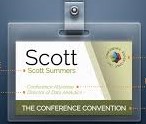 My first couple of office jobs were environments too small to worry about real security. The front desk attendant could greet every employee who stepped off the elevator by name. But then I joined Hewlett-Packard (HP) – 50,000 humans worldwide – and even HP’s smallest offices demanded more than a casual glance at those passing through. In the early years I had a simple name badge, to be clipped on the shirt and worn at all times. Then I graduated to a photo ID card (w/ lanyard, as dress codes relaxed). Finally, HP added magnetic stripes to the back of the cards, so we could self check-in the way you now self check-out at grocery stores.
 The new identity technologies are rooted in biometrics: your sui generis body measurements and calculations. With that in mind – and body – your ID is just the tip of the data iceberg. As long as your heart rate, steps, and movement are measured, wouldn’t your employer want those data points as well? It’s like having a giant Apple Watch lording over an entire workforce. In theory your manager could use this information as a gauge of your “wellness” (i.e. stress), but more likely they’ll be interested in how it relates to your productivity. They’ll also know where you are, when, and for how long, all the day long.
If microchip implants become the norm (something I wouldn’t have fathomed even a decade ago), the benefits are endless. Swipe your hand at a conference room door for access/reservation. Swipe your hand in front of the vending machine for a snack. Check your resting heart rate. On the other hand (ha), consider; the microchip is always watching, including your taps at the keyboard. No message – even the one you deleted before sending – is safe from scrutiny.
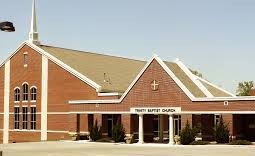 When my wife and I joined our church last year, we were issued name badges. Wearing them is not so much an expression of membership as it is a convenience to greet fellow parishioners by name. But what if we start using biometrics someday? Will my pastor know when I’m at church and when I’m not? More importantly, will He know? Ah, let’s be real; the Almighty doesn’t need an ID system. He already knows when I’m in church and when I’m not.
Some content sourced from the 1/6/2020 Wall Street Journal article, “The Humble Office ID Badge Is About to Be Unrecognizable”.







About Me
The sky is not completely dark at night. Were the sky absolutely dark, one would not be able to see the silhouette of an object against the sky.
Follow Me On
Subscribe To My Newsletter
Subscribe for new travel stories and exclusive content.
 Life In A Word