In the opening scenes of the 1981 classic, “Raiders of the Lost Ark”, intrepid explorer Indiana Jones navigates a deep jungle, a river, the betrayal of his fellow adventurers, and the lethal booby-traps inside a mountainside cave to capture a priceless statue of gold. Indy’s return to civilization includes more death-defying maneuvers, yet he still completes the entire escapade in the first ten minutes of the film. That’s far less time than it took another thrill-seeker to find the real-life hidden treasure of Forrest Fenn.
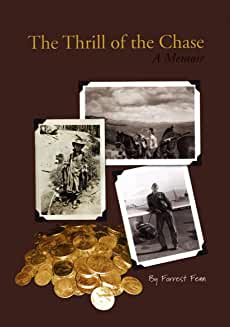
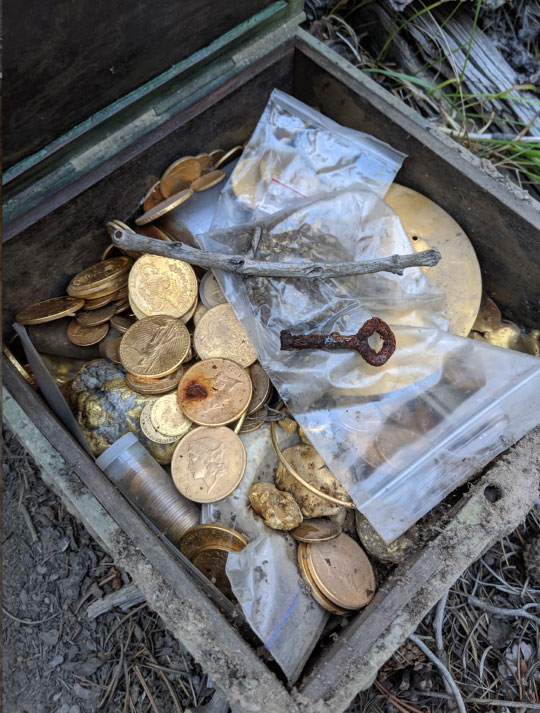
Perhaps you’re not familiar with Forrest Fenn. Hardly anybody would be, were it not for Fenn’s decision back in 1988 to set aside $2 million of his amassed fortune as a reward for an ambitious treasure hunt through the vast Rocky Mountains. Gold nuggets, rare coins, jewelry, and gemstones; all piled up together inside a twelfth-century bronze box and cached in a region of over 500,000 square miles. Treasure hunt indeed… but no treasure map! Instead, Fenn documented clues in the stories and poems contained in his self-published book, The Thrill of the Chase: A Memoir.
Remarkably, Fenn’s treasure appears to have been claimed. The whole story found its way back into national headlines just ten days ago, when Fenn himself declared, “I do not know the person who found it but… the search is over. Look for more information and photos in the coming days.” Conveniently, the one snap of the treasure chest in its hidden location does not indicate when it was taken. Just as convenient, the finder has yet to be identified; only labeled “anonymous searcher from the East Coast”.
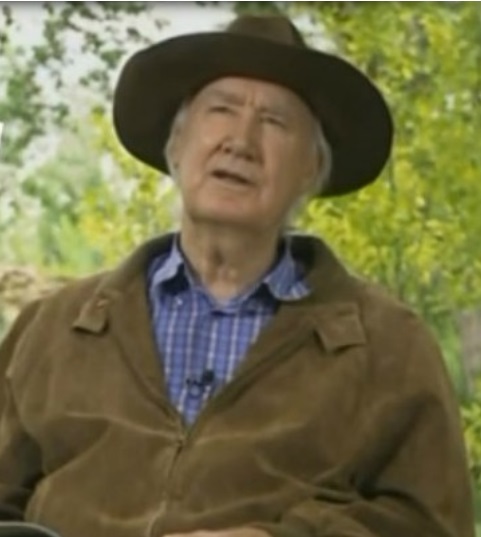
Forrest Fenn
Forgive my skepticism, but I’d say Forrest just raised the first red flag on this whole adventure. It sounds good on paper but the more I read the more I sense fairy tale instead of actual tale. To repeat, Mr. or Mrs. East Coast has yet to come forward. The single photo of the treasure could’ve been taken by Fenn himself. Do the homework and you’ll soon start to wonder, does the treasure really exist? For that matter, does Forrest Fenn himself exist? Even his name sounds make-believe.
Body-double aside, Fenn appears to be very much alive, but the case can be made for calling the man eccentric. Consider, Fenn’s initial intent for the treasure was kind of an “X marks the spot” for his final resting place. In 1988, diagnosed with cancer (likely terminal) Fenn was motivated to set up the treasure hunt before his demise. But somewhere in the next 22 years, Fenn recovered from his illness and then penned the memoir, complete with treasure-hunt clues. This sequence of events alone is suspect. What was Fenn’s original intent: secret burial in the Rockies and whoever stumbled upon his grave (and thought to dig it up) wins the prize?
courtesy of oldsantafetradingcompany.com
Undeterred, thousands pursued Fenn’s treasure after the memoir was published. Five died in the search. Of those five, only one cause of death was confirmed – a fall down a steep slope in Yellowstone National Park. The bodies of the other four, at first identified as “missing persons”, were found later (at different times and places) along the supposed route to Fenn’s treasure. No cause of death determined with any of them. Add to that a dozen or more arrests, detainments, citations, and lawsuits with other hunters and you start to get a real mess on your hands. Sounds more like a “hex marks the spot” doesn’t it? Fenn considered the request of authorities to suspend the hunt, but public opinion swayed him to keep things going.
Ten days ago, Fenn acknowledged the (apparent) hunt winner and he/she possesses the (supposed) treasure. No doubt this isn’t the last of the eccentric tale of Forrest Fenn. I hope we tune into the news one of these nights and see our latest Indiana Jones, posing in front of the heaping bronze chest like a lottery winner with a giant check (please also, with fedora and bullwhip). I hope Forrest Fenn is posing right there alongside him/her, and prepared to detail this crazy adventure from start to finish. Then we’ll know whether the inevitable production from Hollywood will be fact or fiction.
Some content sourced from the Fenn’s Treasure website, Westword, and Wikipedia, “the free encyclopedia”.
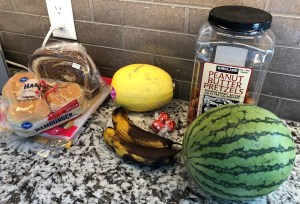
Take a good look at this photo. My wife and I have this weird assortment of foods on our kitchen counter right now. Store-brand hamburger buns. A half-loaf of “artisan-style” marble rye against the backsplash. Below both, a package of ready-to-use French-style crepes. To the right, a spaghetti squash and a handful of wrapped Lindor truffles. To the further right, an oft-visited plastic container of peanut butter pretzels, fronted by a watermelon just itching to join a fruit salad.
These foods are not “still life” waiting to become paint on canvas. They’re not even past-due items from the back-of-store sale rack. They’re just random samplings from trips to the grocery store; items kicked to the kitchen curb instead of the pantry or frig. Two questions, then. If you were given this lot on “Top Chef” could you whip up something appetizing? Would you even care to try?
artwork courtesy of Alexi Talimonov
More importantly, I made it to the third paragraph before mentioning the pair of bananas taking up prime real estate front and center in the photo. I HATE bananas, be it look, feel, texture, or taste. Bananas need to go back to the primeval jungle from which they escaped. In my world, bananas should be called “no-passion fruit”. If I were starving on a desert island, shadowed under the gently waving fronds of a banana palm, I’d nosh on the fronds, then the tree bark, then the tree itself before tossing its worthless bananas into the ocean. Hell, I’d choke down sand before eating bananas. Put a gun to my head (or a banana); I still wouldn’t eat one.
For Pete’s sake though; no matter the magnitude of my banana hate, the yellow curvies still find a way to remain relevant. Take this pandemic for instance. Stuck at home means more time in the kitchen. More time in the kitchen means comfort food, and comfort food includes baking bread. Sourdough. Pizza dough. Baguettes. Challah. Naan. Sadly, we rookie bakers discover the ingredients in our pantry are as past due as our bills. Way past due. Flour tastes sour. Honey ≠ sugar. Past-its-prime yeast does not make the loaf say, “All rise!” Even with fresh ingredients we butcher the recipe by feeding, kneading, and reading too much into every step. Instead of baking bread we’re breaking bread. We need a no-brainer no-spoiler kinda baked good. Banana bread to the rescue!
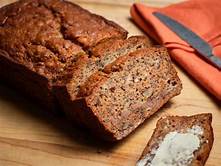
Banana bread is easy; it really is. Call yourself a breadmaker with as few as five items – none of them “yeast” or “starter”. Sift together flour and baking soda. Whisk together eggs, butter, and mashed bananas (mashed bananas? Isn’t that what I threw up regularly as a kid?) Combine in a loaf pan, bake, and voila – banana bread. You’ll find the first four ingredients in your pantry already and if you also have bananas, they’re probably overripe (i.e. perfect for banana bread). Just like the bananas on my kitchen counter. I made the mistake of picking them up when I took the above photo. They’re so ripe they feel like half-filled water balloons. Or half-filled hot dogs. Or Twinkies submerged in water for a few hours. You get the idea. Ewwwwwww.
Now for the irony/paradox/contradiction/twist/flourish of today’s post (take your pick). I like banana bread. I’m on the fence of almost loving banana bread. Slice a thick piece, warm it in the oven, slather with butter, and it’s pretty damned good. As I admitted almost four years ago in my post Banana Rant, bananas work inside of bread like figs work inside a package of Newtons. As a standalone they’re a horror-filled rubbery package disguised as one of Mother Nature’s edibles. Downgraded to an ingredient they stand on the fringes of the vast arena known as “food”.
Enough with the spotlight on bananas already. Trust me, I had better topics to blog about this week. My pandemic-born obsession with Netflix. A lamentation to Major League Baseball for a season that’s never gonna start. A keyboard pounding to the heavens for dumping several inches of snow on our neighborhood this week (for God’s sake, it’s June!) But no, I chose to discuss the best use of “water-logged Twinkies” instead, keeping bananas a front and center topic. Kind of like walking into the grocery store and the very… first… thing… in your field of view is an acre of bananas grinning their pathetic yellowy smiles. They should go back to the jungle where they belong. I’ll make do with soury-dough bread instead.
Some content inspired by the 4/20/20 Wall Street Journal article, “Forget the Sourdough. Everybody’s Baking Banana Bread”.
Last weekend my wife and I drove north a couple hours to visit our granddaughters. The last time we saw them was in the pre-pandemic days of yesteryear. We spent most of Saturday afternoon in the backyard playing little-kid games in the makeshift pool and breaking out a plastic Tee-Ball set. Later on after a barbeque, it was time to clean up the toys. My son and his wife promptly requested the “The Clean Up Song” from Alexa, and my granddaughter hopped to it. Watching her I caught myself thinking, can’t I help with the clean up too?
Google The Clean Up Song and you’ll find several dozen versions to choose from. Cleaning-to-music for kids has been around a little while now. I wish we’d used this approach more often when our own children were little. It’s a song! It’s a game! It’s almost whistling while you work.
For me, household chores morphed to something more therapeutic as the kids grew up and out of the house. Taking out the trash became extra steps towards my ten thousand (we have a long driveway). Washing dishes became a mini-spa of warm water and soap bubbles. Making the bed and arranging its pillows channeled my inner Marie Kondo. Folding clothes was how to avoid lazing on the couch while watching TV. (On that note, an ironing board should be called a “clothes-folding board”, if you go by my folding minutes (100%) vs. ironing minutes (0%).
Lest you think me compulsive, a recent Wall Street Journal study comes to my rescue. During these stay-at-home times – locked-down residents find similar stress relief in housework. Washing windows allows the slow, deliberate wax-on-wax-off zen of “The Karate Kid”. Cleaning countertops tempts flowing dance, like Julia Stiles in the diner in “The Prince and Me”. Ironing doubles as light weightlifting. And vacuuming? Nah, I got nothing there. Vacuuming’s still just a chore.
The lovely Ms. Stiles and her diner dance
Headspace
Headspace, a software company focused on meditation and better sleep, includes housecleaning exercises on its app. They recommend “quiet housework in dim lighting” just before bed (but then how do you see what you’re cleaning?) They want you to sweep the floor and wipe the counter in smooth, restorative motions. Laugh all you want but the use of their “cleaning-related content” is up 20% since mid-March.
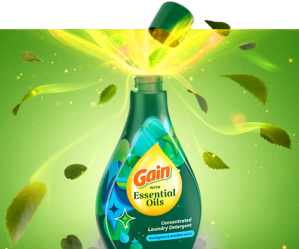
Household products are trending the same way. Swiffer wants you to mop with “a clean home and a clear mind” and suggests a facial treatment while you’re at it. They switch “clean the counter” to “give your surfaces a little TLC” (as if your surfaces are close friends). Proctor & Gamble fortifies its “Gain” laundry detergent with essential oils like lavender and eucalyptus, touted for their calming effects. “Clear Your Mind with a Cooling Clean! A Soothing Scent with a Mindful Twist!”
Call me one-in-five (not compulsive) because P&G research claims 20% of us clean to relax or reduce stress. Sure, but we also clean to clean.
I never thought about laundry this way but the Journal article likens clothes-cleaning to problem-solving (which we guys are all about). Sort the clothes, dose the detergent/softener, fold according to best-fit in drawers, and then put everything away. It’s a process, and it’s a new puzzle every time.
To take it one step more spiritual, household chores are considered seva – a form of selfless-service. Says one yogi about dirty dishes, “You’re reminding yourself you’re washing for the divine grace that flows through your husband, your wife, your children, or your parents.” Whoa now. Me, I’m just washing dishes.
I’ve neglected to mention another household chore: cleaning bathrooms. It can be “healing” sponging the porcelain to a sparkling-white shine, conducting the bowl brush in large, lazy circles, or returning to nature in the gentle flow of the sink (waterfall) or toilet (whirlpool). No, no, NO. I don’t do bathrooms. Not even if you ask Alexa to play “The Clean Up Song”.
Some content sourced from the 5/27/2020 Wall Street Journal article, “Sick of Cleaning? Turn It Into Meditation”.
When I was a kid – many moons ago – my mother made breakfast almost every morning; a service I full-on took for granted. She made eggs or pancakes a lot, but on days she ran late (or just didn’t feel like it) she’d put out big boxes of brightly colored breakfast cereal. Lord how my brothers and I heaped our bowls with those chemical-laden nuggets. Lucky Charms. Cap’n Crunch. Frosted Flakes. Sure beat the horrid porridges my mother also chose to make. So, forgive my double-take when I sat down to a delicious helping of steel-cut oats the other day, deliberately passing up a beckoning box of Golden Grahams.
bo-r-r-r-r-ing…
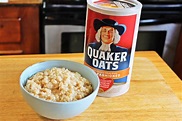
Like tomatoes, avocados, and yogurt, I have zero fond memories of hot cereal in my childhood. I recall coming downstairs for breakfast, and before even reaching the kitchen I’d smell the distinct nastiness of cooked grains. Quaker Oats. Cream of Rice. Cream of Wheat. Wheatena (the worst of them all). My mother had more choices for hot cereal than she had sons (and she had a lot of sons). It’s like she wanted us to vote for “blandest breakfast”. Mercifully, she allowed small amounts of brown sugar and/or raisins to sweeten things up. And milk. Lots and lots of milk.
I should’ve figured this out decades ago. Hot cereal’s a whole lot better with fresh fruit (raisins are a poor excuse for fruit). Strawberries, blueberries, apples – they all turn “mush” into an appealing “meal”. And the learning curve continues. Rolled oats are better than instant oats. Steel-cut oats are way better than instant oats. And lest you’ve forgotten: anything is better than Wheatena (even tomatoes and avocados).
Tell me this: when was the last time you used “porridge” in a sentence (Brits aside)? What an utterly dated word. The last time – the only time I uttered “porridge” was reading “Goldilocks and The Three Bears” or jigging to “Peas Porridge Hot” (“…peas porridge cold, peas porridge in the pot nine days old…”). My nursery-rhyme days. Porridge doesn’t have a modern ring to it (did it ever?) and yet that’s exactly what we’re talking about today by definition: hot breakfast cereal made by boiling grains in water (or milk). Wikipedia counted ’em – all grain types included – and came up with seventy-five distinctly different porridges. Doesn’t matter. If I’m a kid I still opt for Froot Loops.
You need porridge trivia for your next socially-distant gathering and I’m happy to oblige. Consider the following:
Whole-grain oats date back to 7,000 BC, which sounds like dinosaur times to me (even though it isn’t). The Chinese and the Greeks made claim to the first versions of porridge back then.
Lisa Williams and “The Golden Spurtle”
If you’re supremely proud of your cooking, there’s a World Porridge-Making Championship in Scotland every October. The list of winners looks suspiciously Scottish (i.e. “Duncan Hilditch”, “Ian Cruickshank”, “Addy Daggert”) but last year’s champ was England’s Lisa Williams. She earned “The Golden Spurtle“, which begs a most excellent trivia question: What do you call a stick for stirring porridge?
In 1755 it was documented oats were horse food in England but people food in Scotland. Not exactly a boost to Scottish pride (although to be fair the people’s version was cleaned, toasted, hulled, and cooked).
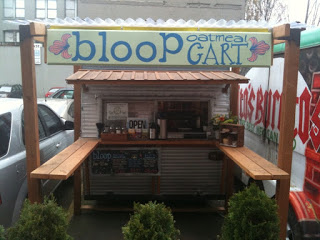
In Portland, OR you used to be able to buy hot cereal from an oatmeal-only food cart. “Bloop” – with made-to-order mush like “Peanut Butter Banana Dreams” and “Good For You Goodness” – shuttered its wheels in 2011 after a single year in business. I get it: oatmeal’s no passing fad but it’s also no passing food truck.
Your standard can of oats (18 oz.) contains over 26,000 grains. Don’t count; just trust.
The oat capital of America is (drum roll…) Cedar Rapids, Iowa, home of most-popular-brand Quaker Oats. Small town, big factory.
Once upon a time, Quaker Oats included coupons in its oatmeal boxes redeemable for legal deeds to property in Milford, CT. Granted, the lots were only 10’x10′ but you could still be a landowner with a modest purchase of oatmeal. The whole scheme became a property tax collector’s nightmare and the lots were eventually condemned.
Speaking of the Quaker Oats Company, in the 1970’s they came out with flavored instant versions of their hot cereals. “Apples & Cinnamon” and “Maple & Brown Sugar” come to mind (“Ready in Just 90 Seconds!”). God answered my prayers to distance myself from Wheatena. Also deserving kudos, Quaker Oats used to own Fisher-Price Toys. Can’t you just picture the marketing division, trying to develop an “oatmeal plush” doll?
I’m devoted to my steel-cut oats these days but I’m not gonna pretend I’m not tempted by alternatives. Cheerios (especially the “Honey-Nut” variety) is the ultimate oat cereal. Life (especially the “Cinnamon” variety) is another delicious Quaker Oats product. And I’ll never get my childhood love for Lucky Charms out of my DNA. They’ll always be a little more “magically delicious” than porridge.
If you’re like me, you’re prepping meals at home more often than you used to. Your grocery lists are electronic or paper instead of in your head. You may even be meal-planning and on your way to becoming America’s next gourmet chef. But no matter the approach eventually you succumb to food out instead of food in. “Taking away” meals these days means navigating an app, a website, a drive-thru, a phone call, or for the really daring, an unscheduled appearance at the front doors. You never know which approach works until you try a couple. Sometimes you simply give up.
Case in point. Last Friday we took my wife’s truck for a service – scheduled just after sun-up. Leaving the house so early meant breakfast would be out instead of in. My first thought? McDonald’s. An Egg McMuffin is still a pretty good on-the-go breakfast, and navigating McDonald’s hasn’t changed (drive thru, pay at the window, drive away, enjoy). I also admit to a soft spot for the Golden Arches because I worked there in high school.
My wife had other ideas. Since a breakfast sandwich was the order of the day she wanted Einstein Brothers Bagels, and with good reason. Einstein’s offers a choice of five “classic” breakfast sandwiches and another seven “signature” specials: twelve different spins on bagels and eggs. While Egg McMuffins are assembled from just four mass-produced ingredients, Einstein’s creations are made-to-order adventures with options like chorizo, avocado, spinach, and mushrooms. If the choice is Einstein’s or McDonald’s it’s a no-brainer. Except now.
“Save time?” I beg to differ.
Not knowing Einstein’s take-away approach during COVID, I parked in front of the restaurant while my wife went inside to place the order. Nope. Einstein’s allows two options: DoorDash or order from the app. Well blast my bagels – DoorDash doesn’t even deliver to our neighborhood so it was either the app or go hungry. Fine. A quick download and I went in search of the “Order” button. Nope. Einstein’s wants an account first – phone number, email, birthday, credit card, and so on. Fine. At last we assembled our on-line order and I went in search of the “Pay” button. Nope. Einstein’s makes you bank a minimum balance first (and welcome to “Shmear Society Rewards”). Really? A cash reserve for a breakfast sandwich? Once and for all, nope. I X’d out of the app, deleted it from my phone, and left a skid mark or two as I accelerated away.
“McDelivery?” Not necessary.
McDonald’s was also on the way home, a couple miles up the road. We didn’t have their app either but so what? Order at the drive-thru, pay at the window, drive away with an Egg McMuffin, enjoy. We even splurged on hash browns (and an order of breakfast sausage for the dog). A McDonald’s breakfast for two people and a pet costs far less than a similar order at Einstein’s. Was my Egg McMuffin forgettable? Yes. Did I consume my sandwich within minutes of leaving the restaurant? Yes (today’s Egg McMuffin is smaller than your palm). Did I wish I’d had a custom-made Einstein’s instead? Of course. But not if I must jump through a bunch of electronic hoops to get one.
I want to support restaurants through the COVID pandemic; I really do. Our favorite Mexican place has nothing electronic, so you just place a phone order and take-away fifteen minutes later. Our favorite coffeehouse is a converted bank, so it’s drive-thru, pay, and go, lickety-split. That’s all I’m asking for: simple process, no hoops.
Einstein’s theory of relativity assumes accelerated motion (say, a car pulling away from a restaurant with an order of food). Einstein’s Bagels requires decelerated motion (say, the unanticipated time to download, setup, and bank-load their app). Take your pick: Einstein’s approach or Einstein Brothers’ approach? For me, it’s Albert’s way every time.
LikeLoading…
About Me
The sky is not completely dark at night. Were the sky absolutely dark, one would not be able to see the silhouette of an object against the sky.


 Perhaps you’re not familiar with Forrest Fenn. Hardly anybody would be, were it not for Fenn’s decision back in 1988 to set aside $2 million of his amassed fortune as a reward for an ambitious treasure hunt through the vast Rocky Mountains. Gold nuggets, rare coins, jewelry, and gemstones; all piled up together inside a twelfth-century bronze box and cached in a region of over 500,000 square miles. Treasure hunt indeed… but no treasure map! Instead, Fenn documented clues in the stories and poems contained in his self-published book, The Thrill of the Chase: A Memoir.

 Ten days ago, Fenn acknowledged the (apparent) hunt winner and he/she possesses the (supposed) treasure. No doubt this isn’t the last of the eccentric tale of Forrest Fenn. I hope we tune into the news one of these nights and see our latest Indiana Jones, posing in front of the heaping bronze chest like a lottery winner with a giant check (please also, with fedora and bullwhip). I hope Forrest Fenn is posing right there alongside him/her, and prepared to detail this crazy adventure from start to finish. Then we’ll know whether the inevitable production from Hollywood will be fact or fiction.
 Take a good look at this photo. My wife and I have this weird assortment of foods on our kitchen counter right now. Store-brand hamburger buns. A half-loaf of “artisan-style” marble rye against the backsplash. Below both, a package of ready-to-use French-style crepes. To the right, a spaghetti squash and a handful of wrapped Lindor truffles. To the further right, an oft-visited plastic container of peanut butter pretzels, fronted by a watermelon just itching to join a fruit salad.
 For Pete’s sake though; no matter the magnitude of my banana hate, the yellow curvies still find a way to remain relevant. Take this pandemic for instance. Stuck at home means more time in the kitchen. More time in the kitchen means comfort food, and comfort food includes baking bread. Sourdough. Pizza dough. Baguettes. Challah. Naan. Sadly, we rookie bakers discover the ingredients in our pantry are as past due as our bills. Way past due. Flour tastes sour. Honey ≠ sugar. Past-its-prime yeast does not make the loaf say, “All rise!” Even with fresh ingredients we butcher the recipe by feeding, kneading, and reading too much into every step. Instead of baking bread we’re breaking bread. We need a no-brainer no-spoiler kinda baked good. Banana bread to the rescue!
 Banana bread is easy; it really is. Call yourself a breadmaker with as few as five items – none of them “yeast” or “starter”. Sift together flour and baking soda. Whisk together eggs, butter, and mashed bananas (mashed bananas? Isn’t that what I threw up regularly as a kid?) Combine in a loaf pan, bake, and voila – banana bread. You’ll find the first four ingredients in your pantry already and if you also have bananas, they’re probably overripe (i.e. perfect for banana bread). Just like the bananas on my kitchen counter. I made the mistake of picking them up when I took the above photo. They’re so ripe they feel like half-filled water balloons. Or half-filled hot dogs. Or Twinkies submerged in water for a few hours. You get the idea. Ewwwwwww.
 Enough with the spotlight on bananas already. Trust me, I had better topics to blog about this week. My pandemic-born obsession with Netflix. A lamentation to Major League Baseball for a season that’s never gonna start. A keyboard pounding to the heavens for dumping several inches of snow on our neighborhood this week (for God’s sake, it’s June!) But no, I chose to discuss the best use of “water-logged Twinkies” instead, keeping bananas a front and center topic. Kind of like walking into the grocery store and the very… first… thing… in your field of view is an acre of bananas grinning their pathetic yellowy smiles. They should go back to the jungle where they belong. I’ll make do with soury-dough bread instead.
 Google The Clean Up Song and you’ll find several dozen versions to choose from. Cleaning-to-music for kids has been around a little while now. I wish we’d used this approach more often when our own children were little. It’s a song! It’s a game! It’s almost whistling while you work.
 Lest you think me compulsive, a recent Wall Street Journal study comes to my rescue. During these stay-at-home times – locked-down residents find similar stress relief in housework. Washing windows allows the slow, deliberate wax-on-wax-off zen of “The Karate Kid”. Cleaning countertops tempts flowing dance, like Julia Stiles in the diner in “The Prince and Me”. Ironing doubles as light weightlifting. And vacuuming? Nah, I got nothing there. Vacuuming’s still just a chore.
 Call me one-in-five (not compulsive) because P&G research claims 20% of us clean to relax or reduce stress. Sure, but we also clean to clean.
 I should’ve figured this out decades ago. Hot cereal’s a whole lot better with fresh fruit (raisins are a poor excuse for fruit). Strawberries, blueberries, apples – they all turn “mush” into an appealing “meal”. And the learning curve continues. Rolled oats are better than instant oats. Steel-cut oats are way better than instant oats. And lest you’ve forgotten: anything is better than Wheatena (even tomatoes and avocados).
 Tell me this: when was the last time you used “porridge” in a sentence (Brits aside)? What an utterly dated word. The last time – the only time I uttered “porridge” was reading “Goldilocks and The Three Bears” or jigging to “Peas Porridge Hot” (“…peas porridge cold, peas porridge in the pot nine days old…”). My nursery-rhyme days. Porridge doesn’t have a modern ring to it (did it ever?) and yet that’s exactly what we’re talking about today by definition: hot breakfast cereal made by boiling grains in water (or milk). Wikipedia counted ’em – all grain types included – and came up with seventy-five distinctly different porridges. Doesn’t matter. If I’m a kid I still opt for Froot Loops.
 In Portland, OR you used to be able to buy hot cereal from an oatmeal-only food cart. “Bloop” – with made-to-order mush like “Peanut Butter Banana Dreams” and “Good For You Goodness” – shuttered its wheels in 2011 after a single year in business. I get it: oatmeal’s no passing fad but it’s also no passing food truck.
 Speaking of the Quaker Oats Company, in the 1970’s they came out with flavored instant versions of their hot cereals. “Apples & Cinnamon” and “Maple & Brown Sugar” come to mind (“Ready in Just 90 Seconds!”). God answered my prayers to distance myself from Wheatena. Also deserving kudos, Quaker Oats used to own Fisher-Price Toys. Can’t you just picture the marketing division, trying to develop an “oatmeal plush” doll?
 I’m devoted to my steel-cut oats these days but I’m not gonna pretend I’m not tempted by alternatives. Cheerios (especially the “Honey-Nut” variety) is the ultimate oat cereal. Life (especially the “Cinnamon” variety) is another delicious Quaker Oats product. And I’ll never get my childhood love for Lucky Charms out of my DNA. They’ll always be a little more “magically delicious” than porridge.
 Case in point. Last Friday we took my wife’s truck for a service – scheduled just after sun-up. Leaving the house so early meant breakfast would be out instead of in. My first thought? McDonald’s. An Egg McMuffin is still a pretty good on-the-go breakfast, and navigating McDonald’s hasn’t changed (drive thru, pay at the window, drive away, enjoy). I also admit to a soft spot for the Golden Arches because I worked there in high school.
 My wife had other ideas. Since a breakfast sandwich was the order of the day she wanted Einstein Brothers Bagels, and with good reason. Einstein’s offers a choice of five “classic” breakfast sandwiches and another seven “signature” specials: twelve different spins on bagels and eggs. While Egg McMuffins are assembled from just four mass-produced ingredients, Einstein’s creations are made-to-order adventures with options like chorizo, avocado, spinach, and mushrooms. If the choice is Einstein’s or McDonald’s it’s a no-brainer. Except now.







 Life In A Word