
Hello, I’m Veronica
The sky is not completely dark at night. Were the sky absolutely dark, one would not be able to see the silhouette of an object against the sky.


-
Fantastic Plastic
On Christmas Day, any parent of small children will stifle a yawn, having built bicycles, dollhouses, and train sets the night before. After all, Santa doesn’t deliver unassembled toys. But hang in there a few years, Mom & Dad, because the building shifts from the giver to the receiver. Older kids want to create. In my generation it was Hot Wheels, Erector Sets, and Lincoln Logs. And one other toy surpassed all others for its ease of use and versatility. Lego.

This piano even plays! My Christmas gift from my wife this year was a grand piano. Can you top that? Okay, so it wasn’t the kind worth five figures or special movers to get it across the threshold. My piano measures a mere 12″ x 14″ and comes from the Lego “Ideas” collection. When it’s finished it will have been built from 3,662 individual pieces. I can’t wait to get started.
 A grand piano made of Legos means the simple interlocking blocks I had as a kid have come a long, long way. Lego Ideas sets are “products inspired by and voted for by Lego fans”. The collection includes a typewriter, a ship in a bottle, the house from the Home Alone movies, and the apartment from the Seinfeld sitcom. Every Ideas product involves thousands of Lego pieces to assemble. Every Ideas product was also completely sold out for Christmas on the Lego website.
 Fifty years ago, Lego was blessedly innocent. All you had were small bricks in primary colors and if you were lucky, a paper set of instructions to create a simple house or a vehicle. Otherwise, you just built whatever your imagination could come up with. When my own kids were kids, Lego moved to product-specific sets like a T. Rex from Jurassic World or an X-wing Starfighter from Star Wars. Sure, they looked cool when they were built, but I was always skeptical because the sets removed creativity from the experience. You’d just follow the step-by-steps in the little booklet and voila – a T. Rex. But call me a hypocrite because this sixty-year-old can’t wait to build his step-by-thousand-steps Lego Grand Piano.
Lego has an interesting history – too many chapters to cover here. The numbers tell the story in a nutshell. The Denmark-based company is considered the largest toy company in the world. Their bricks have inspired movies, video games, building competitions, and eight amusement parks. Their factories have been churning out little plastic pieces for almost 75 years. And at last count, that pile of pieces surpassed 600 billion (or 75 Legos for every man, woman, and child on earth).
 I didn’t expect to be a Lego fan as an adult but then came the Architecture series in 2008, cool buildings like the Taj Mahal, Eiffel Tower, and Empire State Building. I just had to have one, so last Christmas my wife gifted me the 1,032-piece United States Capitol Building. I didn’t clock how long it took to complete but I must’ve looked awfully confident in the assembly because now I’m staring down the more daunting Grand Piano. Maybe my wife wants me locked down in my home office for the next several months?
To underscore the popularity of Lego these days, the Architecture series alone includes 50 buildings and cityscapes, with more coming out each year (the Taj Mahal was released just last summer). These sets run anywhere from $50 to $250, with the discontinued ones setting you back three times as much. Sure, I’d love a Lego version of Frank Lloyd Wright’s “Fallingwater” house, but I’m not going to pay $800 to a collector just to have one.

Lego “Church of Christ” No discussion of Lego would be complete without a nod to custom creations. Our local Scheels department store has a larger-than-life Denver Broncos football player made of Legos, posing front and center in the toy department. The Church of Christ creation in the photo here didn’t forget seating for an 80-member choir (below the big yellow crosses). And the biggest custom creation of them all? A full-scale Lego replica of the previously-mentioned X-wing Starfighter, first displayed outdoors in New York’s Times Square. Try to picture 5.3 million Lego pieces and 23 tons of “toy” in the shape of a fighter jet. Or just check out the photos here.
Now that I’m done writing it’s time to break open the first bag of pieces to begin my Lego Grand Piano (and time for you to watch the ingenious stop-motion video below). I’ll use the stopwatch on my iPhone to capture the hours I consume to complete it. Er, days? Weeks? I mean, Rome wasn’t built in a day. Neither is a grand piano. You might want to check in with me next summer to make sure I haven’t gone bats.
Some content sourced from Wikipedia, “the free encyclopedia” and the Lego.com website.
-
Fa-La-La Land Down Under
I have two nieces who, along with their families, call islands their homes. One lives on Hawaii’s Oahu, her house perched on the cliffs above Honolulu with sweeping ocean views to the west. The other lives in Brisbane, on the east coast of Australia. Sure, Australia isn’t really an island, though it is surrounded by water. By definition its landmass makes it a continent instead. But Australia does lay claim to a few islands off its shores. Including one named “Christmas”.

Christmas Island’s picture-perfect “Flying Fish Cove” Imagine living in a world so small you can walk from one end to the other in less than two hours. Your fellow islanders are so few, your entire social life is like living in a college dorm. Your diet consists of fruits, nuts, and crab. Lots and lots of crab. And the single contribution you and your island-mates make to the outside world is phosphorous from your underground mines. That, in a crab shell, is life on Christmas Island.
 The first time someone told me there was a “Christmas Island”, I was young enough to be watching Rudolph the Red-Nosed Reindeer every December on TV. My favorite part of Rudolph’s story was the “Island of Misfit Toys”. You remember, don’t you? Rudolph was the reindeer-a non grata, mocked by the others because of his shiny nose. Along with a couple other outcasts (Hermie, Santa’s elf who’d rather be a dentist, and Yukon Cornelius, the prospector who can never find silver or gold), Rudolph discovers the Island of Misfit Toys. The island is a repository for unwanted toys. As sad as that sounds, Rudolph’s island brings Christmas to mind much more than the little landmass I’m talking about today.
Palm trees (not pines) on Christmas Island If you wonder why you’d ever visit Christmas Island, consider almost 65% of the island is a national park of unspoiled rainforest, with walking paths past 25 species of trees and 135 species of plants. The only animals you’ll spy in the forest include the “flying fox” fruit bat, the recently introduced Javan deer, and the golden bosun (the island’s “official” bird). Outside of the forest however, it’s impossible to miss the crabs. Coconut crabs. Red crabs. Thirteen different species of land crabs, let alone those who prefer the ocean. And here’s the best part. Every year, one hundred million of them migrate from solid ground to water (to spawn), a sight mind-blowing enough to be called “one of the wonders of the natural world”.
Watch the following short video on the chaotic Christmas Island crab migration. Makes you wonder how you can walk anywhere without getting “crabs”. If this is something you simply must see in person, find your way to Perth on Australia’s western mainland, and book one of two weekly flights to Christmas Island courtesy of Virgin Airlines. Your 3+ hours in the air will take you over nothing but the vast Indian Ocean.
It’s high time we addressed the most burning question about our little fa-la-la land down under. Why is it named Christmas Island? Here are popular theories. One, “The rainforest is made up of nothing but evergreen (Christmas) trees.” Two (for the geographically challenged), “The island is the closest landmass to the North Pole.” And three “Christmas Island was the origin of the species diospyros virginiana, more commonly known as the sugar plum tree.” The correct answer? None of the above. In the 1600s, European explorer Richard Rowe first set foot on the island, doing so on December 25th. With no more creativity than a glance at the calendar, his discovery was dubbed Christmas Island.

Norfolk Island pine I’ve got a much better “Christmas Island” for you. Flip over to just off the east coast of Australia and you’ll find an even tinier landmass called Norfolk Island. It’s about a quarter the size of Christmas, with the same number of inhabitants. But Norfolk Island’s primary export is much more “Christmas” than phosphorous. It is the evergreen Norfolk Island pine, a popular ornamental tree in Australia. My wife and I found one at Home Depot a few years ago and bought it for her mother. For small spaces, Norfolk Island pines make great Christmas trees.
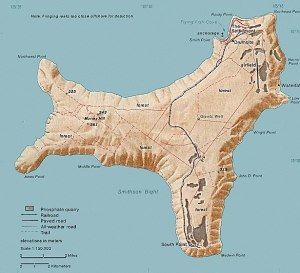
“Christmas” looks a little like an Aussie Shepherd! In defense of Christmas Island, there’s more going on within its shores than phosphorous and crabs. Most of the residents live in the northern area of the island surrounding a coastal region known as Flying Fish Cove. They speak one or more of five different languages. There’s a high school and a public library. There’s even a cricket club, which just celebrated sixty years in the game. And most fitting to this time of year, twenty percent of the population call themselves Christians. In other words, despite the uninspiring reason for its name, Christmas really does come to Christmas Island.
Some content sourced from Wikipedia, “the free encyclopedia”.
-
Christmas-Colored Glasses
 The twenty-minute drive from my house to the gym is fairly nondescript. The streets are two-lane straight with a few turns and traffic lights along the way. Not much to look at on a winter’s morning. But the month of December brings about a miraculous change. With the car stereo belting out songs of the season there’s suddenly a lot to see through the windshield. It’s as if I’m viewing the world through Christmas-colored glasses.
Maybe you’re like me when you’re on the morning drive. You’re half-asleep, a little bit late, and the slightest miscue by another driver puts you in a bad mood. I try to blank out the world around me by toggling my radio presets between news and sports. It’s a wonder my lack of focus gets me to the right destination. But Christmas music changes all that. The happy tunes bring everything back to the crystal and clear. They’re like a gift for the spirit.

Two radio stations in this part of Colorado switch over to Christmas music in December. An adult contemporary station runs an endless loop of about thirty “holiday favorites” from Thanksgiving to New Years Day. I’ll bet they play the Boston Pops’ version of “Sleigh Ride” and Mariah Carey’s “All I Want for Christmas” four or five times a day. It gets old. But they also play the best of Nat King Cole, Frank Sinatra, and Andy Williams so I forgive them. Then we have our Christian contemporary station. Their round-the-clock Christmas playlist keeps it fresh, with more carols than pop songs. They’re a little more in tune with the reason for the season.
Earlier this week I absentmindedly tuned back to one of my regular music stations. Mistake. Their version of celebrating the season had people calling in to say why they deserved to be on “Santa’s naughty list”. One caller said she babysat recently and told the misbehaving child Santa died of COVID. Another said he slept with his ex’s sister and a week later slept with the sister’s best friend. Seriously? This is the spirit of the season?

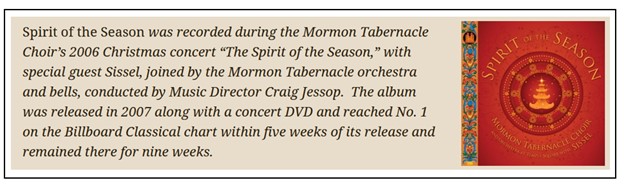
Spotify plays its part on my drive, especially when radio stations bend to the inevitable commercials. But not playlists. Albums. Spotify Christmas playlists just don’t cut it for me. I have yet to find the perfect mix – you know, not too much of this, not too little of that. I think Christmas albums by individual artists or groups do a better job of a “just right” playlist, which is why I’m peppering this post with three of my favorites.

Now then, let’s get back to those Christmas-colored glasses. Exactly what did I see on my twenty-minute drive? A lot more than I did before I tuned in to the season’s songs…
- Children headed to school, laughing and singing as they walked. I think we can agree; Christmas is all about children. Or at least, one child.
- Signs in front of churches advertising Christmas Eve services. Most offer a 5pm, 7pm, and 9pm option, meaning lots of people are heading to church on Christmas Eve. As we should be this year.
- A lone tree at the end of a driveway decorated with just two ornaments. What to make of it? Maybe a senior citizen lives here, and two ornaments are all he or she can manage. A reminder to gift to our local “Christmas for Seniors” program.
- A third-story apartment and its tiny balcony decorated with garlands, wreaths, and lights. Yes, all walks of life celebrate Christmas no matter the look of their “house”.
- The sign at the gas station advertising today’s fuel prices. Unleaded is advertised in red numbers, diesel in green. How’s that for impromptu Christmas decor?
- Our little town’s myriad Christmas decorations, covering trees, buildings, and lampposts, I may not always agree with the spending of our tax dollars but with this investment, they get it right year after year.
 This is my personal mandate for the 2021 holiday season. Take the rest of the month and listen to nothing but carols whenever you’re in the car. You’ll don a pair of Christmas-colored glasses and be amazed at what you’ve been missing around you. Believe it or not, the world looks pretty good right now.
Some content sourced from Wikipedia, “the free encyclopedia”.
-
O’ Come Let Us Adorn
There’s an older fellow in Egypt who wakes up every morning, throws on a flannel shirt and well-worn pants, and goes to his workshop behind the corrugated roll-up door of a small, industrial warehouse. Using ancient tools and techniques, he churns out hundreds of colorful, ornate, square cement tiles. He’s a true artisan, our tilemaker, carrying on his craft from many generations before him. His product endures amid countless mass-produced ceramic and porcelain alternatives. Perhaps our tilemaker would feel more at home in Lauscha, Germany. Lauscha is home to dozens of glassblowers, who still create colorful, ornate, Christmas ornaments by hand.

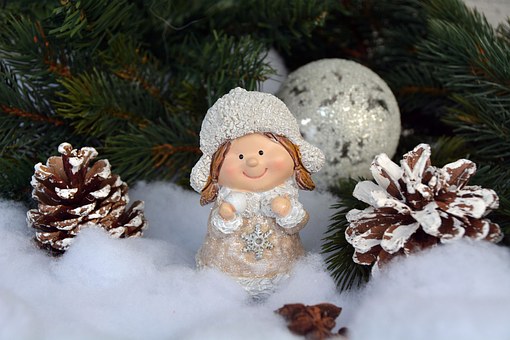
Lauscha “baubles” Every December about this time, my wife & I bring home our Christmas tree (real, not artificial – see Is It Live or Is It Memorex? for that debate). We take our tree through the same steps from start to adorned. First, fresh-cut the trunk, set the tree into the stand, and fill with warm water (and one baby aspirin!). Next, let gravity bring the branches down for a few days. Then, bring out the ladder, top the tree with the angel, and string the lights generously down all sides. Finally, adorn with ornaments. Our collection is larger than the real estate of any Christmas tree we buy, so there’s always debate on which ornaments make the tree and which are re-relegated to the closet for another year of waiting. In the end, we stand back and admire a pleasing mix of homemade, school-made, photo-framed, and collectibles.
You can never have enough ornaments, and the glassblowers in Lauscha would agree. The process they use to create the simplest of glass balls is already beyond my artistic abilities. For one, you must work fast because the molten glass cools in a hurry. For two, you must have steady hands as you add color and detail. Have a look at the following short video and you’ll learn a thing or two you never knew about making Christmas ornaments. My favorite part of the process? “Silvering”. Who knew the mirror-like aspect of a Christmas ball is painted on the inside of the glass?
Germans (and more people than I’d probably guess) refer to Christmas ornaments as baubles, which is ironic because Americans define a bauble as a “showy cheap trinket”. Nothing produced in Lauscha, Germany is a showy cheap trinket. Then again, Americans figured out how to mass-produce Christmas ornaments and the result is a generic, sometimes-plastic alternative to the real thing. “Bauble” indeed.
 The very first Christmas ornaments were anything but glass-blown baubles. You had fruit, candy canes, pastries, strings of popcorn, and whatever else you could find around the house. The Lauscha baubles then came along in the mid-1600s. Short of the post-WWII years (when the German government used the glass factories for more important products) they’ve been making them ever since.
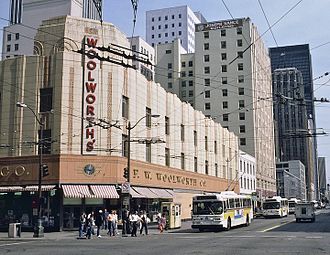
 Credit Woolworth’s once-popular department stores for the proliferation of Christmas ornaments in America. In the late 1800s, Woolworth’s started carrying the Lauscha baubles. Soon after, they stocked mass-produced American-made versions, taking tree-decorating to a whole new level. By the mid-20th-century, Woolworth’s was banking $25 million on Christmas decoration sales alone.
Hallmark “Keepsake Ornament” Hallmark jumped on the bauble bandwagon in the 1970s. Clever folks, those people at Hallmark. Their original ornament collection was made available only for the current year, followed by a new collection the following year, and so on. Today, Hallmark Keepsake Ornaments are so popular you have to join a club (just $49.95!) if you want to own their newest limited-edition ornaments.
As much as I’d like to add a Lauscha bauble or two to my tree, I prefer the more personal ornaments we hang instead. A dozen or more of them were designed around primary-school photos of our kids (“art projects”, they called them). Souvenir ornaments from favorite trips we’ve taken over the years. Several more with imprinted dates, to remind us of special occasions like weddings, births, or passings.
 Five years ago, I wrote my one and only work of fiction on this blog, a post about a Christmas ornament. It seems fitting to include a link to The Best Branch on the Tree, assuming you haven’t followed me that long. Because, you know, ornaments – er, baubles – have feelings too.
Some content sourced from Wikipedia, “the free encyclopedia”.
-
Going Home
Last Friday, my family and I hosted – at long last – an in-person service of thanksgiving for my mother, who passed away in late 2020 at the age of 92. Travel restrictions denied us the opportunity to gather sooner but this year’s Thanksgiving weekend seemed most appropriate. The service program included hymns, Bible readings, a biographical homily, and reflections from my four brothers and me. But it was another element – a solo of “Going Home” – which brought a flood of tears and took my breath away, all at once.
As if the singing of “How Great Thou Art” or the reading of Psalm 23 wasn’t moving enough, “Going Home” brought my emotions to an entirely new level. Sure, the song’s lyrics speak beautifully – to the peaceful transition from a life well-lived to what lies beyond – but it was the music that made my heart skip a beat. “Going Home”, you see, borrows its instrumentals from the Largo movement of Antonin Dvorák’s “New World Symphony”. And Dvorák’s symphony is one of my very favorite pieces of classical music.
I alluded to classical music when I spoke at my mother’s service. I took piano lessons for several years as a child, and it was my mother who pushed me to practice when I would’ve much rather been playing outdoors. It was my mother who faithfully attended my many recitals and competitions. And it was my mother, as a result, who I credit for my lifelong love of classical music.
The New World Symphony’s (NWS) Largo movement is instantly recognizable to anyone who knows classical music (listen to the first two minutes above if you don’t believe me). It may be the most beautiful solo ever written for the English horn; a short, meandering melody backed by soft strings. I can’t think of a more appropriate instrument for the Largo, even though the English horn is an orchestra oddball with its distinctive wail. Now layer the “Going Home” lyrics on top, as with the crystalline voice of Sissel Kyrkjebo above, and you wonder if music can get any better.
Following the English horn solo, the NWS Largo shifts to a minor chord passage which “evokes a nostalgic and desolate mood”, sometimes perceived as a funeral march. But let’s be clear; my mother’s service was no funeral. Rather, it was a blessed celebration attended by those who loved and admired her. I think Dvorák knew this because the NWS Largo leaves the funeral march behind and concludes with another round of the peaceful English horn solo. For me, this music brings a cleansing sigh, and a feeling of calm and content. Just as my mother would want it to be.
I’ve saved the best for last here. After my brothers and I finished our remembrances, my father spoke. He said – to my utter amazement – my mother had effectively written her own service, picking the hymns, readings, and solos. In other words, “Going Home” was no random choice; it was my mother’s preference. Just as the New World Symphony Largo movement is my own preference. Maybe she was aware of the connection? Maybe not but it doesn’t really matter. What matters is I’ll always remember her, especially when I hear the English horn.
I miss you, Mom.
Some content sourced from Wikipedia, “the free encyclopedia”.











About Me
The sky is not completely dark at night. Were the sky absolutely dark, one would not be able to see the silhouette of an object against the sky.
Follow Me On
Subscribe To My Newsletter
Subscribe for new travel stories and exclusive content.
 Life In A Word