
Hello, I’m Veronica
The sky is not completely dark at night. Were the sky absolutely dark, one would not be able to see the silhouette of an object against the sky.


-
Go On, Take the Money and Run
If you buy e-books through Amazon, you’re familiar with the option “send a free sample”. Rather than buying the book up front, Amazon sends the first 5% to your e-reader as a teaser. The sample cuts off abruptly (sometimes mid-sentence), but you get enough of a taste to decide whether you want to commit to the purchase or simply walk away.

Free samples are a genius sales tactics (think Costco), but I say free samples are saving graces for an often mediocre world.
Mediocre. It means you experienced something run-of-the-mill or commonplace. Think about the last food item you purchased. Would you say it was delicious? Like nothing you’ve ever tasted before? Would you rush back and buy another one? Probably not. Yet you ate the whole thing even though the first bite screamed “meh”. Why did you do that?
Here’s a better example. How often are you at the movies and twenty minutes into the film you start to wonder if it’s going to get any better. You become more interested in your surroundings than what’s up on the screen. For me, the first red flag is when I suddenly double-check my pockets for my wallet and car keys.
Sometimes you see people get up and leave in the middle of a movie – the bold ones. Do you leave? Chances are you don’t. You finish out the show, turn to the person you came with and say, “ah, it was just okay”. Again, why did you do that? You could’ve been gone almost two hours ago and salvaged the evening by doing something better!
I think we should apply Amazon’s “first 5%” to more of life’s experiences. At the movies, why don’t they flash a little question mark in the corner of the screen fifteen minutes in. If you’re not into the film you get up and leave at that moment, and the theater refunds you 20% of the ticket price. Sure they might have to charge a little more to offset the loss, but guess what? Movie producers would track the “leave” statistics and make better films.
The other night I saw the Harlem Globetrotters, an act I hadn’t seen since childhood. They’re not as entertaining as they used to be. The basketball is still impressive, but the slapstick comedy is dated, and the focus seems to be as much about their charity and the products they’re selling as it is about the show itself. Again, the “first 5%” rule says you decide within the first fifteen minutes whether to stay or go, and you get a 20% refund on your ticket. And, that ticket could be handed off to another line of patrons, who would then watch your remaining 80% for free (and probably buy enough concessions and products to offset the refund).
We’re in an election year. You may consider your choices for President mediocre. No problem. The “first 5%” rule says the winner has 75 days to make good on those “when I get in office” promises. If he/she comes up short, the Vice-President (or even more interesting, the runner-up) takes over and also gets a 75-days shot. Sure, I’m making the early months in office more demanding and the election process more complicated. But at least the VP would no longer be a figurehead. And you the voter would no longer feel like your “purchase” of the next four years demands a refund.
-
Old-World Charming
One of my favorite musicals is “Brigadoon”. The original production dates a long way back; to 1947. Brigadoon tells the tale of two Americans traveling in the Scottish Highlands. A town quietly appears to them through the fog: charming, simple and untouched by time. It is idyllic. To protect itself from the changing outside world, “Brigadoon” only appears to outsiders one day every hundred years. So when one of these travelers falls in love with a Scottish lass from the town, he only has a few hours to decide if that love means remaining in Brigadoon and disappearing into the fog forever. The ending is fitting (and not so predictable). I won’t give it away here.
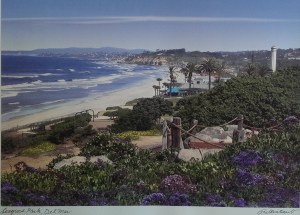
My own Brigadoon appears to me, once a year for only a week or two. Just north of San Diego lies the little coastal town of Del Mar. It is a quiet village by the sea, with pretty little shops and restaurants, a prominent hotel, and a train that whistles its way along the nearby cliffs several times a day. You can stroll leisurely from the beach to the center of town in a matter of minutes. You can sit in the park on the bluffs and lose yourself in the horizon. The flip-flop pace is slow and the carefree inhabitants always seem relaxed and happy. Like Brigadoon, Del Mar is simple, romantic, and idyllic.
I keep returning to Del Mar, just as I did when I was a boy. Growing up in the bustle of Los Angeles, Del Mar was only a two-hour drive south by car or an effortless journey by train; yet always seemed a world away. My family spent the summers at our house on the beach, including countless hours in the sand and surf. In those days – a half-century ago or more (gulp) – Del Mar was as modest a burg as you can imagine. The beachhouses were drab single-story wood-sided bungalows. A walk on the shore encountered a lot of seaweed and rocks and only an occasional shell. The town was unremarkable; more practical than boutique. My child’s eye recalls the 7-Eleven as a highlight; the only place a kid cared about thanks to its Slurpees and pinball machines. Del Mar’s drugstore was almost forgettable, except you could buy chocolate malt tablets (meant for indigestion but candy to us kids). The park contained a snack shack where you couldn’t get much more than a grilled cheese and a Coke. And my friends and I used to sneak under the highway through a culvert, giving us a back door entrance to the nearby horse-racing grounds. I can still picture the jockeys, exercising their thoroughbreds in the ocean waves.
Del Mar is a wholly different animal today. The draw of the coast, the consistently good weather, and the summer horse-racing season has transformed a modest locale into quite the tony address. The beach is groomed daily and the sand is marked into areas for swimming and other areas for games and still other areas for dogs. The hotel commands a nightly rate of $350. The park on the bluffs is all spruced up – no more snack bar – and used for concerts and festivals. A sunset wedding/reception sets you back $4k just for the use of the park. The local Starbucks sells enough coffee and tea to rank among the most successful locations in the country. The racetrack patrons hit the town in their Sunday best the first day of the season (think Kentucky Derby). And most notably, a house on the beach – with a very narrow slot of property abutting the ocean – cannot be had for less than $10 million. Yes, Del Mar is all dressed up these days and hardly simple.
But it’s still my Brigadoon.
My family and I make our annual pilgrimage to Del Mar every July. We leave behind landlocked Colorado for yet another taste of the sun and surf and salty air. And as soon as I arrive, the little town I remember reveals itself to me from the fog that has enveloped it over the years. The fancy shops, restaurants, and patrons step aside in favor of the simpler and more idyllic memories of the Del Mar I first fell in love with. If it were possible, I might just choose to take a leap – forever – into the Brigadoon of my yesteryear.
-
Left, Left, Left-Right-Left
I’ve never been a baseball fan, but I do like the nostalgic origin of the term “southpaw”. Baseball claims the word because early ballparks oriented their fields with the batter facing east (to avoid the setting sun). That put the pitcher facing west, and in the case of a lefty, his pitching “paw” to the south.

I am a southpaw myself. The more formal term for me and my left-handed brethren is sinistral. We are the ten percent of the world’s population who curse as we ladle from the punch bowl, write in our spiral-bound notebooks, or cut that not-so-straight line with our scissors. We are the annoying person to your right at dinner parties; the one who bumps your elbow every time we lift our fork.
Handedness is often determined in the womb but almost always by the age of two. Handedness suggests a tendency towards the opposite side of the brain (that is, left-handed people are more “right-brain” and vice-versa). But it is also believed that left-handed people have the hemispheres of the brain reversed, so that their right-brain skills actually reside in their left hemisphere. Confusing, no?
Whether left or right, the connotations go beyond the body itself. Left-brain people favor analysis, logic, and facts, while right-brains favor creativity, imagination, and feelings. I generally behave left-brain (which would confirm that reversed-hemisphere notion), but just to be sure I took the following 30-second test: http://braintest.sommer-sommer.com/en/ . Try it yourself. It tells me I am 59% right-brain. Huh? Then again – to squash this approach completely – logic tells me a right-brain person would not even subscribe to the idea that a test can determine these distinctions.
When we lived in San Francisco there was a small shop in Fisherman’s Wharf called “The Left-Hand Store”. Among its more popular products: watches that could be set from the left, measuring cups that could be read when held in the left hand, and notebooks spiral-bound on the right. They also sold an impressive selection of scissors and cutlery with the cutting edge on the -ahem – correct side. Finally, they sold a “Super Power” hoodie proclaiming “Left is Right”, which is really just a desperate plea for sympathy from all you righties.
We lefties may need super power to overcome the perception that we are out of favor in a right-handed world. After all, “right” connotes “correct” and “proper”, while sinistral connotes “unlucky” and “clumsy”. The English derived “sinister” from sinistral, while the French termed “gauche” for “left”, but also for “awkward”. Black magic is sometimes referred to as the “left-hand path”. Many cultures seek to convert their left-handed children to the right. Why is it never vice-versa? Hence the perception.
Admittedly, some tasks remain nightmarish when performed from the left. I will never again take chalk to board (as most ends up on my hand). My spiral notebooks will always be bound from the top, to avoid the indent of metal wire on the edges of my palm. My writing will forever be illegible since my hand curves awkwardly around the words I write, (to avoid smearing). And if I ever wish to play the guitar – or the accordion – I need to play them upside-down for the benefit of my more dexterous hand. At least Sir Paul McCartney feels my pain.
Here’s an interesting premise. It is said that more left-handed drivers die in accidents than right-handed drivers. Why? Because in the effort to avoid that head-on collision, we southpaws instinctively pull the wheel down to the left… which takes our car into oncoming traffic. At least in America. Perhaps I should move to England.
From the Facebook community That’s One Awesome Mommy, we read “Left-handers are wired into the artistic half of the brain, which makes them imaginative, creative, surprising, ambiguous, exasperating, stubborn, emotional, witty, obsessive, infuriating, delightful, original, but never, never dull.” Whoa. Now that’s what I’d call a left-handed compliment!
-
Can We Talk?
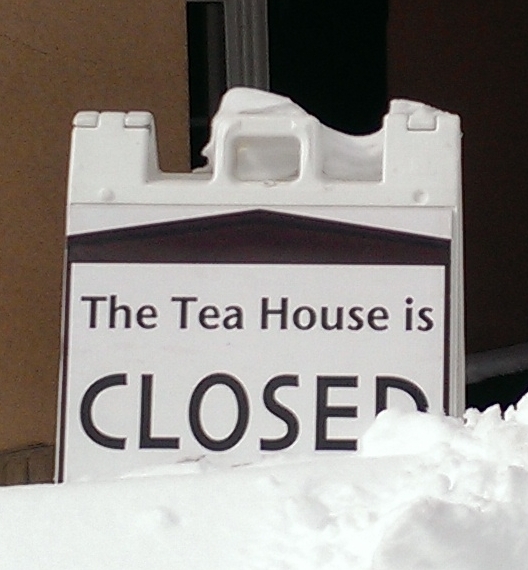
We lost a good friend last month. Wisdom Tea House, one of our local cafes, closed its doors for good after eight years of business (and a little snow). And that’s just sad.
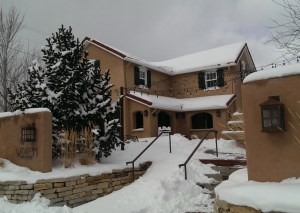
Why am I sad? Let’s start with a quick tour of the house itself. You walk in the front door to the roomy foyer, commanded by a large hutch with dozens of tea cups – choose your own – and a welcoming kitchen where you place your order. If the scrumptious lunch items don’t tempt you, the fresh-baked goods on display certainly will. Then choose from any room in the house and pull up a chair. Perhaps the living room with the small fireplace. Or one of the upstairs sitting rooms with their small couches and comfy chairs. Your tea and cakes will be delivered no matter where you sit. This could just as easily be your grandmother’s house.

Here’s what I’ll really miss about Wisdom. You won’t see people talking on their cell phones or working away on their laptops. You won’t plop down next to a large, loud group of people gathering after work for a drink. Wisdom’s music is quiet and instrumental. The tea and coffee are served in their simplest forms (no Oprah Cinnamon Chai Tea Latte here). In sum, they created a gathering place for requiescence – a bit of rest to escape the bustle of the world beyond the windows.
As I reminisce on Wisdom, I’m sitting at Starbucks. I typically appreciate the convenience of the drive-thru, but today I’m on the inside, observing Starbuck’s brand of “gathering place”. Open floor plan. Hard surfaces. Rock music. A few high tables for two and one large low table for many. Stools at a counter facing the windows with no view to speak of. The handful of patrons I observe are to themselves, engrossed in all forms of personal electronics. The few engaged in conversation raise their voices above the music and the baristas just to be heard. It’s all just so “un-Wisdom”. But that’s Starbucks – and it works. It’s grab-n-go coffee, especially with that drive-thru lane (churning out cars so much faster than people passing through the front door). Having your coffee inside a Starbucks almost feels wrong.
A few years ago my wife and I visited Ireland for the first time.. If you’re ever in Dublin, find your way along the cobblestones to Wicklow Street (just off the wonderful Grafton Street shops), and stop into a little cafe called Gibson’s. Gibson’s is akin to Wisdom Tea House. Order at the counter (the pear tarts are a must) and choose from one of the dozen small tables just beyond. Take in the gentle ambiance and soft decor, and breathe deep. The Irish come to Gibson’s to meet and to chat; to catch a break from the fervor that is downtown Dublin. We stopped in several times during our trip and it was always the same: happy patrons engaged in quiet conversation with – at least for the moment – no cares in the world. I can still picture one particularly well-dressed gentleman a few tables over from ours, sitting alone with his coffee and reading a book. The very picture of requiescence.
Perhaps you have a Wisdom Tea House in your town. A place the locals seek out to unplug, and to spend a quiet moment or two with each other. If you are so fortunate, be regular patrons and keep your little gathering place in business. Without Wisdom, our little town has precious few places to rest. We might as well just head home instead.
-
The Meal of Champions
Last weekend my family and I had breakfast at a small place in downtown Denver called “Syrup”. Syrup’s menu includes breakfast and lunch, but make no mistake; breakfast is king here. I chose the Eggs Benedict with corned beef hash, and all of us shared the Cinnamon Roll Waffle flight – a delight to the senses. It was a breakfast to savor.

Breakfast has always been my favorite meal, or should I say breakfast “out”. People always say “really?”, but I never hear them go on to say whether lunch or dinner is their favorite. Lunch is the neglected and oft overlooked meal of the three – perhaps a topic of its own for a future blog. Dinner represents 95% of what people mean when they recommend a restaurant. Maybe that’s what makes breakfast so endearing to me. It’s the most compact of the meals. Breakfast has its essentials and therefore creativity can only go so far. Dinner has no boundaries, but breakfast can go very wrong if you stray from the expected.
I’ve sampled several of the more exotic approaches to breakfast. I’ve been to the Cafe du Monde in New Orleans for the famous coffee au lait and French-style beignets (fried dough topped with enough powdered sugar to sneeze at). I’ve been to the little Danish town of Solvang, California for aebleskivers (pancake balls with fruit in the middle). I’ve even toured the Kellogg’s factory in Michigan, and to this day I still can resurrect the smell of cooked corn flakes. Put all that aside though, because breakfast for me comes down to just a few essentials on the plate. Eggs any style. Bacon or sausage (the requisite “protein”). And toast or some other form of carb load. At breakfast “out” the eggs may become an omelet or a skillet or a scramble. The bacon may be applewood-smoked and the sausage will have a hint of sage. The toast usually runs a distant second to a freshly-made waffle or fruit-topped pancake. But dress it down and the plate looks pretty much the same as what I prepare for myself at home.
I like breakfast because I’m a morning person (though not one of those restless souls who make it to 5am yoga). I also like breakfast because virtually everything on the menu appeals to me. Except bananas. If I ever opened a breakfast place you’d have to bring your own bananas.
Sunday brunch is not only a favorite meal but a favorite activity. I associate Sunday brunch with family and with special occasions like Easter and Mother’s Day. I love dressing up for church and going to brunch after the service. I love the serve-yourself aspect of brunch – the more options to savor the better. But the “unch” in brunch gets no love from me. As my family will attest to, my plate is always 100% breakfast.
I never understood the term “American breakfast” until college, when I spent a year abroad in Rome. I love the Italians and their “dolce vita” way of life. They perfected the coffee bar concept long before it became a staple in America. But they never gave breakfast it’s proper due. Indeed, “breakfast” in Italy is a small cup of espresso and a hard, barely-sweet roll, downed hastily at the counter before rushing off to wherever it is one is going. No eggs or bacon or pancakes. What’s the fun in that?
In Ireland breakfast essentials include tomatoes and blood sausage. I can’t come to terms with vegetables for breakfast, and blood sausage shouldn’t even be mentioned in a post about breakfast. Again, no fun on that plate.
Here’s an example of breakfast fun. In the classic movie Chitty Chitty Bang Bang my favorite scene is with the breakfast machine. Dick Van Dyke’s character creates the magical car of course, but he also creates a contraption that cooks and distributes eggs, sausage, and toast, all while the breakfast plate moves along a heated track, eventually rolling down to the table ready to eat. Genius.
Breakfast places – at least in Colorado – are a born-again trend these days. Rather than Denny’s or Waffle House we now choose from “Over Easy” or “Snooze” or “The Egg & I”. And in the ultimate nod to my favorite meal, McDonald’s recently changed their menu to include All Day Breakfast. I think McDonald’s gets my drift. Breakfast is not just “the most important meal of the day”. It’s the one that should be on the menu morning, noon, and night.




About Me
The sky is not completely dark at night. Were the sky absolutely dark, one would not be able to see the silhouette of an object against the sky.
Follow Me On
Subscribe To My Newsletter
Subscribe for new travel stories and exclusive content.

