Too Many Roads Lead to Rome

I’ve wanted to take my wife to Italy pretty much since the day we met. After a memorable college year in Rome in the 1980s I knew I’d go back one day, especially since I tossed a few coins into the famous Trevi Fountain before I left. Today however, I sit wondering if I really will set foot in the Eternal City again. Thanks to overwhelming numbers of tourists, Rome might as well put a “sold out” sign on its city gates. Blame it on the Catholics?

Trevi Fountain, Rome

2025, less than four months from now, is a Jubilee Year for the Catholic Church.  Maybe your idea of a jubilee is a celebration, much like Britain’s in 2022 when they honored Queen Elizabeth’s unprecedented seventy years of service to the Crown.  Not so the Catholics.  They define a jubilee – every 25 or 50 years – as a “marked opportunity for the remission of sins, debts, and of universal pardon”.

Catholic jubilees traditionally include a pilgrimage to Rome.  I’d love to know who runs the calculations (and how) but the forecast for next year in Rome has Catholic pilgrims at around 32 million… in addition to the 50 million tourists who normally pass through.  To put that total in perspective, the population of Rome is only 3 million.  That’s a whole lot of extra pepperoni on the pizza (or piazza, if you will).

[Side note: 1983, the year I lived in Rome, was an out-of-cycle Catholic jubilee known as the Holy Year of the Redemption.  Do I remember millions of Catholics “roaming” through the city streets?  I do not.  Then again I’m a Methodist, so maybe I have an excuse for missing the obvious…]

You call this a crowd? Just wait ’til 2025.

Thanks to next year’s jubilee, officials are clamping down on a visitor’s ability to see or tour the city’s most famous attractions.  The Fontana di Trevi is a good example of how things will change.  In the 1980s I could stand in front of the Baroque fountain to my heart’s content.  In 2025 I will need a ticket through a reservation system.  That ticket gets me entry through one side of the piazza and exit through the other, at a specific time and for a specific (amount of) time.  Hired “stewards and hostesses” make sure I don’t linger, and collect a 2-euro fee for the experience.

If I really wanted to be herded like sheep I’d join a flock on the green, green grass of Ireland, instead of paying for the privilege in Rome.  And speaking of paying, the Trevi already collects over $1.5M in coins voluntary thrown into its waters (the money then donated to local charities).  Add in the new 2-euro fee, and even if just 10% of next year’s visitors make it to the Trevi, Rome will nab an additional $18M.  Jubilee indeed.

St. Peter’s Square, Rome

If I sound jaded about Rome’s forced hand, it’s only because I have the perspective of a time when everything seemed so much easier.  In the 1980s I could wander through St. Peter’s Square without photo-bombing dozens of iPhones.  I could also wander without encountering a random protest about a religious war or climate change.  I still remember plunking down on the cobblestones of that grand piazza to paint a watercolor of the Basilica, and nobody bothered me.  I also remember Frisbee with a fellow student in another piazza, while the local Italians watched the spinning disc in wonder.  Innocent times indeed.
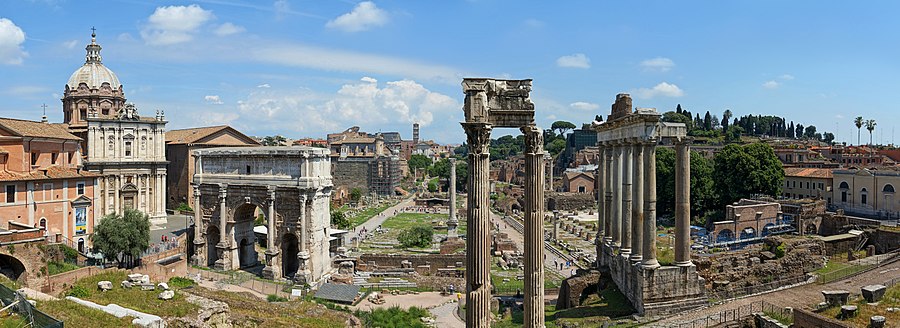
Roman Forum

In 2024, a guided tour of the Vatican (the only way to see it) – including the sublime Sistine Chapel – will set you back $50.  A tour of the Colosseum and Roman Forum will cost you twice that much.  I’m sure next year’s pilgrims will pay these fees without blinking a sin-forgiven eye.  I just can’t get past my free-and-easy days as an architecture student, when each of the city’s wonders was as wide open and come-on-in accessible as you can imagine.

The truth is I’d go back to Rome in a heartbeat, even if I knew untold millions of pilgrims would be standing alongside me.  The Eternal City is worth the look even if you never step inside any of its buildings.  On the other hand, if I’m patient and wait until 2032, it’ll be the 50th anniversary of my college year.  That calls for a jubilee!  I’ll be the only pilgrim of course (er, two of us counting my wife) but at least we’ll have no hassles dropping coins into the Trevi.

Some content sourced from the Skift Newsletter article, “Rome Tourism Chief Says There’s ‘Total Chaos’ at Trevi Fountain…”, and Wikipedia, “the free encyclopedia”.
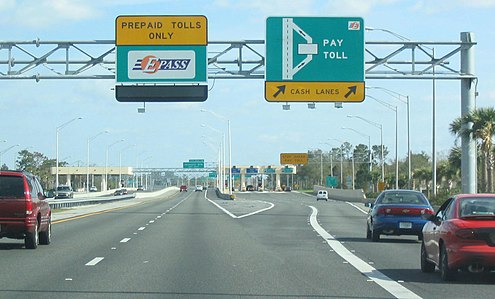
For Whom the Road Tolls

Because we raised our kids in Colorado, vacations to visit our extended families were often by airplane, since my relatives were in California and my wife’s were in Florida. It was the rare trip where we could see any of them by taking the car. So when my wife and I drove from South Carolina to Pennsylvania recently to visit my brother and his wife, we were reminded of what makes travel by car different than by plane. Toll roads, for instance.

Take your pick of payment

I have memories of toll roads my kids will never have. They’re old enough to remember passing through the booths and handing coins or bills to the collector. But they won’t remember the unmanned alternative, which was to toss exact change into a big plastic basket, listen to the coins process through the mechanics below, and hope/pray the gate to the toll road would raise. That automated approach seems almost quaint compared to today’s electronic alternatives.

I say alternatives (plural) because yes, that’s what we have with today’s toll roads. It confounds me. Why in heaven’s name haven’t we developed a painless, seamless, and most importantly, nationally coordinated approach to toll road payments? To some extent (nineteen states) we have a solution – E-ZPass, which by subscription and sticker allows convenient passage.  But even E-ZPass is not a perfect system.

Not so E-Z

For the rest of the country’s tolls – and for most of our round-trip drive between South Carolina and Pennsylvania – we have the clunky alternative. You pass through a now-unmanned (“un-personned?”) toll booth, where a camera grabs your license plate with a noticeable flash. Then, somewhere down the road (ha) a paper bill arrives in your mailbox. By my count I have four or five of these bills coming my way. It’s been ten days since we’ve returned home and I have yet to receive even one.

The cookie recipe is still on the back of the package

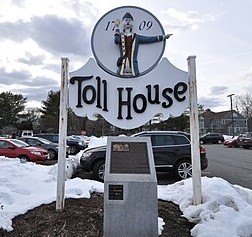
[Trivia detour:  Nestlé’s famous Toll House chocolate chip cookies aren’t named after toll booths but rather for an inn in Massachusetts where baker Ruth Wakefield came up with the recipe.  Wakefield and Nestlé struck a deal in the 1940s: her recipe printed on their bags in exchange for a lifetime supply of chocolate.  How very “Willy Wonka”, eh?]

Here is my unequivocally efficient approach to paying tolls across our many-highway’d nation. When you first get a driver’s license, you also sign up for a bank account-linked program which allows seamless paying of ALL tolls across the land – roads, bridges, tunnels, whatever – through a single readable sticker on your windshield. If you somehow don’t pay the tolls because of say, “insufficient funds”? Well sorry, your driver’s license doesn’t get renewed until you settle up at the DMV.

A $3 toll gets you through Baltimore’s Harbor Tunnel

My system is so logical it’s probably the reason I’ve never been pegged for a government job. In Colorado and elsewhere they almost have it right with the E-ZPass system – a sticker linked to a bank account. The problem is, they hold a minimum balance in a middleman (middle person?) account to guarantee payment of tolls.  I object, your honor. Why should Colorado have forty-odd dollars of my hard-earned money at all times when they can just settle up unpaid tolls whenever I renew my license?

Warning: cash-cow crossing

Then again, I have a beef with the tolls themselves, and that is, they pay for far more than the maintenance of the roads. You can’t tell me $10 per vehicle per crossing of the Golden Gate Bridge (GGB) is needed just to maintain the bridge. Here’s the jaw-dropping math for you.  112,000 cars cross the GGB every day.  That’s over forty million cars per year.  That puts the annual toll-taking at over four hundred million dollars.  $400M for bridge maintenance?  Sorry, fair traveler, you’re voluntarily lining the coffers of California (and San Francisco) every time you cross. “If I’m elected” (as we’ll hear countless times in the next two months), I’ll limit toll-taking to whatever it costs to maintain the bridge, road, or tunnel.  Not a dollar more.

On our return trip from Pennsylvania, I was amused to pass through one toll both with an actual human toll-taker. Those cordial people are still out there, collecting cash one car at a time. The woman in our instance happily returned us $19.25 on a $20.00 bill (and who’s happy to do that anymore?).

Time to bake cookies!

I was also amused… no, “gratified” is the better word; to pull into the parking lot of a South Carolina “rest area” shortly before we got home, for the use of a perfectly safe, clean, toll-free restroom on a toll-free highway. Maybe rest areas and their restrooms are the reason tolls cost more than the maintenance of the roads? Probably not. That would equate to a logical explanation for a government expenditure, which is an oxymoron.

Some content sourced from Wikipedia, “the free encyclopedia”.

Following the Leader

Technology birthed the self-guided tour. More and more often, an admission ticket to sights worth seeing grants you a pair of headphones and a wearable device instead of a name-tagged human to show-and-tell you the way.  Self-guided touring allows for a more convenient and less distracted experience.  But it also removes the storyteller, and that, my friends, makes all the difference between a memorable tour and a forgettable one.

Budapest, Hungary

Viking River Cruises, one of which we completed on the Danube River in early June (see Going With the Flow), provide a plethora of tour guide experiences.  On any given day of the cruise, you disembark to one or two “land-based” locales, in the (sometimes) capable hands of a personal tour guide.  Viking contracts with local agencies to provide these guides for small groups of its travelers.  For example, having a Hungarian show you the sights of downtown Budapest is so much more satisfying than hearing someone drone on about it on a headset.  Sharing a beer with a German on a tasting tour is almost like being invited into his house.

Nuremberg, Germany

If I ask you to share one of your own memories involving a tour guide, you’ll probably recall a particularly good one.  Maybe you’ll even remember a bad one.  Regardless, your stories would support my theory: a top-notch guide can make the what or the where of the tour almost irrelevant.  The guide himself or herself can make the difference between a memorable experience and a forgettable one.

Consider, I still remember a tour of a southern plantation with my family from almost fifty years ago.  Why?  Because the tour guide presented herself in a way that made me think we were being welcomed into her own house.  She also had this soft, syrupy unforgettable Southern accent that had me hanging on her every word.  Do I remember anything about the plantation?  No, but I sure remember the tour guide.

Szentendre, Hungary

So it was on the Viking cruise.  We had good guides and we had outstanding ones.  The very best of the dozen or so – ironically – was a young woman working on contract with Viking for the first time, as a stand-in for our scheduled guide in Munich.  She was, in every respect, delightful.  She started our tour with a greeting and a smile, then a little conversation and questions to break the ice.  As she led us from one sight to another, she spoke with an energy and pride in her city that can only be described as vivacious.  By the end of the tour, as the saying goes, she had us feeding out of her hand.  I was so enthralled I forgot to take a picture of her.

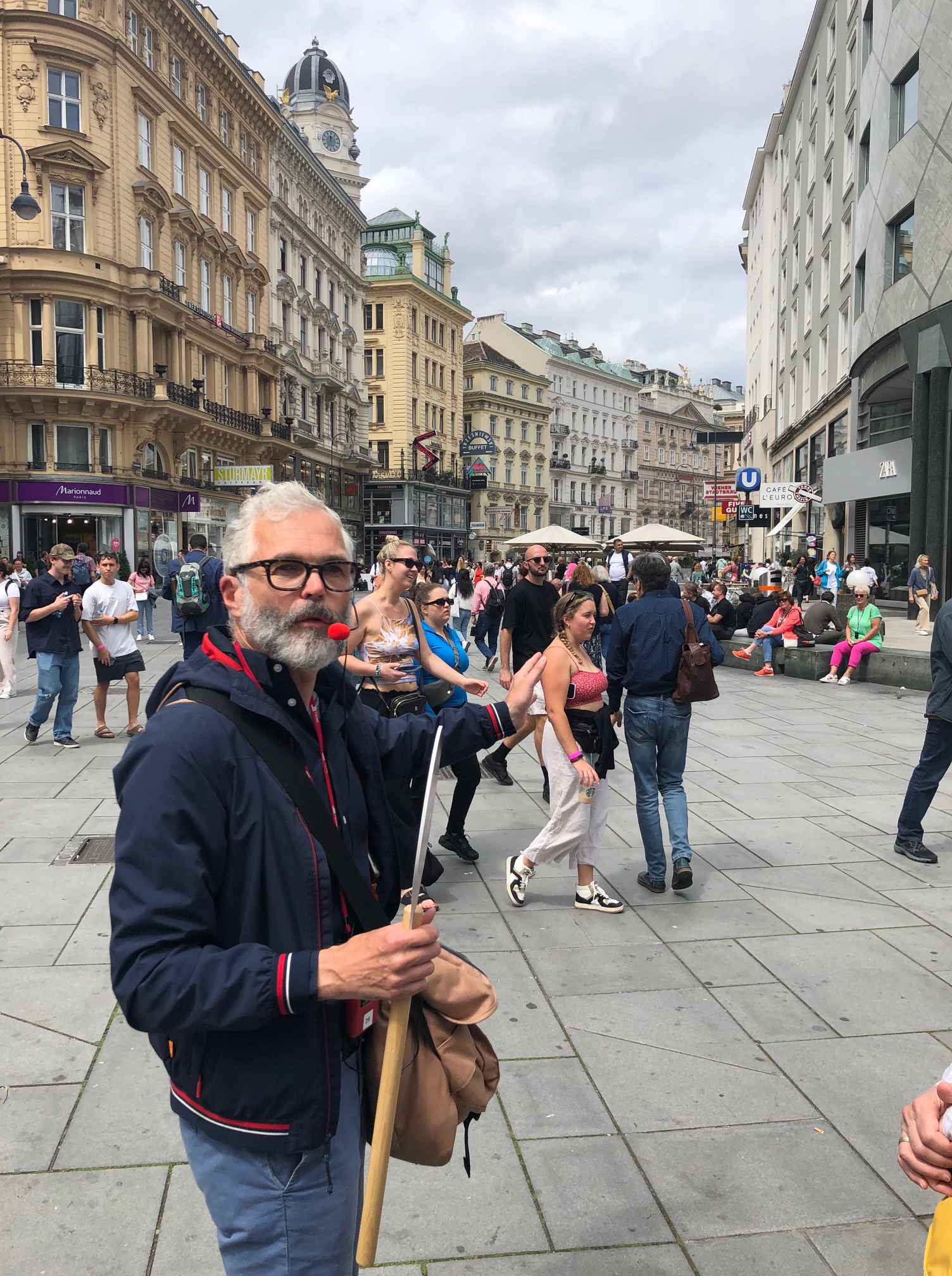
But we also had a lesser guide a few days earlier in Vienna, who I’d describe as a speed-walking encyclopedia.  He led us on a many-thousand-steps rush through the sights, filling our heads with facts and figure as he went, in a pretty thick Austrian accent.  He never smiled and I don’t think we ever stopped walking.  Can’t remember much about that tour (or him for that matter) because it was a rush-rush blurry overload of the senses.  I need to go back to Vienna again someday so I can (literally) stop and smell their famous roses.

Vienna, Austra

Courtesy of Viking and those many tours near the Danube, I present to you, therefore, the attributes of the consummate tour guide:

  1. A local, familiar with the city or sight at hand through regular exposure.
  2. A personality; warm, friendly, energetic, and engaging.
  3. An overflowing font of knowledge on his/her subject, able to answer just about any question thrown their way.
  4. A storyteller, able to weave anecdotes at will into the facts and figures to keep it interesting.
  5. In tune with his/her audience, making adjustments to the tour as necessary (ex. “Am I going too fast for you?”)

If you take enough sightseeing tours, you’ll know whether your guide is missing one or more of the above within the first five minutes.  You’ll also know whether the next hour or two will fly by or drag on for all eternity.  If your guide checks all five boxes, consider yourself lucky.  Most of us aren’t cut out for the job (myself included), whether we like to think we are or not.  It takes a special set of skills to be the leader everybody wants to follow.

Dave meets “Evy”

Renting a car at the airport used to be so hassle-free. You’d book the vehicle online, walk or bus to the parking lot, and bypass the counter by signing up for the company’s free membership program. All of that still happens, so what’s the difference today? You never know what vehicle you’re going to get, even if you choose the make/model ahead of time. And if you’ve never driven an electric vehicle (“Evy”) before, renting one is a real adventure.

Blame it on my laptop keyboard.  As I pecked my way through a recent Avis reservation, I inadvertently chose “Mystery Car” instead of “full-size sedan”.  Mystery car?  What the heck does that mean?  It means more flexibility for the rental car agency.  “Mystery car” means Avis gives you whatever it feels like giving you from its leftover inventory.  Maybe you get what you wanted.  Maybe you get a luxury vehicle for even less.  Or maybe you get Evy like I did.

I admit, I am not with the times of the latest vehicle technology.  I couldn’t tell you the first thing about operating Evy, let alone how she works under the hood.  So there I stood in the Avis parking lot, faced with the prospect of my first miles behind her wheel.  The rental companies should put a beginner’s guide on the driver’s seat for people like me.  I mean, imagine my hesitation (panic?) when I pushed Evy’s start button and nothing happened?  Something happened, of course.  The engine “started”; it just didn’t make any noise.  Yep, this was going to be a different kind of ride.

My first issue with Evy (or at least, the Genesis I rented) is the inexplicable need to make the dashboard wildly different than a conventional vehicle.  You don’t find the basic needs (ex. headlights, windshield wipers) where you expect to.  I actually considered talking to the vehicle instead of pushing random buttons, especially after my seat suddenly firmed up and vibrated when my I let my posture slip a little (“driver safety feature!”)  Seriously, all I’m asking for is dashboard buttons and levers where I expect them to be.

Once I found a modicum of comfort with Evy, the real challenge dawned on me: I have to recharge her before I go back to the airport.  And this, my friends, proved to be a challenge worthy of reality TV.  Those who already know Evy are welcome to say, “Oh c’mon Dave, it’s not that hard!” but truth be told, my charging station experience was just as daunting as the first time I pulled up to a gas pump as a teenager.

Credit Genesis, you can look up the nearest charging station right there on the dashboard.  The search gave me a choice of three.  The first station was in an Urgent Care clinic parking lot… and wasn’t working.  I’ve read that 15% of EV charging stations don’t work so now I’m a believer (EV Charging Flaw #1).

The next charging station option was in a McDonald’s parking lot.  When I arrived, both slots were occupied (EV Charging Flaw #2 – not enough to go around).  I have no problem waiting in line at gas stations but charging Evy takes a lot longer.  So I chose to drive another mile to the third option, a charger in a bank parking lot.  Nope.  No station to be found from one end of the lot to the other.  Genesis needs to update its locator software.

So back to McDonald’s I steamed went (and not for a Happy Meal, mind you).  The charging stations were still occupied, which begs the question, where do you form a line?  If I parked behind either car I’d be blocking their exit.  I’d also be blocking the McDonald’s drive-thru lane.  The only option was the parking space adjacent to the charging stations, with hopes of quickly maneuvering into an available charger before the next person pulls up (EV Charging Flaw #3).

This story only gets worse from here, so let’s keep it brief.  Once a station was finally available, I pulled in only to realize I had to face the car the other way for the charging cable to reach (EV Charging Flaw #4).  Then I tapped my credit card on the charger, only to find you have to download an app to make the station work; no cash or credit accepted (EV Charging Flaw #5).

Fifteen minutes later (because that’s what it takes when you only have one bar of wireless service – grrrrr) I got the app installed, the charging cable connected without electrocution (in pouring rain), and ta-dah… NOTHING!  Nada!  Zilch!  No “PRESS HERE TO CHARGE” or some other obvious way to get things started.  Instead, by the good graces of my EV-knowledgeable brother over the phone, I learned I had to zoom in on the tiny app map, identify the McDonald’s location of my charging station, and tap it (EV Charging Flaw #6).  Suddenly Evy’s gods smiled down on me through the thunderstorm and declared “Charge”.

To say I was giddy to make it back to the airport a day later without a dead Evy is an understatement.  To say I was the target of a sick joke when my very next Avis rental – same day, different airport – was a hybrid is undeniable.  But hey, at least a hybrid gives you the option of gasoline, so you get to fuel up the “old-fashioned way”.  Which brings me, humbly, to declare Dave Flaw #1:  Get to know Evy very, very well before your life – or at least your transportation – depends on her.

“Thoughtless Driving”

One of the inconveniences of living in a small town is the proximity to airports. In western South Carolina we actually have a choice of six, including tiny Augusta Regional just beyond the nearby Savannah River. But whether Augusta or one of the larger airports hours away on the East Coast, the drive to get there is mostly two-lane blacktop, speeding along and then slowing down through the small towns along the way. Correction. You’re supposed to slow down through the small towns.

Blame it on puzzle apps. My wife and I were just thirty miles into our eastward trek to Charleston International when we hit the pretty-much-forgotten small town of Springfield, SC. The speed limit sign suggested 25 through its residential streets. I chose 38 instead. Okay, I didn’t intentionally choose 38. I simply elected to ignore the laws of little Springfield, in favor of focusing on the puzzles my wife was trying to solve on her iPad. Maybe I missed the speed limit sign, but I did see the spinning blue/red lights on the police car sitting quietly in a church parking lot.

Here’s something all four of my life’s speeding violations have in common. As soon as each of them happened, I pulled over pretty much the moment the cop reached for his lights. My thought process went, “Hey, I’m breaking the law”, followed by “Hey, that cop noticed me breaking the law” and finally, “I think I’ll just pull over immediately and save him or her any further trouble”.

38 mph in a 25; yeah, that’s pretty bad. Totally deserved the ticket. At least it wasn’t another school zone this time. My last two speeding tickets, one in the middle of 1992 and the other around 2013, were earned as I passed by primary schools with loads of children on their playgrounds. Even worse, the 1992 ticket was collected from the driver’s seat of a midlife crisis two-door convertible Alfa Romeo Spider. Bet the cop loved ordering youngish me to traffic school in lieu of the ticket.

Speaking of “in lieu”, my Springfield, SC cop (who had nothing better to do because there’s nothing at all to do in Springfield) gave me a no-brainer choice in settling my flagrant speeding violation. Option 1: Pay the fine as advertised and earn four points against my driver’s license (“Ouch!”) Option 2: Pay an additional 30% on the fine and avoid the points entirely (not-so-“Ouch!”) Maybe Springfield’s not a bad little town after all… even if the ticket mocked my violation with a description of “thoughtless driving”.

Here’s the nice thing about making peace with a speeding violation before the cop even reaches the driver’s side window: you have a pleasant conversation. Officer: Do you know why I pulled you over?  Me: Why yes sir, I do, and here’s my driver’s license and registration. Officer: Okay Mr. David, let me spell out your options here (spells out options).  Me: Why thank you sir, I’ll take Option 2, if you please. Officer: Okay then Mr. David, pay the fine online and enjoy the rest of your day.  Me: And you too, officer!  It was almost as if a friendship was born over a speeding ticket.

I can’t talk about three of my speeding tickets without a mention of the fourth.  I made it through my high school driving years before ever getting pulled over – but just barely. It was on a graduation trip, where my parents loaned me their car and paid for enough gas to get me and a buddy a driving tour of the Western U.S. And right there in the middle of Colorado, streaking up the interstate towards the Rockies, I earned the blue/red lights for the very first time.

I will always remember two things about that first ticket. First, the officer gave me a personal escort to a nearby mailbox so he could watch me mail the check for the violation (no online or credit card option in 1980). Second, I turned to my buddy afterwards and said, “My parents are gonna kill me!”… which wasn’t true at all, but it’s how most teenagers feel after they get a speeding ticket in their parents’ car.

I doff my hat to those who make the effort to plead down a speeding ticket. I also admire those who continue driving after a violation, as if they don’t think the police car in the rear-view mirror intends to pull them over. Me, I embrace the fines for my brushes with the law.  It’s easy to claim accountability when you’ve only had four instances. And for the foreseeable future, I’ll be the most well-behaved driver behind the wheel.  You just won’t find me anywhere near Springfield, SC.

Connection Protection

The college my wife attended many years ago was a small Midwestern campus, maybe twenty buildings in all. Because of the extreme winter temps, the college had the foresight to install tunnels between the primary buildings, allowing for warm, comfortable walks from say, the dorms to the central dining hall. It’s the same concept my wife and I discovered in Nuremberg, Germany last month, only this tunnel complex was on a much larger scale.  And getting from Point A to Point B wasn’t its only intent.

Nuremberg, Germany

You’ll find Nuremberg in the center of Bavaria, the forested southwest region of Germany.  The city served as the final destination on our recent Viking River Cruise on the Danube.  Like Salzburg, Austria a few days before, Nuremberg is known for its “Old City” area (now surrounded by modern-day sprawl).  Once inside those towering protective walls, it’s like you’ve stepped back into the Middle Ages.  If there’s a more preserved city of the period, with its moats, castles, towers, and bridges, I’m not aware of it.

A walking tour of Nuremberg is impressive enough with the history, architecture, and stories, but what trumps everything about it is what lies beneath the city.  My wife and I signed up for an excursion called “Flavors of Nuremberg”, expecting to enjoy a culinary sampling of regional delights.  Indeed we did.  Our first stop was for a plate of Nuremberg’s famous white sausages (with a tall beer to wash them down). This could have been lunch alone, but we pressed on for more.

Our next stop was for Lebkuchen, or gingerbread.  It’s even more famous than the white sausages.  Here are two things to know about Nuremberg gingerbread.  One, it contains no ginger.  Two, it’s not nearly as sweet as its American counterpart (typical).  Okay, let’s add a Three: Lebkuchen is absolutely delicious.  We packed a pile of gingerbread cookies into our suitcases to give to family members (but most of them ended up in our own pantry).

Our final stop – of course -was at a Nuremberg brewery for several glasses of local beer.  But what I wasn’t prepared for was how we would get to our beer  Instead of just walking through the front door of Hausbrauerei Altstadthof, our guide took us to the top of a stone staircase, set right into the middle of a nondescript Nuremberg street.  The stair was surrounded by modest iron rails but otherwise would’ve been something you’d walk by without pause.  Our guide explained how the original brewery was located on this spot centuries ago, marked by a plaque in the street.

What followed might have been my favorite moment of the tour.  Our guide excused himself to “go get the key”, so he could unlock the imposing door at the bottom of the stairs.  The key was held by some nearby merchant and our guide had the credentials to borrow it.  I find that charming, versus typing on a computer keypad or gaining the approval of a German guard.  You just open the door with an old brass key.

Our guide returned, beckoned us down the stairs, opened the door, and away we went.  Or should I say, down we went.  Even after passing through the door fifteen feet below street level, we continued down what must’ve been the equivalent of three more floors of stairs.  Our guide stayed behind to lock the door behind us, so we kind of descended on our own.  The walls closed in and it got darker as we went.  Suddenly beer was the last thing on my mind.

Which way do we go, Mr. Guide sir?

What followed was the equivalent of rats in a maze.  Seriously, if I planned to gulp fresh air or glimpse daylight ever again, I was entirely dependent on the movements of our tour guide over the next forty-five minutes.  He’d turn here or turn there, beckon us down one tunnel or push us through another, and he stopped several times to click on or click off the bare bulbs weakly lighting our way.  We passed through several intersections where we could’ve spun off in half a dozen directions, to be hopelessly lost under the city forever.  We saw what looked like dungeons and prison cells.  Suddenly I really wanted a beer.  Above ground.

Dungeon, or just storage?

Our guide stopped us would-be-spelunkers at several junctures to explain the fascinating history of Nuremberg’s miles-long network of hand-dug tunnels, originally used in the making of beer, then used as the city’s prison, and finally, remarkably, used to hide the thousands of residents the Nazis sought during WWII.  It’s an amazing history I can’t begin to do justice in this post, but you can read more about it here.  Suffice it to say, us tourists had a taste of what it’d be like to live in suddenly protective, seemingly endless tunnels for months on end.  Not for the faint of heart.

Watch your step!

At long last, we carefully ascended another long, irregular staircase, and our guide unlocked the final door at the top, where we burst into the sunshine and fresh air of Hausbrauerei Altstadthof‘s colorful outdoor biergarten.  It was a surreal moment, being thrust back into modern-day civilization from the medieval tunnels below.  The several beers that followed not only quenched my thirst but also calmed my nerves.  This “flavors” city tour was unquestionably the most adventurous excursion of the entire river cruise.

Relief in a glass

There was a time, when we lived in Colorado, where my wife and I considered connecting our house to our nearby barn.  We thought, why not string together a series of shipping containers below ground, to act as a tunnel to keep us warm during the frigid winter months?  After our subterranean tour of Nuremberg, I wondered what we were thinking.  Better to just hoof it through the snow than to get lost in the grounds of Colorado forever.

Do-Re-Mi… Oh My!

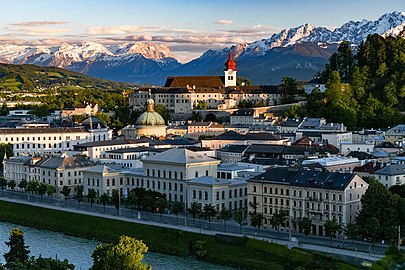
Salzburg, Austria, a day-trip destination from our recent Viking River Cruise, is a popular draw for tourists.  On most days you’ll find more internationals roaming Salzburg’s Old Town than you’ll find Austrians themselves.  The compact city is famous for its historic buildings: churches, palaces, and fortresses dating back 1,000 years or more.  Mozart was born here.  But try as they might, Austrians will never be able to separate Salzburg from what attracts many to its streets: The Sound of Music.

I can think of only one movie we forced our kids to sit down and watch while they still lived under our roof.  Close to Christmas one year (an arbitrary connection because of the lyrics of “My Favorite Things”), the five of us spent three hours together in front of our not-so-big-screen TV watching the somewhat true story of the von Trapp family.  I’ve lost track of the number of times I’ve followed Maria, the Captain, and those seven engaging children as they outwit the Nazis.

For all of the movies I’ve watched in my life (and I’ve watched quite a few), The Sound of Music stands alone.  I’d describe it as a jewel you display in an elegant glass box on the shelf, taken down every once in a while to appreciate up close. The Sound of Music is a feel-good story – if not accurate – produced in 1965 at the end of the Hollywood’s Golden Age.  It remains the most successful movie musical of all time (adjusted for inflation), but I question whether today’s movie-goers would appreciate it as much as I do.

Salzburg, Austria

Most tours of Salzburg include references to buildings and locations included in The Sound of Music.  Our own tour – cut well short because of the flooding of the Danube – was a brisk walk around the Old Town, with only an occasional mention of the movie.  What surprised me was not how little of The Sound of Music was actually filmed in Salzburg (most was done on sound stages back in the States) but rather the Austrians’ utter disdain for the movie.

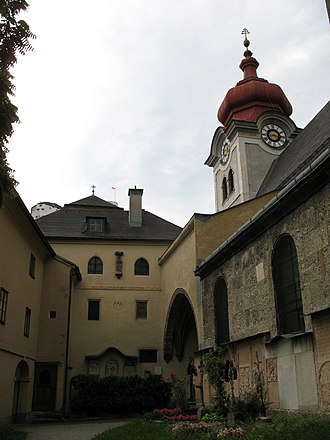
Salzburg’s Nonnberg Abbey

Consider, when it was first released The Sound of Music was only twenty years removed from the end of WWII.  The Nazi overtones of the film didn’t sit well with citizens of Austria and Germany.  Reviews (and box-office receipts) were not favorable in either country.  Coupled with the liberties the producers took with the story, you can see why Salzburg residents don’t exactly “Climb Ev’ry Mountain” to claim the movie as their own.

You’ll find endless trivia about The Sound of Music at IMDB.com and elsewhere.  Most facts are meant to point out discrepancies between the film and the actual story.  Here are fifteen of “My Favorite Things”:

1) Julie Andrews was cast as Maria, of course, but only because Audrey Hepburn declined the part.  Hepburn also denied Andrews the opportunity to play Eliza Doolittle in the movie version of My Fair Lady.  Each played the opposite role in the original stage adaptations on Broadway.

2) Andrews kept getting knocked off her feet in the famous opening scene where she sings and spins in an Alpine meadow.  She couldn’t keep her balance because the hovering helicopter used to film the scene generated too much wind.

Not as easy as it looks!

3) Andrews’ hair was meant to be worn longer but a bad color job forced the pixie cut, which Andrews kept for most of her acting career

4) Christopher Plummer was not a fan of The Sound of Music.  He reluctantly agreed to the part of Captain von Trapp and regretted every moment on set, especially those with the children.  He described working with Julie Andrews as “being hit over the head with a big Valentine’s Day card, every day”.  He nicknamed the movie The Sound of Mucus.  Much later he acknowledged the film’s worldwide success, as well as the Oscar-nominated talent of Andrews.

5) Plummer regularly drowned his acting sorrows in Salzburg bars and restaurants.  As a result his outfits needed to be resized towards the end of filming to accommodate his added weight.

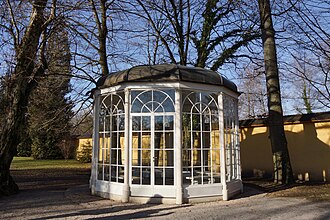
The gazebo (moved from its original location). The interior scenes were filmed In a much larger stage set reproduction.

6) The von Trapp children are Rupert, Agathe, Maria, Werner, Hedwig, Johanna, and Martina… not Liesl, Friedrich, Louisa, Kurt, Brigitta, Marta, and Gretl.  Also, none of the nine leads are Austrian (which certainly didn’t help the appeal of a film based in Salzburg).

7) Auditions for the parts of the von Trapp children included the four eldest Osmond brothers (not Donny), Kurt Russell, and Richard Dreyfuss.

8) Kym Karath, who played Gretl, the youngest of the von Trapp children, created her fair share of challenges.  She had a cold during much of the filming.  She almost drowned in the scene where the boat overturns in the lake because she didn’t know how to swim.  And she ate enough sweets on set to where her weight was too much for Christopher Plummer.  As a result, in the final scene walking over the Alps, Plummer is carrying a stand-in actress instead of Karath.

9) Nicholas Hammond, who played Friedrich, was not a natural blonde so his hair was bleached for the movie.  The coloring process caused some of his hair to fall out, which is why you see him wearing a “Tyrolean Traditional Alpine” hat when he’s seen singing “Do-Re-Mi”.

10) The day after the real von Trapp family left Austria (by train to Italy and then to the U.S., not on foot over the Alps to Switzerland), the Germans shut down all of Austria’s borders.

Salzburg’s Schloss Leopoldskron, where lakefront and garden scenes were filmed

11) The real Maria von Trapp is on screen at the beginning of the movie.

12) The real Maria also claims, if you can blieve it, her own personality was livelier than Andrews’ on-screen version.

13) The real Maria taught Julie Andrews how to yodel.  Watch the lesson here.

14) The film’s production demanded 4,500 extras, including those in the sold-out theater for the music festival.  The audience sings “Edelweiss” as if they know the song, but only because they spent time beforehand learning the words.

15) Despite the aforementioned Austrian disdain, The Sound of Music is played nonstop on the televisions of most Salzburg hotels.

Maybe all of this trivia changes your opinion of The Sound of Music.  Not mine.  There are countless reasons this film includes the tagline, “The Happiest Sound In All The World”.  The Sound of Music will always be that jewel in a glass box, waiting patiently to be enjoyed once more.  Suffice it to say, I’ll never say “So Long, Farewell” to the adventures of the von Trapp family.

Some content sourced from the Internet Movie Database (IMDb), and Wikipedia, “the free encyclopedia”.

Noble Neigh-Sayers

She’s only fourteen months and our granddaughter has already developed a keen interest and affection for our horses. As soon as she gets to the house she hightails it to the living room windows to see if our big boys are grazing in the nearby pasture. She calls them “Neigh-Neighs”; just about the cutest couplet of words you’ll ever hear from the lips of a small child. Makes me think she’d be utterly over the moon if she ever caught a glimpse of the Neigh-Neighs… er, horses at the Spanish Riding School in Vienna.

If you asked me to describe the nerve-wackiest moment of our Viking River Cruise last month, it would’ve been nine months beforehand when I went online to book the sightseeing excursions.  One of those tours – “Behind the Scenes at the Lipizzaner Stallions” – was, at least for us, the excursion of the entire trip.  If the Lipizzaners were sold out, well, there’s a good chance we would’ve a) cancelled the whole cruise, or b) emptied a nearby ATM of Euros, in hopes a couple of our fellow travelers would give up their reserved seats.  Lucky for us we didn’t have to do either.

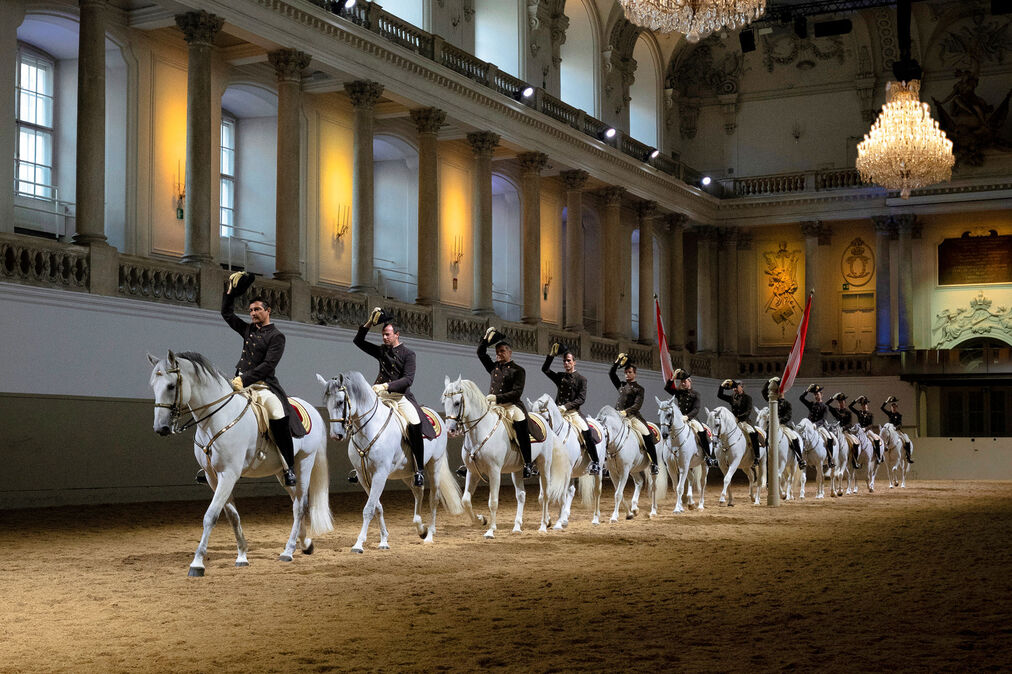
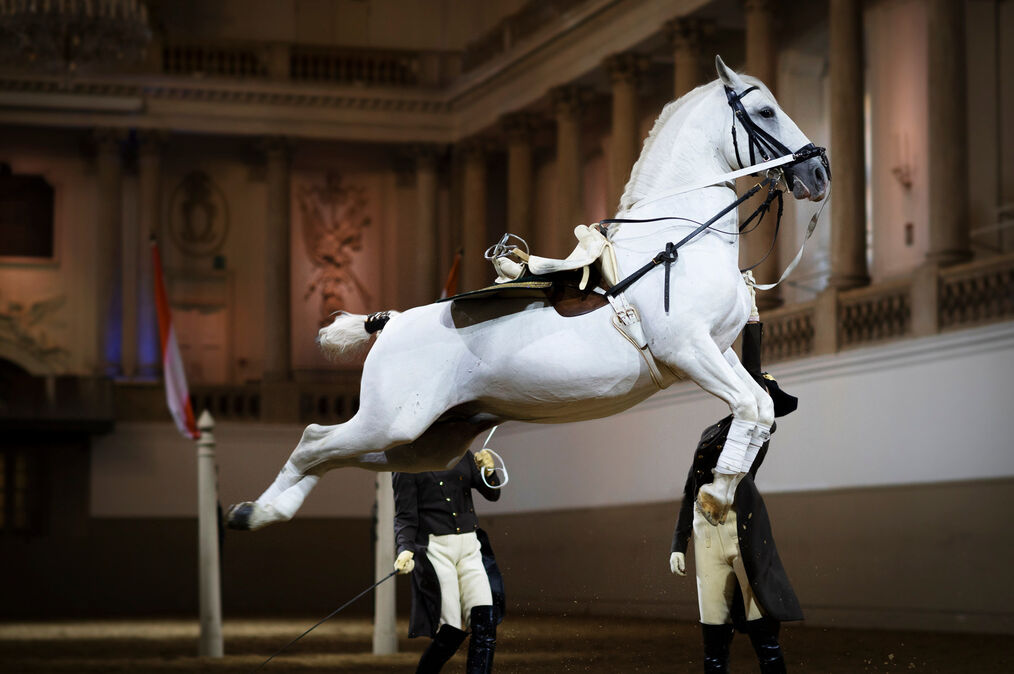
Maybe you’ve heard of them before.  The Lipizanners are a renowned breed of riding horse developed in sixteenth-century Austria.  All these years later they’re among the world’s most famous animals, both for their uniform look and unparalleled skill in the movements of classical dressage.  Five of these movements – known as “airs above the ground” – require horse and rider (sans stirrups) to completely leave the ground.  It’s a performance you’ll only see at prestigious academies like Vienna’s Spanish Riding School, and not in, say, the Olympic dressage competition later this month in Paris.

Spanish Riding School – central hall

So how was this remarkable performance?  I wish I could tell you.  We were in Vienna on a Tuesday and the Lipizzaners only show on Saturdays and Sundays.  But we knew this was the case heading into our trip.  The draw of the excursion was more about a behind-the-scenes look at the riding school facility, learning about the care and training, and of course, a peek at the horses themselves.  The Spanish Riding School is located in the former Imperial Palace of the Habsburg Monarchy, smack-dab in the middle of downtown Vienna.  Were it not for the smell of hay and manure you wouldn’t even know the stable was right through the stone walls adjacent to the sidewalk.

Tack room

But oh my, what a stable!  Each of the 68 resident stallions enjoys a roomy private stall (with a fancy nameplate), as well as outdoor courtyards for fresh air and exercise.  Those weekend performances take place in the spectacular sky-lit central hall, which still contains the royal box from the Habsburg era.  The tack room contains custom-made saddles, bridles, and reins representing a small fortune in leather craftsmanship.  And hay storage, manure removal, and other supporting aspects are somehow completely out of sight.  The Lipizzaners have it as good as we’ve ever seen for horses, at least in an urban setting.

Lipizzaner foals at the Piber breeding farm

Speaking of the Lipizzaners, the Spanish Riding School is just a part-time residence.  They spend a good portion of the year in nearby Heldenberg, enjoying the peace and quiet of the countryside instead of the hustle and bustle of the city.  Their breeding farm in Piber – even further removed from Vienna – is nicknamed “The Cradle of the Famous White Horses”.  And as you might expect, most of the young Lipizzaners go straight from Piber to the easy life in Heldenberg, without so much as a glance at the Spanish Riding School.  Only a select few achieve the look and confirmation worthy of this elite level of training and performance.

A couple weeks ago I described the Viennese Coffee House experience as an Element of Intangible Cultural Heritage.  So it is with the Spanish Riding School.  UNESCO has deemed the Vienna facility, the Lipizzaners, and their horse/rider performances as “an essential component… of [Austrian] cultural diversity and creative expression”.

Horses can fly?  Who knew?

I can understand why most visitors to Vienna would choose to see the Lipizzaners in their “Sunday best” instead of lounging in their stalls.  But I encourage you to see both.  A visit with these beautiful animals up close and personal is a unique experience (even if most tourists don’t seem to know how to behave around horses).  You’ll learn why the Spanish Riding School hosts one black stallion among the dozens of whites.  You’ll learn the historical significance of the trained movements of the Lipizzaners, as well as how to identify a rider’s ranking based on his uniform and equipment.  My granddaughter would have plenty of reasons to give this tour a “neigh-neigh”, but your own response is more likely to be “yay-yay!”

Some content sourced from the website of the Spanish Riding School, and Wikipedia, “the free encyclopedia”.

Goulash by the Gallon

My mother used to make Beef Stroganoff when I was a kid; an easy one-pot concoction to satisfy a hungry family of seven. Mom’s recipe was a far cry from the elegant Russian original of beef strips in a sauce of sour cream and mustard. Hers started with Campbell’s Cream of Mushroom soup, added in whatever leftover beef and spices were found in the kitchen, and finished with soft egg noodles, all mixed together. It wasn’t my favorite dish, but as I recently discovered it’s a whole lot more satisfying than Hungarian Goulash.

This isn’t “Beef Stroganoff”, Dave

A month ago I didn’t know the first thing about Hungarian Goulash.  Now I know way too much about it.  That’s what happens when you visit Budapest.  Everything is about goulash.  And paprika.  Even goulash itself is about paprika.  But I’m getting ahead of myself here (kind of like I did with the last few blog posts, which were further down the Danube).

Before our plane landed in Hungary for the start of our Viking river cruise, I imagined goulash as a more traditional version of Mom’s Beef Stroganoff.  I expected a hearty casserole of meat, vegetables, and noodles, drenched in a rich, creamy sauce.  As it turns out, goulash isn’t even a poor man’s version of Stroganoff.  No “spoiler alert” here because you’re not missing much.  Goulash is plain ol’ broth-based soup.

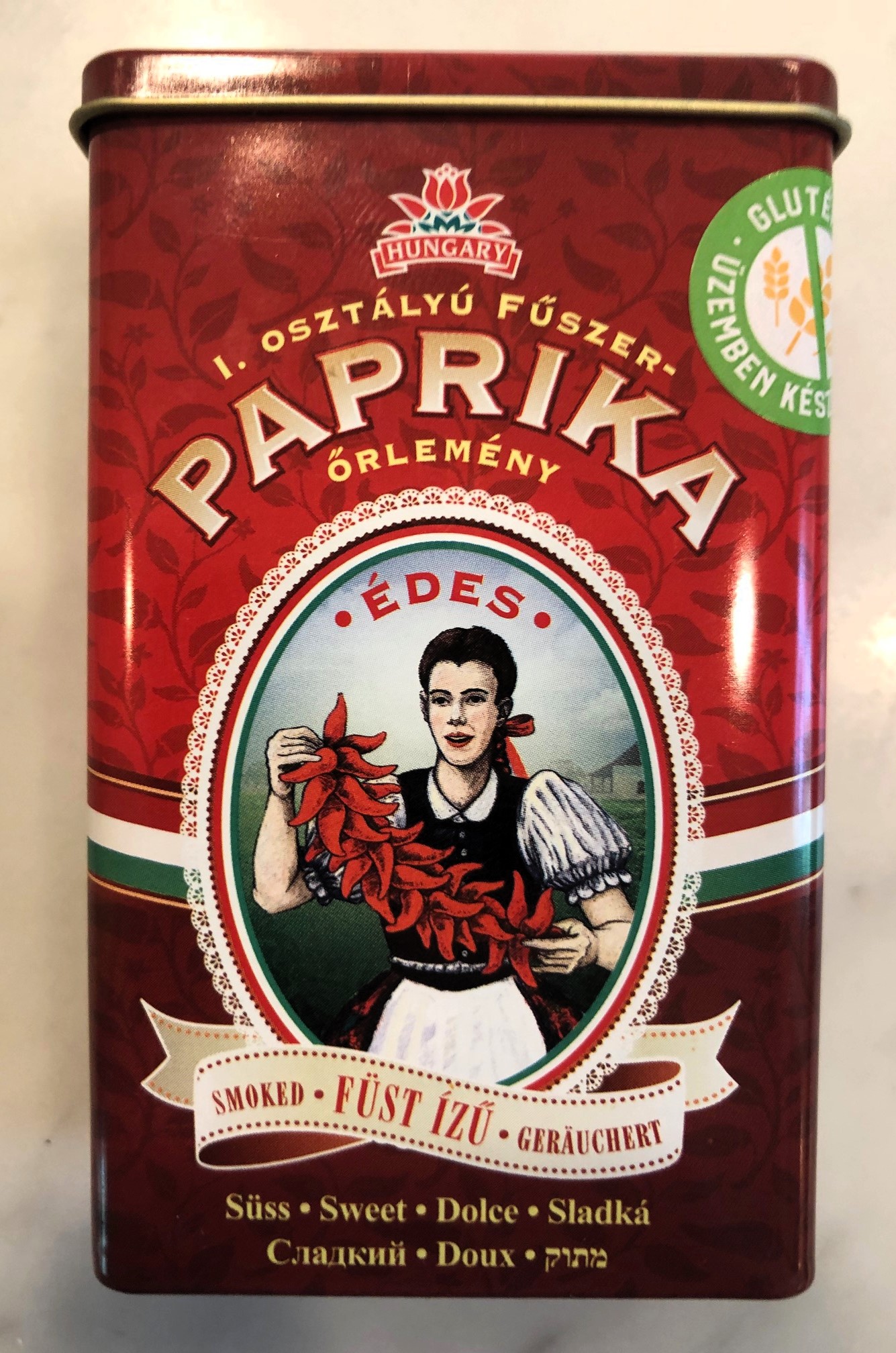
Check out the list of ingredients here.  Besides the ground caraway (ground “carraway”?), the only item standing out to me is the paprika, and only because paprika is synonymous with Hungary.  You find the peppery spice everywhere (and in everything) over there, in grades of sweet, mild, pungent, and strong.  Choose wisely; a small spoonful of the “strong” knocks your socks off even if you like it hot.

On a guided walking tour of Budapest (which included an hour inside the exquisite Parliament Building), we stopped for lunch in a basement restaurant for our first sampling of goulash.  The soup was served family-style with bread so we all ladled a helping.  In short, Hungarian Goulash didn’t “have me at hello”.  I was underwhelmed from the get-go.  I looked around the table at our fellow travelers and noticed the same reaction.  We struggled to come up with something distinctive or even complimentary about our meal.

Pálinka shots

Later on, we ventured into the countryside for a “Hungarian Folklore Dinner”.  As soon as we stepped off the bus, the place practically screamed “tourist trap”.  They greet you at the door with a shot or two of pálinka (fruit brandy), no doubt to dull the senses for what lies ahead the rest of the night.  Then they seat you at long picnic tables with people who look like, well, travelers from all of the other Danube river boats.  The gypsy folk dancing was impressive – I’ll grant them that – but the cauldron of goulash set unceremoniously in the center of the table was no more tasty than the helping we had at lunch.

Our goulash guide

The next day, we took another trip into the countryside for a walk through the several acres of an “open-air museum”, an interesting collection of buildings and settings from Hungary’s storied history.  The tour included lunch (hold tight, I know what you’re thinking), but even before lunch we stopped at an outside kitchen for a “special treat” – a demonstration on how to make goulash! (You’ll see I earned a diploma for my efforts.)  Then we were hustled into a nearby dining room for our third helping of goulash in twenty-four hours.  Part of the restaurant was already set up for a wedding reception later that afternoon.  Wonder what they were having for dinner…

Lest you dismiss Budapest over the goulash that seems to be oozing out of the city walls, let me set the menu, er, record straight.  It’s a beautiful city, whether you choose to tour the Buda or the Pest side of the Danube River.  The buildings are illuminated at night, the same way you’ll see Paris during the Summer Olympics in two weeks.  And Hungary’s history is adventurous and remarkable, with many more chapters than you’ll find in America’s.  But sorry comrades; the goulash (and the paprika) can only be described as superfluous.

One of the highlights of a Viking river cruise is the nightly dinner menu.  In addition to standing entrees, Viking chefs design “sampling menus” made up of the food of whatever city or region you happen to be passing through.  In Vienna it was the veal cutlet wienerschnitzel.  In Nuremberg it was the famous white sausage Weisswurst (correction: it would’ve been Weisswurst had our ship actually made it to Nuremberg).  And in Budapest it could’ve been Chicken Paprikash.  Instead, it was Hungarian Goulash… again.  Make that four helpings in two days.  I should’ve misbehaved so our captain could’ve sent me to my room without supper.

Some content sourced from Wikipedia, “the free encyclopedia”.

Intangible Cultural Coffee

I like stories to demonstrate the American Dream is alive and well.  Ten years ago a New York City husband and wife scraped together their savings (borrowing even more from friends) to open a coffee shop called Maman.  The couple put in eighty-hour weeks, passed up vacations, and kept paychecks to a minimum to give their little cafe a fighting chance.  A decade later, Maman is doing pretty well, with 34 locations and annual revenues of fifty million dollars.
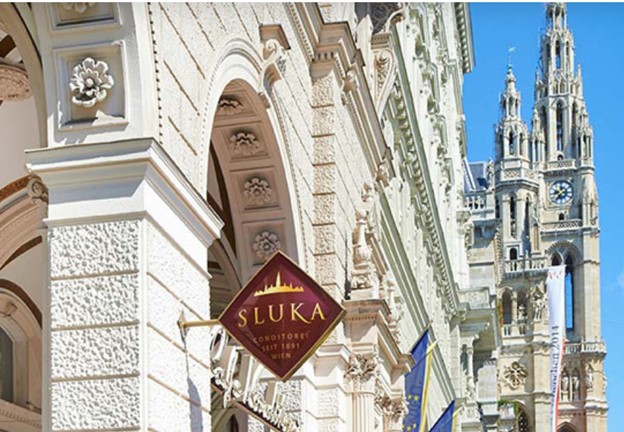
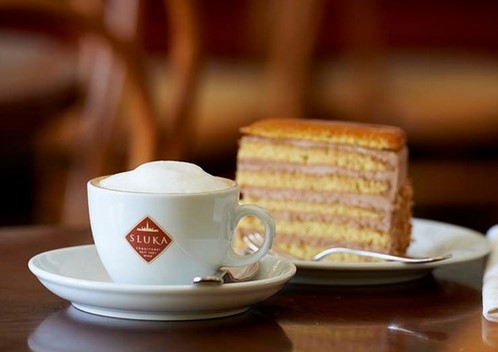
In Vienna, Austria, just a short walk from the magnificent cathedral of St. Stephen, you’ll find another coffee shop called Conditorei Sluka (or “Sluka” for short).  It’s the only location and its revenues are nowhere near $50 mil.  But Sluka doesn’t care about making a fortune.  They’re focused on delivering the quintessential Viennese Coffee House experience instead, which my wife and I were lucky enough to sample on our recent Danube River cruise.

With all due respect to the American Dream, sitting down to coffee at Maman will never come as close as a whisper to a cup at Sluka, no matter the amount of money invested or the number of locations opened.  Consider, Vienna opened its first coffee house in 1685, almost three hundred years before Starbucks landed in Seattle.  How can you possibly replicate that kind of history in a modern-day franchise?

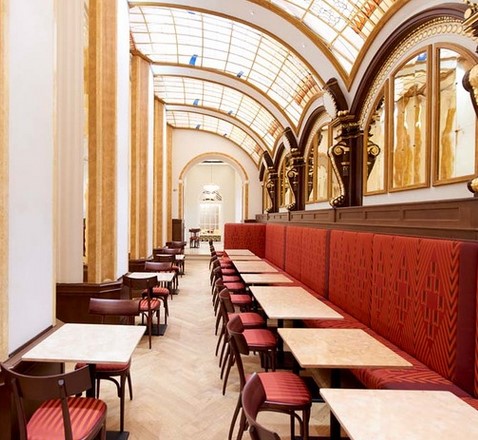
Our “back room” seating at Sluka

What makes the Viennese Coffee House experience incomparable?  For starters, the best of the Houses are still in their original locations in the city, which means surrounds of grand eighteenth-century architecture: high sky-lit ceilings, soaring columns and arches, elegant mirrored panels on the walls, and softly lit rooms.  The marble-topped tables are furnished with upholstered couches and dark wooden chairs of the period.  And the classical music you’ll hear – never too loud to be distracting – is often live from a nearby piano.

You could remove all of this “window dressing”, and coffee in Vienna still might be unmatched.  My wife and I went to Sluka on our tour guide’s recommendation, after several hours of sightseeing on foot.  We were just looking for a snack and a few moments of rest.  On our guide’s suggestion, we sat down at a table way in the back, in a cozy nook of a room that felt miles from the streets outside.

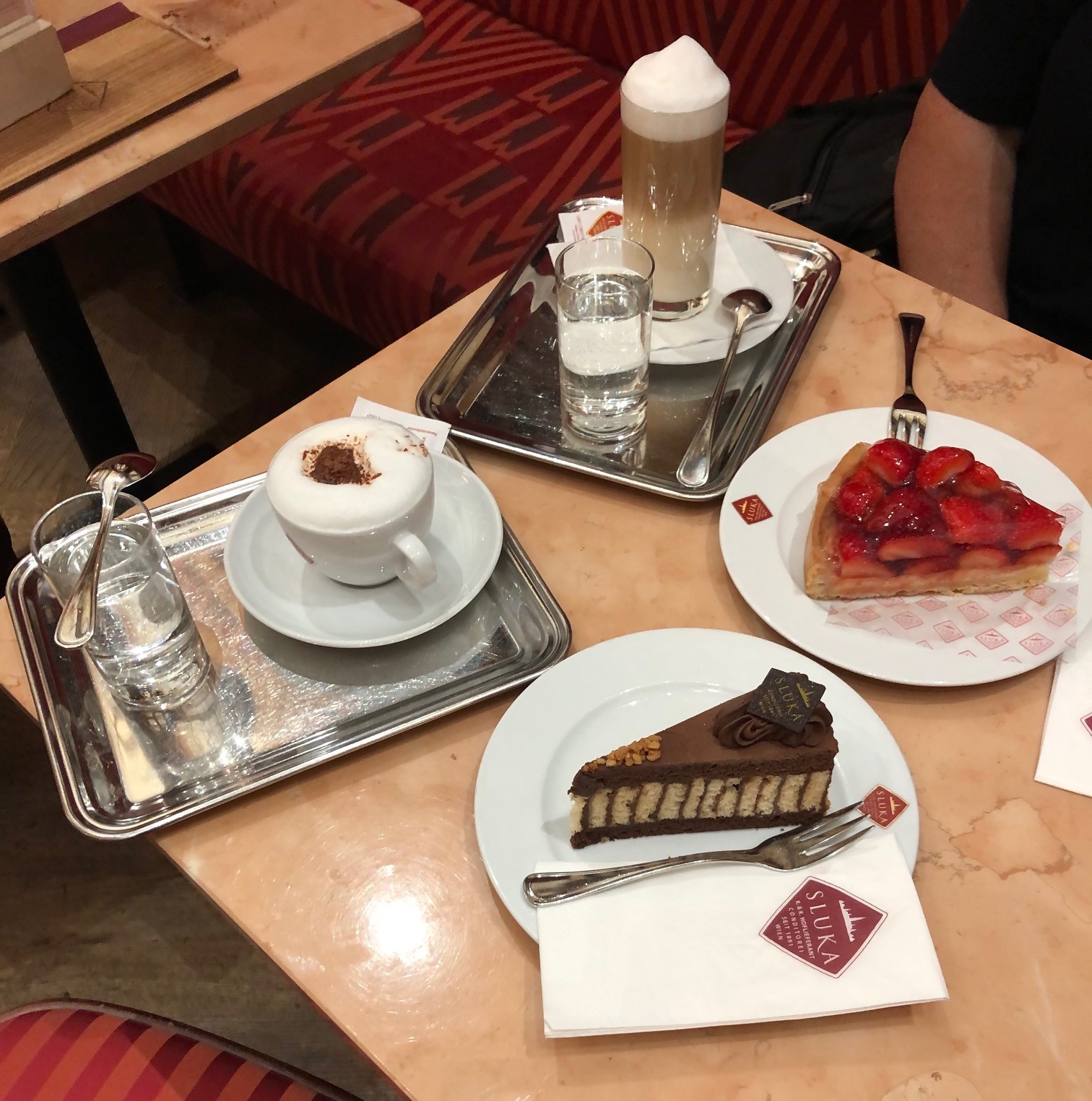
Our selections

A smartly-dressed waiter took our coffee order from the several pages of the menu, then guided us to the nearby pastry case so we could point to our choices; Apfelstrudel, Linzer torte, or dozens of other cakes and tarts looking as if they’d been made just moments before in the nearby kitchen.  A short while later our order arrived; the coffee in china cups, the pastries on matching plates, all dolled up with tall glasses of water, logo napkins, and individual silver trays.  It was the most elegant presentation of coffee we’d ever been served.

The kitchen at Sluka, steps from our table

At our waiter’s insistence, we relaxed at our table after paying the bill so we could wait out a passing thunderstorm.  We watched nearby patrons enjoying their conversations or reading one of the many newspapers the coffee house makes available.  We listened to the music.  Instead of pulling out our phones we simply breathed in the atmosphere of this most satisfying respite.  In a nutshell, this is the Viennese Coffee House experience, as it has been for hundreds of years.  Stop in and take a seat.  Enjoy exquisite coffee and pastries.  Socialize or read.  And forget about the world beyond the windows for a little while.  It’ll be there whenever you’re ready to go back.

The Viennese Coffee House experience is so distinctive it earns a place – per the United Nations – on a listing of Elements of Intangible Cultural Heritage.  For other examples, think Swiss watches, French perfumes, or German church organs.  We’re talking about physical representations here; those which you might naturally associate with a country or people.  America likes its coffee (and food) fast and to-go, while Austria prefers it slow and sit-down.  I’m not claiming one approach is necessarily better than the other.  I’ll just say instead; I can’t wait to go back to Vienna someday.

Some content sourced from the CNBC Make It article, “Couple spent ‘all of our money’ to open a New York cafe…”, the Conditorei Sluka website, and Wikipedia, “the free encyclopedia”.