Decades to Decadence

Waiting in line for the bank teller, as I did last Monday, is decidedly old-school. It’s a face-to-face experience so much more inefficient than the drive-thru lane or smartphone options. But sometimes we still go brick-and-mortar, don’t we?  Stopping into the bank is either convenient in the moment or perhaps the transaction demands a real, live person. And so we wait.  But at least cashing a check doesn’t take thirty years.  It just seems that long sometimes.

Every now and then you see a headline and say, “Wait a minute… WHAT?”  And then, even with no interest whatsoever you still read the article.  Such was the case this week with a story about Kobe beef.  I’ve never eaten Kobe beef.  I’m too cheap to even give it a try.  I’ll concede the price is justified by the high quality, high demand, and low supply.  But what if you had to wait until Thanksgiving of 2052 to be able to enjoy it?

Here’s the gist of the story.  A small, family-run butcher shop in Japan makes a beef croquette so popular it’ll take you thirty years to get one.  Asahiya, about to celebrate a century in the meat business, began producing its croquettes shortly after World War II.  The deep-fried meat-and-potato dumplings were designed as a tease; a mere taste to draw customers to its larger, more expensive products.  The strategy didn’t pan out so well but the croquettes themselves became an Internet sensation, and the inevitable hype that followed created a line of customers thirty years long.

[Note: If a Kobe beef croquette sounds “decadent” you’re probably right, but you’re using the wrong word to describe it.  Decadent actually means “excessively self-indulgent”.  Instead of the food itself perhaps you’re talking about a customer willing to wait thirty years.]

I hear what you’re saying.  I wouldn’t pay big bucks for something like this Dave, let alone wait thirty years for it.  But go figure; an Asahiya beef croquette costs only $3.40 USD.  You could buy a box of ten for less than you probably paid for your Thanksgiving turkey.  You just need a very comfortable chair as well.  Asahiya makes only two hundred croquettes a day (or twenty customers’ worth) so it’s no wonder you have to wait so long.

Technology being what it is today, we’re not patient waiters anymore.  Amazon and others are getting close to same-day delivery on the items we consume regularly.  Many amusement parks and tourist attractions have adopted Disney’s approach, where you can pay more to “jump the line”.  Want tickets to the next Taylor Swift concert?  Pay a “line-stander” to buy them for you.  Want season tickets to the Green Bay Packers?  Okay, sorry, there’s no way around that one.  The seats at sold-out Lambeau Field simply pass down the line from generation to generation.  But you can still join the list for this impossible get, just to say you’re on it.

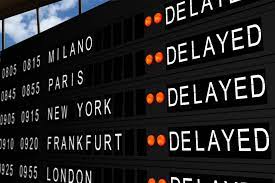
This week’s visit to the bank felt like an impossible get.  I made it to within one customer of the front of the line before things came to a grinding halt.  Only two tellers were open out of the four.  One was preoccupied by a woman who wanted cash and a money order, with terms so specific you knew she was going to be awhile.  The other was completely preoccupied by an older gent, carrying on a personal conversation while constantly losing track of whatever he was asking for in the first place.  Meanwhile, the back window drive-thru teller was cranking out transaction after transaction after transaction.  Shoulda, coulda… I know, I know.

I thought the beef croquette story was timely, not because I went to the bank but because next Thursday is Thanksgiving, when Americans wait all day long.  We wake up early, get the oven going, prep the bird, and spend a long time putting the rest of the meal together.  We eat earlier than most dinners (does that make it “supper”?) but it’s still a waiting game.  Hours and hours of anticipation before the food is finally brought to the table.

If there’s any good news about Asahiya’s Kobe products, it’s that they have options besides the “Extreme” beef croquettes.  There’s a more accessible variety called the “Premiere”.  You only have to wait four years for those.  When you consider how fast we’re going through U.S. Presidents lately, four years doesn’t seem like a long time at all.

Some content sourced from the CNN Travel article, “These Japanese beef croquettes are so popular there’s a 30-year waiting list”.

Sitting in the Catbird Seat

Though she’s only four, our granddaughter relishes being the eldest in her family.  She already demonstrates the authority associated with the role, especially in the presence of her siblings.  She seems to understand how her position in the order comes with slightly increased expectations.  Her sisters will challenge her command as they grow older (and won’t that be fun?) but for now, for the most part, they take her lead.  Not that I would understand “first position”, mind you.  I’m neither the oldest nor the youngest in the family I grew up in.  I’m what you might call an “off-center middle”.

If there’s a significant advantage to being a middle child (I’m the fourth of five) I’ve yet to discover it after all these years.  The eldest child experiences the “firsts” (driving, voting, etc.) while the rest of us wonder when it’ll be our turn.  The youngest receives a gentler version of parenting (and who can blame a parent after five kids?)  Meanwhile, the middle(s) are looking in both directions wondering where to take sides. Inevitably, to appease all, the middle child finds a way to agree with everyone.  Our son is also a middle and he’s neutral so often we’ve nicknamed him “Switzerland”.

Maybe we middles have it better after all.  It’s not often I fall into the vast minority on a topic but today I do, because… I prefer the middle seat on airplanes.  A recent survey says only 6 out of every 1,000 frequent flyers feel the same way.  My five outliers and I have our reasons; mine make flying more comfortable for me.  On the aisle I can’t help leaning out a little, to where beverage carts or those passing by brush up against me.  On the window (which I happily bequeath to my wife) I have less elbow room up against the glass.  Even when the passengers on either side of me take the armrests (a subject to toss about another day) I still feel my greatest sense of freedom is in the middle seat.

I can now reap rewards for my middle-mindedness.  In a promotion sounding equal parts creative and desperate, Virgin Australia (VA) is giving away prizes to make the middle seats on its airplanes more appealing. Just by choosing the middle, I enter a lottery for a million VA frequent flyer miles, a helicopter pub crawl (a what?), or a bungee jump (but isn’t Australia flat?).  I can even win tickets to the final of the Australian Football League.  Of course, entering VA’s “Middle Seat Lottery” assumes I want to fly somewhere within Australia.  I also have to join VA’s frequent-flyer program.  And I’ll need to figure out Australian football, which may be the toughest ask of all.  But you get the idea.  “In the middle” is now a little cooler.

Maybe the airlines should revive an old saying.  They could call the middles catbird seats instead.  After all, “sitting in the catbird seat” refers to a position of advantage or superiority.  I can win the helicopter pub crawl and you can’t (advantage) and I’ve deluded myself into thinking I have more elbow room than you do (superiority).  All from the catbird seat.

Try as I might, definitions of “middle” never stray far from “average”, or at best “neither one extreme nor the other”. The dictionary also labels me as “ordinary”, “mediocre”, “commonplace”, and “pedestrian”.  Even if I spice up the word to “middling”, I’m still defined as just “medium” or “moderate”.  I could stretch things a bit and go with “fair to middling” but even then I’m merely slightly above average.  Nope, the only “outstanding” middle I can come up with is our stomachs when we’re, ahem, not in the best of shape. 

“Sitting in the catbird seat” works well for today’s topic, because I moved to the American South just a few months ago.  The phrase originated down here a long time ago.  Literally, it’s a bird’s habit of singing from way up high in a tree, a sort of nyah-nyah-nyah to its predators who can’t climb nearly as high.  And maybe that’s my aim for today: to elevate us “middle-peeps”, even if I haven’t come up with much substance to do so.  But consider this: the more of us there are, the less likely you’ll be sitting in the middle seat.  As a thank-you, the least you can do is meet me in the middle and pick up my beer tab when I win the helicopter pub crawl.

Some content sourced from the CNN Travel article, “Airline launches lottery to entice more passengers to sit in the middle seat”.

First Class is now un-American

On our return flight from Denver last Saturday, the woman across the aisle coughed so many times I lost count before I had a sip of my complimentary beverage. Another woman ten rows back had a speaking voice so loud you wondered how she could hear herself think. And then there were the backpacks, so… many… backpacks. Nothing wrong with carrying your stuff on your shoulders, except when walking down the aisle and the slightest turn of the hips gives me a not-so-gentle whack as I sit in my aisle seat. Which pretty much confirmed what I already knew.  I should’ve flown First Class.

Heads up, weary travelers.  If your brand of travel abroad is a first-class seat, you’d better book one while you can.  American Airlines (AA) just announced they’re removing those premium seats in favor of several more in Business Class. Why? Because nobody wants them.  It’s not rocket science.  Airplanes need to be full (like, 97% full) or airlines don’t make money.  If a class of seat doesn’t interest a passenger the airline will find one that does.  Put the champagne on ice, flight attendants.

Even if dropping the very best seats makes good business sense, it doesn’t mean I’m happy about it.  I’ve never deliberately flown First Class but I still get to walk down their aisle on the way to the cozier confines of Cattle Economy.  As I do, I steal a glance to the left and to the right.  What are they wearing?  What are they drinking?  Most importantly, what are they talking about?  After all, these are America’s movers and shakers.

Except they’re not anymore, now are they?  Tell me who (or “what”) you see the next time you pass through First Class.  The domain of the rich and famous is now diluted with passengers who simply rack up enough frequent flyer miles.  Thus, next to the woman in the stylish suit with the glass of Pinot Noir, wrapping her important business call, you have the young tattooed character in tank top, shorts, and sandals, slurping a Rockstar energy drink while obliterating his latest Call of Duty foe.  No wonder these seats aren’t selling anymore.

My kids don’t believe me but there was an era when people dressed up to travel.  When I was young I wore a suit and tie on airplanes, as spiffy as a Sunday morning in church (although church attire has changed too, sigh…).  Instead of a palm-sized bag of peanuts in Economy, you still got something of a meal.  Flying was, back then, a classy step above other forms of travel.

Just because I can – and knowing American’s about to crash the party (poor choice of words) – I decided to book a first-class ticket to London for Thanksgiving.  Get me to jolly ol’ England the day before (so I can overcome jet lag before the big meal) and have me back in my own bed by Sunday night.  I know, I know, it’s practically Halloween already but guess what?  There are still plenty of first-class seats for my un-American Thanksgiving. They’re just a little – ahem – pricey.

My least expensive option on AA is $6,054, which includes two stops, choice of seat (but isn’t every first-class seat equally wonderful?), free baggage, and a full refund if I have second thoughts (which I will).  My most expensive option is $12,966, with identical terms as the first option except this ticket is nonrefundable.  Huh?  Whatever.  Even the least expensive option is more than my annual grocery bill.  Let’s not book this trip after all.  Let’s have turkey at home instead.

You can see where this is headed.  Next thing you know AA will get rid of First Class on all of its flights.  Then passengers will lose interest in Business Class so that’ll have to go too.  Premium Economy will be the last to fold, until all we’re left with is a planeful of Cattle Economy, every row and every seat.  But given the attire and attitudes of passengers these days, isn’t Economy a perfectly-fitting shoe?  As a friend described it, air travel these days is effectively a Greyhound bus with a couple of wings.

I just ran another itinerary on the AA website.  I can visit my son in Dallas over Thanksgiving, flying First Class, for just over $1,000 roundtrip.  That’s a bargain compared to London and I can get my turkey from a smoker (delicious!)  Maybe I’ll splurge.  After all, there may come a day when my grandchildren ask me, “What’s ‘First Class’?”

Some content sourced from the Fox Business article, “American Airlines ditching first class…“.

Blue-Blood Spuds

As I was digging into dinner last night, I surveyed the contents of my plate and decided the food was looking rather pedestrian. Yes, I’d topped the roast pork with a tasty sour cream and onion sauce. I added lemon zest and shredded cheese to the broccoli. But the potatoes were run-of-the-mill, simply diced and baked with nothing but salt and pepper. I could’ve done more there; a lot more. Starting with potatoes from La Bonnotte.  It’s just, I don’t want to spend $300 for a pound of them.

$300 for potatoes – yikes.  It sounds ridiculous unless you’re British royalty or the finest restaurants in Europe.  A couple of medium-sized Russets – the ones we bake – weigh a pound, but the Bonnotte potato is more like the small red ones you cut up and season. 10-12 Bonnottes in a pound; so like, $30 each.  That’s a pricey bite (and not exactly “small potatoes”).  But if you’re willing, you can purchase your share of this delicacy; that is if you’re quick.  They’re only on the market ten days a year.

What makes the Bonnotte the aristocrat of spuds?  Here’s the meat and potatoes of it:

  1. La Bonnotte potatoes are found on a small island off the Atlantic coast of France, and nowhere else.  It’s as if they’re grown in some fortified castle, surrounded by a wide moat.
  2. The potato field is limited to fifty square meters, so they’re not even using the entire island.  You could walk the perimeter of the entire crop in about five minutes.
  3. Even though the island soil is ideal for growing La Bonnottes, the “secret sauce” is nearby seaweed and algae, mixed into the dirt by hand.  This is perhaps the first time I’ve heard of a good use for seaweed.
  4. Every Bonnotte is harvested by hand, then treated, cleaned, and sold by a small cooperative of local farmers.  Talk about an exclusive club.
  5. As I said, the harvest is only available for purchase ten days a year.  Mark your calendars for May 1-10, 2023.
The island of Noirmoutier-en-l’ile has a church, a chateau, and very expensive potatoes.

Here’s my favorite reason to buy this hot potato (and for heaven’s sake, don’t drop one): you don’t peel them.  You shouldn’t peel them.  Their unique flavor – tastes of lemon, earth, “the sea”, and chestnut – is most concentrated in the skin.  You eat them just the way they come out of the ground.

Luxuo is an online news portal whose mission is “to uncover the values which permeate the fiber of the world’s most recognizable luxury brands” (Got all that?) The Luxuo website has a dropdown menu for timepieces, yachting, motoring, properties…. and now you’ll find potatoes, because La Bonnottes (you don’t even call them “potatoes” at this price) are the most expensive potatoes in the world.  By some measures they’re one of the most expensive foods in the world.  Saffron, macadamia nuts, Beluga caviar, and white truffles are the top four, followed by La Bonnottes.  Blue-blood spuds indeed.

[Author’s Note: I just had to know why we refer to things as “blue blood”.  The term originated in Spain.  It was used to differentiate between people with light skin from those with darker complexions. The veins of southern Europeans appeared bluer due to their pale and translucent skin. Wealthy landowners or their descendents were part of an upper class in Spain, and somewhere along the line the veins were associated with wealth.  Not a look I prefer, but the money is tempting.]

Couch potato fare

After the La Bonnotte harvest and sell, a small number of the potatoes are reserved for a local festival, where they’re served plain, just as you see them in the entertaining video below (because no other ingredient deserves to share the pan).  Who can blame the farmers for throwing a party?  They’ve convinced the world to purchase potatoes for $300/pound yet again, just as they’ve done for decades before.

Some content sourced from Wikipedia, “the free encyclopedia”.

Local Fare for the Win

When you pick up and move to a new town 1,500 miles from where you used to live, “getting the house in order” is a little overwhelming. Thirty years in the same spot creates a lot of favorite “thises” and preferred “thats”. So whenever my wife & I step away from the endless unpacking, we’re trying out supermarkets, large-animal vets (for the horses), and restaurants, to figure out which ones best replace those we chose time and time again in Colorado. And here’s what we’ve quickly discovered about life in the South (of the U.S.): good Mexican food is a tough ask.

Pizza as it should be

Let’s take a bit of a detour. (Don’t worry; we’ll be back on the main highway before you know it.)  In a surprisingly candid post from fellow blogger Brilliant Viewpoint, her recent trip to Rome and Florence determined pizza – at least the classic Italian version of the pie – is not what it used to be.  The writer suggested the crusts are like cardboard, the mozzarella chunky and unappetizing, and the pizza itself a little soggy.  Having spent a college year in Italy (when I survived on pizza and not much else), I found her conclusions shocking.  Maybe this is why Domino’s – they of the generic-but-convenient home-delivered product in America – decided to give Italy a try?  It’s true.  In 2015, a Dominos franchise opened several stores across Italia to capture the then non-existent delivery market.  It almost worked.

No matter what the state of Italian pizza these days, Domino’s Pizza stores in this of all countries lands on my “you’ve got to be kidding me” list (alongside Starbucks coffee).  Put yourselves in their shoes to understand the absurdity of it all.  You’re an Italian.  Pizza was invented in your country, which has thousands more years of history than America.  You can choose from any pizzeria on any block of any street in your town and the homemade product will be excellent.  Yet you’re going to call Domino’s to order a mass-produced American knock-off instead?  At least Baskin-Robbins was sensible enough to stay away instead of going head-to-head with gelato.

You shouldn’t be surprised to learn – after a seven-year run – Domino’s Italian franchisee filed for bankruptcy in April.  “Of course“, you say. “Their product just couldn’t compete.”  Well, that’s not quite the story.  It was more about pizza delivery itself.  Remarkably, Italy had very little delivery before the pandemic.  You wanted a pie back then, you went out into the streets and got it.  But just like American restaurants, Italian pizzerias did whatever it took to survive the pandemic years, and that meant delivery to front doors.  Domino’s thought they had the market cornered before they ever entered it.  Next thing they knew, everyone else was doing the same thing.

No matter the reason, I’m happy to say arrivederci to Domino’s Pizza in Italy.  Franchise food doesn’t feel right in a country with so much history and wonderful local food.  Shortly after my college year in the 1980s, I learned a McDonald’s restaurant somehow landed a lease at the base of Rome’s famous Spanish Steps.  That’s like painting a mustache on the Mona Lisa.  America has much to offer the world, but fast food is not our proudest accomplishment.  I’m not even sure it’s an accomplishment.

Let’s get back to the main highway now.  Up top we were talking about Mexican food… er, the lack of it, in the American South.  It’s true, if our new little town is any indication.  Yes, we have several options to beat a sit-down at Taco Bell, but they’re only a whisper better.  Everything looks and tastes so generic.  What should be salsa roja inside of enchiladas tastes more like pizza sauce.  What should be a margarita with the sublime afterbite of tequila tastes like syrupy lemonade.  The chips might as well be Doritos.  Yet you look around and the restaurant is packed.  These people don’t know what they’re missing, but they seem happy enough.  As a result, just like Dominos, I don’t expect a Mexican restaurant from outside of the region to waltz into town and do well.

My theory on good Mexican food goes like this: the further west and south you go the better it gets.  Colorado and Tex-Mex trump anything east of the Mississippi.  Arizona and Southern California fare trump Colorado and Texas.  In other words, my favorite Mexican place in my new hometown is destined to be close to my front door. In fact, it’s inside my front door.  It’s my kitchen.  Time to start making my own margaritas and enchiladas. 

Some content sourced from the CNN Business article, “Domino’s tried to sell pizza to Italians…”, and the Brilliant Viewpoint blog.

(No) Separation of Church and State

This weekend my wife & I packed up the last of our things and moved from Colorado to South Carolina. We’ve decided the lower elevation and milder temps of the “Palmetto State” make better sense for our retirement. But instead of a moving truck, we trailered the horse (and the dog and the barn cat) along with our suitcases. A half-ton of horse means driving in the slow lane, our top speed 65 mph without blowing a gasket. And driving through Kansas in the slow lane – or any lane for that matter – feels like forever.

The western edge of Kansas, at Interstate 70, is an encouraging starting point as you leave Colorado.  You pass an attractive “Welcome Center”, a convenient place to take a break and learn a little about the “Sunflower State” before you venture further.  More importantly, you notice an immediate improvement in the road conditions.  Kansas, unlike Colorado, not only earmarks tax dollars to keep its highways pristine, the state actually spends those dollars accordingly (instead of dipping into them for other purposes).  Our horse – standing on four legs the entire journey – appreciated the smoother ride, if not the triple-digit temps.

Twenty or thirty miles into Kansas, the sobering reality of America’s Heartland sets in.  For one, you could lay a ruler on the hundreds of miles of Interstate 70 and hardly need a turn of the steering wheel.  For two, you realize every town along the way – save Kansas City to the far east – looks exactly the same.  Water tower. Cell phone tower. Church. Gas station. Fast food. A surround of corn fields. Lather, rinse, repeat.  It’s like someone drew up a generic template of a town and laid it down a couple dozen times along the interstate.  Doesn’t help to keep a slow driver alert, especially when you’re on cruise control.

But suddenly, mercifully, and completely out of nowhere, you see little Victoria, Kansas on the horizon.  Not Victoria, British Columbia (though it might feel like you’re driving all the way to Canada).  Victoria, Kansas, with its mere 1,200 residents and one square mile of town.  And right in the middle of Victoria, rising out of the earth as abruptly as the Rocky Mountains, sits the Basilica of St. Fidelis, better known as the Cathedral of the Plains.

You can probably spy St. Fidelis from fifty miles away as you approach, but you certainly don’t believe what you’re seeing.  Kansas is as flat as a pancake yet Victoria boasts a cathedral worthy of a spot in Rome.  The first time I saw St. Fidelis several years ago (driving a whole lot fast than 65 mph), I thought it was the Kansas heat bringing me a heavenly mirage.  I half expected the clouds to part (even though there weren’t any) and a host of angels to surround those tall twin spires.

But St. Fidelis is a lot more real than a mirage.  It was built in the early 1900s by German and Russian immigrants, each of whom pledged to haul six wagonloads of limestone and another four of sand from nearby quarries.  St. Fidelis predates any kind of construction equipment so the entire structure was raised by hand.  These industrious Kansans knew the meaning of hard work.

St. Fidelis boasts forty-eight handcrafted stained-glass windows, valued at more than $1M.  Its beautiful procession of Romanesque-style arches hovers above marble floors.  The cathedral was “elevated” to the status of Minor Basilica by decree of the Pope in 2014, and earned a place on America’s National Register of Historic Places.  In other words, there’s no separating this church from this state.  Not bad for an old building in a tiny metropolis in the middle of cornfields.  I only wish I’d had the time to exit the interstate and head down to Victoria for a closer look.

The Sunflower State has adopted the Latin phrase ad astra per aspera as its motto.  It means “to the stars through difficulties”, representing the aspirations and hard-working spirit of the state.  I’d say the Cathedral of the Plains is Kansas’ perfect example, wouldn’t you?

Some content sourced from Wikipedia, “the free encyclopedia”.

Adding Fire to the Fuel

When I step up to the counter at Starbucks for my favorites (hot: Grande Flat White, cold: Grande Cold Brew w/ a splash of cream), I find it interesting how accepting I am of the high price of my purchase. By nature I’m a penny-pincher, monitoring the family budget with a fully-focused microscope. But the scan-and-go Starbucks app makes it easy to overlook the five dollars for a single cup of coffee. On the other hand, a gallon of gasoline for the same price is literally headline news.

I don’t wonder if you’re just like me at the gas station these days because you are. When you pull up to the pump you try to ignore the unbelievable digits on the station sign and on the pump itself.  The tank in your vehicle is probably closer to “E” than usual (though my wife still refuses to go below the quarter mark).  You may even shop around now before choosing your station.  Finally, the price of your favorite octane has you considering a cheaper option, even though none of them are really “cheap”.  Just like the Starbucks menu, purchasing gas is no longer the mindless decision it used to be.

$5.00/gallon. Ten days ago the U.S. hit that preposterous average for the first time in its history.  Just two months ago the average was $4.00; two years before that, less than $2.00.  Forecasters say we’ll see a nationwide average of $6.00 before the end of the summer.  No wonder our fiery conversations are all about fuel these days.

When my car’s “low fuel” light pops on (with an annoying “DING!”) I know it’s going to take eighteen gallons to get the needle pointing back to “F”.  That’s $90 in June 2022 math.  When a stop at the gas station sets you back almost $100, you start to think about what else you could buy with the money.  Four or five dinners out.  Ten months of Netflix.  Twenty Starbucks Flat Whites.

If it’s any consolation, at least we’re talking about self-service gasoline here.  Some of you are too young to remember when a “gas station” was a “service station”.  Prior to 1980, it was all about full service.  I can still hear the ding-ding as the wheels of my parents’ car passed over black hoses, triggering the bell to let the attendant know they needed a fill-‘er-up.  Then he (yes “he” because I never remember a “she” working at service stations back then) would run over to the pump, ask what octane and how many gallons, and start the filling.  He’d also ask you to “pop the hood” so he could have a quick look at the oil, washer fluid, and engine.  Finally, he’d give your front windshield a wash, take payment (in cash, of course), and off you’d go.  For all that service, you simply rolled down the driver’s-side window and paid the man.

Full-service is still a thing of course but it’s a lot harder to find these days.  Unless you live in Oregon or New Jersey.  In those states, self-service is rarely an option.  Attendants are still the norm.  It sounds like an alternate reality for 2022 (or the scene from Back to the Future below) but two out of the fifty states stubbornly refuse to allow self-service.  They stand by the well-worn concerns: fire hazards, difficulties for the elderly or disabled, and loss of station attendant jobs.  They also charge a few pennies more per gallon because they can’t make a profit the way they used to – by offering services beyond the gas itself.  For the most part, those under-the-hood services moved to car dealerships a long time ago.

Just this week our politicians proposed a three-month “holiday” on gas taxes (and taxes on gasoline should be the subject of its own blog post).  The holiday won’t happen, though.  Our politicians won’t allow the sacrifices made by not collecting those taxes.  Or activists will wonder if gas companies will maintain the high prices and generate additional profit.  And if gas is on its way to $6/gallon anyway, it’s kind of like adding a new lane to the highway, where by the time it’s finished the traffic has increased too much to notice any difference.

Not speaking for other countries but Americans won’t be driving less in the next several months.  The travel forecast calls for more vehicle miles than even in the summers before COVID.  Our lack of efficient mass transit and our woes at the airport (can you say, “canceled flight”?) will, uh, drive us to drive.  In other words, we’ll pay $5, $6, maybe even $7 before we’ll pull back on our stubborn habits.  Just like I will, admittedly, at Starbucks.

Some content sourced from the CNN Business article, “Why New Jersey and Oregon still don’t let you pump your own gas”, and Wikipedia, “the free encyclopedia”.
Changing Planes

My wife & I are boarding more flights than usual as we anticipate our upcoming relocation to South Carolina. “More than usual” deserves context I suppose, since so many of us skipped airports altogether the last couple of years. Flying is different now – some ways better, others not so much (and unquestionably more expensive). Regardless, I was happy to learn our favorite choice of airline before AND after the emergence of COVID just earned the label “world’s best” for 2021. Care to guess which one?

I already gave you the subtlest of hints in my blog title.  With mathematics at least, the world’s best airline is also known as “an incremental change in a variable”, which makes its logo – the triangle – a fitting symbol.  Its slogan is the uber-confident “world’s most trusted airline” but I prefer one of its older ones:

Maybe Delta Air Lines is your airline of choice too.  If not, you’re wondering where your favorite ranks among the world’s best.  I’ve never heard of Cirium (have you?) but the data-mining company spends its days converting 300 terabytes of aviation performance metrics into annual best-in-class rankings. (300 TB meant nothing to me until I crunched a few numbers.  A ten-page Word doc is about 2 MB  By my calcs Cirium is sorting through five million pages of data.  I’d say their rankings are legit, wouldn’t you?)

Let’s end the suspense.  Here are the top ten airlines measured by “operational performance”, for 2021:

  1. Delta (“Platinum Award” winner)
  2. Alaska
  3. American
  4. United
  5. Spirit
  6. Frontier
  7. Southwest
  8. JetBlue
  9. Air Canada
  10. Allegiant

Delta should put a lot of stock in this win, and not just because 9 of its 10 aircraft arrived on time in 2021 (10% better than second-place Alaska).  It’s more about the impact of the passenger experience to the result.  Is the boarding process efficient?  Is the flight crew rested and available?  Is the aircraft properly maintained? How is baggage handled? How are unruly passengers dealt with (a more recent trend)?  Every one of these details number-crunches to a measure of on-time arrivals.  And no one does it better than Delta.

I may be biased but my own experiences seem to back up the numbers.  My wife & I have flown Delta several times since 2019 (including a trip to Europe) and every one of those journeys met or surpassed our expectations.  I’m not saying Delta goes over the top to gain customer loyalty (though a warm chocolate-chip cookie would help).  They simply do what I expect.  Arrive on time and make the journey as pleasant and efficient as possible.  Is that too much to ask?

Sadly, my affection for Delta is bolstered by my dissatisfaction with its competitors. I’m surprised to see American and United make the top five.  My family and I have had several lousy experiences with American, including delayed or canceled flights and could-care-less customer service agents.  Meanwhile, United may know how to arrive on time, but their coach seats should be labeled “cattle class” (not unlike Spirit and Frontier).  Drop down the tray table and open your laptop.  I challenge you to type comfortably.

Southwest could’ve been higher in Cirium’s rankings but I’m sure their logistical issues last year contributed to the number.  Scores of their canceled flights were attributed to “weather challenges” during an unprecedented upheaval in the workforce.  I’ll forgive the bald-faced excuse.  When Southwest is running on “all engines” their brand of customer service is second to none – which keeps me coming back for more.

From my days in corporate America, I remember an equilateral triangle as the symbol of a successful company, giving balance to customers, employees, and shareholders.  Looks a lot like the Delta logo, doesn’t it?  More than just a nod to the Greek letter (Delta) or a throwback to its origins in the Mississippi (“Delta”, that is).  Even the dictionary definition of delta belongs in the conversation. Positive change befits operational excellence.

If my wife & I were relocating to Salt Lake City or Atlanta (or one of Delta’s other hubs), we’d be changing planes and flying more often with the “triangle”. Just this week my wife enjoyed another Delta flight she described as “perfect except for a few inconsiderate passengers” (which seems to be the norm these days). Delta celebrates one hundred years of passenger flights in 2029 so it’s safe to say they’re guided by experience.  The Cirium ranking is just a numbers-crunching confirmation of what I already know.  Delta is ready when I am.  Or, to put it mathematically, Δ = (S)atisfaction + (L)oyalty.

Some content sourced from the CNN Travel article, “The world’s best-performing airline has been revealed”, and Wikipedia, “the free encyclopedia”.

——————–

Lego Grand Piano – Update #18

(Read about how this project got started in Let’s Make Music!)

Today’s section of the symphony could’ve, maybe should’ve used a stand-in pianist.  Bag #18 – of 21 bags of pieces – assembled a little more than half of the piano’s top lid.  I show the structure on its side in the first photo because that’s how I built it, from the ground, er… desk up.  I imagined myself as a tiny mason, building a wall brick-by-little-brick, working right-to-left, then over to the right again.  You – my faithful reader – could’ve handled this part of the construction easily.  In Lego terms, it’s a wall made with various lengths of rectangle pieces.  That’s it.

Not a wall, but part of the hinging piano lid.

Know what I love about this adventure? (which is rapidly coming to a close!) You don’t always see what’s coming.  I knew I was building the top lid, but it was hard to see how it fit the piano until I set it on its side when I was done (second photo).  More to my point, I have three bags of pieces remaining.  One is the remainder of the piano lid.  One is the free-standing bench for the pianist.  Which leaves… you see? I still have no idea what’s coming.

Running Build Time: 13.0 hours.  Musical accompaniment: Berlioz’s Symphonie fantastique. Leftover pieces: None!

The top lid rests in its future location.

Conductor’s Note: The story behind Louis-Hector Berlioz’s Symphonie fantastique is more interesting than the piece itself (seriously).  At the somewhat tender age of 24, Berlioz fell in love with an Irish Shakespearean actress, who kept him at bay until she finally agreed to be his –  seven years later. Maybe the length of Berlioz’s pursuit extinguished the flame because the romance didn’t last.  But Berlioz wasn’t left empty-handed.  He composed the Symphonie fantastique to depict the idealized version of his Irish lover. I just didn’t find his music fantastique.

Emerald Greens

In the final lines of our national anthem, Americans sing, “O’er the land of the free, and the home of the brave”.  Those labels are a little dicey today.  Are we really free?  Are we really brave?  It’s a debate best left to more intellectual bloggers. I’m simply looking for less controversial words to describe the United States.  Take Ireland, for example.  The little republic is nicknamed “The Emerald Isle”.  Of this, there can be no doubt.  Before your flight even touches down, the window seat view is nothing but endless rolling green hills.  And not just any green.

See what I did there?  Inside of a single paragraph I distanced myself from heavy topics like freedom and bravery, and now I’m focused on the color green.  Bravo, Dave! Now then, let’s continue.

“The Emerald Isle”

Emeralds have always been my favorite of the precious gems.  In the jewelry shop it’s hard to ignore diamonds (because they’re everywhere), yet somewhere in the glass cases you’ll find the more colorful stones. Blood-red rubies. Royal blue sapphires. Modest little garnets (my birthstone).  And green, green emeralds.  I’m drawn to emeralds because green is my favorite color.  On that note, do you realize your favorite color never changes?  Nobody says, “Well, I used to like purple but now my favorite color is orange”.  You can move to another country, switch up your career, or overhaul your wardrobe, but your favorite color is a constant.

I digress (sorry). I have emeralds on the brain for good reason.  My wife & I just celebrated thirty-five years of marriage (thank you very much), and she hinted emeralds might be a nice gift.  So I paid a visit to my jeweler.  I told her I was looking for something understated, maybe earrings and a necklace.  She showed me a pretty set, where I thought my only decision was the shape of the stones (Round? Square? Pear?).  But then she threw me a curve when she said, “Would you prefer natural or lab-created?” Huh? Why would I buy my wife anything other than the real thing?

“Natural”
“Lab-created”

Here’s the rub of the green.  Lab-created gems are the real thing.  They’re “chemically, physically, and optically identical to their natural counterparts.” So why choose one over the other?  Cost. Lab-created gems can be significantly less expensive, especially as the number of carats grows.  In other words, easy choice, right?  Wrong.  The lab-created gems – at least in my jewelry shop – were small enough to be the same price as the naturals.  Instead, my decision came down to color.

Was I tempted by the blue-green clarity of the lab-created?  Absolutely.  Did I choose them?  Absolutely not.  I kept coming back to the emeralds in my brain.  Call it natural green, kelly green, or Irish green, but I prefer the green on the left.  And I think my wife did too.

Liz is wearing $6.5M worth of emeralds and diamonds

I’d like to share some trivia on today’s topic but – warning – it’s a little pedestrian.  Emeralds are one of the twelve birthstones (conveniently, the month of May).  Emeralds come from the mineral Beryl (as do aquamarines).  Their rarity makes them “precious”, alongside diamonds, rubies, and sapphires.  They’re delicate, susceptible to chipping.  Finally, emeralds are considered, among other things, a symbol of rebirth.

A section of the Florida Panhandle is called the Emerald Coast for the area’s clear, green water.  The Wizard of Oz lived in the Emerald City for reasons only Oz fanatics can explain.  And little Ireland, deservedly, earns its nickname for those rolling green hills, as well as Irish jewelry, made primarily from green gems (if not all emeralds).

Florida’s Emerald Coast

I saved one more fact for last, mostly to make points with my wife.  After I bought her the earrings and necklace, I said to my jeweler, “By the way, it’s silver for the 25th anniversary and gold for the 50th, but what about the 35th?” She replied, “Emerald” (even though several Google searches suggest jade).  Whoa. I didn’t plan on that coincidence but I’ll certainly take the credit.  After all, my wife is one-quarter Irish. My daughter’s name is Kelly. And my favorite color is green. How could it be anything but emeralds?

Some content sourced from Wikipedia, “the free encyclopedia”.

——————–

Lego Grand Piano – Update #17

(Read about how this project got started in Let’s Make Music!)

Today’s build demanded more of an overhead view so you can see the difference between last week and this week. Bag #17 – of 21 bags of pieces – earned me the row of seventeen black caps you see in the second photo (on top of the piano wires), as well as the wide stand for sheet music, just behind the keyboard cover.

Last week

The piano is a remarkable instrument.  When you press down on a key, you’re actually pushing a “hammer” up against the underside of a piano wire, creating a musical sound (or “note”).  When you release the key, a black “damper” (one of the seventeen I just built) drops down on the top of the wire, silencing the sound.  Add in the functions of the three pedals at the base and you should consider the piano a musical mechanical marvel.

Running Build Time: 12.5 hours.  Musical accompaniment: Rimsky-Korsakov’s Flight of the Bumblebee. Leftover pieces: 2

This week

Conductor’s Note: The Bumblebee is a brief orchestral interlude of an opera, composed well over a hundred years ago. Nikolai Rimsky-Korsakov’s furious little piece, when played on the violin, really does sound like a buzzing bee.  It’s only 84 seconds in length, but you find yourself catching your breath after you’ve heard it.  It’s even more remarkable when played on the piano, the fingers almost a blur.  Have a listen to the audio file here. I’m sure you’ll recognize the tune from some of today’s movies and cartoons.

Happy Holiday

If you subscribe to Disneyland’s claim of “the happiest place on earth”, you’re really talking about the several happiest places on earth.  Besides the original parks in California and Florida you now have more exotic locales like Tokyo, Shanghai, and Paris – a total of twelve Disney theme parks across the globe.  Now throw in Hawaii’s Aulani (Disney) Resort & Spa for a baker’s dozen.  But do a search on “the happiest place on earth” and nothing remotely close to the lands of Disney comes up.  Instead, you get the land of the Finns.

Maybe you haven’t heard of the World Happiness Report? I have. I first blogged about it five years ago in my post, Happy Days Aren’t Here Again.  Back then I wasn’t lamenting the fact the UN established a rather desperate-sounding holiday (“International Day of Happiness” – March 20th).  Rather, I was un-happy the United States ranked #14 in the holiday’s companion report.  Thirteen countries, including #1 Norway, were happier places on earth.  To make matters worse, the U.S. had been slipping in the happiness rankings since the first report in 2013.  This year?  The Americans dropped again, to #16.

The Northern Lights make me happy

An objective report on happiness sounds a little ridiculous but when one country (Finland) ranks “happiest” five years running, you sit up and wonder what you’re missing with Laplander life. Consider the variables in the happiness report calculation:

  1. Healthy life expectancy
  2. GDP (goods and services) per capita
  3. Social support in times of trouble
  4. Low corruption
  5. High social trust
  6. Generosity to the community
  7. Freedom to make key life decisions
Cold = contentment?

Maybe you assume Finland’s proximity to Ukraine (and Russia) puts it in a nonpareil position to earn high marks for say, “social support” and “generosity to the community”.  But this year’s rankings were determined before Russia’s invasion.  Finland was already socially supportive and generous (and apparently “happy”).  So, does Finland come to mind when you consider the list above?  It doesn’t for me, but I will say this. The Finns enjoy day-to-day living. On a Baltic Sea cruise a few years ago we spent several hours in the capitol city of Helsinki, where we had the chance to observe the locals.  What were they doing? Sunning themselves in the parks on an unusually warm day. Shopping in open-air markets.  Children walking home from school unattended.  Peace and quiet wherever you looked.  Happiness.

Eight of the ten “happiest” are on this map

Let’s visit some of the other happier-than-America countries.  There must be something good in Baltic Sea water because Norway, Sweden, and Denmark also make the top ten.  Iceland skates in at #3, which almost makes for a clean (and happy) sweep of the Nordic countries.  Switzerland (#4) and New Zealand (#10) are also “happiest”, and I can think of several reasons to spend time in both places.

As the song goes, “don’t worry, be happy”, but I confess I’m a little concerned about happiness here in America.  We need to step up our feel-good game from more than just Disney theme parks.  Maybe post those seven criteria on our refrigerators as regular reminders. Or, spend more time in saunas like the Finns do.  Otherwise, it may be time to pick up and move further north.  After all, happiness beckons.

Some content sourced from the CNN Travel article, “The World’s Happiest Countries for 2022, and Wikipedia, “the free encyclopedia”.

——————–

Lego Grand Piano – Update #16

(Read about how this project got started in Let’s Make Music!)

Every piano keyboard demands a cover to keep it clean. Bag #16 – of 21 bags of pieces – was entirely dedicated to the protection of the keys.  As the photos show, the keyboard cover hinges gracefully up and down, blending seamlessly with the rest of the black piano frame.

A word about leftover pieces (another 3 this week).  I need to be more thankful they’re “leftover” and not “missing”.  I swear I was shorted an important piece this time around (and maybe I really did swear).  But as usual, there it was in plain view in my pile of pieces.  I’m grateful to the human or the machine making sure every last piece was included in my Lego Grand Piano box.

Running Build Time: 12.0 hours.  Musical accompaniment: Tchaikovsky’s 1812 Overture. Leftover pieces: 3

Conductor’s Note: Peter (or Pyotr, if you prefer) Tchaikovsky’s 1812 Overture was an interesting choice for this week’s build, because I completed the keyboard cover before 8:30am.  If you know the Overture, you know it’s fortíssimo, like an alarm clock firing on all cylinders.  It’s a blast better meant for an Independence Day fireworks celebration (and some orchestras add a real cannon for the finale). The Overture is also brisk; a mere sixteen minutes from start to finish.  I wasn’t that quick with the keyboard cover build, but I did wrap it up in less than a half-hour.