
My late father had a habit I always admired. He’d send personal notes of thanks to those he felt deserved his gratitude. His notes were not smartphone texts, emails, or Word documents. They were handwritten sentiments on heavy card stock, his name elegantly embossed across the top. Why did these notes capture my admiration? Because I’ve forgotten how to write them myself. Or more to the point, I’ve forgotten how to write.
 America’s Common Core Standards – the guidelines by which most states create curriculums for school grades 1-12 – no longer include cursive writing. Students still learn to write block letters, but the flowing, looping mannerism of cursive has pretty much been left behind. Instead, typing is more Common Core, and probably taught in a grade much sooner than my own middle school years. Frankly, the only remaining argument in favor of cursive writing might be for the signature of one’s name.

Even handwritten signatures have fallen by the wayside. Ever heard of an Autopen? It’s a mechanical hand, designed to hold a pen and duplicate one’s signature over and over. The Autopen is popular with politicians who want their handwritten signature on countless memos and letters, but without the added task of actually signing them.
I have a sort of Autopen myself but it’s more of a stamp. I sent my handwritten signature to a company and a few weeks later I received a stamp in return. When used with just the right amount of pressure it’s the spittin’ image of the one I’d sign with my own hand. It’s something of a writing “crutch”.
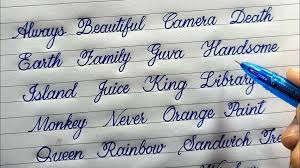 The hard truth is, over the years my cursive has devolved from “Dave, you have beautiful handwriting” to “Uh, what is that supposed to say?” I can’t even read my own writing anymore. To add to this misery my hands shake a little, which means my formerly elegant loops and curls are now jiggly, scribbly lines. Filling out the tip, the total, and the signature on a restaurant receipt is now a legitimate challenge in legibility.
It didn’t occur to me until recently that my illegible handwriting is simply the product of no longer writing by hand. I’ve always believed this degradation was the result of aging fingers, hands, and the associated muscles required for cursive writing. To a certain extent this is true. But more importantly, my writing muscles just don’t remember what to do anymore.
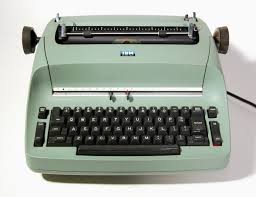
The first day I walked into typing class was likely the first day my cursive writing went downhill. The manual typewriter, followed by the electric typewriter, followed years later by the computer keyboard ensured I could create quick and perfectly legible documents in myriad fonts. Cursive writers average only 13 words a minute. Typists? 40, 60, sometimes as many as 80 words a minute.
But the pursuit of writing efficiency comes at a somewhat alarming cost. You lose the connection between mind and matter. Cursive writing is slow-w-w, which translates to more focus on what you are writing about as you form the letters. Typing feels more like a sprint to the finish, to get your thoughts through the keyboard as quickly as possible. Think of cursive as “in your own words”, while typing is “verbatim”.
Here’s an interesting experiment for you bloggers to consider. Write your next post in cursive before you take to the keyboard. See if your “voice” doesn’t sound a little more thoughtful than the one from the keyboard. Now here’s an experiment for me. What if I were to spend ten minutes a day trying to restore my handwriting? Would it eventually be described as “beautiful” once again?
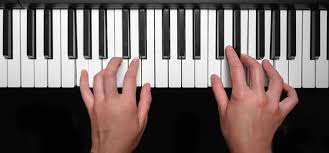 Side note: I’ve somehow retained the dexterity of playing the piano, even though I don’t sit down to the keyboard very often. I’ve noticed my fingers hover over the piano the same way they do over the computer keyboard. Maybe this is muscle memory at work, no matter what the fingers are doing?
 Someday it wouldn’t surprise me to see a famous quote, penned in beautiful flowing cursive, framed and displayed as artwork in a museum. The piece would bring us back to simpler days, back to the times when a physical hand put deep thoughts on physical paper. Of course, the question then would be, will anybody still be able to read cursive?
LEGO Notre-Dame de Paris – Update #3
(Read about the start of this “church service” in Highest Chair)

There were moments in the build today where I would’ve preferred to be laboring on the real cathedral. Bags 4, 5, and 6 – of 34 bags of pieces – were loaded with some of the tiniest pieces I’ve ever seen in a LEGO set. As I spilled out one of the bags a determined little square tile dashed away to the deep, dark recesses underneath my desk. If it weren’t for my phone’s flashlight I might never have rescued him.

We built a lot of round, structural columns today. I’ve never seen a step in a LEGO instruction manual asking for 48 identical pieces, but there I was, stacking them in my hand as I counted, “33, 34, 35…”. Those 48 pieces assembled to the 24 columns you kind-of sort-of see here.

We also reinforced, filled in, and rose to new heights the curving east end of the cathedral. This assembly brought new levels of frustration, in that the installation of some pieces caused others to promptly dislodge. Indeed, at one point a very tiny piece skittered onto the floor of the cathedral (hidden within those 24 columns) and the only way to get him out was to rock the whole assembly back and forth in my hands the way you would a marble maze.

I need to do a better job of taking photos as I build, because the fruits of my labor are already being covered up by the higher structure of the cathedral. Maybe it was no different with the artisans of the real Notre-Dame de Paris, who crafted in very small spaces knowing almost no one would ever see the detail of their work. At least I have a camera. Back then they’d have to make a painting of what they created just to show off their accomplishments!
Running build time: 2 hrs. 50 min.
Total leftover pieces: 11 (!)
Some content sourced from The Guardian article, “Signature moves: are we losing the ability to write by hand?”

 Life In A Word
In 8th grade, I won a Most Improved Penmanship award, so my cursive was obviously very bad before that! I do have a wee bit of the shakes now, so I mourn for my former penmanship. I have a daughter-in-law from El Salvador who speaks wonderful English, idioms and all, but she has great difficulty reading cursive. That made me decide not to continue my journals in cursive and I began typing them. Now I no longer keep any journals anyway.
I enjoy seeing the Notre Dame progress. Makes me think I am somehow part of the accomplishment😂
LikeLike
My late aunt knew calligraphy, so I always loved her notes and letters just for the way they looked. No matter how nice/neat my cursive was, it never held a candle to her writing. On that note, I never learned to use a fountain pen, which by its very nature embellishes cursive. Glad you’re enjoying the build of the cathedral. I vow to keep the weekly updates entertaining and upbeat, no matter the challenges (or frustrations) I encounter 🙂
LikeLiked by 1 person
I hope you have no frustrations but you have the ability to make those entertaining reading as well!
LikeLiked by 1 person
My handwriting used to be a lot like my Moms simple, slightly curvy lettering. I still hand write a lot, but now my brain moves faster than my hand, making my letters much less readable. On the subject of sending a “thank you”, I type mine on my iPad first and then hand write them on a card. I love receiving a hand written letter and assume maybe others do too! Thank YOU for the topic, Dave!
LikeLike
My late mother had beautiful, flowing handwriting. I think more emphasis was placed on handwriting skills back in the day, for the sake of social status and even job opportunities. Today we all look the same behind the letters of the computer keyboard, sigh.
LikeLike
I’ve never been able to write in cursive well. I can, but it’s not good. Well, even my block letters aren’ that good. By the 7th grade, my teachers told my father I needed to learn to type but nobody was able to read what I wrote.
LikeLiked by 1 person
The saying goes (supposedly), the more illegible the script, the more intelligent the person. Maybe you should’ve been a doctor!
LikeLiked by 1 person
My wife and I keep a diary when we vacation on Cape Cod. We’ve been going to CC almost yearly, since 1998. I write most of the diary entries. Those entries are nearly the only cursive writing I’ve done during all those years. My handwriting will not win any awards for legibility!
LikeLiked by 1 person
I thought about making a reference to diaries. By their very nature they demand writing by hand. Diaries call for slow, thoughtful entries.
LikeLiked by 1 person
It’s all rather sad, isn’t it? Talk about a lost art. It’s so pretty when people write nicely in cursive, but how often do we have occasion to see it anymore? I remember a bit of a standup routine where the comedian talked about going to war with millennials. She said, we could leave our war plans on the middle of the table without fear. We’d just have to write in cursive.
The cathedral is coming along!
LikeLiked by 1 person
I feel the same way about calligraphy. When was the last time you saw anyone show off their mastery of the fountain pen? It’s almost a shame we have the convenience of electronic equivalents of calligraphy and cursive. For that matter, shame on any electronic artwork that has effectively retired the by-hand version.
LikeLike
Agreed! And let’s not get started on AI art.
LikeLiked by 1 person
I know what you mean by losing your writing dexterity. For a while I got some of it back by drawing Zen Tangles.
I suggested to my grandchildren that they should learn to read cursive because I was going to write the will bequests in cursive. Anyone who couldn’t read it would not get anything… I better do that writing soon or I won’t be able to!
LikeLiked by 1 person
Why am I not surprised to read your (tongue-in-cheek?) approach to will bequests? I like it, if only to justify the need for cursive beyond mere signatures of names. Interesting comment about the Zen Tangles. Supports my theory that practice (at any age) may restore the skill.
LikeLiked by 1 person
Dave, you are correct about us losing our ability to write cursive and it would not be the first time I messed up an envelope either with an illegible address. I can remember in elementary school there was a banner with a row of alphabet letters in cursive at the front of the classroom and we students practiced writing daily. The only time I write anything now is to address a card or sign a check. I once took pride in my penmanship until I started working at the diner and my boss, on my first day and while looking over my shoulder, told me “Linda, are you here to take orders or improve your penmanship?” He was sarcastic, but a very kindly man who I thought of as a grandfather, but that stung. I’ve had messy handwriting since! You are sure progressing on the Lego build. If you drop a piece inside you need a flashlight to find it and fish it out if you can’t shake it out like you did this time!
LikeLiked by 1 person
I can still remember going to the chalkboard in elementary school (I forget which grade) and drawing block letters to match the examples already on the board. The cursive practice must’ve come shortly after, which I also remember. Writing the same sentences over and over and over, with words designed to teach the writing of all of the letters. I remember having particular trouble with lower case “q” and “z” because they dropped below the line. Your comment about lost LEGO pieces makes me feel more adventurous than frustrated. Flashlight in hand, I wander through those columns in the pitch black, in search of the tiniest of plastic pieces. “Indiana Dave”! 🙂
LikeLiked by 1 person
I remember practicing at home with lined paper, which we called “scribblers” in Canada (not notebooks), almost like a legal pad only wider spacing between the lines. I did like the idea of a handwritten note that your Dad did – handwritten notes are a lost art sadly. Yes, one of those pen flashlights is perfect for spotting the errant pieces that cannot be shaken from the depths of the Cathedral – “Indiana Dave” … go for it and remember to take pictures.
LikeLiked by 1 person
I am another whose mother had lovely handwriting for her entire life. And she may poke a hole in your theory, because she was also an excellent typist.
My handwriting has always been an odd mixture of cursive and printing.
LikeLiked by 1 person
I think handwriting was ingrained in our parent’s generation, no matter the technology that followed. My father never embraced email (or text). I don’t think he ever learned to type. My mother, like yours, welcomed the typewriter but not at the expense of her handwriting. Proof, perhaps, both skills can co-exist as long as they are properly maintained.
LikeLiked by 1 person
I tried to hand write a couple thank you notes several months ago. I went through half a box of lovely note cards before I had two I was not embarrassed to send. It seems the harder I tried, the worse my letter formation got. I was completely frustrated by the ordeal! Notre-Dame is looking good!
LikeLiked by 1 person
I’m really only good for the address on the envelope and the signature on the note anymore. The more I handwrite the more illegible my writing becomes! Yes, Notre-Dame is coming along faster than I expected (even if the bag count puts me at less than 20% completed).
LikeLike
I had beautiful legible cursive writing back in the day, but now it’s a mess. It’s interesting that you mention using cursive to write a post to determine your voice. I keep umpteen little scraps of paper on which I write ideas for a blog post, and I can tell you my hand-written notes are from a much more sarcastic and ticked-off woman than she who writes the blog.
LikeLike
The more responses I receive like yours, the more I’m convinced my own loss of legibility is simply due to no longer writing by hand. I also believe our writing “voice” is altered by the speed of which we document our thoughts.
LikeLiked by 1 person
The women in my family always had beautiful loop handwriting; the men always printed. It seems to have all come around now. I understand that typing is more important that cursive these day. But it’s a shame that today’s young people cannot read historical documents or older family letters.
LikeLiked by 1 person
Your comment reminded me of my early days in architecture, when block lettering was an essential for construction drawings. Just one more departure from the regular use of cursive!
LikeLiked by 1 person