
I’ve always been fascinated – mesmerized even – by the mechanics of assembly line manufacturing. A product takes form from a single part, then moves down the line to where another part is added. Then another part, another, and another, until at long last the completed product presents itself at the very end for packaging. Assembly lines are becoming more and more automated, which begs the question: When will humans be removed from the process altogether?
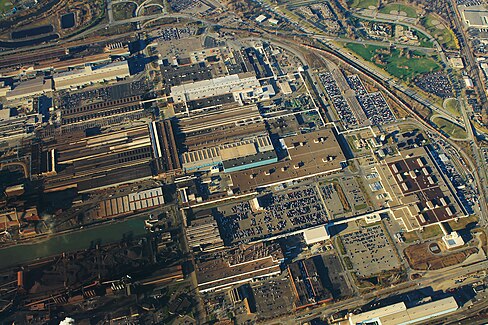
On a recent trip to Detroit with my brothers, we were lucky enough to snag tickets to a tour of the Ford River Rouge Complex, where the F-150 truck (gas engine) is mass-produced. Ford has over 65 manufacturing plants worldwide but I think “The Rouge” is the only one you can tour. And boy is it worth it. You walk away with a lot more admiration for a fully-built F-150 than when you first set foot in the building.
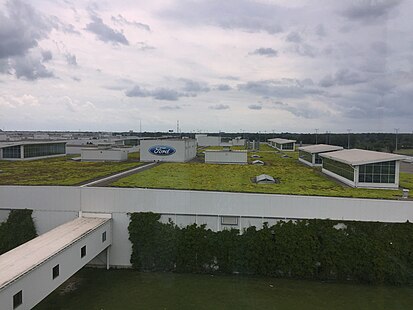
Ford doesn’t allow you to take photos inside The Rouge (and they keep a close eye on visitors) else I’d include a few here. The tour starts with a couple of promotional videos in comfortable theaters, followed by an elevator trip to the top of the visitors center for a look down at the vast campus. Then things get serious. You put away your phones, listen to the rules and regulations about behaving inside the factory, and off you go.

Here are the eye-popping numbers. The F-150 travels the length of a four-mile assembly line as it grows from parts to finished product. That line includes over two hundred stops to add parts (which aren’t really stops because the truck is always being pulled along). A fully-functioning F-150 rolls off The Rouge assembly line every 52 seconds, which translates to a remarkable 650 new vehicles per ten-hour working shift. And finally, the whole process is far from automated. 6,000 workers assemble the vehicles, each a specialist in the given part, calibration, or inspection the truck demands.
Of course, an F-150 has far more than two hundred parts. Some of those assembly line stops are for the installation of major components. The entire dashboard, for example, or most of the engine are installed in a single stop. But you also have workers who do nothing more than take a rubber mallet and pound on rear taillight covers. Think about it. Can you imagine hammering on taillight covers 650 times a day? It’s mindless, it’s repetitive, and you have to wonder about the toll it takes on the human body.
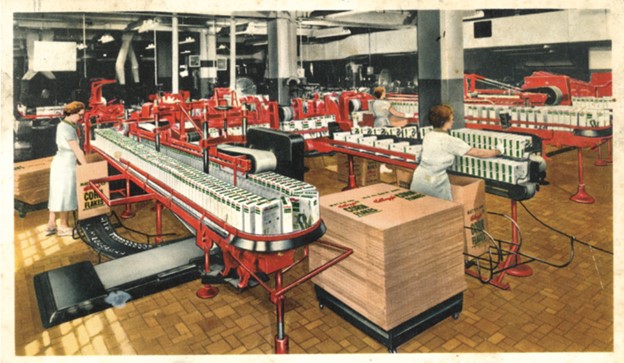
Assembly line work can be more fun and less repetitive than building cars. My family and I visited the Kellogg’s (cereal) factory in Battle Creek, Michigan in the early 1970s. The smell of cooked corn flakes might’ve turned a kid’s nose but the tour was the next best thing to Willy Wonka’s. You’d don a Kellogg’s paper hat and read the colorful brochure story about how “this little kernel went to Kellogg’s… first it was milled… then it was flavored…”. Then you’d walk the assembly line of breakfast cereal, from cooking all the way to box filling. The best part was at the very end, where you’d get free samples of all your Kellogg’s favorites, and postcards so you could brag about the place to your friends. Alas, like many manufacturing facilities, safety and espionage concerns brought an end to the Kellogg’s tours in the mid-1980s.
 At least I could watch assembly lines on TV after that. How It’s Made was my kind of show. The Canadian documentary spent years creating virtual factory tours so viewers could see the ins and outs of manufacturing processes. In a single episode you’d watch the dizzying mechanics behind the creation of everything from candies to clothing to cars. How It’s Made kind of gave you access where access wasn’t allowed.
Speaking of no access, the electric-engine version of the Ford F-150 – the “Lightning” – is produced in a plant where no tours are permitted (back to the espionage thing). Instead, you watch a short video of the process after you’ve completed The Rouge tour. How are the two F-150 assembly lines different? Several thousand humans. The Lightning production is almost entirely automated, with robotic machines hovering over the vehicles as they come together. Our tour guide said the assembly line is eerily quiet, since a robot doesn’t require a banging mallet to add on a taillight cover.
 For all my fascination with assembly lines and automation, I wonder whether “loss of humanity” is really the way to go. All those jobs at The Rouge would disappear. Machines would be one step closer to taking over the world. Suddenly “handmade” sounds better than ever.
Some content sourced from the Michigan Blue article, “Visiting the Kellogg’s Factory”, and Wikipedia, “the free encyclopedia”.

 Life In A Word
The Ford F-150 travels four miles to be made. That’s amazing. I’d enjoy taking a tour of that factory. My family also went to the Kellogg’s cereal factory in Battle Creek, Michigan. I enjoyed it immensely. As an adult the coolest factory tour I’ve taken [other than whiskey and beer] is the Louisville Slugger factory. Fun and informative.
LikeLiked by 1 person
I’d be up for pretty much any factory tour. I find the mechanics of assembly lines so fascinating, and wish I had the engineering mindset to design them.
LikeLiked by 1 person
Fascinating essay. Sometimes I wonder how certain products are made. How, for instance, are toilet paper rolls created? It seems impossible that long lengths of perforated, extremely thin paper could be produced without anything ripping. Yet, the process obviously works perfectly.
LikeLiked by 1 person
I wondered about the maintenance of an assembly line like The Rouge, Neil, and asked the question of our tour guide. She said a crew inspects/repairs the line regularly off-hours. She said the cost of the line going down – even for a few minutes – is more than worth whatever Ford has to invest in salaries for its maintenance workers.
LikeLiked by 1 person
I took that tour several years ago, and agree that it was a fascinating experience!
That plant was fully operational in the 20’s, and was probably the most vertically integrated manufacturing plant in the nation. That’s economist-speak for iron ore coming in one end and finished cars coming out the other. It turned ore into iron and steel, rubber into tires and sand into glass.
Not many big plants from the 20’s are still online, but that one surely is, even 100+ years on.
LikeLiked by 1 person
We also toured the nearby Ford Piquette Plant, J P, where the Model T was first mass-produced. That tour guide said Henry Ford should be credited with the creation of the moving assembly line as much as for the creation of the first mass-produced vehicle. Ford was constantly tinkering with the designs of his vehicle and his manufacturing, all in the name of efficiency and cost-savings.
LikeLiked by 1 person
A million years ago I was an industrial engineer working on building automated computer assembly lines. There’s a lot of crazy engineering that goes into designing a process that can build car like that.
LikeLiked by 1 person
After our tour we realized we’d spent six hours on The Rouge tour (most of it self-guided). We would stand at a given viewpoint for 15-20 minutes at a time, just watching the same aspect of the assembly over and over and over. Like I said it was mesmerizing, as much for the build process as for the mechanics of the assembly line.
LikeLiked by 1 person
I love the show ‘How It’s Made’. I’m glad you can still watch it on YouTube.
I found a site that listed 12 Automotive Factory Tours in the U.S.A. I think my husband would like the BMW, Mercedes, Corvette , Shelby and Harley Davidson factories since he has owned or now owns one from each brand other that the Shelby.
LikeLiked by 1 person
On our Viking Cruise through Germany we had the opportunity to visit the Mercedes factory, a tour that conflicted with the timing of another tour we wanted to take. After seeing The Rouge, I want to go back and tour Mercedes. I’ll bet that assembly line (not to mention the working conditions) is first-class.
LikeLiked by 1 person
It’s pretty amazing you can tour that, seems like a big liability to them but I’m sure it’s run like a well oiled machine. Pun intended ha. We did not have any field trips there growing up.
LikeLiked by 1 person
The Rouge is pretty locked down even though they seem happy to let you through the doors. Cameras everywhere. Tour guides trained to watch your every move. And viewing platforms high above the several floors of the operation, so you have no real opportunity to mess with the works. I’m surprised you don’t sign your life away before you go in. It would’ve been a fascinating comparison to see the automated assembly line of the F-150 Lightning, but you can understand why that technology isn’t for public consumption.
LikeLike
It sure is interesting to be on a manufacturing tour. Suddenly an IKEA set, we make with all the parts, is seen on a larger scale for a car. So many parts, stages, etc for the build. We can imagine why Boeing is having all of their issues. There has to be a lot of quality checks in production.
LikeLiked by 1 person
We saw several employees along the line who were inspectors instead of builders. One person was testing the way the passenger doors opened and closed, and if an adjustment was necessary it was done on the spot. Another person was checking the exterior paint to make sure there weren’t any flaws. It was impressive how these concerns were addressed mid-assembly instead of waiting until the truck was completely built.
LikeLiked by 1 person
Absolutely, it’s exciting to see.
LikeLike
That was interesting Dave. I’ve never been to the Rouge Factory, nor the Kellogg’s factory for that matter either, but I’d enjoy both of these tours. Since apple crops are big business in Michigan, this week I have been hearing about the use of robots for picking apples in the bigger orchards and there is also a means of using autonomous drones to hover and pick apples off the trees. Pretty amazing, isn’t it? When I had cable, even though I’m not much of a baker or cook, I enjoyed a show on the Food Network called “Unwrapped” which would periodically take you into plants where various food products were made. One really great episode aired around Thanksgiving and delved into how all items on a typical Thanksgiving table were made, from visiting the cranberry bogs to how Durkee French-fried onions were made.
LikeLiked by 1 person
Okay, you got me Linda. When I referenced “How It’s Made” I was actually thinking of “Unwrapped”. That’s the show I remember. Who knew there were two? Robotics for picking fruit is eerie, as if the machines can “see” what they’re after. Doesn’t help me sleep at night 😉
LikeLiked by 1 person
I learned so much about how food is made by watching that fun show. Ha ha – I agree with you on the apple picking Dave. Technological advances are just over the top sometimes. One thing is for sure, the farmer doesn’t worry about them having an apple or two on their break, or slipping a few in their pockets to take home. 🙂
LikeLiked by 1 person
Four MILES of assembly line?! Wow! It must be quite the marvel of organization and efficiency. No wonder you spent 6 hours there. Of course, I can imagine with your brothers along, you guys had much to discuss about each stage of the process. We visited a chocolate truffle factory this summer. Unfortunately it was not in operation that day! (We were not told that ahead of time either.) A tour guide explained the operation, but to see it in action would have been much more interesting.
LikeLiked by 1 person
The Ford assembly line is like a giant snake, extending back and forth several times across the building to make up those four miles. At several high-up vantage points visitors can pretty much see the entire extent of the line, including a good share of those thousands of workers. I’ve never seen so many humans and machines working in concert!
LikeLike
Sound really interesting. I think the cereal factory would be the most fun (and tasty 😉 ). I hadn’t heard of that show. I may have to look for it. What a great concept!
LikeLiked by 1 person
Maybe you’ve heard of “Unwrapped” instead? As I told Linda above, THAT’S the show I meant to mention, not “How It’s Made” (which now I realize I’ve never heard of either 🙂 )
LikeLike
We used to watch How Its Made all the time! Do they still make that show? I haven’t seen it around, but we also don’t watch asm uch TV as we used to. But it’s got me thinking about learning. I’m currently sitting on the couch hearing the repairmen work on our garage door, and as I sit here, this has made me think about how much I learned in shows like How It’s Made and when was the last time I actually learned something new? I know this wasn’t the purpose of this post, but it’s got me thinking! Thanks for sharing!
LikeLiked by 1 person
“How It’s Made” filmed its last episode about five years ago. I was always fascinated by the mechanics of the assembly lines they showed, and the thought of someone designing, then engineering, then manufacturing the parts to make the whole line go. I’m sure the lines never worked quite right the first time they were run either, so you’d have a lot of fine-tuning. Then there’s the maintenance of the whole thing. It’s almost beyond (my) comprehension. Glad the topic got you thinking.
LikeLike
As a systems architect, I’ve always been fascinated by the way of transforming a bunch of excel sheets, through schematics down to a working production line, with minimum intervention in between. In the end, there is basically a schematics and checklists, and a production line comes to be, in a Lego fashion (the integration phase and making it operational but an annoying interlude).
LikeLike