
Let’s talk about apricots. If you read my last post, apricots are the last topic you’d expect in a series about a Viking River Cruise. But fate played a hand when our ship only got a taste of the Danube River (while others were literally underwater), so I suppose we needed to satisfy our appetites on something else instead. Like apricots.
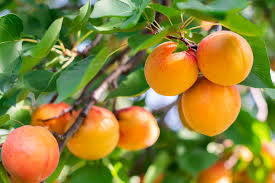
I don’t associate apricots with Austria at all (how about all the “a” words in that sentence there, huh?) Austria is more about snowy Alps, Mozart, and the hills coming alive in The Sound of Music. So it was something of a surprise to find myself on a hot, sunny day, standing in an apricot orchard in Krems, Austria. Almost floating above this little riverside town, you’ll find the fruit trees on the property of a Benedictine monastery known as Göttweig Abbey.
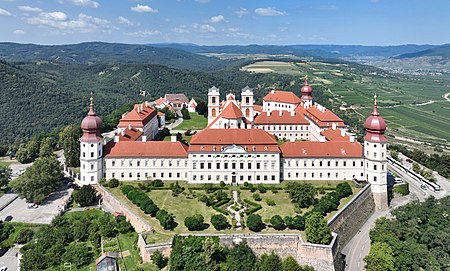
Göttweig is an impressive complex of buildings, and even more impressive for its lengthy history. The Abbey was built in the 1100s, rebuilt larger after devastating fires in the 1500s and 1700s, and survived relatively intact after the Nazi occupation of WWII. Its library contains 150,000 books and papers, and its main structure houses the largest Baroque staircase in Austria. But who cares about all that, I hear you saying. Tell me about the apricots, Dave!
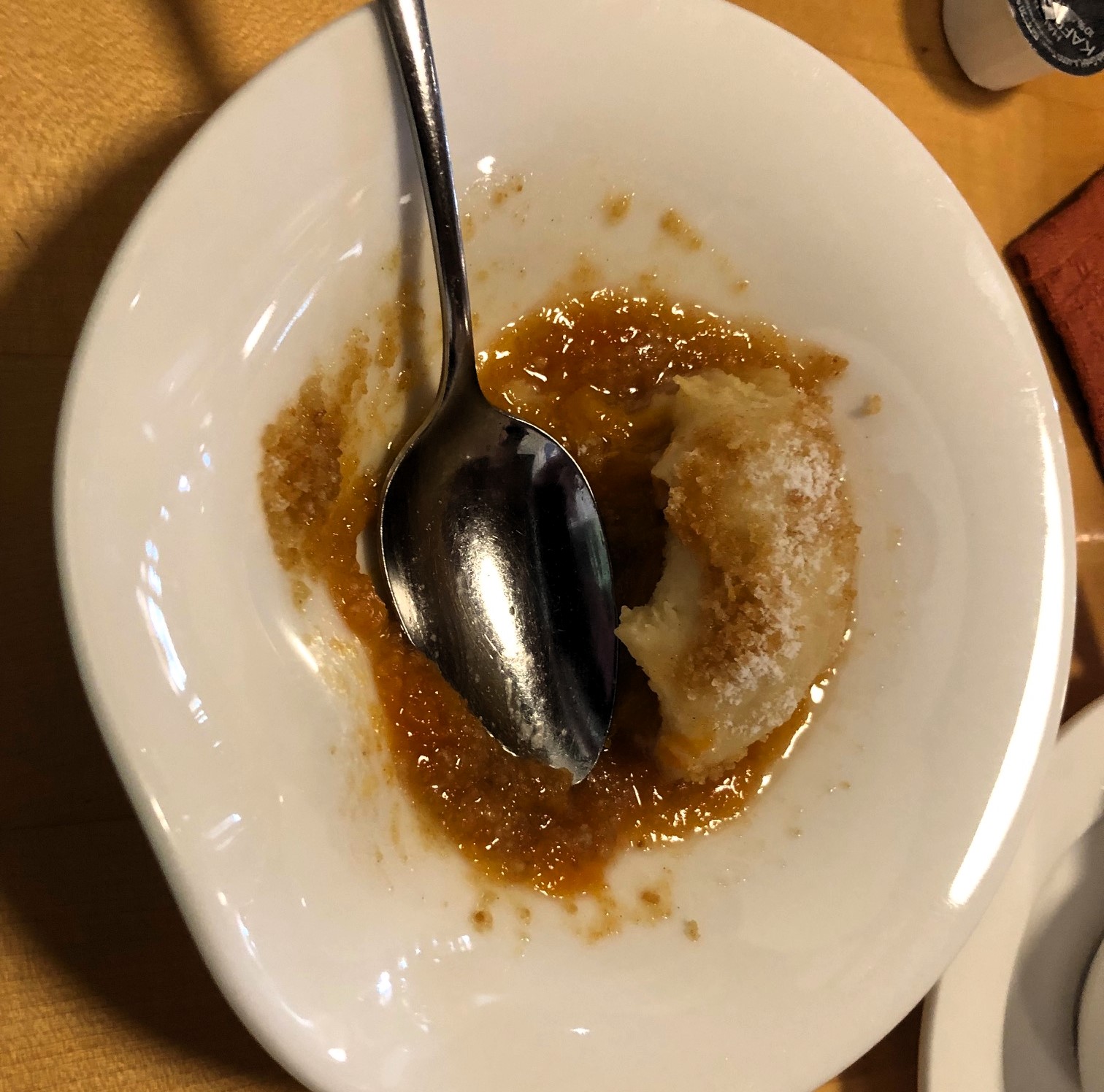
Let it be said; Göttweig brought apricots back to life for me. The Abbey tour starts in its apricot orchard, where we saw the trees up close, on the verge of harvest time. The tour ended with a short class on making apricot dumplings (unquestionably as scrumptious as they sound: a whole pitted apricot wrapped in puff pastry, topped with vanilla-apricot sauce, served hot). And the gift shop… oh my, the gift shop. Shelf after shelf of everything apricots, from syrups to jams to cookies to candy. Even better, you’ll find a tasting bar for several varieties of Göttweig apricot wine and brandy (also available for purchase, of course).

When the tour took us to a little theater for a short film on Göttweig’s history, one of the monks (at least, I think he was a monk) served us apricot juice in tall glasses as a refreshment. It was the proverbial nectar of the gods… and I time-traveled to my childhood instantly. My mother served apricot juice at breakfast occasionally, and I remember never really caring for its sweet/tart taste. Guess I’ve grown up since then. This juice was so delicious my wife and I are already in hot pursuit for a bottle here in the States. Not something you’ll find in your ordinary grocery store.
[Blogger’s note: Don’t take “Göttweig” for a spin on Google Translate. Our tour guide said they’ve never known the meaning of the word. Google Translate doesn’t either (but its guess is a little ironic).]

Here’s a strange word you should associate with apricots: drupe. It’s another word for stone fruit; as in, fruit where the flesh surrounds the pit. So apricots are drupes, as are cherries, peaches, nectarines, and plums. Even dates join this pit-y party.
Here’s another word you should associate with apricots: orchard. There’s nothing more frustrating with the English language than two words with essentially the same definition. So it is with orchard and grove. Technically there’s a difference. If your apricot trees are planted in neat rows with the intent of commercial production, you have an orchard. If you’re walking through the forest and come across a natural stand of apricot trees, you’re in a grove. But c’mon, if all that is true then why do we say “apple orchard” but “orange grove”? Sigh…

I wouldn’t care if I had an orchard or a grove as long as I had apricot trees. I’m not really a peach or plum fan, but man I love the taste of apricots. As a kid I also loved them dried, because they were so sweet they might as well have been candy. But the adult version of me chooses the fresh fruit instead. And now the juice.
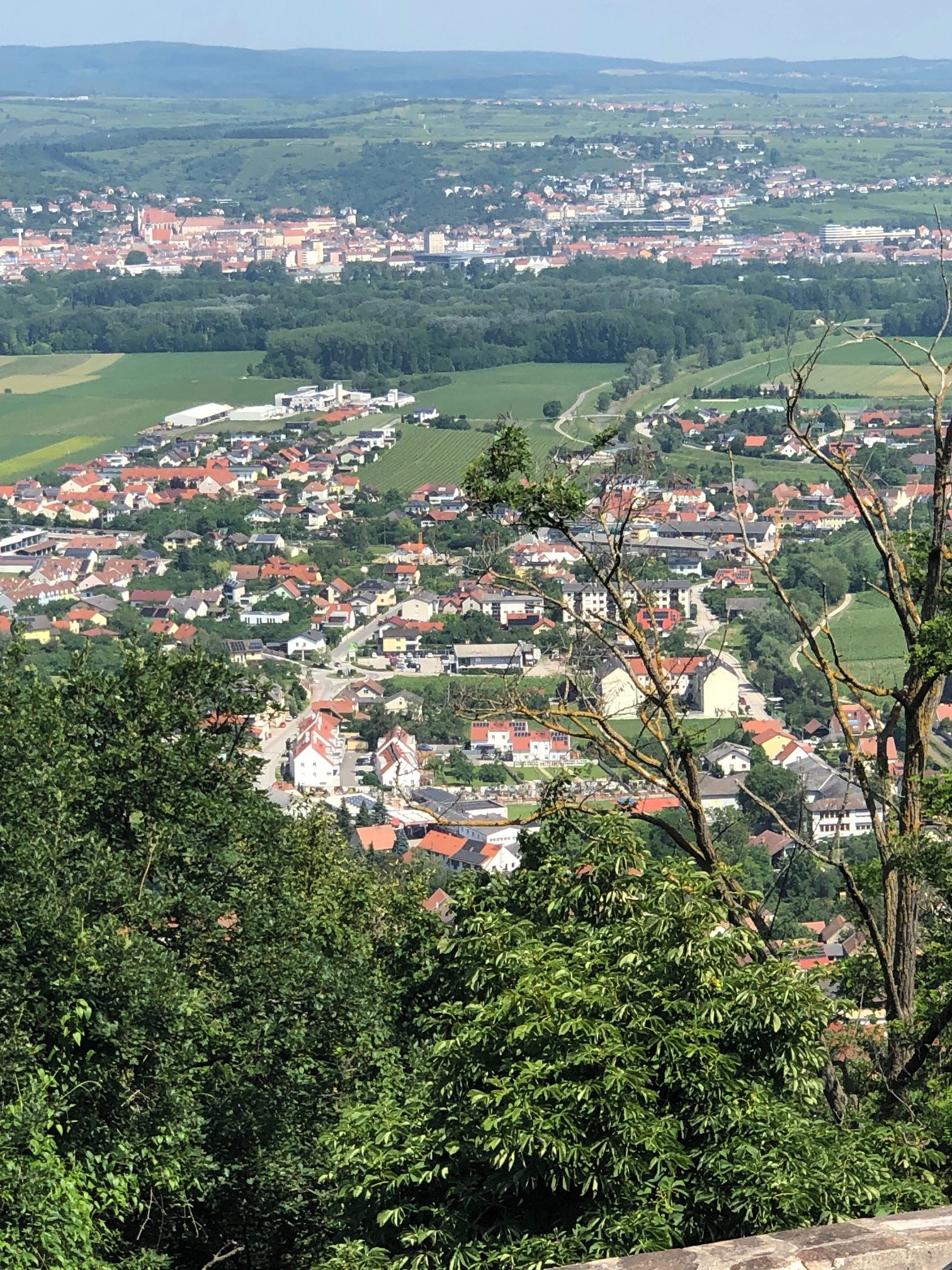
Some of you more adventurous (and/or Christian) souls may be interested to know Göttweig Abbey lies on one of the routes of the Camino de Santiago, the soul-searching network of the Way of St. James. A tall glass of apricot juice would be most refreshing along the 1,100-mile pilgrimage to the coast of Spain. Of course, you don’t need to walk that far for the taste of apricots. Just mosey down to your local grocery store, because they’re in season now. Maybe you too will discover newfound appreciation for “monk fruit”.
Some content sourced from Wikipedia, “the free encyclopedia”.

 Life In A Word
Great post Dave!
LikeLike
When we were at Göttweig Abbey in 2021, we bought a small bottle of apricot liqueur from that cute little gift shop. I used it in the making of breakfast smoothies. When I recently ran out, I discovered apricot liqueur is not as easy to find here as it was in the hills and valleys around Krems. Nice post!
LikeLiked by 1 person
We have one of those bottles of the apricot liqueur as well. I’m hoping it lasts a long time!
LikeLiked by 1 person
😎
LikeLike
I loved our visit there. I have to say that apricots was the last thing I expected to find there. Great stuff.
LikeLiked by 1 person
We were fortunate to make it to the Abbey, since it was well beyond the point where our cruise was forced to stop. The several-hours bus ride was worth it, and we even had a few hours in Krems itself for a look around.
LikeLiked by 1 person
I hadn’t thought about apricot juice in at least 50 years. I had it now and then when I was a kid. It was pretty thick, and the brand we drank called the product “apricot nectar.” I think that Dole possibly was the brand.
LikeLiked by 1 person
We have yet to find any brand of apricot juice here in the States. We’ll keep up the search!
LikeLiked by 1 person
An awesome and appreciated article about apricots, Austria, Alps, and abbeys!
LikeLiked by 1 person
Oh my. That sentence is… astonishing!
LikeLike
Loved your travelogue about Gottweig Abbey, Dave. Even on a multiple-choice question about there apricots are grown, I’d never consider Austria as an answer! I too loved dried apricots and apricot nectar as a child. Haven’t enjoyed either one for quite some time. Calories and sugar content, you know!
LikeLiked by 1 person
The only country I associate apricots with is Turkey (with honey – talk about sugar!) Austria was already appealing, so the apricots only added to the attraction (my gosh, even more “a” words for you 🙂 ).
LikeLiked by 1 person
Enjoyed your post, agree would not have thought you’d be telling us about Apricots in Austria and on a Cruise. Now, I’m going to search out some apricots. I haven’t had them in a long time.
LikeLiked by 1 person
You will not be disappointed, especially if you’re already a fan of “drupes”.
LikeLiked by 1 person
What a wonderful experience with the apricots Dave – that dumpling sounds scrumptious, especially the vanilla-apricot sauce as a final touch. I would definitely like that. My mom also bought apricot juice to serve at breakfast, although not as much as pineapple, orange or tomato, but enough that I remember how thick and sweet it was. A fellow blogger and her husband did a portion of the Camino de Santiago pilgrimage a few years ago. They enjoyed the experience immensely.
LikeLiked by 1 person
It seems apricot juice is harder to find on grocery store shelves these days. I can’t find any (yet) but I haven’t given up my search. My nephew walked the Camino de Santiago years ago; his daily blog about the experience was fascinating. Emilio Estevez made a very good movie about the Camino called “The Way”, staring his (real-life) father Martin Sheen. For many the pilgrimage is life-changing.
LikeLiked by 1 person
We used to buy it in large tins, like tomato juice back in the day. I just looked at Kroger online and they sell it but ship only. I have not looked for it in awhile. I drink V-8 low sodium now for my juice of choice. Interesting about the experience walking the Camino de Santiago. Laurie and her husband Bill (same age as me) have always been avid runners and at the time routinely participated in marathons. They did walk, but she said they were surprised to find that their running regimen did not help prepare them for the hours of walking. They met some nice folks in the walk and decided to travel to Portugal the following Summer. Laurie studied Portuguese, then COVID happened and they never got there until 2023 I believe. She no longer blogs, but continues to follow those she interacted with when she did blog. I didn’t know about that movie – I would like to see it. On another note, I thought of you and your trip today. I saw some video online about the flooding in northwest Italy. I am awestruck about the flood waters, that looked like a raging river through the town.
LikeLiked by 1 person
Since I already had my nephew’s experience as a basis, “The Way” was effective in that used one man’s broken story to demonstrate how life-changing the walk can be. The Camino is more about communing with those you meet along the way, figuring out food and shelter as you go, and finding new perspectives in life, instead of simply saying you completed the walk from start to finish. Also, you’re never too old to participate. My nephew came across walkers of all ages and nationalities.
LikeLiked by 1 person
I can see how walking the Camino would be a life-changing, enriching event.
LikeLike
Thanks for this information about apricots. They’re one of my all-time favorite fruits, although I didn’t know about them being drupes… which I should have. We can only get fresh ones for about a month here, so right now I’m gorging on them.
LikeLiked by 2 people
Everything I’m reading says fresh apricots are only to be had from mid-June to July (short!) My post was unintentionally timely 🙂
LikeLiked by 1 person