
There was a time, not so long ago, when the Girl Scouts knocked on your front door instead of standing outside your local supermarket, selling their popular cookies. My wife would tease me because I never had the heart to turn down the cute little uniformed kids on my doorstep. But let the record show, I really do like Girl Scout cookies. And if I had the money to buy just one box, it’d be the Thin Mints every time.

I’ve been a mint fan as long as I can remember. I’m not talking about foods (yet) so much as the flavor itself. Peppermint, spearmint, wintergreen, or even a fresh sprig right out of the ground – they all speak to me with a sort of spicy vibe. I find a food so “tasteful” when it’s freshening your breath at the same time.
For a hot minute I thought the Girl Scout Thin Mints were gone for good. A recent headline teased the departure of a “cult-favorite” cookie flavor and I feared the Mints had run their course. Instead, it’s the lookalike “Raspberry Rally” calling it quits. No harm, no foul. As long as I can still buy the Thin Mints (and an occasional Caramel Delite) I’ll happily fork over the $5 (now $6) a box.
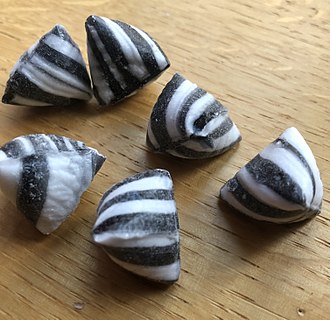
Had the Thin Mints really been gone for good, I needn’t look far to find other fresh-breath foods. Who doesn’t like a scoop of peppermint or mint chocolate-chip ice cream? A pack of Mentos? Listerine? Heck, I’ll even settle for that gritty peppermint paste the hygienist uses to polish your teeth.

Minty consumables really do run the gamut. You’ll find over fifty global brands of breath mints, including Altoids (my favorite), Breath Savers, Certs, Clorets, Ice Breakers, Tic Tac, and Velamints. But put all of these together and you still wouldn’t come close to the Starlight Mint population. The origin of Starlights is one of the world’s great mysteries. Brach’s Candy claims their invention, but if so then why do they call them “Star Brights”?
If Starlights are too dime-store for your taste perhaps you prefer the softer texture of a “butter mint”. Butters are often found, individually wrapped, in the lobbies of fine restaurants (gone are the days where you’d just spoon yourself a handful on the way out the door). I’ve always thought a butter mint is caught in a quandary, Does it identify more as “butter” or “mint”?

Speaking of a refined palate, minty liquors make for some mighty fine beverages. The first drink my wife and I ever shared was hot chocolate and peppermint schnapps from a thermos at our college’s movie night. A grasshopper (and my wife has a killer recipe for one) is a fresh-breath milkshake made with crème de menthe. And the Kentucky Derby’s mint julep is more bourbon than mint but you’ll always find fresh sprigs garnishing the top.
If not the Starlights, my first introduction to mint was probably packs of Life Savers. There used to be several mint flavors of “the candy with the hole in the middle” including Wint-O-Green, Stik-O-Pep, and Spear-O-Mint. But when the trendier Mentos and Tic-Tac came along, Life Savers headed for the rear-view mirror.
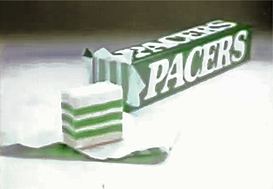
No mention of mint would be complete without a couple of failures (at least IMHO). In the 1970s the makers of Starburst came out with a short-lived minty version called Pacers. They never worked for me because I always expected those chewy little squares to be fruit-flavored. Nabisco’s Oreo, which blossomed into 85+ varieties from their black-and-white signature sandwich cookie, include ones with green mint filling. No, just no. Oreos are meant to be the vanilla originals. Food-color them orange for Halloween if you will but don’t change the taste.
[Side advertisement: The next time I fly overseas I’ll have to give Jet Blue’s Mint class a try. Their individual “apart-mint” cubicles allow you to lie flat, with lots of cushions, a TV, and plenty of storage space for your carry-on items. Fancy, huh? All that’s missing is a chocolate mint on your memory foam pillow before you drift off to sleep.]

Here’s a chicken-or-egg question. Which mint came first, the flavor itself or the stodgy industrial facility which manufactures coins? I always thought it’d be cool to work in a mint. You’re handling millions of dollars every day and if someone asked what you do for a living, you just say casually, “Oh, I make money.” And If it were up to me I’d give all those coins a sweet-smelling scent on their way out the door so they’d be “freshly-minted” two times over.
 Our Christmas celebrations used to include a box of Frango Mints, the melt-in-your-mouth chocolates you could buy at Chicago’s Marshall Field’s. These days we go with Williams-Sonoma peppermint bark. Our tree will always welcome a peppermint candy cane or two. And if a Girl Scout should ever knock on my front door again, I’ll be happy to help her meet her quota, because the Thin Mints will always be a breath of fresh air.
Some content sourced from the CNN Business article, “The Girl Scouts are discontinuing a cult-favorite cookie”, and Wikipedia, “the free encyclopedia”.


 Life In A Word