

Our church is weighing creative approaches to conducting in-person services next month. Pastor Bob sent out a survey recently asking we-the-congregation to consider options like outdoor church, weekday church, and evening church – all in the name of social distancing. We’ll also be shaking up the service “touchpoints”, like sharing the peace, passing the (offering) plate, and partaking in communion. The Big Guy doesn’t care about the where’s, when’s, and how’s, of course – just that we have church. On the other hand, He (She?) might have something to say about the music. After all, how does a church organ sound after a three-month absence from tuning? It’s bad enough our congregation is gloriously inharmonious when we bellow out the hymns (no choir of angels are we), but add in a fully discordant church organ and you have a complete mess. Organs need tuning like the human back needs a chiropractor: maintenance is key. When dust accumulates and seasons change, organ pipes sound noticeably different than they’re supposed to (hence the term “off-key”). Imagine the pitch-perfect tones of a bass saxophone, but instead you get more of a sour wail. That’s an organ pipe sans “tune-up”.
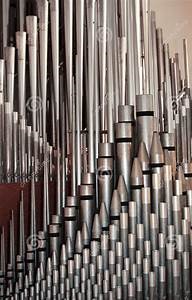
Tuning organ pipes is serious business and can run thousands of dollars per visit. Consider, the biggest organs have as many as 25,000 pipes. The booming bass pipes can be thirty feet long and two feet in diameter, while the little pixie sopranos look more like metal soda straws. Each pipe must be individually tested and tuned no matter how big or small. Tuner A presses a key on the (up to four) keyboards down below, while Tuner B adjusts the pitch of the pipe up above (sometimes on a ladder, sometimes on a suspended platform). It’s hours and hours of monotonous – and in the case of cathedrals, death-defying work, one demanding pipe at a time. Better love what you do.
Here’s another reason organ tuners deserve hazard pay. Imagine you’re suspended hundreds of feet above the sanctuary floor on a swaying rope-suspended platform (I’m already saying “no”), virtually floating like the angels, and as you reach over to adjust the pitch of a mid-sized pipe, bats fly out. Yep, that’s the kind of critters tuners encounter when an organ wants for too long (or a single pipe sounds suspiciously out-of-tune). Squirrels even make their homes in the pipes – though don’t ask me how they don’t go plummeting to their death the moment a note is blasted from the keyboard. Maybe they’re flying squirrels?

In the land of COVID-19 there are no organ tuners (or very few). Those Peter Pipers are being denied access to their church-bound “patients” because a) COVID may reside on a surface like, say, a keyboard, and b) no congregation means no offering plate means precious few payments to the Piper. So what do stay-at-home tuners do instead? Why, they tune their pianos of course! Then they play those pianos hours on end. We may come out of COVID with a whole new genre of classical music called “tuner tunes”.
 Talk about a sprint from feast to famine. An organ tuner’s busiest weeks are those leading up to Easter, often requiring extra staff and longer hours. COVID downpoured on that parade. Demand for pre-Easter tuning disappeared faster than Mr. Bunny himself. In the case of one tuner – profiled in the Wall Street Journal – 100 contracts withered to less than a dozen inside of two weeks. He furloughed his entire workforce, worried instead over simply paying the rent on his shop.
One day soon, we faithful will walk away from our laptops and wander back into church sanctuaries instead. We’ll spread out over more services. We’ll wave hands instead of shake hands. We’ll drop the offering into the plate from a “safe height”. We’ll bypass communion servers and help ourselves to the bread and wine instead. The organist will play and the congregation will sing; both noticeably off-key. And when that happens give a nod to the organ tuners, who will someday get the pipes pitch-perfect again.
Just hope they don’t need an exterminator as well.
Some content sourced from the 3/25/2020 Wall Street Journal article, “As Coronavirus Shutters Churches, an Organ Whisperer Changes Key”, and Wikipedia, “the free encyclopedia”.