
Flip through the chapters of my life and you’ll find a bookmark at 1975. It was the year I became a teenager. It was the year I started middle school. But most importantly, 1975 was my first foray into Top 40 music. In those days, punk, funk, disco, and metal were just getting started; all too progressive for a kid taking his first dip into the pool of radio rock. Instead, my preference was to chew on something a little sweeter. Like bubble gum.
 In the 1970s, I was way too young to witness the birth of rock and roll. I also missed the advent of pop music. But I was right on time for a musical genre known as bubblegum. Bubblegum siphoned off pop music’s more catchy, upbeat tunes and marketed them to children and adolescents. And what better way to market theses songs than kid TV? Anyone who ever watched The Partridge Family, The Monkees, or the cartoon rock of The Archies on Saturday mornings enjoyed bubblegum music.
As for 1970s Top 40, it’s easy to look back on those weekly lists and find bubblegum. “Love Will Keep Us Together” (Captain & Tennille), “Laughter In The Rain” (Neil Sedaka), and “He Don’t Love You, Like I Love You” (Tony Orlando and Dawn) are just a few examples from fifty years ago. Like most things back then, music was more innocent.
Having said that, bubblegum wasn’t even specific enough to define my own tastes. The industry standard Billboard Magazine generates a Hot 100 list at the end of every year based on sales and radio plays. It’s fun to go through the 1975 list and recognize just about every song. But I was looking for three names in particular and – no surprise – all of them made the list with multiple entries. Hello again, John, Olivia, and Barry.
 John Denver was only 53 when he was tragically killed piloting a single-engine plane above California’s Monterey Bay, yet he managed to create over twenty-five years of gentle hits before that. When I first heard his voice he’d already landed top-ten’s like “Leaving on a Jet Plane” (from the movie Armageddon for you younger readers), “Take Me Home, Country Roads”, and “Rocky Mountain High”. One of Denver’s biggest hits, “Annie’s Song”, was a love song to his first wife. Another, “Calypso”, paid tribute to the late ocean explorer Jacques Cousteau. I purchased most of Denver’s albums (cassette tapes!) with a good chunk of my meager teenage savings.
 I was an Olivia Newton-John fan well before 1978’s Grease became a Hollywood phenomenon. Newton-John and her sweet Australian accent were an instant teenage crush, with songs like “If You Love Me, Let Me Know”, “Have You Never Been Mellow”, and “I Honestly Love You”. Then Grease came along and good-girl-turned-bad Olivia turned my teenage heat up several notches. A testament to Newton-John’s popularity came in the form of 100 million records sold, fifteen top-ten singles, and four Grammy awards. To this day, the soundtrack to Grease remains one of the world’s best-selling albums.
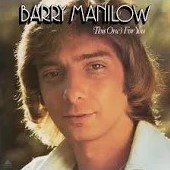 Barry Manilow and his music are more of a confession than the two we’ve already visited with. It wasn’t at all cool to admit to liking Manilow’s “adult contemporary” music back then. His hits were better suited for your parents, like “Mandy”, “This One’s For You”, and “Even Now”. “Copacabana” was a dance number you couldn’t get out of your head. “I Write the Songs” spoke to my inner-musician wannabe. Manilow’s talents on the keyboard certainly captured my attention as I pursued the piano myself. Unlike Denver and Newton-John, I purchased every Barry Manilow album as soon as it hit the shelves. Somewhere in my attic I still have a boxed CD collection of his best work.
Like him or not, what is remarkable about Manilow is his enduring popularity. He has been ensconced in Las Vegas for years now. He just completed his 600th performance at Westgate’s Resort & Casino (an achievement which prompted this post), breaking a record held by Elvis Presley. The one time I saw him in concert – at an outdoor venue in the Bay Area – I knew every song he performed. Sure, almost all of his audience members are now graying at the temples, and his popular music is from five decades ago (!) but you still have to give him props. The man has staying power.
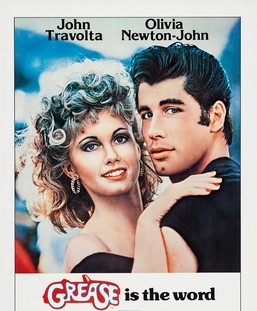 Do I still listen to John, Olivia, or Barry? No, but I can sing entire songs from memory. There’s nothing like the music of those three to take me back to my teenage years. Call it adult contemporary if you want, but this guy will always think of it as “Pop” music.
Some content sourced from The Atlantic article, “It’s Okay to Like Barry Manilow”, and Wikipedia, “the free encyclopedia”.
 Life In A Word