
Hello, I’m Veronica
The sky is not completely dark at night. Were the sky absolutely dark, one would not be able to see the silhouette of an object against the sky.


-
Loony Binge
I know very little about Oscar Wilde, except he was a 19th-century Irish playwright famous for “The Picture of Dorian Gray”. Wilde lived to be just 46, producing his best works in the last ten years of his life. He was often quoted, lacing words of wisdom with pretty good wit. Here’s one of Wilde’s best: “Everything in moderation, including moderation”.
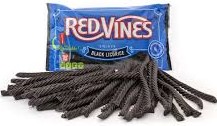
Poisonous snakes? Perhaps you caught this story from last week’s headlines: “Man Dies from Eating More Than A Bag of Licorice a Day”. (I mean, who wouldn’t catch a story like that, right?) It seems a Massachusetts construction worker with a daily candy habit switched from red to black licorice, and a few weeks later he went into cardiac arrest.
After futile attempts to revive our candy man, medics discovered he was experiencing ventricular fibrillation, meaning the lower chambers of his heart stopped pumping blood. So he died. From licorice. You’ve heard of death by chocolate, but seriously, death by candy?
The New England Journal of Medicine says black licorice contains glycyrrhizic acid, which in ample amounts tanks the body’s potassium levels. Low potassium levels contribute to heart arrhythmia (and heart arrhythmia is never a good thing). Can’t say I’ve heard of glycyrrhizic acid until now (bet you haven’t either) but it doesn’t matter. All I took from this story was: black licorice = death. That’s disturbing because I love black licorice.
Check out my previous post connoisseur for a “taste” of my licorice obsession.

Whips, twists, nibs, wheels, shoelaces – licorice comes in all shapes and sizes. Not gonna lie; the moment I read this not-so-dandy candy story I pulled open my desk drawer (left side, second one down) and grabbed the bag of black licorice sitting innocently in front. Then I reviewed the ingredients very slowly and very carefully. “Corn syrup, sugar, modified potato starch, caramel color, carnauba wax…” (and several other ingredients I really shouldn’t be eating). But nowhere did I find “licorice root extract”, the bearer of that nasty acid. Whew.
Let’s be honest – the real message here isn’t “don’t eat black licorice”. Rather, it’s Oscar Wilde and his “everything in moderation”. Our poor construction worker, according to family members, consumed “one to two large bags of black licorice every day for three weeks”. If it wasn’t the glycyrrhizic acid, something else in the candy would’ve done him in. Or maybe the gallons of water he drank to wash it all down.
 Yep, that’s a real thing too (water intoxication). Drink too much and you can succumb to an “imbalance of electrolytes” and die. Then again, 99% of us avoid stupid dares or sustained exercise where you lose track of how much water you take in. But then there’s the other 1%. Stay away from those people.
Nine of ten of you don’t like black licorice (easy guess) so you’re not breathing a sigh of relief alongside me. But you may not be innocent of other binge-worthy foods. Take your pick: popcorn, potato chips, nuts, trail mix, or peanut butter (especially those little PB-filled pretzel-bite thingies – oooooo). “You can’t eat just one”, am I right? You probably can’t even put the container down. And don’t get me started on Chinese food, where I seem to get hungrier the more I eat of it.
The good news is, you’re not heading for potassium deficiencies or cardiac arrest with these binge foods, but it’s fair to say they contribute to the downward spiral of unhealthy eating. One day you wake up and find yourself sprawled atop a mountain of junk food asking, “how did I get here?”
 Since we’re talking about killer (or diet-killing) foods, let me throw another one out there: coconuts. Yes, you think coconut oil, milk, and extract are all the healthy rage these days, and you’d be… right. But I’m talking about tropical islands and swaying palm trees. There lies (er, hangs) the reason coconuts are called “the killer fruit”.
Urban legend perhaps, but they say falling coconuts kill several people every year. At least ten cases have been documented since the early 2000s. In Queensland, Australia they remove coconut palms from their beaches for this reason. Don’t say I didn’t warn you. Coconuts kill.
 Then there’s death by chocolate. (Chocolate kills too, you ask?) Okay, so maybe I’m referring to a sinful dessert instead, minimally described as “chocolate with chocolate on top of chocolate”. The American pub “Bennigan’s” offers the undisputed king of Death by Chocolate: a chocolate crumb-crusted chocolate cake, paired with two scoops of (chocolate) ice cream, topped with two Twix bars and covered with chocolate sauce, accompanied by a side dish of heated chocolate topping. Woof. Maybe chocolate kills after all.
How about a smile, Oscar? Here’s one more ingredient in my desk drawer licorice: anise oil. Anise gives you the same flavor as licorice root extract but without the occasionally fatal side effects. Maybe it’s a cheaper or easier-to-come-by substitute? Unfortunately, anise oil can cause pulmonary edema (also never a good thing). Maybe I need to reevaluate my licorice habit after all.
I’ll leave you with another Oscar Wilde quote: “Life is too important to be taken seriously”. With all due respect to our Massachusetts licorice-aholic, I couldn’t agree more. So I will continue to eat black licorice, and I will continue to enjoy black licorice. In moderation, of course.
Some content sourced from the 10/13/2014 ShortList article, “20 Pieces of Wisdom From Oscar Wilde, the 9/25/2020 Ars Technica article, “Rare case of black licorice poisoning kills man in Massachusetts”, and Wikipedia, “the free encyclopedia”.
-
Brand Spankin’
 Years before Haagen-Dazs, Klondike, and Dove Bars competed for your freezer space, you had a revolutionary creation known as the Eskimo Pie. Foil-covered, with a thin coat of chocolate magically adhered to a small bar of ice cream, the Eskimo Pie was the first of its kind: a two-desserts-in-one sensation brought to market almost a hundred years ago. The version I remember (from the 1960s) was a hockey puck – a little larger, a little flatter – with mint ice cream in the middle. Today, the (Dreyer’s) Eskimo Pie looks no different than any other ice cream bar. Someday soon it won’t even be called an “Eskimo Pie”.
You know what I’m talking about, of course. Eskimo Pie lands on the list of brand names considered negative racial stereotypes. Before you know it, Eskimo Pie will be rebranded into something more socially acceptable. News to me, “Eskimo” is considered derogatory by the Inuit and Yupik people of Alaska. An “Inuit Pie” doesn’t sound quite as tasty but maybe Dreyer’s should adopt the name anyway. At least they could retain the cute little fur-lined character they already have on the box.

America: land of stereotypes I get it; I really do. As much as the Caucasian and the male in me make it virtually impossible to stand in another’s shoes, I still empathize. Brands get spanked because their names, images, or associations are knowingly insensitive – even harmful – to groups of people. That needs to change, even if it means renaming a product that’s been around a century or more.
My mother may have been a woman ahead of her time. When I consider the brands I was raised with, I remember Minute Rice (not Uncle Ben’s), Log Cabin Syrup (not Aunt Jemima or Mrs. Butterworth’s), and Challenge Butter (not Land O’Lakes, whose logo centered around the image of a Native American woman). Nothing controversial about my childhood brands (thanks Mom!) The only character who might’ve caused a stir was the leprechaun on the Lucky Charms box, but I don’t think the Irish made a fuss about him (yet).
 While you’re wondering about the new names for Aunt Jemima and Uncle Ben (the latter announced just yesterday as Ben’s Original), broaden your perspective a little as these other products/people/places step up to the home plate of scrutiny:
- Dixie (i.e. Cups, Beer, Chicks). “Dixie” originated in (black) minstrel shows and denotes the former Confederate States of the Southern U.S. Either association doesn’t bode well for this Americana word.
- Mutual of Omaha. Nothing wrong with the name, but the logo is effectively a Native American in full headdress. What say a cornucopia instead (get it?)
- Nestle Candies. Overseas brands include “Red Skins”, “Chicos”, and “Beso de Negra” (Kiss of the Black Woman). Maybe just drop these products entirely for now.
- Squaw Valley Alpine Meadows. Whoops. At least they can just go with “Alpine Meadows”.
- Disney’s “Splash Mountain”. To me it’s just a theme-park water flume ride with hollowed-out logs, but others see the connection to Disney’s 1946 stereotypic animation “Song of the South”. Look for less controversial ties to “The Princess and the Frog” soon.
- L’Oréal. Products claiming to make the skin “fair”, “light”, and towards “whitening” are going to need different words. Way different words.
 Then you have businesses like ManpowerGroup Global, Five Guys Burgers and Fries, and Two Men and a Truck. There’s just no winning with these (unless you label 50% of the company/restaurants/ fleet as the female equivalent?)
 I found it funny the (former) Washington Redskins couldn’t come up with a socially acceptable team name in time for the 2020 NFL season, so they’re simply known as “Washington Football Team” today. That’s so generic I picture every player on the roster identical: same height, same weight, same hair color, same number on the jersey. With that in mind, here’s some advice for the Edmonton Eskimos of the Canadian Football League. Come up with a new name pronto. Not the “Edmonton Inuits” or “Edmonton Yupiks”, neither of which roll off the tongue. Just something, else you’ll be known as “Edmonton American Football Team”. Uh, come again?
Some content sourced from the 6/19/2020 USA Today article, “Are the Washington Redskins Next?…”, the ONGIG article, “20+ Top Brands Changing Their Name to Avoid Racial Bias”, and Wikipedia, “the free encyclopedia”.
-
Calories of Contentment
 The other night – too late for a grocery store run but with few options in the pantry – my wife and I split a box of Kraft Mac & Cheese for dinner. No spicing things up, no healthy side of vegetables to lessen the guilt – just a heaping bowl of the little pasta elbows with powdered cheese. MAN did that taste good. I promptly considered a Hostess Ding Dong for dessert but caught myself just in time. Whoa, boy. Who says there’s no traveling during the pandemic? I’ve made the journey to the land of comfort foods!
A little context before we explore the calories of contentment. After the kids moved out of the house several years ago, our diet moved decidedly to the more healthy. We upped our fruit and vegetable count. We focused on meals with whole foods and fewer ingredients. We started shopping in boutique grocery stores, discovering foods and brands we never knew existed. Dairy and starchy carbs took the back shelf to pure proteins and Mother Nature’s bounty.
 Somewhere in the middle of all of this good intention, a box of Kellogg’s Pretzel Cinnamon-Sugar Pop-Tarts dropped casually into my grocery basket. I’d heard they were pretty good and I’d never tried them before, so… why not? Then the kids came to town for a long weekend, so we just had to load up on old family favorites like Cap’n Crunch, Good Humor Creamsicles, and Red Baron frozen pizzas.
But here’s the thing. Our kids eat so responsibly these days, sugary cereals and snack foods no longer appeal to them. They make flourless banana pancakes and organic food “bowls”. They nosh on healthy proteins and Boba teas. They spend most of their time in the kitchen instead of the drive-thru. Those comfort foods we purchased got no love, so naturally we purchased a couple more (the Kraft Mac & Cheese and Hostess Ding Dongs). Heck, we even embellished those choices with a countertop bowl of Brach’s caramel “Royals”, and a huge container of Peanut M&M’s in a nearby cupboard. There’s now a junk-food roadblock in front of every attempt to eat healthy.

What is going on here? I blame the coronavirus. Most of our processed-food pals moved into our pantry in the last six months. All of them were impulse buys (or “moments of weakness”, or whatever else you want to call them). No surprise though; we’re contributing to a nationwide, if not worldwide trend during this pandemic. The world’s biggest packaged-foods manufacturers reported sales growth of 4.3% in the first three months of the year (vs. forecasts of 3%). Canned soup purchases rose 37%, canned meat 60%, and frozen pizza 51%. Hot Pockets and SpaghettiOs flew off the shelves.

Is one of these YOUR comfort food? In all seriousness, a turn to comfort foods is a sign of something more complicated below the surface of our psyches. I wish I could credit nostalgia: the sentimentality for past happier times and places, or emotional eating: the propensity to consume comfort foods in response to positive/negative stimuli. Instead, I think we’re dealing with declinism – the belief our society is heading towards a prolonged downturn or deterioration. We’ve been here before America, as in the Depression of the 1930s, the spread of Communism in the 1950s, or the rise of Japan’s economic powerhouse in the 1970s. In each instance our country soldiered on better than before, but that’s not to say the short-term endurance is any fun. And that, boys and girls, is why comfort foods maintain a “healthy” presence in grocery stores and in your pantry.
 Hilton Hotels rivaled the pandemic headlines when they revealed their Doubletree chocolate-chip cookie recipe to the world last April. Talk about your classic comfort food. Doubletree cookies have nestled on hotel pillows since the mid-1980s; a whopping 25,000,000 in less than forty years. “We know this is an anxious time for everyone”, was Hilton’s excuse for sharing their secret. I baked a batch as soon as I came across the headline and now I can’t seem to stop. A heaping bag of Doubletrees now sits in our refrigerator more often than it does not. I could probably recite the recipe from memory, and I dream about them in my sleep. Hilton’s got me hooked.
 I still haven’t tried those Pretzel Cinnamon-Sugar Pop-Tarts, the preservative-filled pastries responsible for this whole mess. All are still paired neatly in their foil packets, sitting quietly on the shelf. The box may even be getting a little dusty. I figure my willpower remains intact if I leave the tarts alone until their expiration date. Er, wait – now that I think about it – Kellogg’s Pop-Tarts never expire. Dang it; that’s a little depressing. I’d better have a Ding Dong to cheer myself up.
Some content sourced from the 4/24/2020 Wall Street Journal article, “Comfort Foods Make a Comeback in the Coronavirus Age”, and Wikipedia, “the free encyclopedia”.
-
Matt Match
It happened again this week, as it seems to every couple of months. I was lying face-up in the chair, with the dentist putting finishing touches on a crown, when she says out of nowhere, “So… celebrity trivia question. Which Hollywood actor do people say you most resemble?” To which I quickly responded – from years of practice – “Matt Damon“.
That’s me on the left and Matt on the right. The likeness has never been my own opinion, but rather a conditioned response from so many people making the comparison. If I really concentrate, focusing on certain facial features, I suppose I can acknowledge some resemblance. But it’s a stretch at best, so it fascinates me I get this comment over and over again. In yesterday’s instance, my dentist said it was most obvious when seeing my face in profile. She must check out a lot of photos of Matt Damon.
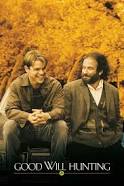 Damon has made quite a name for himself on the silver screen. Alongside Ben Affleck, he burst onto the scene in 1997 with his Academy-award winning screenplay Good Will Hunting. His resume has been a fairly unbroken string of box-office successes since, including Saving Private Ryan, Ocean’s Eleven, the (four) Jason Bourne movies, The Martian, and most recently, Ford vs. Ferrari. It’s fair to say Damon leans towards scripts with lots of action, with the occasional foray into comedy and drama.
 With something of a physical likeness, I thought I should explore a little further under Damon’s skin (so to speak), to see if he and I have anything in common besides looks. He’s eight years younger than I am. He was born in Boston while I was born in Los Angeles. His parents divorced when he was three while my parents remain married to this day. He has one brother while I have four. On the other hand, we’re both married and we both have daughters. We’re identical in height at 5′-10″ (!!!) And most significant to the topic at hand, we’re both products of a parent of English descent and another of Swedish.
Portman/Knightley So Damon is (apparently) my biologically unrelated look-alike (aka doppelganger). All of us have one or more out there in the world; mine just happens to be a “name”. My dad was often associated with the late actor George Kennedy. My mom – Nancy Reagan. Hollywood itself has plenty of pairs, including Dax Shepherd/Zach Braff, Zooey Deschanel/Katy Perry, and IMHO the most twin-like of them all: Natalie Portman/Keira Knightley. As for Matt Damon? His doppelganger is not yours truly, at least not in his own social circles. Maybe Mark Wahlberg.

Linus Caldwell Let’s visit Damon’s movie characters for a second. I identify with one in particular. No, not the brilliant-but-shy, quick-talking Will from Good Will Hunting, with his rough edges, street smarts, and Boston accent. Neither Jason Bourne, with his lightning-fast fighting skills and penchant for cross-continent espionage. Not even Private Ryan, because I can’t claim to have worn the uniform nor lived in wartime. Ah, but then we have Ocean’s Eleven’s Linus Caldwell. Linus is the hesitant participant in the heist. He’s not keen to lead, but he likes being part of the team. He’s on the quieter side, aims to please, takes a risk or two for the sake of respect, and comes across as Mr. Nice Guy. He also sports the casual polo/khaki look, with the occasional zip-up jacket. Yep, Linus could be my doppelganger as well.

Matt (not me) You’ll find a lot of photos of Matt Damon on the web. You’ll also find some personal quotes. Here’s one of my favorites: “It’s just better to be yourself than to try to be some version of what you think the other person wants.” As much as Damon’s an actor by trade, I’ve seen enough of his roles to believe his true persona often reflects in his characters. He seems like a decent guy and he’s done very well for himself. He has a solid marriage and three wonderful daughters. He’s atypically modest and straight-shooting for a Hollywood headliner. So if people want to “doppelgang” me with someone like that, who am I to care if I actually look like the guy?
Some content sourced from IMDb, “the world’s most popular and authoritative source for movie, TV, and celebrity content”.
-
A Sound of Thunder
Like it or not, we’ve changed our personal hygiene habits these last six months. You’re wearing a mask because you choose to (or your governor mandates it). You’re social distancing to be able to do things as simple as grocery shopping. You may even be washing your hands longer (though I still can’t get through the “Happy Birthday” song twice). But one habit hasn’t changed – I’m sure of it. You’re sneezing as often as you normally would, and not necessarily because you’re sick.
 How often do you sneeze? The answer to that question is as varied as the number of people reading this post. Sneezing is a highly personal habit, one you have no control over. Your body needs to sneeze and will do so whether you fight it or not. Technically, a sneeze is a “semi-autonomous, convulsive explosion of air from the lungs through the nose and mouth.” In plain English, your body is fighting something irritating and sneezing helps to get rid of it.
I sneeze every day, without fail. I know this because I can recall my last sneeze and the one before that; both within the last twenty-four hours. More significantly, I sneeze twice at a time. That’s another highly personal aspect. Some sneeze once, others twice. My dad sneezes consistently seven to ten consecutive times (to which he declares, “marvelous!”) Consecutive sneezes either means a repeated effort to rid the irritant, or the body simply settling down in a reflexive sort of way.
 My wife knows when I sneeze because I don’t hold back. I feel one coming, I rear back, and I erupt for all the world to hear. But once again, we all have our differences. For some, it’s a sound of thunder. For others, it’s akin to a cough. Occasionally you’ll even hear a person squeak. No matter the sound, it’s generally unalterable. The body does what the body will do.
Stanford University once conducted a study and concluded a sneeze is the equivalent physiological response as one-quarter of a sexual orgasm. Now how would Stanford know what one-quarter of an orgasm feels like? Your one-quarter may feel different than my one-quarter. Regardless, both responses release a bunch of endorphins and endorphins feel good. Kinda makes you want to sneeze more often, doesn’t it?
An effort to control a sneeze can be downright comical. In situations where you don’t want noise (church!), trying to avoid a sneeze can make it worse than just going through with it. Picture the person anticipating a sneeze in the pews. Deep breaths or holding the breath (count to ten!), pinching the nose, tilting the head back, and on and on. The sneeze often comes anyway.
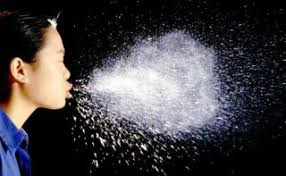 Trying to thwart a sneeze can be downright dangerous. There’s no truth to the myth your eyeballs can pop out if you sneeze hard enough (though it’s not impossible to sneeze with your eyes open – try it). But hold that blast in and you can damage blood vessels or the nasal cavity. Best to just let the volcano erupt. Even the mask naysayers can’t deny the value of today’s “mouthpieces” relative to sneezing. A sneeze can emit up to 40,000 droplets of something you don’t want any part of.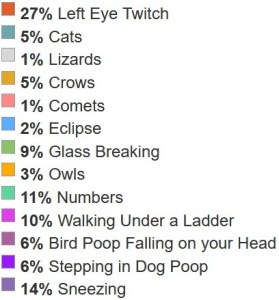
What makes YOU superstitious? Let’s put the superstitions to rest. Your heart does not stop when you sneeze, even though there’s a quick break in the rhythm. Nobody’s talking behind your back when you sneeze, nor does the number of times you sneeze indicate what they’re talking about. There’s no relevant amount of good or bad luck with sneezing. Finally, your soul won’t leap out of your body to be carried away by Satan (or for you atheists, your “breath of life”).
 I like to think of my wife’s “God bless you!” as the protector of that last superstition. She and I exchange the blessing unfailingly (religiously?) with every sneeze, as if not doing so will separate the soul from the body. I suppose we could go with “Gesundheit” instead (since the Almighty certainly speaks German) but the English version somehow sounds more effective. Here’s a coincidence for 2020: the very first “God bless you’s” were uttered after sneezes associated with the very first pandemic: the Plague of Justinian in the 6th century.
Sneezing can be encouraged, be it with pepper or snuff or some other artificial irritant. Not for me. My sneezes come often enough to simply deal with them as they do. I’m sure you agree; the experience is not altogether unpleasant if you sense it coming.
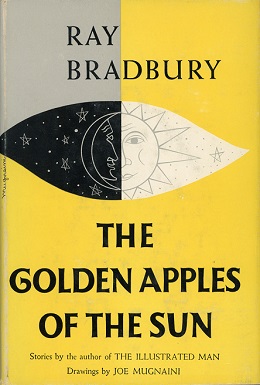
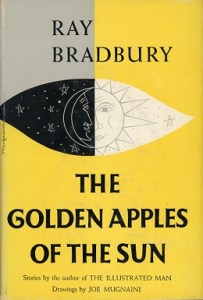 A final nod to sneezing science-fiction fans, who may recognize this post’s title as one of Ray Bradbury’s very best short stories, from his collection, The Golden Apples of the Sun. “A Sound of Thunder” was the tale of time-travel, dinosaurs, and seemingly innocent tampering with evolution – suddenly gone very wrong. It’s as chilling a read today as it was at its publication almost seventy years ago. And the “sound of thunder”? It wasn’t a sneeze. You’ll just have to read the story for the real meaning.
Some content sourced from Wikipedia, “the free encyclopedia”.







About Me
The sky is not completely dark at night. Were the sky absolutely dark, one would not be able to see the silhouette of an object against the sky.
Follow Me On
Subscribe To My Newsletter
Subscribe for new travel stories and exclusive content.
 Life In A Word