
Hello, I’m Veronica
The sky is not completely dark at night. Were the sky absolutely dark, one would not be able to see the silhouette of an object against the sky.


-
As the Wind Blows
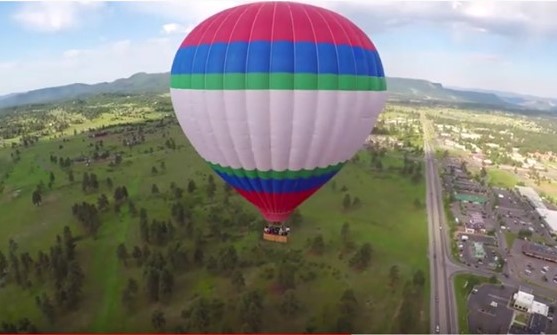
Pagosa Springs, a small town in Colorado’s San Juan Mountains, lies 7,100′ above sea level. It is locally known for its therapeutic hot springs. Pagosa also boasts a 35-year business called Rocky Mountain Balloon Adventures, which takes you an additional 3,000′ above sea level for “360° views of the beautiful valley [of Pagosa] below”. Maybe you’ll climb aboard their basket and go for a float someday. If you do, my apologies for not joining you. I’d rather spend my time in the terra firma of Pagosa’s hot springs than the “terror for-sure-a” of a balloon ride above.
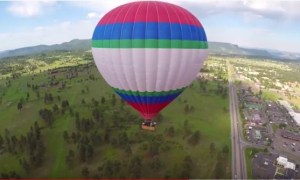
Getting high, above Pagosa Springs Logic says my fear of heights denies me the thrill of soaring up, up, and away. Not true. It’s more about the “gone with the wind” part (sorry for that, Scarlett). Once the balloon reaches cruising altitude, the pilot extinguishes the fire and Mother Nature silently takes over. Then your high-rise ride gets a little
diceyunpredictable. It’s the whole not-knowing-where-you’re-gonna-end-up moment that gets me.Possible outcomes as follows. You descend gracefully into a farmer’s field with the “chase vehicle” just minutes away. You zip hundreds of feet up and then hundreds more down, depending on which fickle air stream you encounter. Or, you float all the way to nearby New Mexico on the strong winds we have here in Colorado. All while literally hanging by threads.
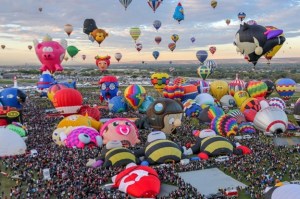
Albuquerque’s big balloon bash Speaking of New Mexico, it wouldn’t be the worst destination for one of Pagosa’s rogue hot air balloons. After all, the International Balloon Fiesta – the largest gathering of balloonists in the country – takes place every October in Albuquerque. At least you’d have professionals on the ground eager to reel you in. Also in Pagosa’s favor: small town = few power lines. Hot air ballooning and power lines do not mix. See here for what happens when they do (coincidentally, just weeks ago in Albuquerque).
Despite the occasional crash landing, ballooning fatalities are rare. In fact, hot air ballooning has been designated “safest air sport in aviation” according to years of statistics, and a Swiss aeronautics organization whose name I can’t pronounce. So maybe it’s not so bad if you never have a neatly paved runway to greet your touchdown. Heck, Pagosa locals love it when a hot air balloon ends up in their backyard. They come running out of their houses to greet you with coffee and cinnamon rolls. Breakfast? Hmmm. Maybe I can do this ballooning thing after all.
 I may not be a balloon flyboy but that doesn’t mean I’d rain on a parade of those big colorful inflatables. After all, hot air balloons first appeared to me in favorite childhood stories, like L. Frank Baum’s The Wonderful Wizard of Oz, William Pène du Bois’s The Twenty-One Balloons, or Albert Lamorisse’s priceless (and wordless) The Red Balloon. They show up as flying animals every Thanksgiving Day at the Macy’s parade in New York City. As well, right here in my hometown we have an impressive showing of hot-air balloons every Labor Day weekend, including a “balloon glow” in the evenings. Now that I think about it, there’s probably more ballooning going on in this part of the country than anywhere else.
Colorado Springs’ beautiful balloon glow It’s not as if hot air ballooning is some new-fangled sport (hoverboarding, anyone?) The first untethered hot-air balloon flight took place back in the eighteenth century. Hundreds of commercial operators offer hot-air balloon rides in the United States, and hundreds more are private owners. Add a little perspective and 3000′ above Pagosa Springs is nothing. The world record for the flight height of a hot-air balloon is 64,980′ (like a Mt. Everest on top of a Mt. Everest).

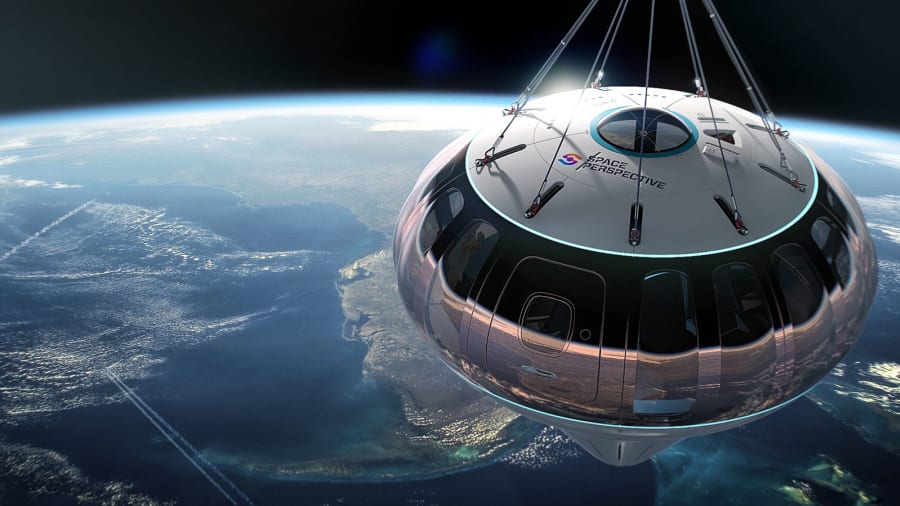
Up, up, and seriously away Strict definitions aside, the altitude record for hot air ballooning is about to topple, in a big way. A company called Space Perspective is now taking reservations for its giant hot air balloon, launching in early 2024. You, seven other passengers, and your
pilotastronaut will take a six-hour ride in a pressurized capsule under a giant balloon… to the edge of the Earth’s atmosphere. A seat on “Spaceship Neptune” costs $125,000. Operators are standing by to take your payment…. for 2025, that is. The 300 seats offered in 2024 are long gone.Maybe 3000′ above Pagosa Springs doesn’t sound so bad after all.
Some content sourced from the CNN Travel article, “On sale: $125,000 balloon trips to the edge of space”, and Wikipedia, “the free encyclopedia”.
-
Delicious Clicks
When my wife and I completed a partial remodel of our house last year, we replaced the rather ordinary-looking front door with a solid-core faux mahogany beauty, highlighted with a stylish centered rain glass cutout. This single architectural element transformed our entry into a much more inviting space. But after many months of opening our new door, I’ve come to realize it’s not just the look I enjoy so much. It’s the sound. A door of this caliber comes with a well-machined, weighty set of hinges and lockset. Close the door and you’ll hear the latch and catch nestle comfortably and perfectly together. It’s one of the most pleasing sounds I’ve ever heard. I call it a delicious click.
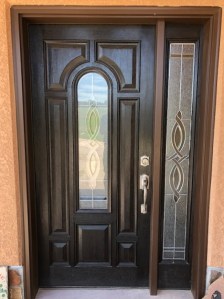
Our newish front door Delicious clicks. Maybe you already know what I’m talking about. You hear a rich, deep sound and you immediately think “high quality” or “high dollar” or just “n-i-c-e…”. You hear this kind of a click in someone’s house and you think, “whoa, these people have it made”. If you haven’t experienced this brand of audible, here’s an idea. Your local bank may have a walk-in safe, one of those with the big spinner handle front and center on the door. Maybe you can hang around until the time they secure the safe. They’ll push that massive steel door closed on silent hinges. They’ll spin the handle until it catches, and then secure the deadbolt with a secondary lever.
That’s when you’ll hear it. A delicious click.
 I’d love to trademark my little sound phrase but I must give credit where credit is due, so I summon James Bond. Rather, James Bond’s creator, the author Ian Fleming. After From Russia With Love, Goldfinger, and all of the other Bond adventures, Fleming wrote a wonderful, timeless children’s story called Chitty Chitty Bang Bang (1964). For those not familiar (and shame on you), Chitty is about a nutty inventor living in a windmill with his family, the nearby candy company whose owner’s daughter is “Truly Scrumptious“, a mysterious castle in a land called Vulgaria, and the magical flying car that brings it all together.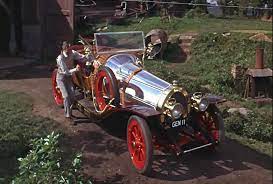
Note the license plate Perfect for this post, “chitty chitty bang bang” is also the sound of the flying car’s engine when it’s in gear. There’s a moment in the movie where you hear the four-part tempo and you think, “perfect words to describe it!” But more to my point today, it’s the car’s doors that are even more pleasing. Even without a copy of the book in my hands, I still remember the author’s description as Chitty’s doors came to a close. Delicious clicks.
Mercedes just came out with its “largest and most luxurious” electric car, the EQS. It’s the battery-powered equivalent of the popular S-class sedan. It has an aerodynamically sloping hood to make speeds above 100 mph (!) smoother. The EQS can travel 480 miles on a single charge. And the purchase will set you back over $100K.

Ferrari’s 296 GTB Ferrari just came out with a new “supercar” with 818 horsepower and a V6 engine. The “296 GTB” is also a plug-in hybrid. It’s not Ferrari’s fastest car but it sure looks like fun to drive. If you have the means, the 296 GTB will set you back the equivalent of three Mercedes EQS’s.
I can’t afford either of these cars; not even close. But I can guarantee one thing. Whether you go with the Mercedes or the Ferrari, your money will get you meticulously crafted doors on your car. With delicious clicks.

Only $900 on Amazon! Recently one of my liquid soap bottles was down to its last few drops. When I pressed down for more the nozzle made a horrible, empty, nasally kind of plea for more soap. What an awful sound. Not exactly “toot sweet”.
On that note, I think I’ll close my front door again.
Some content sourced from IMDb.com.
-
Two-Color Tangos
 Last week I stopped at a traffic signal and it happened again: I had me a little Christmas moment. Visions of Santa Claus, sugar plums, and all that. The traffic light is red, you see, but then it changed to green. Combine those colors and presto! Dave goes all holly/jolly in the head. Can’t really explain it but at least, maybe, a brief bit of Christmas cheer keeps the road rage at bay.
 When two colors tango, untold images fill my brain. Pair up red & green and I’m ready to wrap presents. Pair up light blue & cream and I’m lounging on a beach in Hawaii, frosty piña colada in hand. But maybe you’re different. Maybe you celebrate Hannukah (in which case you should lobby for blue & silver traffic lights). Or maybe your world of red & green is simply something other than Christmas. Strawberries. Tennis courts. Those colorful maracas you hear a-shake-shakin’ in a Latin band. A dozen roses.
“Cha-cha-cha!” If we were talking about single colors we’d be back in elementary school, wouldn’t we? Green as the grass, red as the fire truck, orange as the pumpkin, and so on. Not a lot of fun in that. Not to mention, a single color dancing the tango by itself would be awkward. But two colors? Now… now we’re getting closer to a barrel of monkeys.

What do you see here? Psychologists like their Rorschach inkblots well enough, but two-color tangos would be a more interesting reveal. Tell the patient to close their eyes and concentrate. Now hold up a card half-white & half-orange and say, “Okay, open your eyes. What’s the first thing you think of?” Creamsicles. Blue & yellow card? Swedish Flag. Purple & red? Sunset. You get the idea. But that’s just me. My morally straight brain sprints to morally straight images.
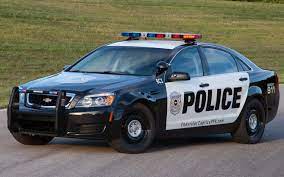
A “black-and-white” Let’s put a thug in the same psychologist’s chair. He’s got “better things” to do but somehow we’ve convinced him to take the two-color tango test. He doesn’t even have to concentrate. Black & white? The police car headed his direction. Black & gray? His favorite handheld weapon. Black & red? Brimstone and fire in the afterlife known as Hell. Creepy, right? At least you have him in a chair instead of out on the streets. Might want to summon more psychologists for further evaluation.
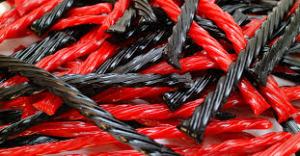
My version of bliss The irony of my thug friend (foe?) is black & red is my favorite tango; more vivid than my red & green Christmases. I’m a nut for licorice, you see. Always have been. Love the whips, twists, shoestrings, Australian, salty, All-Sorts. You name it as long as it’s black or red. I prescribed myself thousands of Good & Plenty “pills” as a kid. I’ve eaten enough black licorice in my life to risk the consequences of this poor fellow’s habit.
[Author’s note: Any licorice with a color other than black or red does not deserve to be called “licorice”. Green Apple? Blue Raspberry? Watermelon? B-L-E-C-H. Those colors are fully inferior to the candy. They’re also trying to tango solo, which we’ve already established as awkward.]

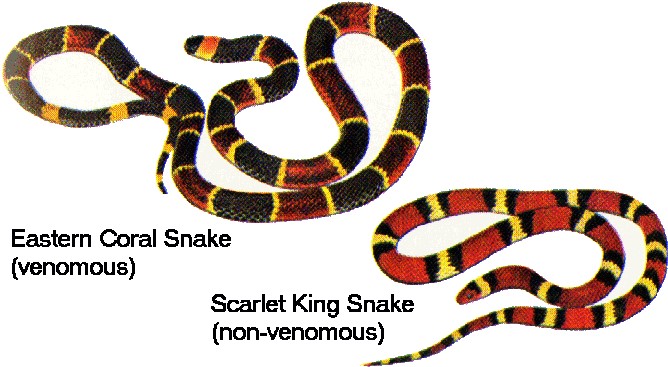
“Go Bucs!” Despite my overconsumption of black & red licorice, live and breathe I continue to do. And my two-color tango images are unfailingly consistent. Play me a game of checkers? Pass the licorice. Red bell pepper and black olive added to my salad? Where’s the licorice? Tampa Bay Buccaneers on Monday Night Football? Fill the snack bowl with licorice. Venomous eastern coral snake? WHOA… hang on now. No licorice image there, not at all. More like get me the hell outta my brain.
 Before I get the coral snake outta my brain, let me pass along a PSA. The coral snake and the harmless scarlet king snake look remarkably similar with their bands of black, red, and yellow. If you come across one of these bad boys, try to remember this little “nursery rhyme”:
- Red Touch Yellow – Kills a Fellow
- Red Touch Black – Venom Lack
- Yellow Touch Red – Soon You’ll Be Dead
- Red Touch Black – Friend of Jack
Fun, huh? Better yet just look at the snake’s head. If it’s black, run away. FAST.
 I planned to finish this post with three-color tangos and the images I came up with there. After all, traffic lights just as often go from green to yellow to red. Bell peppers. Macaws. Skittles candies (“Taste the Rainbow!”) But let’s be honest; I don’t have those images at all. Instead, I’m fully focused on speeding through the intersection before the signal wants me to stop.
Some content sourced from Wikipedia, “the free encyclopedia”.
-
Maker’s Marks
 In the 1993 thriller Cliffhanger, the opening scene is truly disturbing. Having summited a mountaintop for a little adventure, young climbers suspend a cable across a deep chasm to a nearby peak, then cross the open space one by one in zip-line fashion. One climber, terrified to cross the void, gets caught in the middle of the fraying cable, holding on by her fingers for dear life. Despite Sylvester Stallone’s valiant efforts, she shockingly loses her grip, plunging untold feet into the abyss. I remember envisioning myself as her and thinking, “I’m going to die”.
Almost sixty years into life as I know it, I have three unforgettable, take-it-to-the-grave moments where I thought, “I’m going to die”. One of them happened two nights ago.
Returning from a Rockies baseball game in downtown Denver, I drove myself and a friend through a long stretch of interstate road construction. We chatted about nothing and everything as we eyed the late-night traffic around us. I’ve driven this stretch countless times, so much so my brain moves to a certain degree of autopilot. However, I was not prepared for one unexpected moment. As we ascended a rise in the divided two-lane highway, the lane to our right began to disappear without warning. Orange cones cut across its width too quickly, with no signage or blinking lights to grab our attention.
 All would’ve been fine were it not for the well-lit semi-trailer truck already occupying the disappearing lane. He was just enough ahead of me he wasn’t going to back off. I don’t think he could even see my car was occupying the lane into which he was about to merge. Instinctively, I pressed the brake pedal, but not before realizing how much of his trailer was still trailing my car. How the back of his trailer didn’t merge directly with the hood of my car is beyond me. As he swung over into my lane there couldn’t have been two inches between his bumper and mine.
This miracle of a no-accident is an example of a “shoulda died” moment. The semi was at least four times the length of my car (and three times as high). It’s safe to say he and his truck would’ve survived the collision (me, not so much). It’s also safe to say providence of a higher being was present at that very moment.
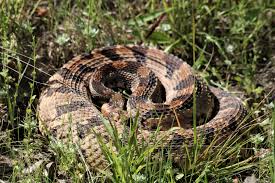 The two other “shoulda” moments in my life are etched into my brain as clear as crystal. When I was a kid, I once hit a tennis ball over my neighbor’s fence and into their backyard. It was easy enough to sneak through their side gate and down the side of their house. Then I ran into their tall grass to the approximate location of the ball. Just short of it, I leaped instinctively over a fully coiled rattlesnake, ready to strike. No question, the most terrifying moment of my young life. I remember yelling and screaming until our neighbor came out and killed the snake. “Shoulda died?” Maybe not, but tell that to a ten-year-old who was sure he’d be bitten by a poisonous snake. To this day I’m convinced there was an angel nearby telling me to “JUMP!” at just the right moment.
 My one other “shoulda” happened in my twenties. Driving back to my college after a road trip, I fell asleep at the wheel in the early-morning hours of an almost deserted divided highway. My car drove itself into the road’s grass median at 60 mph, where I awoke to the horrifying realization I was completely out of control. Struggling to get the car in hand, I swerved this way and that until finally crossing three lanes of oncoming traffic, plunging into a ditch, completely rolling the car, and finally skidding to a stop, adding the flourish of a 180° spin. How was the hospital? Never saw it. I walked away from my totaled car with just cuts and bruises, in an understandable state of shock. Why wasn’t I hit by oncoming traffic? Why didn’t I perish in the remains of my car? Another dose of providence, I think.
We all have one or two of these “shoulda” moments in our lives. They leave an indelible stamp on our memory as if to say, “Nope, not done with this life just yet.” Now let’s add “coulda” and “woulda” moments.
“Coulda died” moments are all over the map:
 I coulda died if I didn’t catch my balance on the edge of that cliff.
I coulda died if I hadn’t been strong enough to swim out of that riptide.
I coulda died if I rode my bicycle on that busy highway.
And so on.
“Woulda died” moments are even worse because you know the life-or-death consequences beforehand. “Woulda’s” are typically fraught with ignorance. Choosing to drag race down a busy city street. Choosing to scale the steep roof of your house in shorts and sandals. Choosing to act on your road rage. Have I done any of these “woulda’s” myself? No. I choose to live instead.
 Maker’s Mark is a small-batch bourbon whiskey produced in Loretto, Kentucky by the company Beam Suntory. Maker’s marks, by my definition, are those “shoulda” moments where we emerge on the other side, a sweating bundle of nerves, thankful to be alive.
That semi and I had a “shoulda” moment the other night, but divine providence chose to play a part.
Thanks be to God.
-
Amending Fences
We’re keeping a close eye on our new neighbor these days. You see, he’s building a fence on his property. In most cases the only discussion neighbors have about fences is who pays for what, or how the fence will look on either side. But this situation’s more complicated. Our neighbor doesn’t realize the driveway separating he and me is not right on the property line. If his new fence line marches down his side of the driveway, he’s actually claiming several square yards of our property.
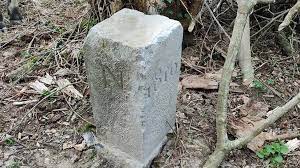
Better left alone Here’s a story you never hear, certainly not in the United States. A Belgian farmer was working on his property and decided to move a giant rock in one of his fields. Several days later, federal authorities knocked on his front door. Turns out, moving that rock adjusted the border of Belgium. Our farmer moved one rock (as it turns out, a 300-year-old stone marker) and singlehandedly increased the size of his country by 1,000 square meters. The very sovereignty of his nation was called into question. Neighboring France was not thrilled.
So it is with my neighbor. Unless he has a plot plan on hand he’ll unknowingly increase the size of his property while decreasing mine. But that’s why we put up fences, right? A fence specifies property; a literal landmark to indicate, “this is mine”. That’s just for starters because we use fences for a lot of other reasons.
 If I’m guessing right, my neighbor needs a fence to keep horses (or other livestock) between his house and the edges of his property. His animals will be shut in from adjacent roads and lands. Good luck with that, friend. Most people around here seem to have breaks in their fences (if they have fences at all). Not a day goes by where someone doesn’t post a notice on our neighborhood’s electronic newsletter about animals on the loose. This morning’s alert concerned a bunch of cows grazing peacefully… on the wrong property. You can’t blame ’em if “the grass is greener on the other side”, right?
 Last week on our vacation to Charleston, South Carolina, we drove down streets full of the town’s characteristic row houses, with tasteful pastel colors and two-story side “piazza” porches. We also walked by stately antebellum mansions in the waterfront “south of Broad” neighborhood. Each of these estates was surrounded by high gates and brick walls, an obvious nod to security. Yes, these palaces were beautiful, but their surrounding “fences” seemed to declare, “keep out”. So we did.
 Here’s another need for fences. At last Saturday’s Triple Crown Belmont Stakes in New York, the eight thoroughbreds were guided – and in one case pushed – into the starting gate before the race began. In the split second where the horses were all in a row, each standing in a sort of starting cage, there was structure. Once they burst out of the gate, all horses and riders shifted to the left, jockeying chaotically for prime position on the rail. Imagine the start of that race without that starting “fence”. Disorder with a capital “D”.
Some fences don’t even need a physical definition. Picture your city streets without lane markings (as if you lived in India). All cars would tend to compete for the best position, just like those Belmont Stakes horses. Horns would honk and road rage would rise to new levels. Roll down your window and throw out any sense of safety.
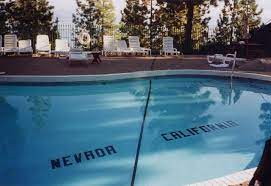 I leave you with one final fence. The shuttered Cal Neva Lodge and Casino overlooking Lake Tahoe straddles the border between California and Nevada. A solid line on the floor splits the dining room and then the swimming pool, to indicate which state you’re dining or soaking in. Drink on one side of the line; drink and gamble on the other. I just hope the hotel’s current remodel doesn’t include relocating the pool. California might become even bigger!
Some content sourced from the CNN Travel article, “Belgian farmer moves border with France by mistake”.






About Me
The sky is not completely dark at night. Were the sky absolutely dark, one would not be able to see the silhouette of an object against the sky.
Follow Me On
Subscribe To My Newsletter
Subscribe for new travel stories and exclusive content.
 Life In A Word