
Hello, I’m Veronica
The sky is not completely dark at night. Were the sky absolutely dark, one would not be able to see the silhouette of an object against the sky.


-
The Game of the Name
When our youngest granddaughter was born last year, I wouldn’t have guessed her first name was the most popular among newborn girls in the U.S. Olivia is the current front-runner (and Liam for boys), as it has been for the last six years. Emma sits firmly in second place (and Noah) – also on a six-year streak – while Amelia (and Oliver) takes third. It’s nice to see the use of “normal” names in this day and age because you’ve got to admit; some really odd ones float around out there. But there’s another list of baby names you probably don’t know about: the ones you’re not allowed to use.
 Two or three generations ago, the topic of baby naming wouldn’t have made for interesting reading. Back then parents defaulted to monikers from their family tree or from the Bible. In the decade of my birth for example (the 1960s), the most popular names for boys were Michael, David, John, and James. Compare those to today’s “trendy” choices: Truce, Colsen, Bryer, and Halo. (Colsen aside, I’d be hard-pressed to guess the gender of any of the others.)
 At least Halo is legal. The U.S. Constitution protects a parent’s right to name their child, yet the courts still came up with a not-an-option list. Including the following:
- King
- Queen
- Jesus Christ
- III
- Santa Claus
- Majesty
- Adolph Hitler
- Messiah
- @
- 1069
Right off the bat you can understand why most of these would cause problems. If your baby’s name is “King” I’m looking for his bejeweled crown. If your baby’s name is “Jesus Christ” I’m looking for a crown of a different sort. As for Santa Claus, the courts in Miracle on 34th Street may have determined he and Kris Kringle were one and the same but let’s be honest: Nobody south of the North Pole should be named Santa Claus.
 “III” and “1069” require a little more explanation. Both are examples from real court cases where persons decided a numeral or number were preferable to their given name (seriously?) But the courts denied both petitions, deciding numerals and numbers fall more appropriately into the category of “symbol” than “name”. The same can be said of the @ sign, which better belongs in your email address than in your signature block.
U.S. federal guidelines seem sensible enough but the individual states add more rules. Consider New York, where your first name can be no longer than 30 characters, while in Arizona it can be up to 45. Rhode Island won”t allow you to put an accent above any character. In New Mexico you can’t name your baby boy “Baby Boy” (nor your baby girl “Baby Girl”). And in Arkansas you can’t name your child “Test” or “Void” because they wreak havoc with the state computer systems.
 The game of the name is not unique to the United States. Indeed, the lists of illegal names in other countries include some really creative ones. Here are my favorites:
- “Thor” – Portugal banned this one but only because they don’t consider Thor to be a word in the Portuguese language.
- “IKEA” or “Ikea” – Banned in Sweden (of course!)
- “Judas”, “Cain”, etc. – Switzerland doesn’t wish to promote the Bible’s bad guys.
- “Fish” and “Chips” – New Zealand decided no child deserves either of these names alongside his or her twin.
- “Spinach” – Australia said no to the green veggie, probably also warning the parents that just because spinach is good for you doesn’t mean your child will also be.
 Considering what my granddaughter could’ve been named I’m glad her parents went with Olivia, even if she is one Olivia among many. At least her name need not be contested in court… like the French couple who wanted their child to be named “Nutella” and were promptly denied. They did settle on “Ella” – which is nice enough (and maybe her cutesy nickname will be “Nut”) – but if I were that crazy about Nutella I would’ve just gone with “Hazel”.
Some content sourced from the Parents.com website article, “32 Illegal Baby Names You Might Want To Keep Off Your List”, and Wikipedia, “the free encyclopedia”.
-
Up, Up and Away Birthday
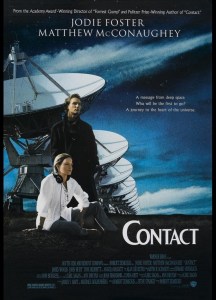
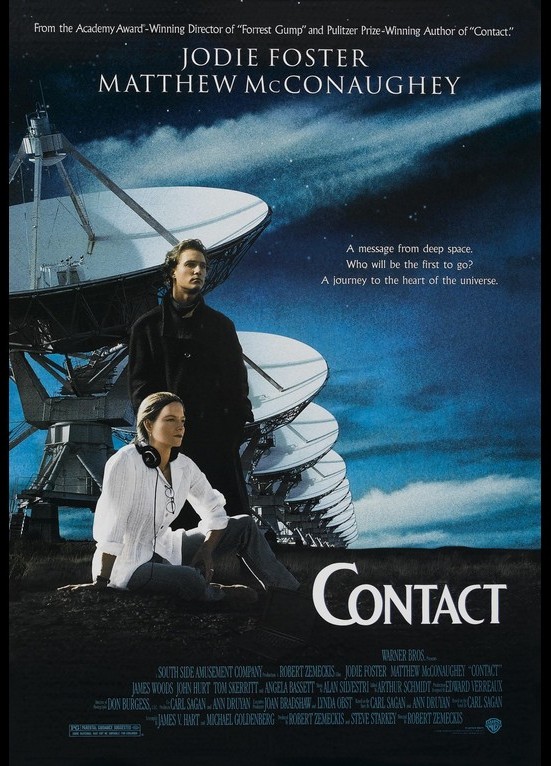
One of my favorite lines from the science-fiction classic “Contact” (starring a young Jodie Foster and and even younger Matthew McConoughey) comes from one of the lesser-known characters. Foster’s Dr. Arroway discovers a communication stream from beyond Earth, while an anonymous millionaire funds the spaceship capable of traveling to the source of the signal. The donor then turns to Foster’s character with a smirk and says, “What do you say, Dr. Arroway… wanna take a ride?” This year, the same question was posed by the (good) people at Goodyear.

Wingfoot Two is a “semi-rigid airship” In a nod to my advancing age, the Goodyear Blimp turned 100 on Tuesday (or I should say, one of the Goodyear Blimps). “Pilgrim”, Goodyear’s dirigible based in Akron, Ohio, took it’s first flight on June 3, 1925. Now Goodyear can claim a hundred years of lighter-than-air travel, even if this noteworthy form of transportation never made it to the masses.
To be clear, Goodyear started with rubber, and then tires. They manufactured tires for bicycles and carriages back in the day as well as horseshoe pads and poker chips, before Pilgrim first took to the skies. Sure, you’ll find their products on vehicles everywhere but what comes to mind when I say “Goodyear”; tires or blimps?

The Goodyear Blimp of my childhood I choose blimps. I grew up just thirty minutes from Goodyear’s blimp airbase in Carson, CA. The blimp I saw back in the ’60’s and ’70’s was named something like “Puritan” or “Reliance” or “Defender”, because Goodyear honored the sailboat winners of the America’s Cup. Not today. Thanks to a public naming contest the blimp down the street from my childhood neighborhood is named “Wingfoot Two”. (I prefer the America’s Cup names instead.)
Maybe you also choose blimps because you drive on Michelins or Firestones. More likely it’s because you’ve seen a blimp buoyant over the Super Bowl or other sporting event. And speaking of football, if the Goodyear Blimp sets down on the field it covers 80% of the yardage. That’s one big balloon.

“LZ 129 Hindenburg” Goodyear’s flying machines of my childhood were literally balloons filled with helium, without any of the technology of today to make them easier to steer. Coincident with middle-school history class, whenever I’d see the blimp I’d think of Germany’s Hindenburg, the Nazi propaganda passenger dirigible that, like the Titanic, is best known for its final flame-filled disaster, on approach to Lakehurst Naval Air Station in New Jersey in 1937. Perhaps we should be thankful Goodyear never promoted its blimps as a form of mass transportation.
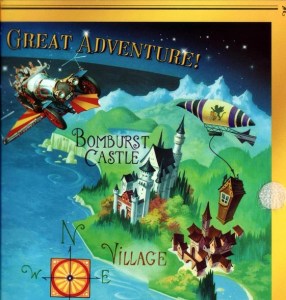 Also in my childhood, blimps offered a far more romantic image in the movie Chitty Chitty Bang Bang, where a colorful zeppelin traveled here and there over the fictional country of Vulgaria, carrying the villainous Baron Bomburst and his crew. (And here’s my opportunity to distinguish between terms. A zeppelin has more of a cylindrical shape, while a blimp looks more like a sausage. A dirigible? Just a general term for an airship.)
 Speaking of sausage, it was inevitable someone would open a sub sandwich shop named after the aircraft. The Blimpie franchise (“America’s Sub Shop”) began in the 1960s, spread to locations around the world, and enjoyed a good fifty years of success. Today most of the helium has left their balloon. There are only about 25 Blimpie stores left in the U.S. (compared with almost 20,000 Subways). IMHO Blimpie’s was the better product, at least the version I remember from the 1990s.
 Oh how I wish I could’ve concluded this post with another wanna take a ride? You and I missed the boat, er, airship on that opportunity. Goodyear held a contest at the start of 2025 and leading up to Pilgrim’s birthday, where three lucky passengers won a blimp ride. I say “lucky”, when in fact my fear of heights takes away any personal appeal to float up, up, and away. No worries, because now I’m thoroughly distracted by hunger pangs. Think I’ll hunt me down a “blimp sandwich”.
Some content sourced from IMDb, “the Internet Movie Database”, and Wikipedia, “the free encyclopedia”.
-
Liquid Dreams
On the few occasions I buy water at a convenience store, I don’t think twice about downing the bottle I just paid two dollars for. Maybe you pay more or maybe you pay less, but I’m guessing the price doesn’t make you hesitate either. Even so, you could’ve gotten the same sixteen ounces for free out of your kitchen tap. That kind of thinking danced in my head last week when I reviewed a contractor’s bid for a new swimming pool in our backyard. I mean, it’s basically a divot filled with water. How much could it possibly cost?
 Like fancy cars and country clubs, I’ve just been reminded a pool earns the label of “luxury item”. It’s a something you may want but definitely a something you don’t need. The cost is just one of the reasons people flock to public pools instead of having one of their own. But even public pools aren’t free. Maintenance. Insurance. Labor (lifeguards). The water itself. The list goes on and on; the same costs you’d have with your own pool. Okay, maybe not the lifeguards (unless my wife has visions of Baywatch studs in our backyard) but add it all up and pools are expensive with a capital E.
The contractor was more than happy to stop by our house last week for a look. He loved the proposed location: flat, unobstructed, and right behind the back porch. Then we debated the dimensions. My wife wanted a lap lane for exercise, but just how long should a lap lane be? Forty feet? Fifty feet? Something to host the next Olympic Games? Eventually we settled on fifty. Then we added a “sun shelf” at one end for the grandchildren and a small patio at the other for an umbrella table and chairs.
Here’s where I got annoyed and suspicious (take your pick). The whole time we’re talking, the pool contractor is doing nothing else besides talking. He’s not sketching, he’s not measuring or taking notes, and he has no examples of what we’re looking for. He’s just talking and nodding his head. He did manage to find time to tell us how he likes to take his boat to the Bahamas several times a year (!) And before I could wrap my head around that he shook my hand with a hearty “Okay Dave! I’ll get you a quote by next week!”.
Well, “next week” is this week and I’m staring at a single page with a single number. $89,750 without any bells or whistles. Go ahead and gasp the way I did, as if you’re underwater in your new pool and can’t breathe (heh). A few of you – those who already have pools – are nodding your heads and saying, “Yep, sounds about right, Dave.” But now all I’m thinking about is how I’m helping this guy make his mortgage payments on his boat. The quote is suspiciously vague as well; not even broken down into labor and materials. My pool does come with a net and brush, a session of “pool school”, and an underwater light (“whoo-hoo”). I also get a credit for “no diving board”, even though it doesn’t say for how much.
This experience reminds me of our last house, and a contractor who gave us a bid on a very large all-seasons deck. We talked briefly while he stood on our lawn, gazing over to where the deck would go. Then he held up his hands as if framing a painting. After a few moments of silence he turned to us and simply said, “$200,000”. Seriously? Not only can you instantly estimate the cost of our new deck, but the number comes out to exactly $200k? So I asked this guy for a more detailed quote and he said, “Yeah, no. I am an artist (he pronounced it “ar-teest“). People pay good money for my work”. Yeah, not these people pal.
Our community has a small pool, sized to somewhere between soaking and short laps. Really short laps. My wife will take two or three strokes before having to think about her flip move to head the other way. She’ll burn more calories switching directions than she will the swimming itself. But hey, at least we won’t have to worry about the maintenance and insurance (or the mortgage payments on someone else’s boat). For now at least, our pool will remain a liquid dream.
-
Ambassador Aspirations
Wedding anniversaries call for a celebration in one form or another. My wife and I default to dinner out and exchanging store-bought cards. This year however, we threw caution to the wind and splurged on three days at the beach, at one of those resorts where they put a price tag on every little thing. It was meant to be the proverbial toast to our almost forty years of marital bliss. But right out of the gate I had to wonder if dinner and a card would’ve been the smarter choice.
 Ocean-front room… has a nice ring to it, right? Somehow I shooed the practical angel off one shoulder in favor of the carefree one on the other and just booked it. I figured the extra cost would be justified by endless views of the horizon, easy walks on the beach, and ocean waves to lull us to sleep. At least that’s what I had in mind as I approached the front desk.
No sooner did I present my driver’s license and credit card when “Paula” (per the name tag) said, “Can I hang onto your cards a sec, Mr. Wilson? I’ll be right back.” Without waiting for an answer she disappeared behind a closed door. Minutes passed. Then tens of minutes. The growing line of check-in guests behind me was stressful, but more to the point what the heck was taking Paula so long? Was I about to be arrested and dragged away in cuffs? Was my credit card getting shredded to little bits? Was Paula really a front desk employee or someone who was already out the back door with visions of identity theft?
My fears were interrupted when the closed door opened and out strolled a more important-looking person – “Kevin” from Guest Services. Kevin asked if I could “step aside for a personal conversation”. So we moved beyond earshot of the other guests and an awkward exchange began.“So… Mr. Wilson… uh… I don’t how to tell you this so guess I just tell you. We don’t have any more ocean-front rooms. I’m very sorry. We’ve given you and your wife an ocean-view room instead.”
Let’s clarify before we go any further. Ocean-front and ocean-view (at least at this place) are very different offerings. “Front” is smack-dab on the dunes of the sand of the beach of the ocean. Leave the sliding door open and you breathe in salt air and get sand in your hair. “View” is the room high up at the very back of the resort, with the hotel bars and restaurants in the foreground and the ocean a distant third.
I hesitated ever so briefly before responding to Kevin from Guest Services. The angel on one shoulder was lacing up boxing gloves while the other was donning a Japanese kimono and parasol for a bow of gentle acceptance. Neither approach seemed quite right so I split the difference.
“Why don’t you have an ocean-front room, Kevin? I have the confirmation email right here, showing I made the reservation weeks ago.”
“I know, Mr. Wilson, I know. We simply don’t have the room, not tonight nor any other night you’re here. How can I make things better?”
“How can I make things better?” Seriously?
“You can give me an ocean-front room, Kevin, just like I booked online. That would make things better.”
“I’m sorry, Mr. Wilson, that’s just not possible. The best we can do is an ocean view. Listen, why don’t you and your wife get settled in and I’ll give you a call later?”
So settle in we did, somewhat begrudgingly. And I’ll be the first to admit the ocean-view rooms at this place were actually pretty nice. Our windows were centered so we had a panorama of the pools and restaurants, with the waves and horizon just beyond. Live music floated up from the bar. It was a pleasing scene from our little balcony. Now if only we had the king bed we reserved inside of the room instead of two queens.
Ring-ring (er, buzz-buzz)
“Mr. Wilson? It’s Kevin from Guest Services again. I’m checking in to see how you like your room. Getting settled? Everything okay so far?”
“Well, yes Kevin, it’s a nice enough room, only it has an extra bed. We reserved a king and I’m looking at two queens.”
“Two queens? Hoo-boy that’s not good. Can’t say how that happened. How can I make things better?”
Ignoring his favorite phrase and choosing not to state the obvious, I said, “Look Kevin, we’ll manage with the two queens; don’t worry about it. But here’s what I want to know. How does a hotel not have the ocean-front room I reserved and was guaranteed weeks ago?”
Pause.
“Well, uh, Mr. Wilson, I’m not supposed to share this information but I can tell you one of our other guests extended their stay, so they’ve taken the room that was supposed to be yours.”
Extended their stay? Taken my room? Must be someone important, like South Carolina’s governor or one of those surgeons at the “Advanced Echocardiography” session in the hotel conference room.
“Yes Mr. Wilson, an extended stay. In fact, the person who made that request is an ambassador.”
Ah, now we’re getting somewhere. I knew it! A political heavyweight. One of those who has the power to simply decree and it shall be done.
“An ambassador, huh? Okay, well that’s something. From what country?”
“Marriott.”
“Excuse me? Marriott?”
“Yes, Marriott rewards. An Ambassador is the highest level of our rewards program.”
My wife looked it up. Sure enough, you’re an “Ambassador” if you stay in a Marriott enough nights in a year. Like, one hundred enough nights. Me, I stay in a Marriott three nights in a year. I wonder what the program calls me, “Peon”? Again my thoughts were interrupted.
“Look Mr. Wilson, I’ve got to get going now, but we’ve added a nice discount to your room rate. I hope it makes up for the inconvenience. How can I make things better?”
Man, this guy really wanted to make things better, so I considered my options. Room service? Spa treatment? Round of golf? Hotel gift shop splurge? Instead I simply said, “Sure Kevin, make me an Ambassador”.
He laughed. Then he stopped laughing. Needless to say, I didn’t get the promotion.
-
Finial Touch
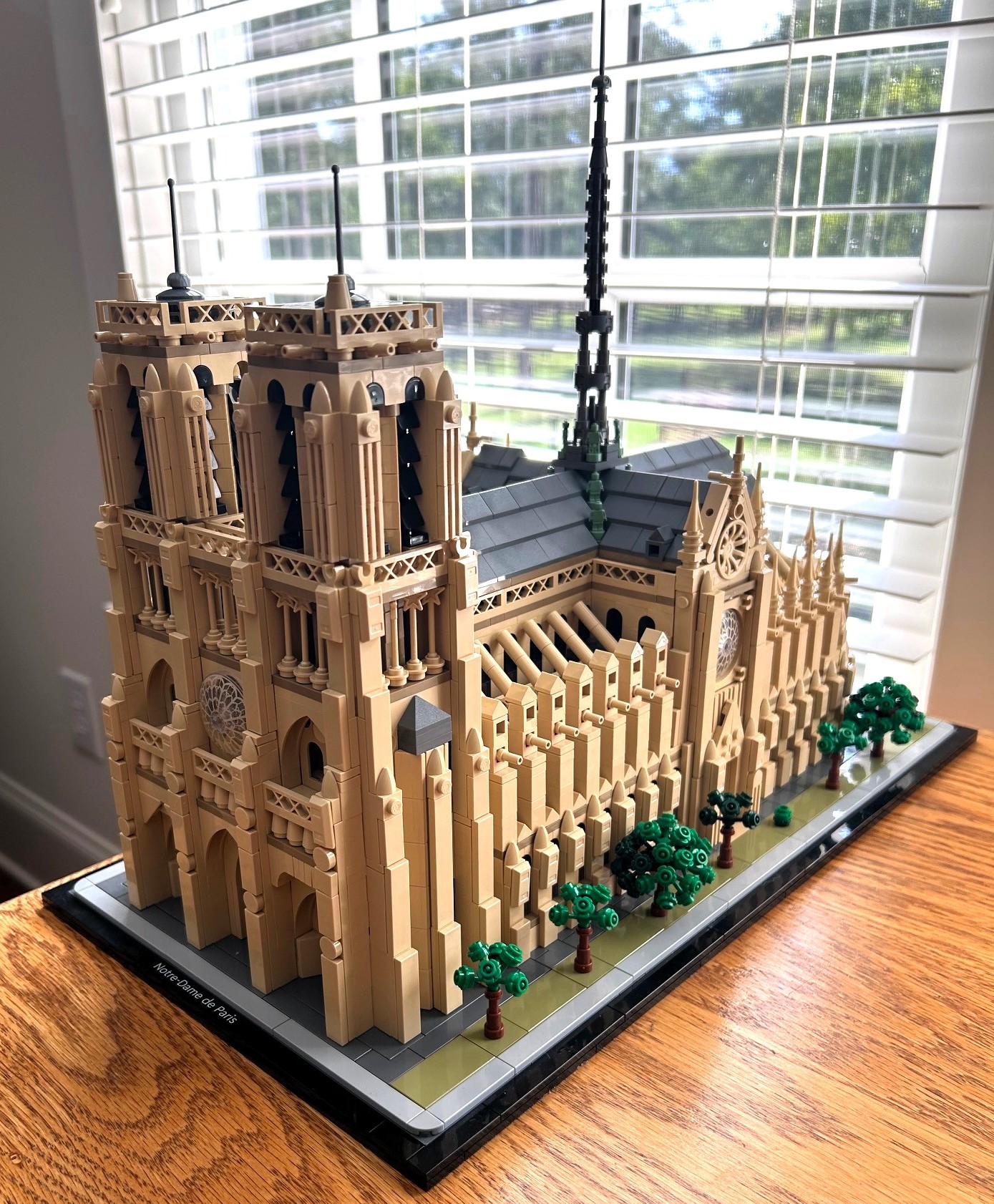
In early January you walked into my blog, took a seat in a pew up front, and witnessed the longest church service in the history of France. From the first LEGO piece I laid as the cornerstone – a now-hidden flat black rectangle – to this week’s placement of the oversized finial on top of the roof, you watched – for almost two hundred years – the slow, somewhat steady rise of Notre-Dame de Paris. Time sure flies, doesn’t it? But at last we’ve made it to the end (or at least, the year 1345), where the pastor dismisses the congregation with a “Go in peace!”(which sounds much better than “Go in pieces!”)
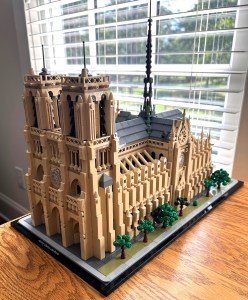
Notre-Dame de Paris Some reflection is in order today, especially since we’re talking about a building of faith. Our cathedral adventure over the last 19 weeks took us through 4,383 LEGO pieces and 393 steps of the instruction manual, snapped together in fifteen hours, resulting in a five-pound plastic model that – “thank heavens” – really does look like the famous French cathedral on the Seine River in Paris.
[Builder/blogger note: I chose my Spotify classical music playlist while I finished up the cathedral. The first selection was entirely fitting: Edward Elgar’s “Pomp and Circumstance”, because this really did feel like a graduation of sorts. But the second selection was eerily more fitting: the final chorus of Handel’s “Messiah”. Ha-a-a-a-a-llelujah indeed!]
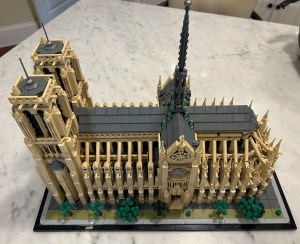 Some of the photos here aren’t much different than last week’s, but only because bags 31-34… of 34 bags of pieces, were all about embellishment: capstones, pinnacles, tabernacles, finials, statuary, and all the other little architectural flourishes unique to a cathedral (plus a little landscape on the sidewalk). You know those cake decorator videos where a white cake sits on a spinner and you get to witness the slow, mesmerizing development of frosting, flowers, and such? That was me this week; spinning, applying, and fully decorating my cake… er, cathedral.
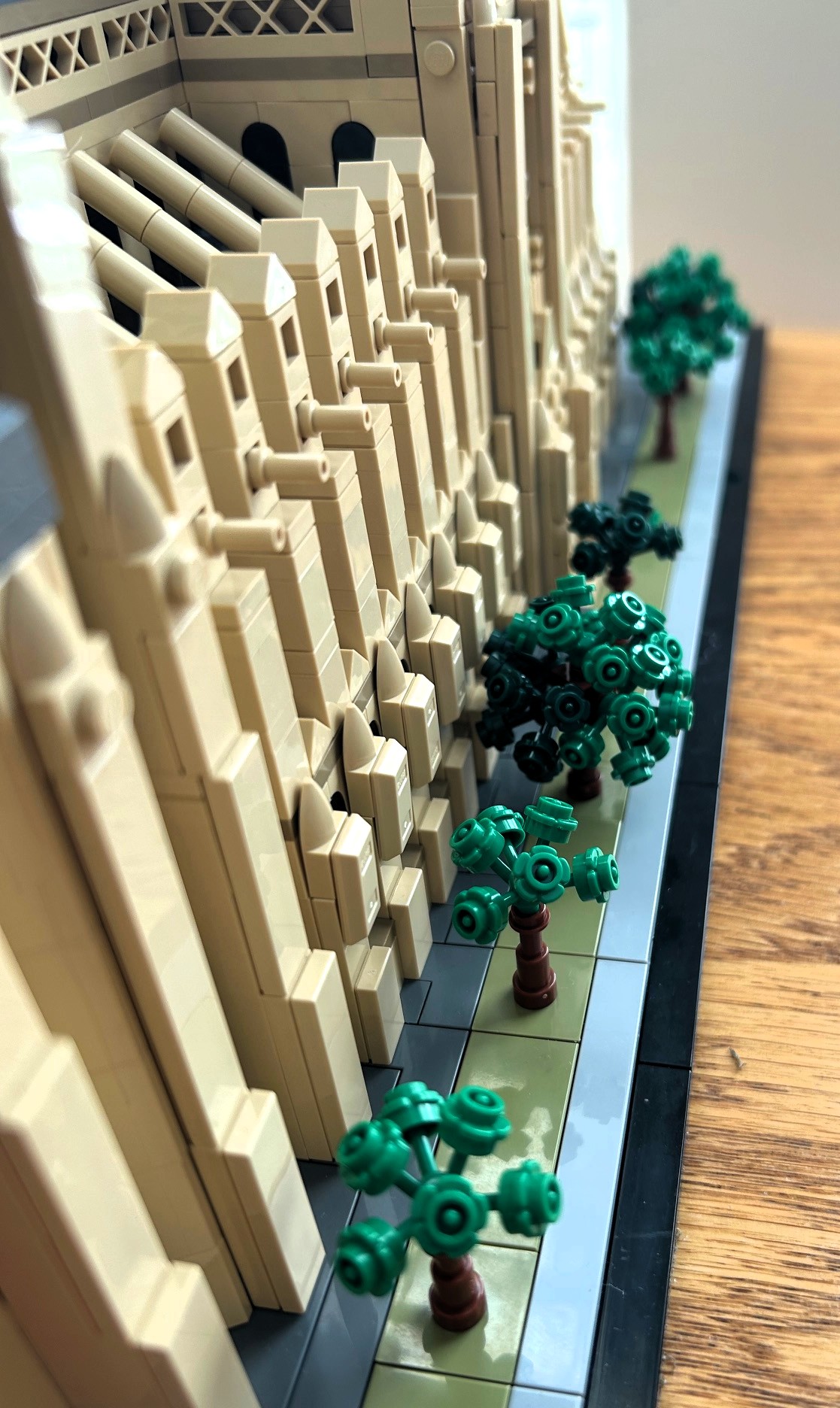
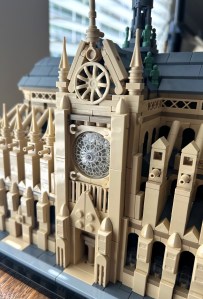 Here’s a good photo of some of this decor (and click on any of the photos to see everything better). To the far left you can see several of the pinnacles; the little spires all in a row high up. There are 30 pinnacles on the entire cathedral. To the right you can see a couple of the tabernacles (14 of those); the open box-like structures above the tiny drainpipes. And running along the first floor you can see capstones; the helmet-like headers on either side of the open bays. There are more capstones on Notre-Dame de Paris than any other decorative element (68!)
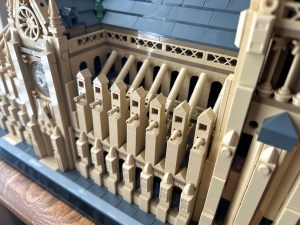 Here’s a look at the cathedral’s famous flying buttresses, the exterior structural elements keeping the building from falling in on itself. There are 28 buttresses, including 14 running around the chancel and apse on the east end. Just below the tabernacle boxes you see the drainpipes. There are 46 of those. During a good rainstorm this view would include an elegant line of waterfalls.
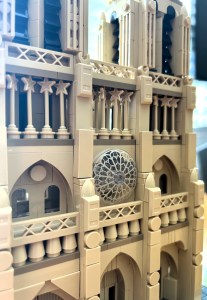 Remember those curious “stars on flagpoles” (or “magic wands”)? Here they are again, all grouped together just below the part of the towers housing the bells. There are 24 of them. You can also see one of the cathedral’s three majestic rose windows front and center. Finally, note the round “medallions” just under the curved arches on either side of the rose window. You’ll find 24 of those on Notre-Dame de Paris as well; several stamped proudly with a “LEGO” logo.
 Okay, one more example of embellishment. Here you can see the 12 disciples in green, symmetrically positioned around the base of the finial (all facing inward). When I pulled these little guys out of the plastic bag I thought they were scale figures for down on the sidewalk, but instead they are the statuary I referred to when I first talked about the cathedral back in January.
 I’d be remiss if I didn’t say something about the model’s landscape elements. LEGO has come a long way since the boxy trees surrounding LEGO Fallingwater. These little “growees” are pretty sophisticated. Consider the tree in the middle. (Click on the photo for more detail). It’s made up of 37 LEGO pieces, including the trunk, branches, and leaves. Furthermore, the branches up against the cathedral are a darker green because, of course, that part of the tree is typically shaded.
 Now then, before you “go in peace” I must mention one more thing; the so-called surprise I teased in last week’s post. Notre-Dame de Paris is such an elegant structure it deserves to be seen by day… and by night. Thanks to the good people at Briksmax, I am able to do just that: light up the cathedral from one end to the other. That’s the good news. The bad? I’m looking at another 2 instruction manuals and another 230 steps to get it done. Are you kidding me?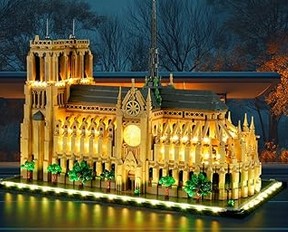
Briksmax lighting When I purchased the lights I figured they would be simply and cleverly inserted in and around the completed structure, but NO-O-O-O-O-O!!! (cue horror-movie music). In order to light up Notre Dame de Paris I must deconstruct the model. Again I say, are you kidding me? Here I finally complete my cathedral and now you want me to take it apart again? Sorry good readers; it’s just not something I can stomach right now. I’m going to sit and admire my completed cathedral while you settle for admiring the Briksmax photo above. You don’t place the finial on the roof of the catheral with a flourish, only to then remove the entire roof. Another church service for another time.
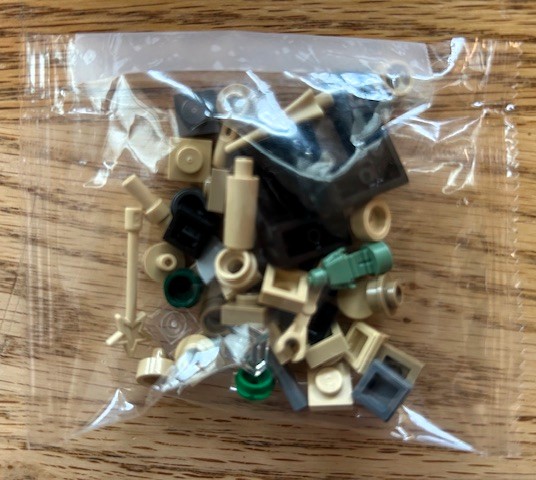
 I leave you with one last look at our poor, unused, leftover pieces, all 48 of them in plastic-bagged captivity (but still trying to escape). I think they all ganged up and cried, “RUN FOR IT!”, because the 49th leftover – a tiny cluster of leaves from one of the trees – went skittering off the desk and onto the carpet below, where it immediately hushed and hid. I still haven’t found it, but no worries. The next time I walk into my office I’ll probably step on it with a satisfying crunch.
Running build time: 15 hrs. 6 min.
Total leftover pieces: 49







About Me
The sky is not completely dark at night. Were the sky absolutely dark, one would not be able to see the silhouette of an object against the sky.
Follow Me On
Subscribe To My Newsletter
Subscribe for new travel stories and exclusive content.
 Life In A Word tv