
Hello, I’m Veronica
The sky is not completely dark at night. Were the sky absolutely dark, one would not be able to see the silhouette of an object against the sky.


-
Sweet Nothing
Cleveland, Ohio sits proudly on the south shore of Lake Erie but has long been considered one of the least desirable locales in America. Shuttered steel mills, miserable weather, and a floundering economy don’t paint a pretty picture. But Cleveland does have an upside. It hosts the iconic Rock and Roll Hall of Fame. Hundreds of thousands flock to its international film festival. And the Cleveland Browns – long the doormat of professional football – just completed their first winning season in over a decade. Alas, music, movies, and sports don’t erase mistakes… not when a city lays claim to a “holiday” called Sweetest Day.
 Tape a big round target to my computer monitor and hand me a bazooka, because I’m about to blow the Sweetest Day bullseye into bits you’ll need a microscope to see. The redeeming qualities of this celebration amount to little more than sweet nothings. I mean, how bad is it when your holiday is not only labeled a “Hallmark”, but popular opinion says it’s the worst of that lot?
A Hallmark Holiday. By definition it’s a celebration with no more substance than a push to buy a greeting card. Boss’s Day (Oct. 16th). Administrative Professionals’ Day (April 27th). Teacher Appreciation Day (May 3rd). There’s even Clergy Appreciation Day (Oct. 10th). Sweetest Day lands at the very bottom of this feathery-light pile. Please, can we just leave it buried there?

“Hallmark Holiday” It wasn’t always this way with Sweetest Day. Wait… YES IT WAS. Did you know we celebrated the 100th anniversary of the original Sweetest Day last Saturday? But I’m getting ahead of myself. The better question I should ask: Do you even know why we celebrate Sweetest Day?
No, I don’t celebrate Sweetest Day, but many of you in the “Great Lakes Region” do (eight midwestern U.S. states plus the Canadian province of Ontario). For the rest of us, here’s the debatably sincere back story. In 1921, twelve Cleveland candy company executives pooled their surplus product and gave away 20,000 boxes of candy “to newsboys, orphans, old folks, and the poor”, and literally manufactured a holiday in the process. In the hundred years since, Sweetest Day has morphed from free candy for strangers to “… a day to share romantic deeds or expressions and acts of charity or kindness.” With all due respect Cleveland, why do we need a “holiday” for romance or charity?

This is all your fault, Cleveland When I first learned about Sweetest Day all I could come up with was Valentine’s Day 2.0. I mean, how convenient, right? We have the big day of romance in February so why not a little one (a really little one) in October? Defenders of Sweetest Day say the two celebrations aren’t anything alike. I agree. Valentine’s Day was a Christian feast day designated over 2,500 years ago and celebrated throughout the world today. Sweetest Day was a gimmick designed to sell candy (and cards) exactly 100 years ago and celebrated throughout… the Great Lakes Region.
 Several failed attempts were made over the years to solidify Sweetest Day on the October calendar. In 1922 the name was changed to “Candy Day” to see if it would generate more buzz (nope). In 1927 they tried to make it Sweetest Week (nope again). And in 1937, to make it more nationally accepted, they tried to advertise Sweetest Day on par with Mother’s, Father’s, and Valentine’s Day (this effort sponsored by, drum roll please… the National Confectioner’s Association).
None of this spinning of wheels stood in Hallmark’s way. The greeting card company produces over 150 designs for Sweetest Day. American Greetings joined the card party to make another 180. Can you blame them when so many Great Lakes Region people are willing to buy?
 All of my bazooka-blasting brings me to a fitting conclusion concerning Wikipedia (where I often find reference material). Every Wikipedia article gets a rating of “quality” and another of “importance”, using a scale not so different from the one you had in grade school. Wikipedia’s article on Sweetest Day – published seventeen years ago – gets a quality rating of, uh… has not yet received, and an importance rating of, uh… has not yet received. In other words, nobody at Wikipedia cares enough to even rate the article.
 Here’s an idea. How about we just delete the Wikipedia article? (as one employee proposed two years after it was published). For that matter, how about we just delete Sweetest Day? I have my bazooka at the ready.
Some content sourced from Wikipedia, “the free encyclopedia”.
-
Lucky Strikes
Have you checked your basement lately? (uh, Dave, I don’t have a basement). How about the crawl space (nope, don’t have one of those either). Maybe a deep closet, the kind with empty space behind the hanging clothes? If I haven’t pegged you yet, just lift up your area rugs (assuming your floors have been around a while). Why? You might find something interesting down there! Loose change. Old love letters. Bowling balls.
Bowling balls?

A small part of Dave’s “bowl” collection Talk about a lucky strike. Another Dave in my country (he of Norton Shores, MI) recently began a DIY house renovation when he unearthed a bowling ball from behind the crumbling concrete of his back porch. So he pawed the sand some more and found another ball. And another. Pretty soon he had fifteen. By the time our industrious friend cleaned out his subterranean bowling alley – er, crawl space, he’d amassed 150 balls – some black, most blue, and all designed to knock down pins. I’m sure Dave would agree with this Dave when I say, “What the HECK?“
Seriously, how would you react if you found hundreds of bowling balls under your house? Me, I’d wonder if they weren’t part of the structural foundation (Don’t laugh; a 1940’s house we used to live in had glued-together schoolroom yardsticks in the walls.) My next thought would go to an abandoned underground city, with my house right on top of the bowling alley. And my final thought? Aliens. Aliens put those hundreds of bowling balls down there.

Did THIS used to be under Dave’s house? Norton Shores Dave was more rational than my own thinking. After finding the first fifteen balls he stopped digging and picked up the phone to Brunswick Bowling. Some of the balls had date stamps back to the 1950s and Dave was concerned about toxicity. (Good thinking there, Dave.) But Brunswick glanced at a few of the photos he sent and said the balls were fine. So it’s official: bowling balls last forever.
Hidden rooms – and the hidden treasures they contain – have always captured my imagination. In the movie National Treasure, Nicolas Cage sorts through clue after clue on the hunt for a hidden fortune. The final scene where the underground room reveals itself in bursting firelight is jaw-dropping. Or how about any movie scene where a sliding bookcase protects a passage to the secret space beyond? Wouldn’t that be a great feature in your house?
 I designed a house with a sliding bookcase once (true story), back in my days as an architect. The hidden room was accessed from the landing halfway up an open staircase, behind innocent-looking shelves of books. The hidden room was meant to be a home office, with a small balcony overlooking the backyard. I pictured the owner’s guests, standing on the lawn and looking up, saying, “Wait a sec’, how come I haven’t seen that room?
Admittedly, bowling balls aren’t a sexy find (even 150 of them). It’s not like you’d go, “Perfect… just what I’d been hoping for!” That’s not stopping Norton Shores Dave, however. He thinks there may be even more balls down there, but – letdown ending to the story – he’ll probably just turn them into decorative pavers in the yard.

Plant orange trees… find a church instead! Other hidden-space stories yield more satisfying treasures. Last year a gardener in England – simply pulling weeds – unearthed sixty-three gold coins from the era of Henry VIII (now that’s what you call “paydirt”). Another gardener – this one in Turkey – found an entire 6th-century church under the ten acres of land where he was about to plant orange trees. Old rolled-up movie posters under the floorboards of a house were so pristine they brought $600,000 USD at auction. Finally, in 2009, an English doctor passed away and left his house to his relatives. What they overlooked for many months? The dusty, vintage 1937 Bugatti in the garage. Selling price: $4.2 million.
 Maybe the best finds are up in the attic. In 2013 a family found a Van Gogh in the rafters of the house of deceased relatives. The painting had been gathering dust for over a century because the original owner thought it was a fake. Not so. It turned out to be a priceless example from Van Gogh’s most prolific years. Okay, not quite “priceless”, but how about $90.6 million?
 It’s only fitting – as Halloween approaches – I ask you to crack the seal on your hidden spaces. You’ll probably need a flashlight. You’ll brush aside spiderwebs or put the boot on a creepy crawler or two. But c’mon, you know you’re curious. There could be something valuable right there underneath your feet. A stash of cash. A famous painting. Or 150 bowling balls!
Some content sourced from the CNN.com article, “Home renovation leads to the discovery of over 150 bowling balls under a family’s porch”, and the lovemoney.com article, “People who bought homes and found treasure”.
-
Sour Grapes
I’m not a fan of French wines. Er, let me rephrase – I don’t appreciate French wines. My palate for bottles of the red and the white has traveled as far as Napa (Chardonnay and Cabernet) and California’s Central Coast (red blends) but nowhere further unless I count the occasional bottle of Chianti from a college year in Italy. I can’t even name a French wine, other than a sparkler like Dom Pérignon. But maybe it’s time for a change, my friends. I’ve taken a sudden interest in a new Viognier… you know, the wine from the vineyards of Grey Poupon?

But does it “pass muster”? You read that right. Grey Poupon, the maker of Dijon mustard, wants to be a maker of fine wine as well. Described as “bright hints of spice and pronounced citrus” and “floral characteristics”, a bottle of Grey Poupon white “pairs ideally with charcuterie boards and sandwiches”. Of course it does, because there’s an infusion of crushed mustard seeds in every glass.
Mustard-flavored wine. Sounds like sour grapes, doesn’t it? Mustard wine sounds as appealing as the scoop of Goat Cheese Beet Swirl ice cream I can get right up the road in Denver. And if you think the name on the Grey Poupon bottle sounds fancy – La Moutarde Vin – think again. Translation: mustard wine.
I don’t expect to stock my wine cellar with bottles of La Moutarde Vin (once I have a wine cellar, that is) but I do stock my frig with mustard. Despite endless baloney-and-mustard-on-white sandwiches in my grade school days, I bounced back as an adult and reembraced mustard. The yellowest of condiments is delicious in potato salad. It’s ideal on bratwurst or a hot dog. And mustard wins out over mayonnaise any day on a ham-and-cheese.

For all the attention ketchup gets (for some reason Batman and Robin come to mind here), mustard has been around longer and comes in more varieties. In typical fashion, Americans first flocked to its most basic version, “yellow mustard”, before maturing to the spicy brown varieties of Europe. Mustard was created in Dijon (France) in the 1800s. Anyone who knows the taste of Dijon knows it’s a wholly different animal than the yellow. Why so different? Dijon mustard is made with white wine. And there’s the role reversal in a nutshell. Now we have white wine made with Dijon mustard.
[Trivia break: A popular brand of mustard in America is French’s. Where in France did it come from? No, no, no, back up the truck. It’s just yellow mustard. It has nothing to do with France. But it has everything to do with the guy who invented it: Robert Timothy French.]
 We Americans adore mustard so much we built a shrine in its honor. The National Mustard Museum in Middleton, WI proudly boasts the world’s largest collection of mustards and mustard memorabilia. I have no plans to visit, but I do wonder if they’ve added a bottle of La Moutarde Vin to their display.
 As long as I’m grappling with American vs. Dijon or mild vs. spicy, let’s address another challenge with mustard. It’s a branded color, as in mustard yellow. Sure, I get it – the yellow evokes the bright blooms of mustard plants. You’ll even find mustard yellow in a box of Crayola crayons. But what if you’re a kid in France? How does a French mom explain to her kid why his mustard yellow crayon looks like bright sunshine instead of Grey Poupon?
 Grey Poupon’s La Moutarde Vin is a limited-edition product, sort of a “cheers” to the wine used in the mustard. At $30 a bottle, it’s reaching the high end of what I typically spend on wine. But with every bottle you also get a free jar of Grey Poupon. Okay, so maybe I have a taste for mustard wine after all.
Some content sourced from the CNN Business article, “Grey Poupon wine now exists”, and Wikipedia, “the free encyclopedia”.
-
Coup de Grâce
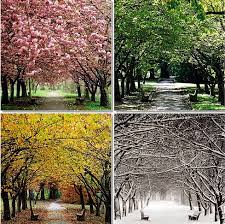
On my green and pristine back lawn, a solitary fallen leaf lies captive among the blades, a sure sign of the coming fall. A summer lengthened by oppressive heat is mercifully at its end. Fellow bloggers eagerly write about crisp mornings, cool nights, and college football games. But here’s a better nod to the upcoming season, a beckoning more sublime than anything “pumpkin spice”. Have a listen to Antonio Vivaldi’s violin concerto “Autumn”, from his best-known work, “The Four Seasons”.
Sure, I could bore you with the details of a classical composition written over four hundred years ago. “The Four Seasons” was cutting edge for its time because the music reflected real-life events: singing birds (“Spring”), soft breezes (“Summer”), and icy paths (“Winter”). But today’s post is not really about “Autumn” and its drunken dancers. It’s about the performance of the piece by Frederieke Saeijs.

Ms. Saeijs I’d never heard of Frederieke Saeijs before I watched the eleven minutes of her violin solo in the video above but I must confess, I’m absolutely smitten. Frederieke (pronounced exactly like it reads, unlike her last name), is Dutch by birth but worldly in every other respect, including her education, performances, and teaching. Her list of accomplishments and awards suggests there is nothing further she can achieve with her instrument… and she’s only forty-two.
But I digress (and can you blame me after seeing her photo?) Let’s get back to this performance of “Autumn”. Here is what I found so captivating. First, Frederieke’s eyes and her movements with her violin are unabashedly expressive as she plays, clearly one with the music. She is a picture of grace with her slender frame, elegant hairstyle, and striking purple gown. In other words, you could watch this video on mute and still be impressed. But please don’t. You need to hear the music, even just a few minutes of it. I admit to distraction by some other things on my computer screen yet I kept coming back to this performance until I’d completed all eleven minutes.
 If I haven’t yet persuaded you to spend a few minutes with Frederieke, consider this. She plays the entire piece from memory (which, in ‘Autumn’s more furious moments, is mind-boggling). Also, her performance – as well as those of the smallish orchestra around her – is captured from a dozen different angles. This was a busy production, both in front of and behind the camera.
I kept waiting for something – anything – to bring this performance back to earth so I could describe it as less than perfect. Except for a cough in the audience minutes from the end, I don’t see how the concerto could’ve been purer. Seriously, have you ever wondered how a soloist of this caliber avoids a sneeze or a cough, or even slips a little on her high heels? Perhaps this explains why Frederieke is a world-class violinist and I am not.
Finally, if you made it to the end of this performance like I did, you’ll find it interesting the video concluded before the audience applause (and standing ovation, no doubt). I say “good call” to whoever posted the video. The silent fade-to-black conclusion only makes the performance more powerful.

Mr. Vivaldi A coup de grâce is defined as “a decisive blow”, and further, “one delivered mercifully to end suffering”. I love the double meaning here. The season of autumn delivers a merciful end to the suffering of a hot summer. More to today’s topic, Ms. Saeijs’ violin performance speaks of force and grace as one. In other words, she offers you a most sublime welcome to fall.
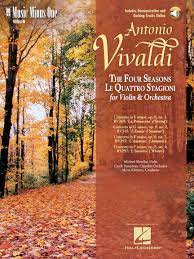 The poem which inspired Vivaldi’s “Autumn” concerto includes the line, “… And (by) the season that invites so many, many…” After watching today’s video I feel very much invited. I suggest you raise a glass of hot cider to the calm of fall. While you’re at it, give thanks for the breathtaking talent of Frederieke Saeijs.
Some content sourced from Wikipedia, “the free encyclopedia”.
-
Do YOU Know the Muffin Man?
I have a hodgepodge of baked goods on the kitchen counter right now. A loaf of sourdough sliced and ready for sandwiches. Brioche buns to cradle the bratwurst I barbecued over the weekend. Angel food cake for dessert topped with berries and whipped cream. And tortillas (which, okay, are “fried goods”) by the bagful. But we’re not done here. There’s one more option, one where my starchy carb willpower goes flying out the window. English muffins.
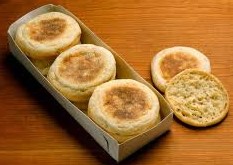 Who among us doesn’t love a warm, toasty English muffin? The little round breakfast breads give us so many reasons to choose them. They’re delicious, whether with butter, jam, or as an ingredient in Eggs Benedict. They’re satisfyingly circular. They’re usually fork-split so they break apart easy for the toaster. You feel like you get two-for-one instead of a single piece of boring toast. And as if to boast of their popularity, McDonald’s bakes millions of them into their Egg McMuffins.
 Here’s another appeal of English muffins. They have all those nooks and crannies to secure the melted butter. You’re familiar with the term “nooks and crannies” (I know you are). It’s the primary descriptor in Thomas’ English Muffins advertisements. But you probably don’t know the backstory. Thomas – as in Samuel Bath Thomas – created the “American” English muffin in 1880, after moving to the United States from England. He brought with him a griddle-baking process for the muffins, which results in the signature crunchy outside and soft inside. 140 years later, I’m hard-pressed to come up with another manufacturer of English Muffins. Okay, maybe Bays. That’s it.
Ironically, English muffins are a more popular breakfast item in North America, Australia, and New Zealand than in England. But you can’t just call them “muffins”, at least not in America. Muffins (coming from the German muffen for “little cake”) refer to blueberry or corn or some other muffin with a more specific taste than the sourdough of English. Not sure about you, but my consumption of English muffins to blueberry or corn is probably 100:1.

Eggs Benedict You think you “know the muffin man”, but I’ll bet you’re just singing the children’s song (and you’re welcome for getting it stuck in your head). There really were muffin men, you see, way back in the mid-1800’s. They’d walk the streets selling their fresh-baked muffins, ringing bells like an ice cream truck. In Britain there used to be so many muffin men ring-ring-a-ringing, Parliament passed a law to ban the bells. But people still bought their fresh-baked muffins (at least until houses started getting this new invention called a “stove”).
When Mr. Thomas first sold his muffins in America he called them toaster crumpets, described as a “more elegant alternative to toast” to appeal to finer hotels. Over time he changed the description to “English muffins” to better serve the masses. The company bearing his name has been making them ever since, and the griddle-baking approach is the secret to all those nooks and crannies.
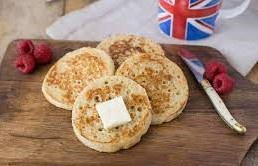
Crumpets, aka “English muffin imposters” While we’re on the subject, let’s settle the debate on crumpets (and scones, for that matter) vs. English muffins. Crumpets look like English muffins. They’re about the same size. But that’s where the similarities end. Crumpets are only cooked on one side. They have a milder taste. And there’s a good explanation for the popularity of English muffins over crumpets in America. Muffins go better with coffee, which Americans drink a lot more of than tea. Can’t tell you when I’ve ever seen someone having a crumpet with their coffee.
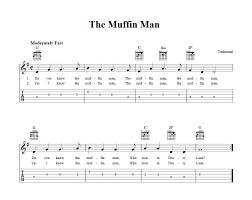 “The Muffin Man” song includes the lyric, “… who lives on Drury Lane?” Turns out, Drury Lane is a real street; a thoroughfare bordering Covent Garden in London. But I prefer to think the Muffin Man lives right here on my street. The Muffin Man is me, because not a week goes by where I don’t include the English rounds in my breakfast.
Some content sourced from Wikipedia, “the free encyclopedia”.













About Me
The sky is not completely dark at night. Were the sky absolutely dark, one would not be able to see the silhouette of an object against the sky.
Follow Me On
Subscribe To My Newsletter
Subscribe for new travel stories and exclusive content.
 Life In A Word