
Hello, I’m Veronica
The sky is not completely dark at night. Were the sky absolutely dark, one would not be able to see the silhouette of an object against the sky.


-
A Month of Sundaes
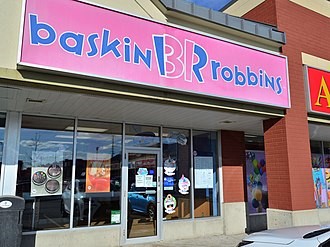
I seem to have an affection for the hyphen. The humble horizontal line appears regularly in my posts. The “dash” is more formal than the “dot-dot-dot” yet more relaxed than the semi-colon – perfect for blog pauses, don’t you agree? My hyphen habit may be the result of formative moments in my life, like Hanna-Barbera cartoons (hello, Yogi Bear) and Hewlett-Packard, where I worked most of my professional career. But if I had to pick just one – or should I say, thirty-one, I’d go with my favorite hyphen of them all. Baskin-Robbins.
 The next time I write a post, remind me to have something to eat before I sit down to the keyboard. My last four entries cover graham crackers, doughnuts, waffles, and now ice cream. Might be my anticipation of Easter Sunday (when my Lenten sweets sacrifice comes to an end). Bring on the jellybeans, Peter Rabbit! But today is about ice cream – and not just any. It’s about the one you grew up with; the one you still identify with. For me, it’ll always be Baskin-Robbins.
 “B-R”, as they’re now called, has a quaint beginning worth a few sentences here. Burt Baskin and Irv Robbins got into the ice cream business independent of each other. Then Burt married Irv’s sister. The now brothers-in-law decided to combine “Burton’s Ice Cream Shop” (10 flavors) with Irv’s “Snowbird Ice Cream” (21 flavors), and there you have it – the birth of “31 Flavors”. B-R was a single shop back in 1948; today, how about 8,000 parlors in 50 countries? Their new slogan – Seize the yay – has more to do with “celebrating small, joyous moments” than ice cream. Even the rebranded logo removes the nostalgia of the B-R I grew up with (though the embedded “31” is clever). But I get it – B-R needs to appeal to younger generations as well.
Dad’s favorite Baskin-Robbins is inextricably tied to my childhood memories. Our local B-R was one door over from my mother’s hair salon. It was also right down the street from our church. So ice cream for me was often the reward of patience with Mom or simply going to church with Dad, who often couldn’t resist a stop at B-R on the way home. You could always find a container of B-R Rocky Road in Dad’s freezer, all the way up to the last day of his life. He was fond of saying while he enjoyed a bowlful, “Nothing beats Baskin-Robbins’ Rocky Road.” (I beg to differ with B-R’s Peanut Butter ‘n’ Chocolate, but hey, we all have our favorites).
A lot of my posts mention ice cream yet I’ve only mentioned Baskin-Robbins once in all my blogging (in The Sweets Life three years ago). Kind of a crime there because B-R deserves a post of its own, as does your favorite ice cream parlor. Wikipedia has an article called List of Ice Cream Parlor Chains (of course they do). Your favorite is on that list. I may be partial to B-R but I’m familiar with several others, including Braum’s in Oklahoma and Texas, Carvel to the Northeast, Farrell’s to the West, and Lappert’s in Hawaii.
 Of course, with Baskin-Robbins I’m talking “ice-cream-parlor ice cream”. Back at home, you won’t find any B-R in our freezer because Häagen-Dazs (ice cream) and Talenti (gelato) earn the shelf space instead. H-D goes a whole lot higher on the butterfat scale so naturally it tastes better. H-D even has a hyphen! And Talenti, well, it’s gelato. Need I say more?
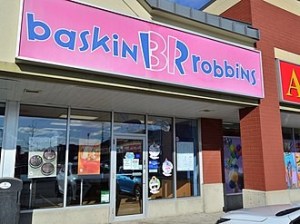 If you live in a bigger city than me, you have better ice cream options than Baskin-Robbins. Big cities have wonderful local places (follow Lyssy in the City for some of the best in New York). But do they have hyphens? Mine does (as does this post – 48 if I counted correctly). Yes, B-R may be updating its brand, but I’ll always insert the rainbow-sprinkle “dash” between the initials, returning me to those ice-cream parlor memories of old.
Some content sourced from the CNN Business article, “This 77-year-old ice cream chain is getting a makeover”, and Wikipedia, “the free encyclopedia”.
——————–
Lego Grand Piano – Update #13
(Read about how this project got started in Let’s Make Music!)
We passed the ten-hour mark with the build today, which amounts to a very long piano concerto. (Good thing you’re not being asked to sit and watch, eh?) Bag #13 – of 21 bags of pieces – added another five keys to the board for a total of fifteen. Eight more next week will complete the entire set. Maybe we’ll be installing them into the piano as well!
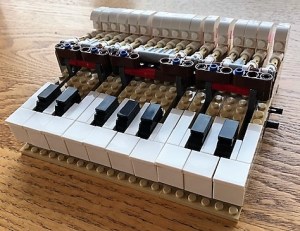 Here’s a stop-sign warning if you take on a project like this. Pieces can easily be installed backwards. For all my “practice” building keys these past few weeks, I got a few tiny pieces reversed today and had to disassemble to make things right. Mr. Instruction Manual includes warning-like diagrams to make sure you don’t do this. In other words, the piano student must pay attention at all times!
Running Build Time: 10.2 hours. Musical accompaniment: Strauss’s The Blue Danube waltz. Leftover pieces: 3
Conductor’s Note: The Blue Danube is familiar from the very first bars (especially if you saw 2001: A Space Odyssey and remember the scene with the rotating space station). Strauss was fond of waltzes and this one is his most famous. With its repeating theme, I thought The Blue Danube would be appropriate this time around since I’ve been building key after key after key.
-
Strange Bedfellows
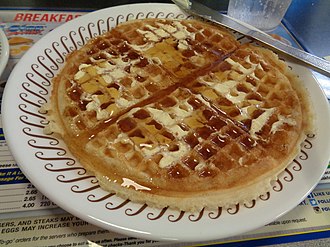
Welcome to Masters Week, sports fans! Even if you don’t know the first thing about professional golf, you’ve probably heard of The Masters. The tournament begins again this Thursday (for the eighty-sixth time) at Augusta National Golf Club in Georgia. If you have nothing better to do this weekend, you can watch a dozen mind-numbing hours of the television coverage. While you’re at it you’ll discover the Masters traditions, like the champion’s green jacket, the clubhouse top-story “Crow’s Nest” (where the amateur golfers reside), the famous pimento cheese sandwiches, and of course, Waffle House. Wait, Waffle House?
 Question: When do waffles and golf belong in the same sentence? Answer: When it’s April at The Masters. Why? Because alongside the golf hats, shirts, and commemorative this-and-that for purchase at the souvenir shop, you can buy a limited-edition pair of Adidas golf shoes for your long walk along the course. The shoes will set you back $200 – a little pricier than most – but hey, they’re limited-edition. You’ll be among the select few advertising Waffle House on their heels.
 Before you think waffles and golf shoes are the most random “pairing” (ha) in the history of merchandising, remember; The Masters is in Georgia. So is Waffle House. Their headquarters is right down the road in Atlanta and they have over 400 restaurants across the Peach State (way more than any other state). In other words, a pair of Waffle House Adidas at The Masters may earn as many thumbs-up as strange looks.
 Speaking of strange, Adidas took the breakfast look of its limited-edition shoe to an extreme. Besides the rear-facing logo, a square-after-square print runs along the side, in a muted tone meant to represent waffles and syrup. Adidas calls it “batter-like colorway” (a phrase you’ll never hear again, ever). Including syrup in the design and labeling it “batter-like” might be how Adidas keeps distance (and lawsuits) from competitor Nike, which famously created its first shoe using a waffle iron. Whatever. Shoes and waffles still make strange bedfellows. I mean, look at the marketing photos spaced throughout this post. Clever yes, but isn’t your first thought, “Get your dirty sneakers off my dining table!“
[Props to Adidas, if you have buyer’s remorse with your breakfast kicks, at least you also get a shoebox looking exactly like a teeny, tiny Waffle House.]
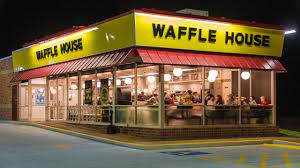 I’m not on my soapbox to knock Waffle House; quite the opposite. Any restaurant keeping the doors open sixty years after the very first plate deserves my respect. So does a restaurant where waffles are the main event because I love waffles. If they’re on the menu, I’ll order waffles whether at Waffle House, Belgian-style, or made-to-order at the finest champagne brunch. I’ve even been known to eat an Eggo or two. Ideally, top your grids with strawberries and Chantilly cream, with syrup on the side for dipping. Heaven on earth.
I’ve only been to Waffle House twice in my life. Was it a memorable experience? NO. Both times I perched on a backless stool at the counter. Both times I sat next to characters I’d never, ever choose to dine with. Finally, the Waffle House kitchen is right there in the wide-open so you can watch your breakfast being prepared. Wouldn’t say it was the most sanitary process I ever saw.
 Waffle House does have its charms, however. The original menu had just sixteen items; today, well over a hundred. Each location is open all-day-all-night, which has some customers believing Waffle House doors don’t lock. Each location also has a jukebox, including favorites from the “Waffle Records” label (Ex. They’re Cooking Up My Order by Alfreda Gerald, released in 2006). Finally, two percent of all restaurant eggs in America are cracked at Waffle House. Two percent is rarely a big number but in this case, it’s got a lot of zeroes.
Waffle House did make a famous mistake once. In the 1960s, the chain was approached by one S. Truett Cathy, looking for an outlet for his proprietary chicken sandwich. The sandwich was added to the menu for a short time, but sales were so strong Waffle House worried its waffles would lose the spotlight. So Cathy moved on, and of course, Chick-fil-A soon became an even more popular place to eat.
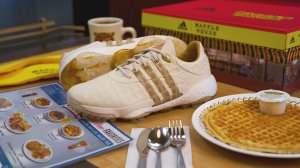
Note the Waffle House shoebox To be fair, the Adidas shoe isn’t the first time waffles and golf crossed paths. In 1996, Kevin Costner starred as a down-on-his-luck golfer in Tin Cup, which included a memorable scene at a Waffle House just before the U.S. Open. Somehow this worked better than waffle-golf shoes.
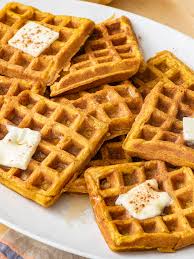 According to its website, Waffle House has 10 locations in my home state of Colorado versus 439 locations in Georgia. Do the math. If a hundred Georgians order two waffles a day in each of those restaurants, Waffle House is cooking up over 600,000 Peach State waffles every week. WHOA. Now there’s my excuse to go to The Masters!
Some content sourced from the ESPN.com article, “Waffle House and Adidas team up for waffle-themed golf shoes”, and Wikipedia, “the free encyclopedia”.
——————–
Lego Grand Piano – Update #12
(Read about how this project got started in Let’s Make Music!)
We’ll be “playing” the keyboard for the next few weeks. Bag #12 – of 21 bags of pieces – added another seven keys to the five I constructed last week, which puts us not quite halfway across the board. I’m showing the complicated mechanical action in the photo because once the keys are installed it’ll be hard to see. Notice how pressing the piano key down makes the rounded counterweight to the left go up. The weight strikes the piano string above it (once inside the piano), and Voila! Music.
 When you work on one of these Lego projects for almost ten hours you notice things. Little things. Today I realized, for the first time ever, Lego imprints its logo on every one of the thousands of raised “bumps” on its pieces (like the beige bumps just to the left of the black piano keys here). A perfectionist would have all of those logos facing the same direction. Nope, not gonna happen; we’re on a one-way street here.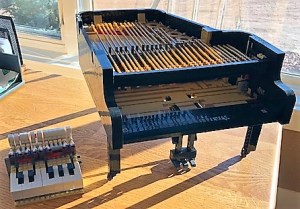
Running Build Time: 9.6 hours. Musical accompaniment: Handel’s Water Music. Leftover pieces: 3
Conductor’s Note: Water Music is a collection of short pieces for a large orchestra. Because Handel wrote the set of suites for King George I for a concert on the River Thames, Water Music is often performed outdoors. Next to his choral work Messiah (“HA…lle-LU-jah!”), Water Music is Handel’s best-known composition.
-
This is Dough-NUTS!
Earlier this week, Krispy Kreme held the grand opening of its newest store just a few miles from my house. You’d have thought the first customers through the doors won the state lottery. I’ve never seen such an amped-up bunch of doughnut-lovers, at least the ones who stepped up to the television cameras. Even the news anchors caught the fever, practically giddy with their coverage, which in turn had me thinking, “Hello? Isn’t there anything more important going on in Colorado Springs?” Welcome to America, where the opening of a fast-food restaurant makes headline news.
 Full disclosure: I’ve had a Krispy Kreme doughnut and they’re positively scrumptious. Put a box of the original glazed in front of me and I’ll polish off at least half of ’em. But that was years ago, back when Krispy Kreme was new and novel. Today? I take ’em or leave ’em, and apparently I leave ’em because I can’t tell you the last time I ate any brand of doughnut. Regardless, doughnuts aren’t really my topic today; doughnut customers are. Specifically, the ones who would get up at oh-dark-hundred just to say they’re among the first through Krispy Kreme’s doors on opening day.
Why? Maybe these nuts for doughnuts are the same people who purchase tickets to the opening of a feature film; the ones who wait hours in line, watch the sold-out midnight show, then fall into bed bleary-eyed at 3am. I want to get down on my knees and plead with them, “Hey you, the movie will be shown a hundred more times and will be just as good as the first showing”. Why give up a good night’s sleep to say you saw it first? Krispy Kreme will sell their doughnuts for years and they’ll taste just as good next year (and the year after that) as they do on “Grand Opening Day”. Why the rush?
Here’s something else I don’t understand. This same fast-food frenzy applied to Chick-fil-A, In-N-Out Burger, and two weeks ago, Whataburger when they opened their first stores in town. The local news gave us updates for months until their “big days”, then cars backed up by the dozens through the drive-thru, then all you’d hear from neighbors was, “Did you hear what just opened?” like it was the juiciest bit of gossip ever. I can think of a dozen local, family-owned restaurants opening in the past several years, and not one of them earned the same hype as these national-chain fast-food commoners. It’s like we Americans are addicted to fast food. Which of course, we are.
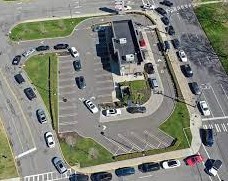
Why again? If I’d kept the local news on all day Tuesday, I would’ve seen the same on-the-spot reporter at Krispy Kreme, giving updates every two or three hours on the progress of the grand opening. Instead, I just pulled up the news channel website and watched her short videos, one after the other after the other. This reporter was at Krispy Kreme the entire day (that’s 5:30am-10:00pm for those who are counting). She managed to look as fresh and bubbly with the first interview as with the last. Probably hyped up on doughnut sugar.
 At least she was getting paid. Those first customers chose to be there voluntarily, which leads me to this question: what does the rest of your day feel like when you’ve been up since 3:00am? One customer thought to pack pillows and blankets into her car for her three (pajama-clad) kids, so they could sleep while her husband waited in a line so long, the camera couldn’t find the end of it. Another customer looked and talked like he’d just received his U.S. citizenship from a very faraway land, espousing the merits of the Krispy Kreme over the lesser doughnuts of his homeland. A third customer, several dozen-doughnut boxes stacked carefully in her hands, boasted how popular she was going to be when she showed up at work (and between you and me, she looked like she’d had plenty of Krispy Kremes already).
 Here’s my favorite part of this “news story”. This isn’t the first Krispy Kreme to open in Colorado Springs. Years ago, when KK doughnuts were a new rage, Colorado Springs got its first store. A few years later it closed. After that, you could only get pre-boxed Krispy Kremes at a few convenience stores around town. After that you couldn’t get them at all. Then several years pass. Now we’re doing it all over again, with the same amount of hype. To which I conclude: What does it say about your city when headline news that doesn’t deserve to be headline news becomes headline news all over again?
Now there’s a sentence I never thought I’d write.
Some content sourced from the Krispy Kreme website.
——————–
Lego Grand Piano – Update #11
(Read about how this project got started in Let’s Make Music!)
Today’s build stepped away from the body of the piano (again). Bag #11 – of 21 bags of pieces – started out as a bit of a mystery. If I’d looked closer at Mr. Instruction Manual, I’d have known what was coming. At some point in the thirty-five-minute assembly it became obvious. Keys, Francis Scott. Piano keys.
 I put the Bag #11 keys side-by-side with the piano in the second photo so you can get a sense of scale. They’re kind of a “module”, which should insert comfortably into the front of the piano later. My next several builds may be more of the same. Remarkably, the keys are weighted just like a real piano. Press one down and the red-tipped weight way at the other end brings it back up. Think see-saw. Lest this photo has you thinking “easy build”, Bag #11 contained well over 200 pieces.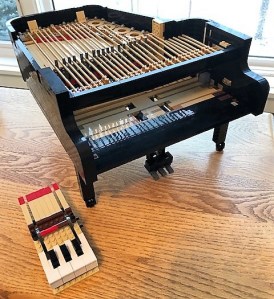
Running Build Time: 8.7 hours. Musical accompaniment: Ravel’s Boléro (twice through). Leftover pieces: 2
Conductor’s Note: Boléro is one of my favorite classical pieces and Ravel’s most famous work. Listeners either love it or hate it. It’s a fifteen-minute variation on two themes, with the orchestra building slowly to its crash-bang finale. The repeating themes are so simple I could probably play them with just the few piano keys I built today. Ravel composed Boléro as a ballet (it does sound like a dance or a march) and predicted most orchestras would refuse to play it. He was wrong. Boléro also gained considerable notoriety as the theme music for the 1970s movie 10, starring Bo Derek and Dudley Moore.
Some content sourced from Wikipedia, “the free encyclopedia”.
-
Sweeter Than Honey
We all have favorite name-brand products, and crackers are no exception. I grew up on Nabisco’s Wheat Thins. Years later I developed a taste for the more sophisticated shredded-wheat Triscuit. When I first met my wife, she introduced me to Kellogg’s buttery Club Crackers. Each of these products is a little different (and today we prefer healthier versions of all three). But I think most would agree, there’s nothing quite like the taste of a graham cracker.
 As I put graham crackers under the spotlight today I wonder what comes to your mind first. For me, it’s two things. First, I’m taken back to childhood mornings at Sunday school, where the preferred snack was honey graham crackers and pineapple juice. I can’t think of another time or place where I ever had that combination of foods. Maybe the sugar overload was a strategy to keep us awake during the Bible stories? Second, I endlessly debate whether a graham is a cracker or a cookie. If you’re at all familiar with the ingredients, grahams lean towards “cookie”. They’re called a cracker, they look like a cracker, but nine out of ten stores stock them in the cookie aisle.
Graham cracker or “graham cookie”? It’s appropriate my first memory of graham crackers is at church. They’re named after Sylvester Graham, a nineteenth-century preacher whose constant message was temperance. In Graham’s time, temperance was a movement against the consumption of alcoholic beverages, but also encouraged what may have been the first vegetarian diet. Wheat was its cornerstone, and wheat (flour) is the primary ingredient in graham crackers. To be clear, Sylvester didn’t invent the graham cracker (we’re not sure who did) but his preaching inspired its name.

“Blackstrap” molasses The sweet ingredient in graham crackers used to be molasses, one of my favorite items in the pantry. Inevitably, molasses gave way to processed sugar. But as I discovered recently, honey is a key ingredient in today’s best-tasting grahams.
For you, maybe graham crackers taste best in s’mores (which I wrote about in Toasty of the Town), or the crust of a cheesecake, or even Moon Pies for you baby boomers. But for me, grahams taste best all by themselves. They play like a “cheat” to the more sugary options out there, and I can pretend I’m just snacking on a “cracker”.
I keep a stash of grahams in my office drawer to satisfy my occasional sweet tooth. I only need a couple of the 2″x 5″s and I’m back on track. The other day however, I pulled open the drawer to nothing but crumbs. Horrors! Grahams have been my go-to since the beginning of Lent because I’ve given up chocolate and “sweets”. So I quickly added them to my store list and vowed to shop later in the day.
 But as so often has been the case during the pandemic, I immediately paused and thought, “Wait a minute. Why buy graham crackers? Maybe I can make them from scratch?“
Here then, I present what is the best graham cracker recipe I’ve ever tried. (Okay, it’s the only recipe I’ve ever tried but it doesn’t matter; I don’t need another one.) Gemma’s Bigger Bolder Baking takes grahams to a way higher rung on the cookie ladder (including a helpful video if you’re baking-challenged like me). I’ve eaten a million Honey-Maids yet it took me sixty years to realize grahams can be SO… MUCH… BETTER. Why? Because these contain a lot more of the good stuff and a lot less of the nasty chemical flavorings and preservatives.
 You should expect these homemade grahams to taste better when you see the ingredients. The ratio of flour to brown sugar is 2:1 (emphasis on the “1”). Now add another 1/3 cup of honey. That’s a lot of “sweet” for a cracker, er, cookie that looks like a thin cardboard rectangle. But I’m talking delicious with a capital “D”. Think chewy instead of crunchy, with a rich “graham” flavor lingering much longer than store brands. They’re almost too good to be called a graham.
My grahams Okay, let’s close the box on graham crackers with a quick review:
- They were invented as an alternative to unfavorable indulgences.
- They’re a cookie by definition but a cracker by name.
- They make you want to try Moon Pies (if you haven’t already).
- They satisfy a craving for sweets without being “a sweet” (disregard earlier comment about brown sugar and honey).
- They are unquestionably better made from scratch than store-bought.
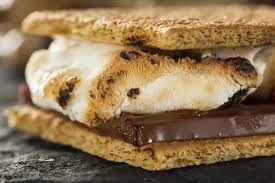
Yum! If I haven’t sold you on how much better the humble graham cracker can be, consider this. They’re simple to make and you already have all of the ingredients you need. So, what are you waiting for? Go bake some crackers, Graham!
Some content sourced from Wikipedia, “the free encyclopedia”.
——————–
Lego Grand Piano – Update #10
(Read about how this project got started in Let’s Make Music!)
 We worked entirely underneath the piano today, with the instrument flipped onto its back. Bag #10 – of 21 bags of pieces – contained an intimidating pile of tiny parts. I didn’t realize what I was even building until somewhat magically, pedals, legs, and castors appeared before my eyes. That’s right folks, this baby-baby grand now rolls.
I also took a deep breath and tackled the “loose piece” I’ve mentioned with the last two builds. Sparing you the heart-stopping details, let’s just admit I installed a tiny piece ninety degrees wrong. Correcting meant removing all the piano strings and working in a deep, dark corner, with the assistance of an X-Acto knife, eyeglass screwdriver, and pliers. Like I’ve said before, don’t get any part of this performance wrong. It’ll cost you later. Dearly.

Elevated! Running Build Time: 8.1 hours. Musical accompaniment: Satie’s Gymnopidies 1, 2, and 3 (a deliberate choice to soothe me while I repositioned the loose piece). Leftover pieces: 3
Conductor’s Note: The tiny pedal to the right is called the “damper”. It’s used to sustain the notes you play after you take your hands off the keys. Remarkably, the Lego Grand Piano has the same mechanical action you’d find with this pedal in a real piano. Sit down at a keyboard some time, press the right pedal with your foot, and (with the piano lid raised) you’ll see just how many moving parts it takes to sustain notes. You’ll find those same moving parts in the Lego Grand Piano.
-
In-Spired Music
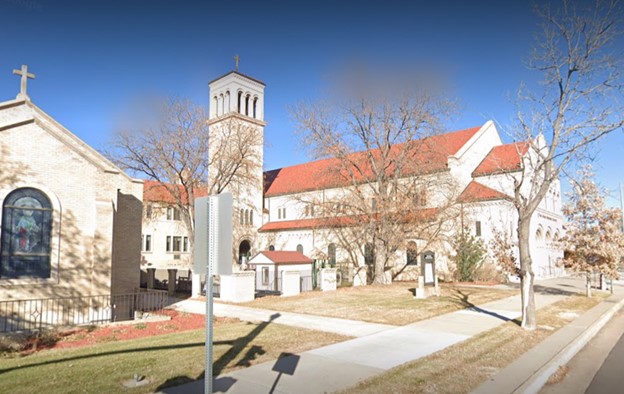
Last Friday, I walked out of the downtown salon where I get my monthly haircut to the makings of a beautiful late winter afternoon. A few cars motored by on the street, yet nobody blared the horn or blasted the radio. Pedestrians kept their conversations to a low tone. Songbirds made melody, willing the next season to an early debut. Above all (literally), the nearby Methodist church bells rang out the hour of the day from the steeple, followed by a cheerful rendition of… “The First Noel”?
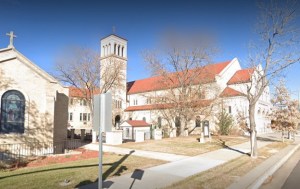
Found the culprit on Google Street View! Last time I checked Christmas was well over two months ago. Decorations are boxed and returned to the closet, lights are taken down, and Starbucks no longer offers my seasonal favorite Chestnut Praline Latte. Yet here I was, a block from a downtown church in March, with happy steeple bells daring me to burst into Christmas song.
Talk about a case of bats in the belfry. You think I’d pause for such a strange moment. Instead, I simply took in this carol of the bells with a smile, got behind the wheel, and went on my “merry” way.
So it is with church bells, especially the ones in steeples big enough to broadcast their melodies for miles around. I find church bells comforting, so much so they can play anything they choose and I’ll be happy to listen. Even a tune that sounds so three-months-ago.
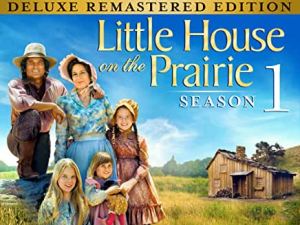 The church I grew up in, on the far west side of Los Angeles, had a tall steeple with bells. If you pulled up to the parking lot within ten minutes of the start of the service, the bells were making music. More importantly, they were telling you (as they’ve done for centuries in older churches) it’s time to get yourself inside for worship, buddy. I didn’t watch every episode of Little House on the Prarie but I watched enough to remember the steeple bells summoning the people of the small town to church. Believe me, you didn’t want to be the last parishioner in Walnut Grove to pass through the sanctuary doors, earning a steely-eyed stare-down from Rev. Alden.
Here’s another memory from childhood church. In “Sunday School” they taught us how to lace our fingers together, tips pointing down, palms face-to-face below, and thumbs side-by-side in front.
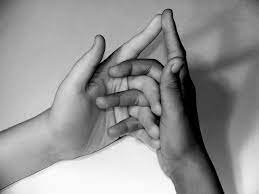
Church! Steeple! Doors! PEOPLE! [Go ahead, I’ll wait while you make your little “church”.]
Then you’d look at your hands and say, “Here’s the church…” (now raise your two index fingers into a point), “Here’s the steeple…”, (now separate your thumbs a bit), “Open the doors…”, (now flip your hands over and wiggle your fingertips), “… and see all the people!” That little ditty was clever enough to recollect all these years later, the moment I heard “The First Noel” from the downtown steeple.
At least in America, the appeal – ha – of steeple bells is probably because you don’t hear them all that often (unless your neighbor is a church). Most modern churches can only afford the structure of the steeple, not the complicated mechanism of the bells within. Just like train crossings, today’s “bells” are often an electronic equivalent, and so realistic you can’t tell the difference. But you can with steeples. If the church was built in the last fifty years, the steeple bells probably don’t ring true (ha again).
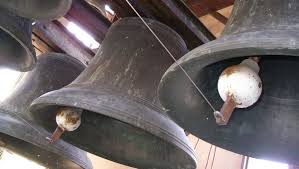 Charleston, South Carolina is known as the Holy City because you’ll find over four hundred churches in its rather compact downtown streets. You can’t look in any direction in Charleston without seeing a steeple, and many of them are hundreds of years old. That means bells; hundreds and hundreds of bells. Take a walk in Charleston on a Sunday morning and you’ll be “treated” to the overlapping competition of steeple bells. They’re summoning you to church, of course (but which one, exactly?)
The Sound of Music has a brief but charming steeple scene in the movie, just before or after Maria weds Captain von Trapp at Mondsee Abbey. The camera points to the very top of a steeple, where the abbey bells are visible just below the cupola. In the era of the story, steeple bells were rung by hand. In this scene, the “ringer-boy” is shown holding on for dear life as he clings to a rope, the weight of the bell dragging him up and down like a pogo stick. The moment always makes me laugh.
 One of these days you’ll be walking down the streets of your own town and church bells will ring. Stop for a second and give them a listen. You’ll probably hear a melodic hymn. You might even be gifted with an “unseasonal” Christmas carol. Doesn’t really matter. Those big, happy bells make beautiful music no matter the tune.
——————–
Lego Grand Piano – Update #9
(Read about how this project got started in Let’s Make Music!)
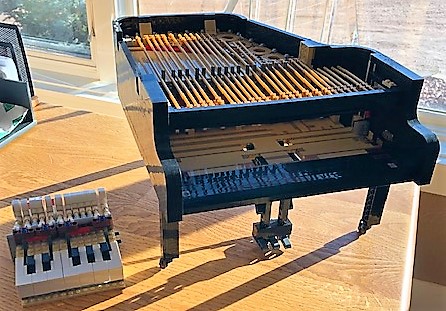
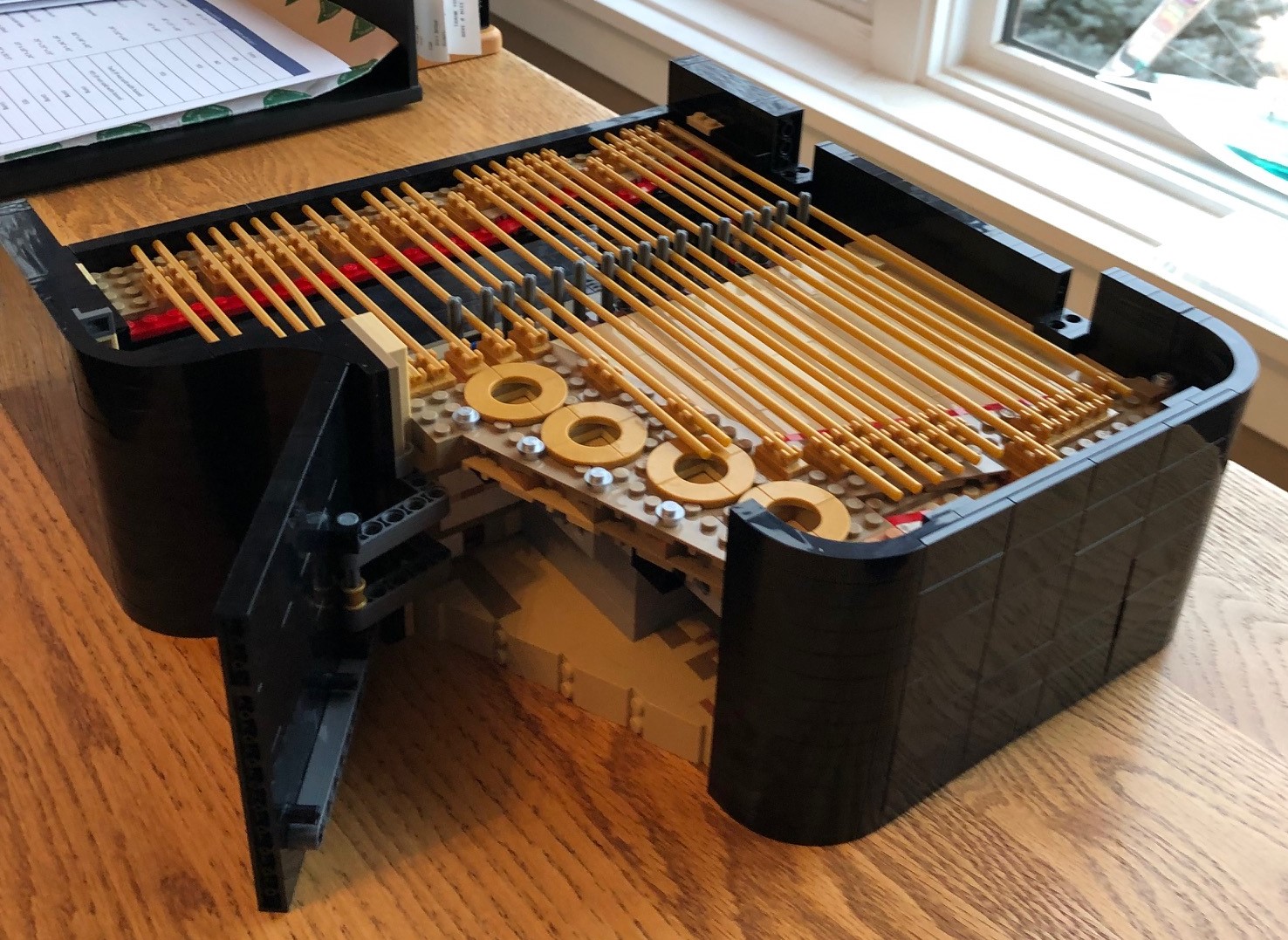
 We are closing in the piano’s insides now, as you can see by the almost complete black frame in both photos. Bag #9 – of 21 bags of pieces – contained a good chunk of the frame curves, including the graceful “S” you can see just beyond the right side of the (future) keyboard.
Mendelssohn’s Piano Concerto No. 1 was just about the perfect length for today’s build, with a couple of hold-your-breath moments where pieces from previous builds snapped off and skittered away. They’re back where they belong now,
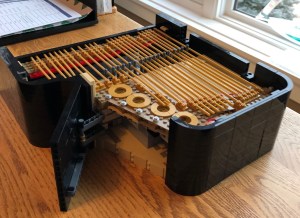 Running Build Time: 7.5 hours. Musical accompaniment: Mendelssohn’s Piano Concerto No. 1 in G-Minor. Leftover pieces: 2 (tiny unnecessary extras for the frame).
Conductor’s Note: We have a hinged trap door built into the frame now, for access to the battery pack and on/off switch. When it’s closed, the frame is seamless and you’d never know the door was there. They have clever people at Lego.














About Me
The sky is not completely dark at night. Were the sky absolutely dark, one would not be able to see the silhouette of an object against the sky.
Follow Me On
Subscribe To My Newsletter
Subscribe for new travel stories and exclusive content.
 Life In A Word